 opensourcemalware/vercel-april2026-incident-response
This is an incident response playbook we created for the Vercel April 2026 compromise

Last updated: 20 April 2026 @ 12.07 PM AEST/Brisbane - (v2 — incorporates Vercel CEO update of 20 April)
Vercel disclosed on 19 April 2026 that an attacker gained unauthorized access to internal systems. Here is the official announcement:
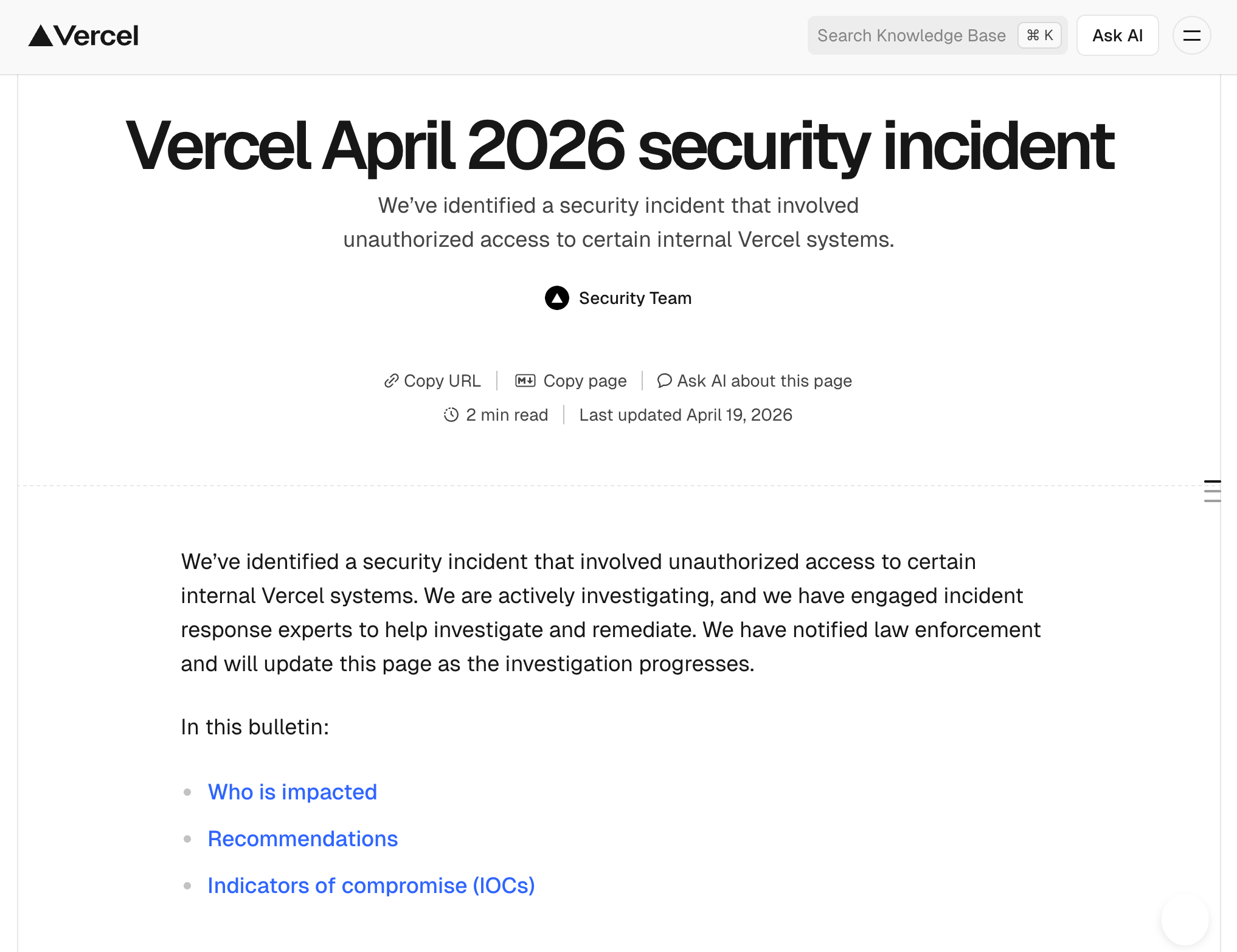
On 20 April, Vercel CEO Guillermo Rauch published a detailed update confirming the initial access path: a Vercel employee used an AI platform called Context.ai, which was itself breached; from there the attacker pivoted into the employee's Google Workspace account and escalated into Vercel environments. Environment variables are encrypted at rest, but the attacker was able to enumerate variables not flagged as "sensitive." Vercel characterizes the attacker as highly sophisticated and likely AI-accelerated. Google Mandiant is engaged in the response. Vercel states Next.js, Turbopack, and their open source projects remain safe.
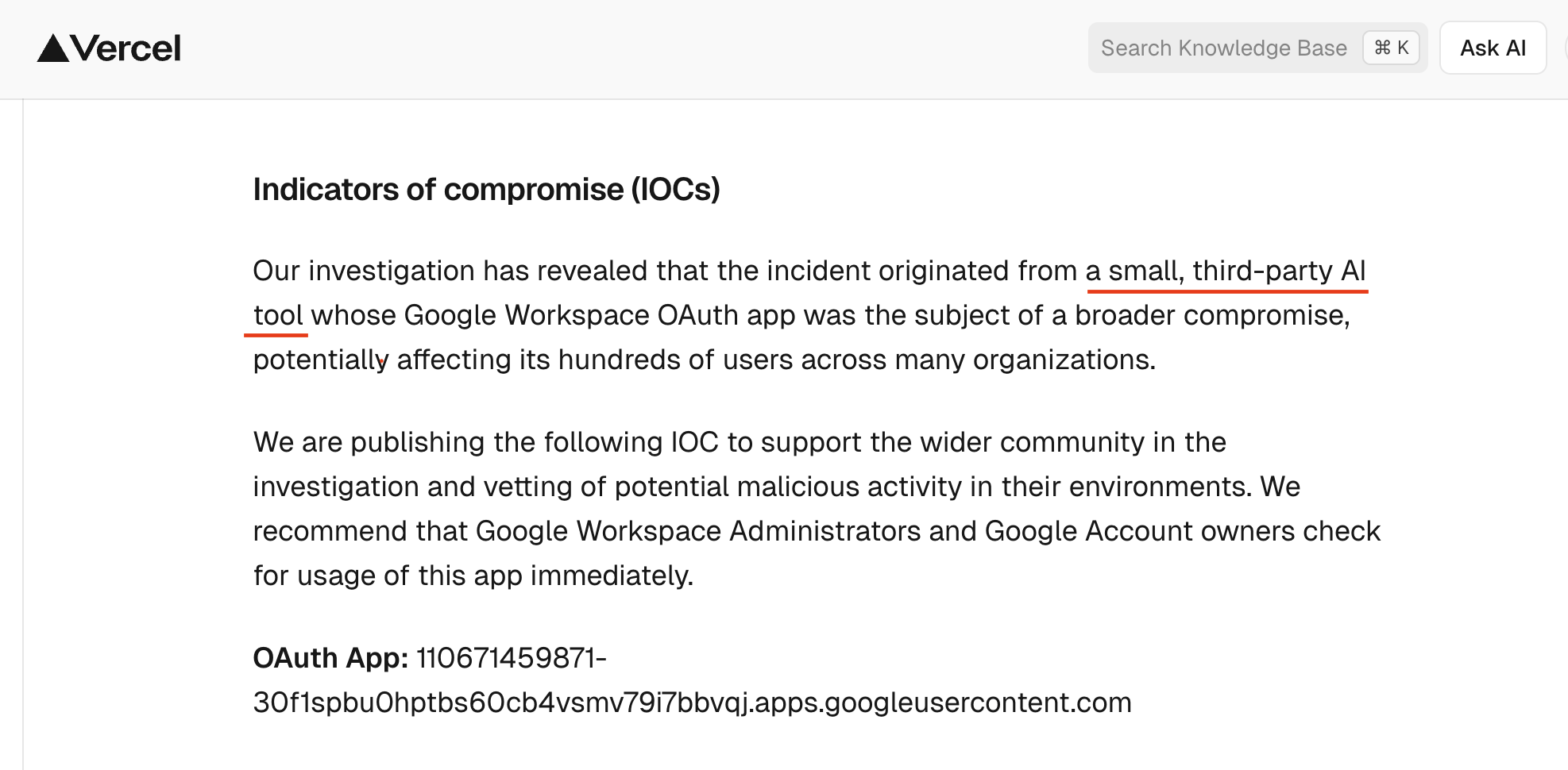
Here’s the important indicators of compromise section from that security advisory:
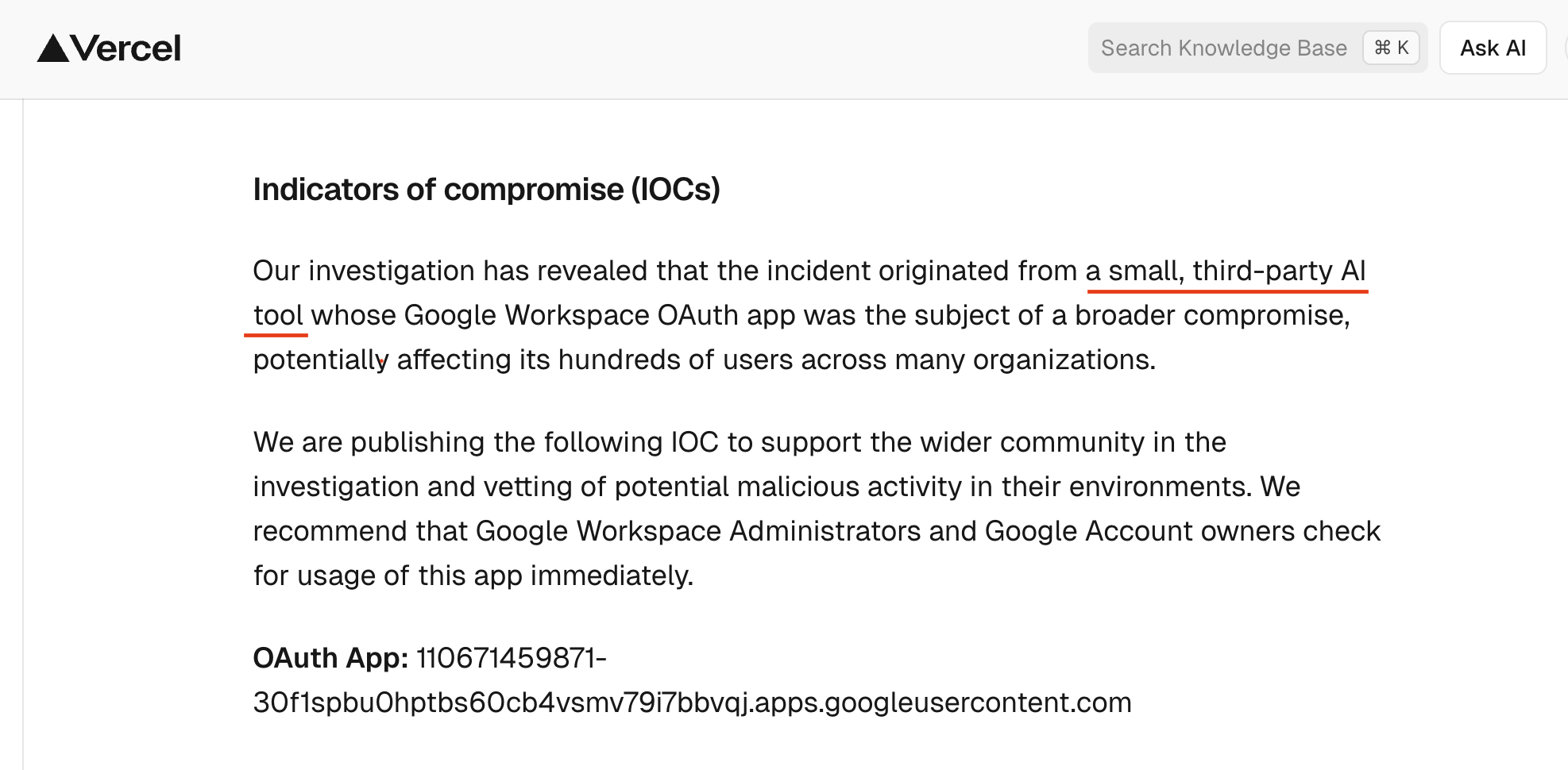
Pretty light on details. They don’t even tell you where to check for that one lone Google IOC. As a Vercel customer, I am pretty disappointed with this level of detail. Help me understand what to look for! Tell me where to go to learn if I’ve been compromised or not!
If you run workloads on Vercel, assume the following until proven otherwise:
vercel env CLI that is not rotated is a standing liability.This distinction matters for executive comms and for not over-responding (or under-responding).
Treat unconfirmed reporting as plausible and actionable for your own triage, but do not cite it as fact in customer or regulator comms until Vercel corroborates it or you have independent evidence. The gap between "enumerable env vars" (confirmed by Rauch) and "npm + GitHub tokens for sale on BreachForums" (attacker claim) is the gap that matters most for supply chain risk — assume the worst for rotation purposes, stick to the confirmed version for comms.
Highest urgency — you received direct outreach from Vercel, or any of the following apply:
Standard urgency — any team with active Vercel projects, even marketing sites. Marketing sites often hold CMS API keys, analytics tokens, and form-handler webhooks that pivot into more sensitive systems.
Still do it — even if your projects were deleted before the incident. The question is whether secrets were ever resident in Vercel in a readable form, not whether the project is still there.
The 20 April update names Context.ai as the breached upstream vendor. If anyone in your organization uses Context.ai independently of Vercel — for meeting intelligence, knowledge management, CRM enrichment, or any other workflow — you may have your own direct exposure window separate from the Vercel incident.
Run these checks in parallel:
context.ai or associated app IDs.If you find Context.ai usage in your environment, revoke the OAuth grants, rotate any credentials that passed through Context.ai workflows, and monitor the affected users' Google Workspace accounts for the same indicators of compromise Vercel describes seeing on their employee's account. Reach out to Context.ai directly for your own incident details; Vercel has publicly stated they're coordinating with Context to help other affected organizations.
Two goals: prevent new damage, preserve evidence.
