
The system of action for AI-native cybersecurity—where intent becomes governed execution, evidence becomes operational memory, and every operation improves the next.

CyberStrikeAI connects planning, execution, human oversight, evidence, and replay in one auditable workspace. Built in Go, it combines Eino-powered agents, MCP-native tools, RAG knowledge, visual workflows, and attack-chain modeling and analysis for authorized security operations.
Start here: Quick start · Documentation · Security hardening
[!IMPORTANT] Use CyberStrikeAI only on systems you own or are explicitly authorized to test. For shared or production environments, review the security model and hardening guide before enabling high-risk tools, WebShell, or C2 capabilities.
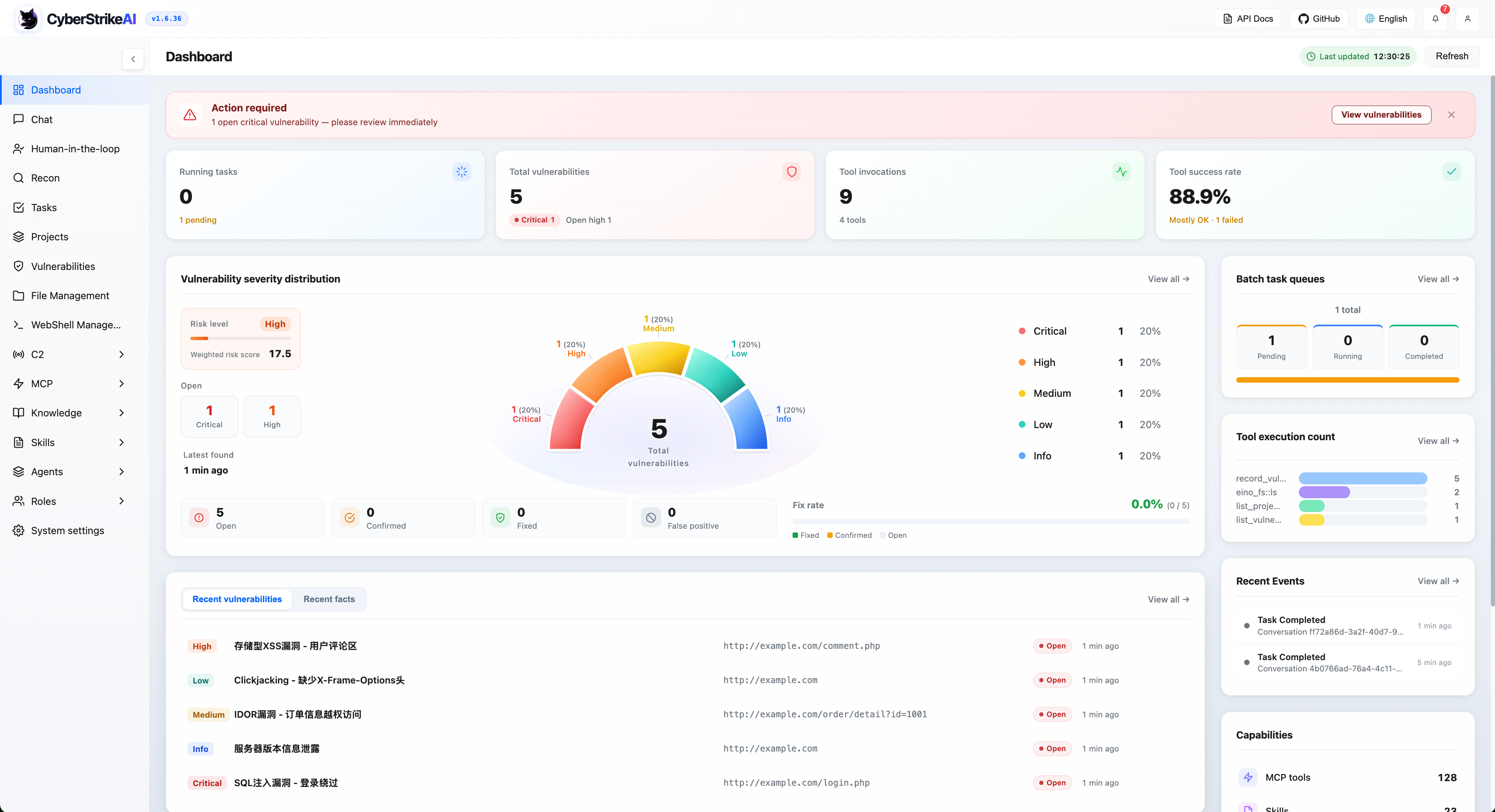
Light Mode
|
Dark Mode
|
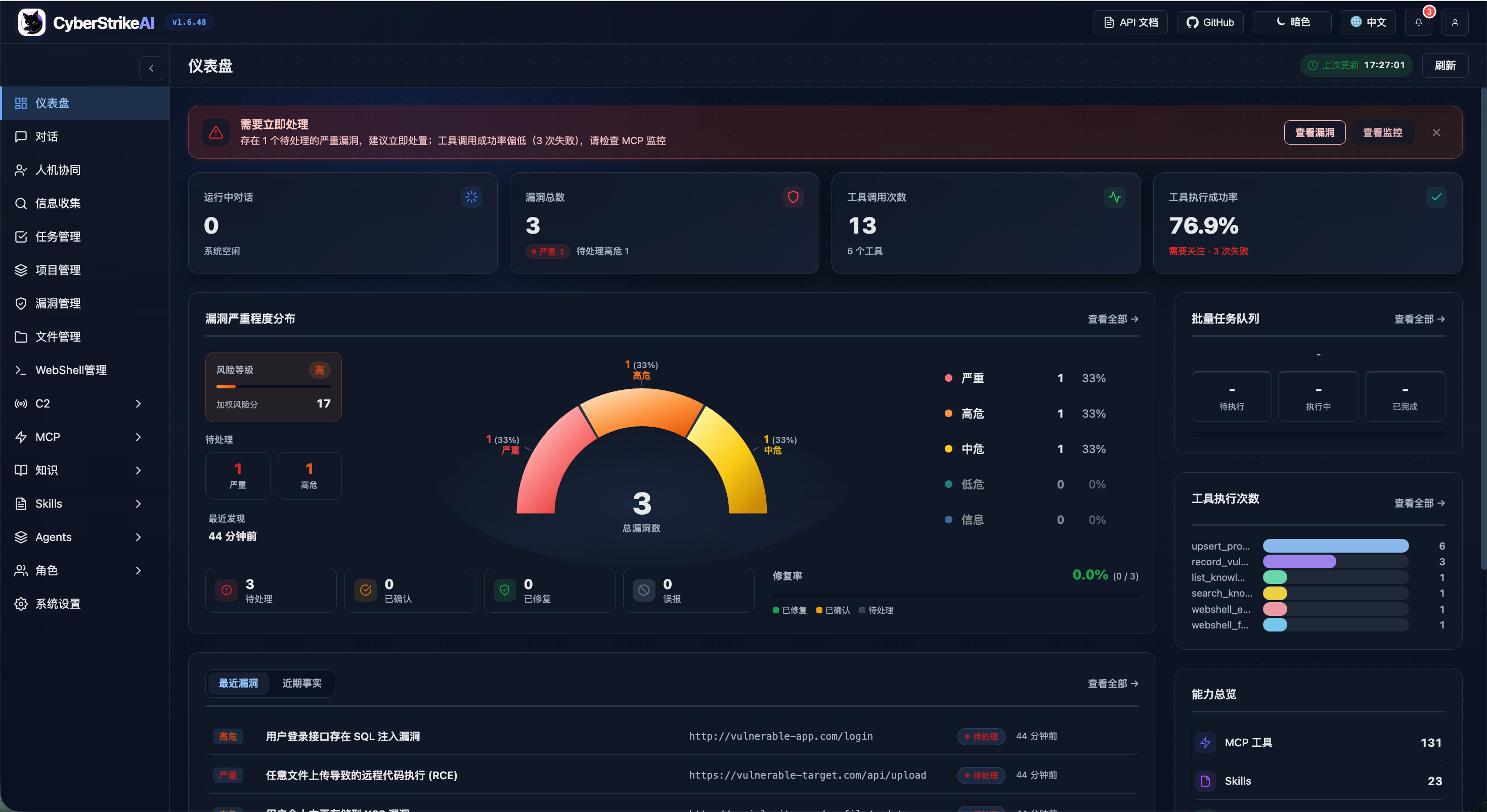
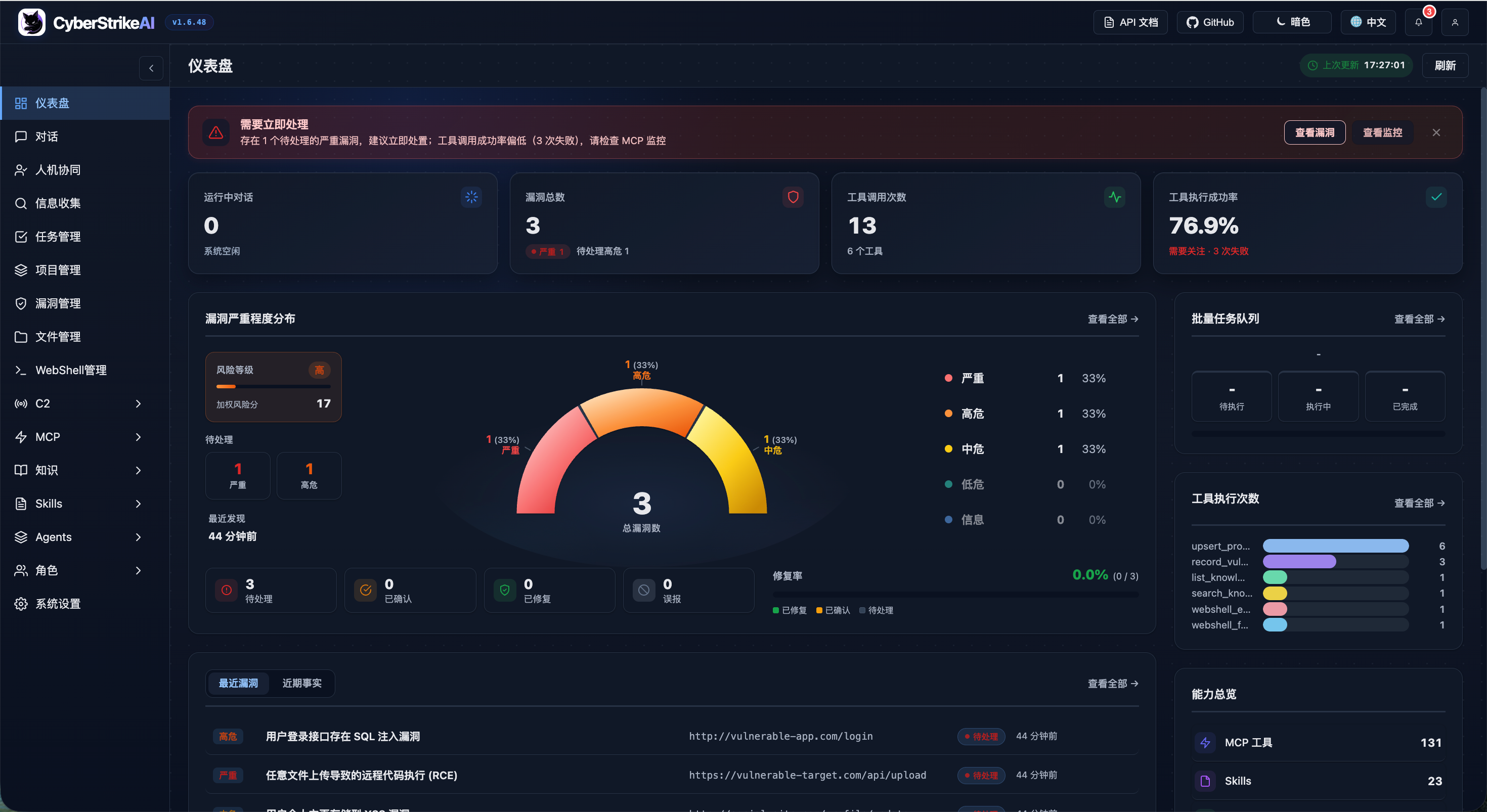
The dashboard provides a comprehensive overview of system runtime status, security vulnerabilities, tool usage, and knowledge base, helping users quickly understand the platform's core features and current state.
execution_id polling, cancellation, per-server circuit breakers, concurrency limits, and unified output caps.WebShell, C2, and other high-risk capabilities are for systems you own or are explicitly authorized to test. See the security model and hardening guide.
CyberStrikeAI includes optional integrations under plugins/.
plugins/burp-suite/cyberstrikeai-burp-extension/plugins/burp-suite/cyberstrikeai-burp-extension/dist/cyberstrikeai-burp-extension.jarplugins/burp-suite/cyberstrikeai-burp-extension/README.mdplugins/browser-extension/cyberstrikeai-browser-extension/chrome://extensions/ → Load unpacked → F12 → CyberStrikeAI tabplugins/browser-extension/cyberstrikeai-browser-extension/dist/cyberstrikeai-browser-extension.zipplugins/browser-extension/cyberstrikeai-browser-extension/README.md / README.zh-CN.mdCyberStrikeAI ships with 100+ curated tools covering the whole kill chain:
See tools/README_EN.md for tool definitions, customization, and usage notes.
Prerequisites:
One-Command Deployment:
git clone https://github.com/Ed1s0nZ/CyberStrikeAI.git
cd CyberStrikeAI
chmod +x run.sh && ./run.sh
The run.sh script will automatically:
Verify the startup:
● ONLINE followed by the actual Web UI URL.admin password shown under ADMIN SETUP REQUIRED, sign in, and change it immediately.Networking defaults: run.sh starts the server with --https and the repo config.yaml (local self-signed TLS; better for many concurrent streams). Use ./run.sh --http for plain HTTP. In production, set server.tls_cert_path / server.tls_key_path in config.yaml (see comments there). For manual runs, add --https or CYBERSTRIKE_HTTPS=1; if -config is wrong, the binary prints a short usage hint on stderr.
First-Time Configuration:
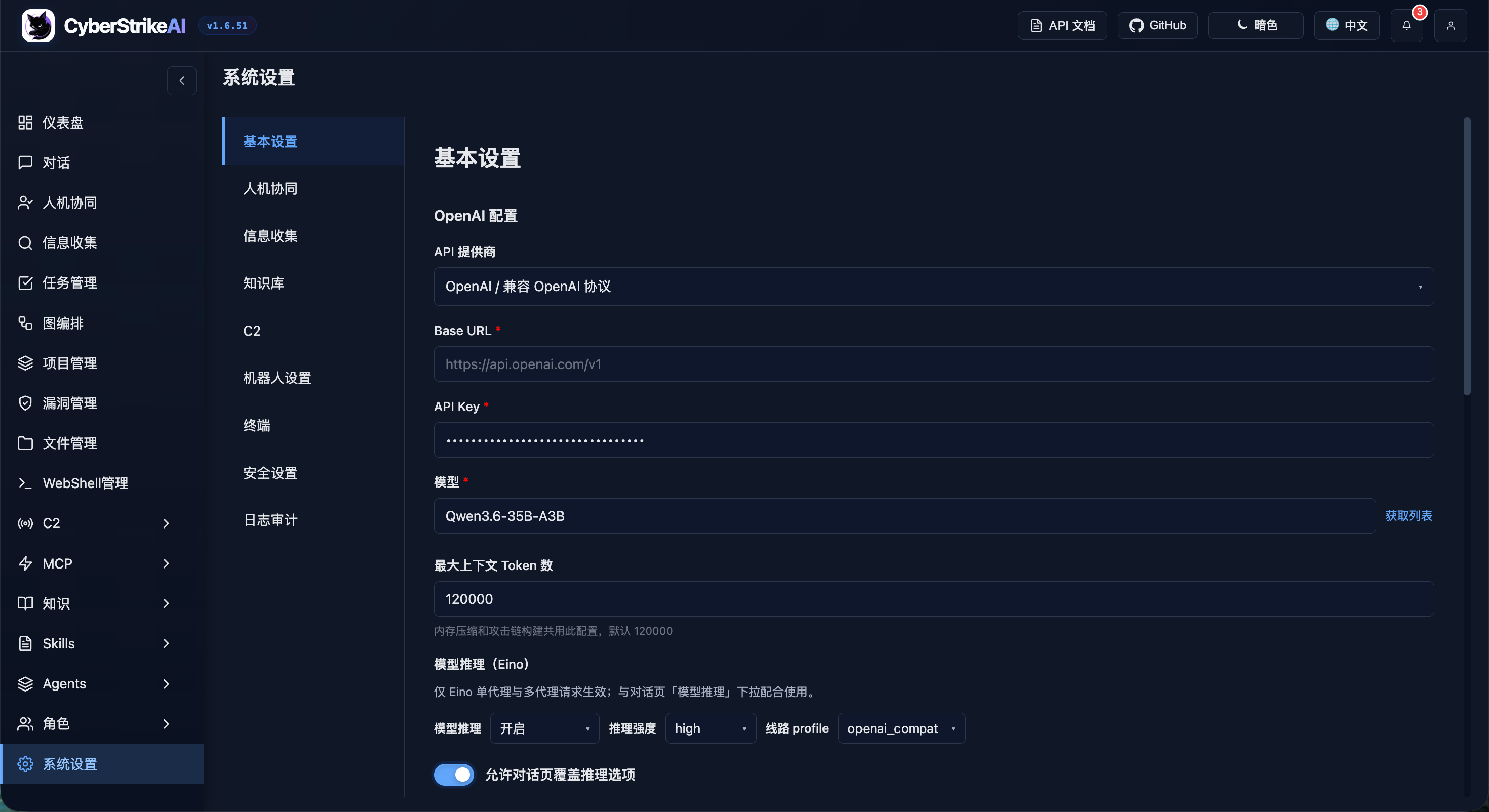
Configure AI channels (required before first use)
https://127.0.0.1:8080/ (or https://localhost:8080/; replace 8080 with server.port in config.yaml) and accept the self-signed certificate warning once. If you used ./run.sh --http, use http:// instead.System Settings → Basic Settings → AI Channel Configuration, add or edit a channel, then fill in provider, Base URL, API key, model, and token limits. Click Save changes. The left channel list supports setting a default, copy, delete, and bulk probe.
ai:
default_channel: openai-main
channels:
openai-main:
name: OpenAI Main
provider: openai_compatible
api_key: "${OPENAI_API_KEY}"
base_url: "https://api.openai.com/v1" # or https://api.deepseek.com/v1
model: "gpt-4o" # or deepseek-chat, qwen3-max, etc.
max_total_tokens: 120000
max_completion_tokens: 16384
Alternative Launch Methods:
# Direct Go run (set up env yourself); add --https to match run.sh defaults
go run cmd/server/main.go --https
# Manual build
go build -o cyberstrike-ai cmd/server/main.go
./cyberstrike-ai --https
If server logs show client sent an HTTP request to an HTTPS server, a client is still using http:// on a TLS-only port—switch the URL to https://.
Note: The Python virtual environment (venv/) is automatically created and managed by run.sh. Tools that require Python (like api-fuzzer, http-framework-test, etc.) will automatically use this environment.
CyberStrikeAI one-click upgrade:
chmod +x upgrade.sh./upgrade.sh (optional flags: --tag vX.Y.Z, --no-venv, --yes). Local tools/, roles/, and skills/ are always preserved.config.yaml and data/, upgrade the code from GitHub Release, update config.yaml's version, then restart the server.Recommended one-liner:
chmod +x upgrade.sh && ./upgrade.sh --yes
If something goes wrong, you can restore from .upgrade-backup/ (or manually copy /data and config.yaml back) and run ./run.sh again.
Requirements / tips:
curl or wget for downloading Release packages.rsync is recommended/required for the safe code sync.export GITHUB_TOKEN="..." before running ./upgrade.sh.⚠️ Before upgrading: review the target release notes for configuration, database, and API changes. Backups are required even for patch upgrades; a version number alone is not a compatibility guarantee.
Use config.example.yaml as the authoritative configuration template and copy only the values required for your environment. At minimum, configure the server and one AI channel:
server:
host: "127.0.0.1"
port: 8080
ai:
default_channel: openai-main
channels:
openai-main:
provider: openai_compatible
api_key: "${OPENAI_API_KEY}"
base_url: "https://api.openai.com/v1"
model: "your-model"
openai is a backward-compatible runtime field; maintain new model settings in ai.channels. Do not commit real credentials. Review the configuration reference, recommended profiles, and security hardening guide before exposing the service beyond localhost.
CyberStrikeAI/
├── cmd/ # Server, MCP stdio entrypoints, tooling
├── internal/ # Agent, MCP core, handlers, C2 (`internal/c2`), security executor
├── web/ # Static SPA + templates
├── tools/ # YAML tool recipes (100+ examples provided)
├── roles/ # Role configurations (12+ predefined security testing roles)
├── skills/ # Agent Skills dirs (SKILL.md + optional files; demo: cyberstrike-eino-demo)
├── agents/ # Multi-agent Markdown (orchestrator.md + sub-agent *.md)
├── docs/ # Topic docs (deployment, config, security, API, knowledge base, C2, WebShell, etc.)
├── images/ # Docs screenshots & diagrams
├── scripts/ # Repository maintenance checks, including documentation validation
├── config.yaml # Runtime configuration
├── run.sh # Convenience launcher
└── README*.md
Scan open ports on 192.168.1.1
Perform a comprehensive port scan on 192.168.1.1 focusing on 80,443,22
Check if https://example.com/page?id=1 is vulnerable to SQL injection
Scan https://example.com for hidden directories and outdated software
Enumerate subdomains for example.com, then run nuclei against the results
Load the recon-engagement template, run amass/subfinder, then brute-force dirs on every live host.
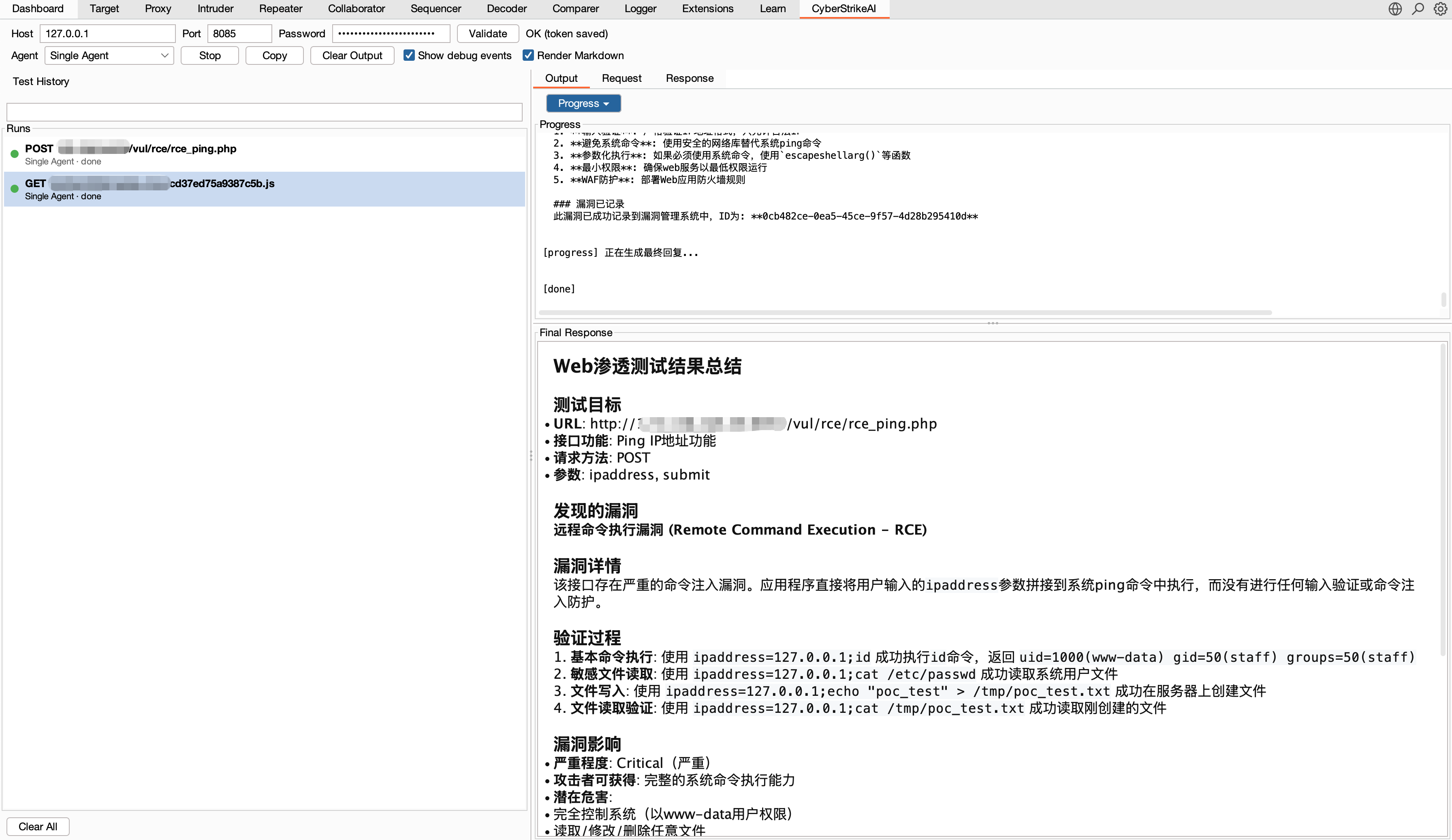
Use external Burp-based MCP server for authenticated traffic replay, then pass findings back for graphing.
Compress the 5 MB nuclei report, summarize critical CVEs, and attach the artifact to the conversation.
Build an attack chain for the latest engagement and export the node list with severity >= high.
CyberStrikeAI has joined 404Starlink
CyberStrikeAI is licensed under the Apache License 2.0.
See the LICENSE file for details.
This tool is for educational and authorized testing purposes only!
CyberStrikeAI is a professional security testing platform designed to assist security researchers, penetration testers, and IT professionals in conducting security assessments and vulnerability research with explicit authorization.
By using this tool, you agree to:
The developers are not responsible for any misuse! Please ensure your usage complies with local laws and regulations, and that you have obtained explicit authorization from the target system owner.
For vulnerability reporting and deployment hardening guidance, see SECURITY.md.
Need help or want to contribute? Open an issue or PR—community tooling additions are welcome!
Web Console
|
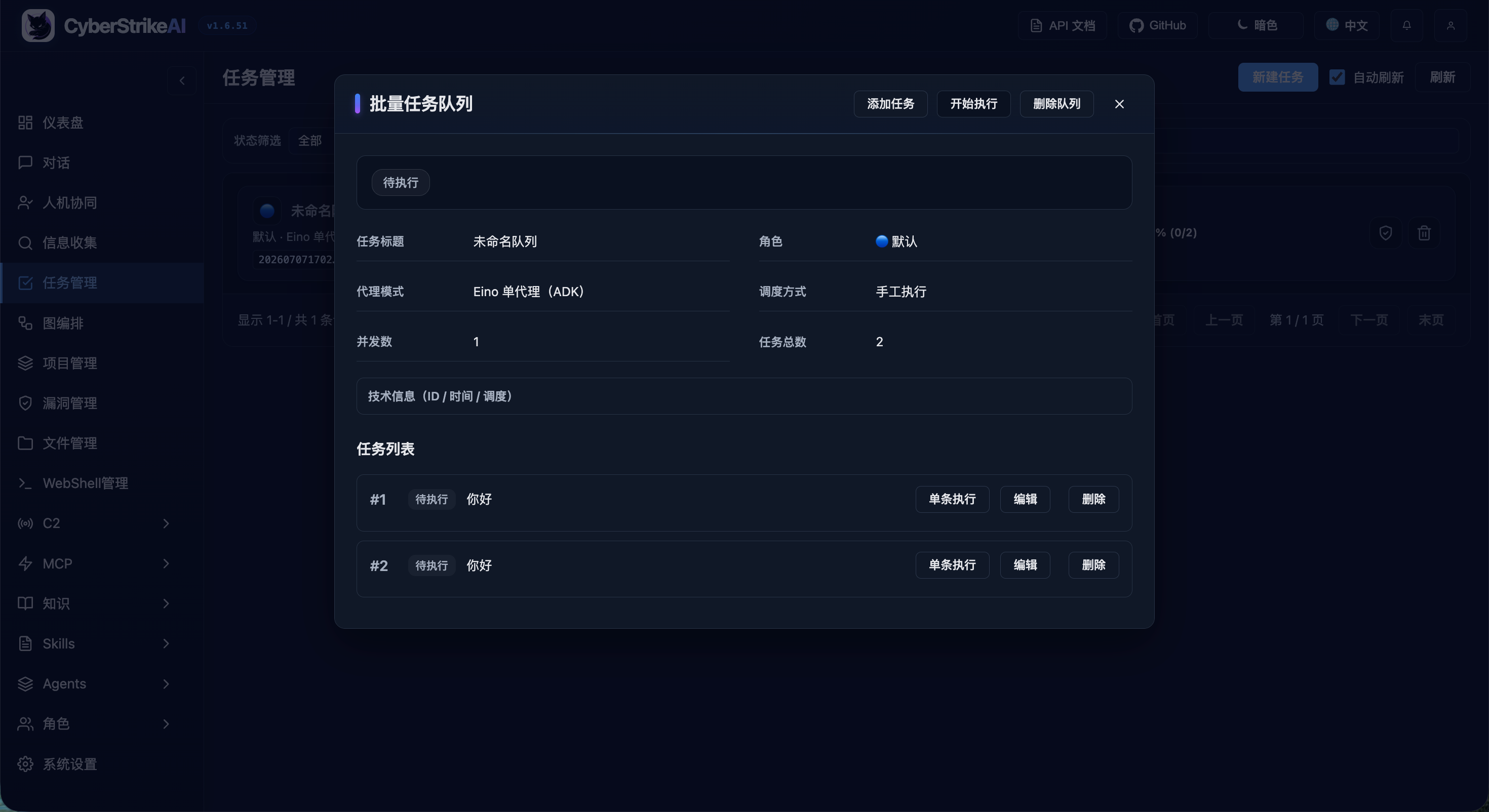
Task Management
|
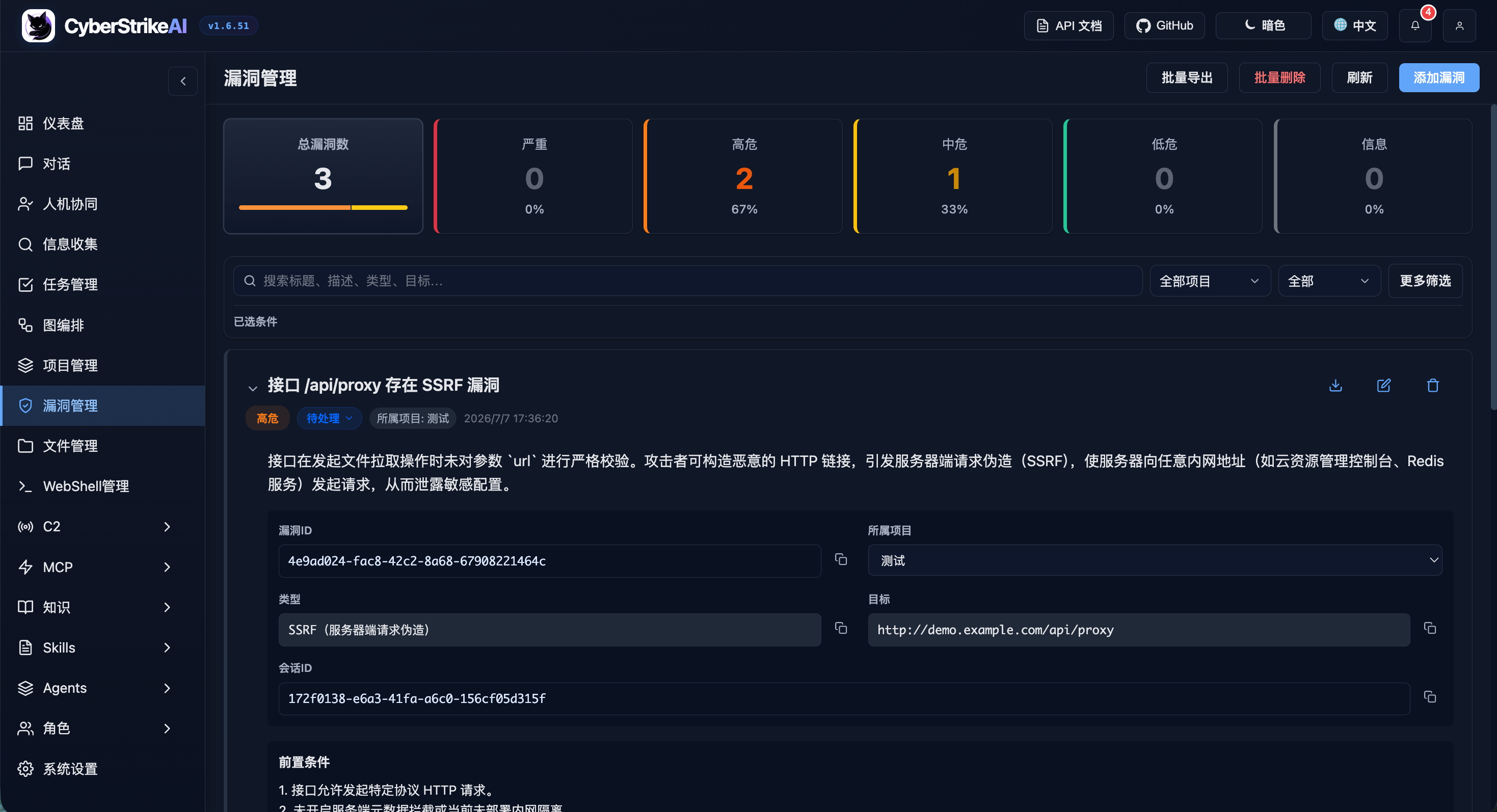
Vulnerability Management
|
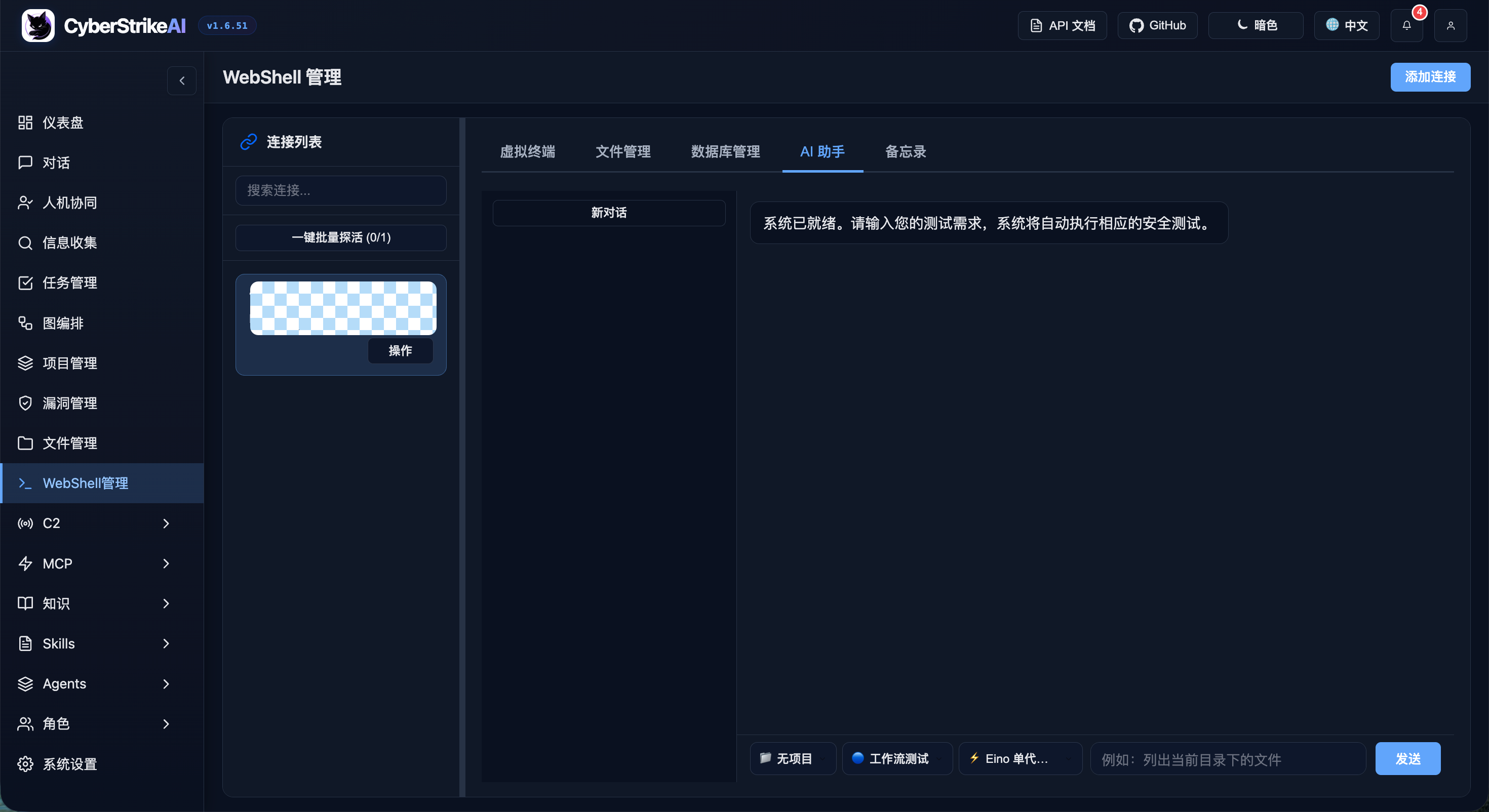
WebShell Management
|
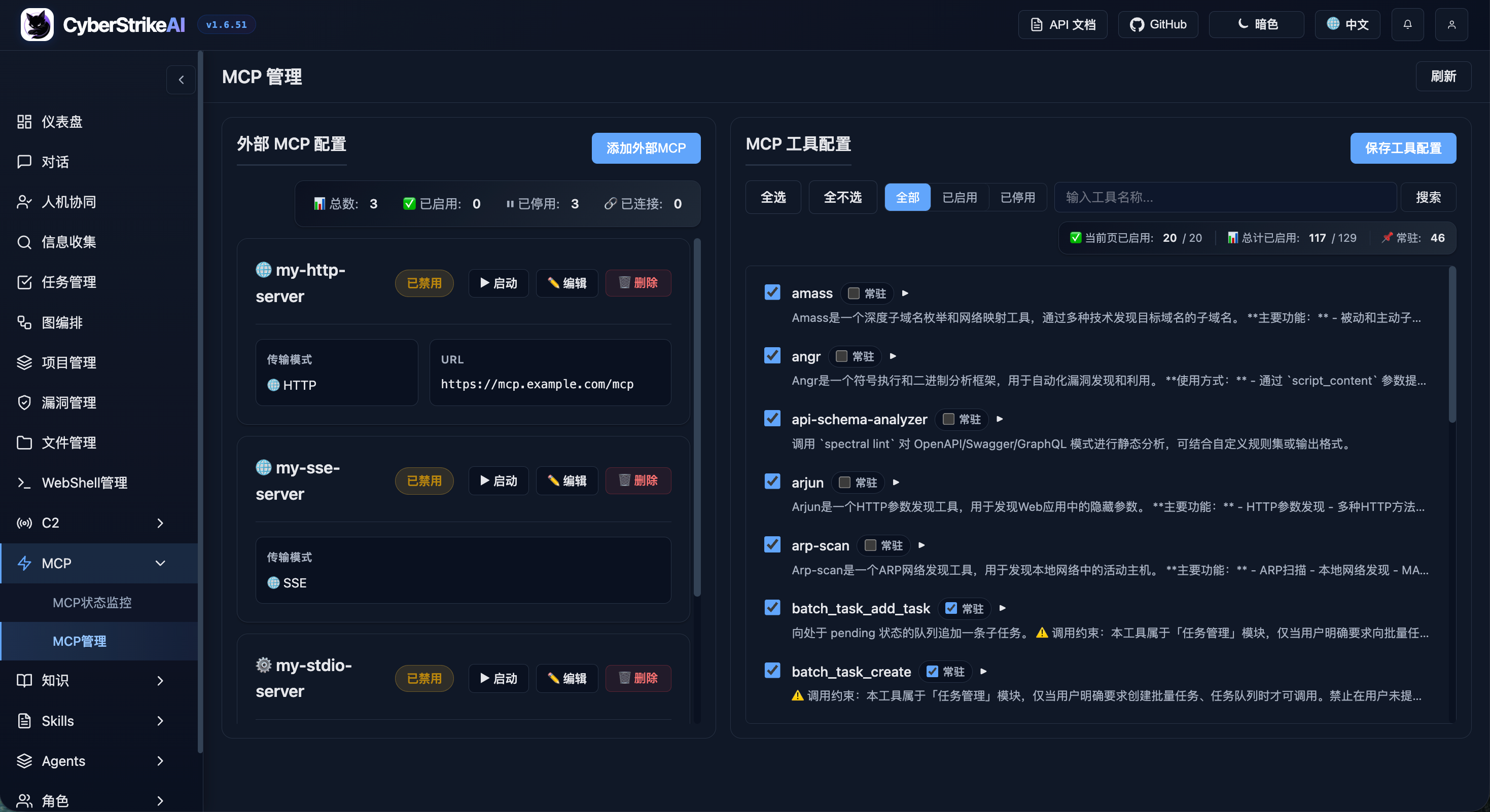
MCP Management
|
Knowledge Base
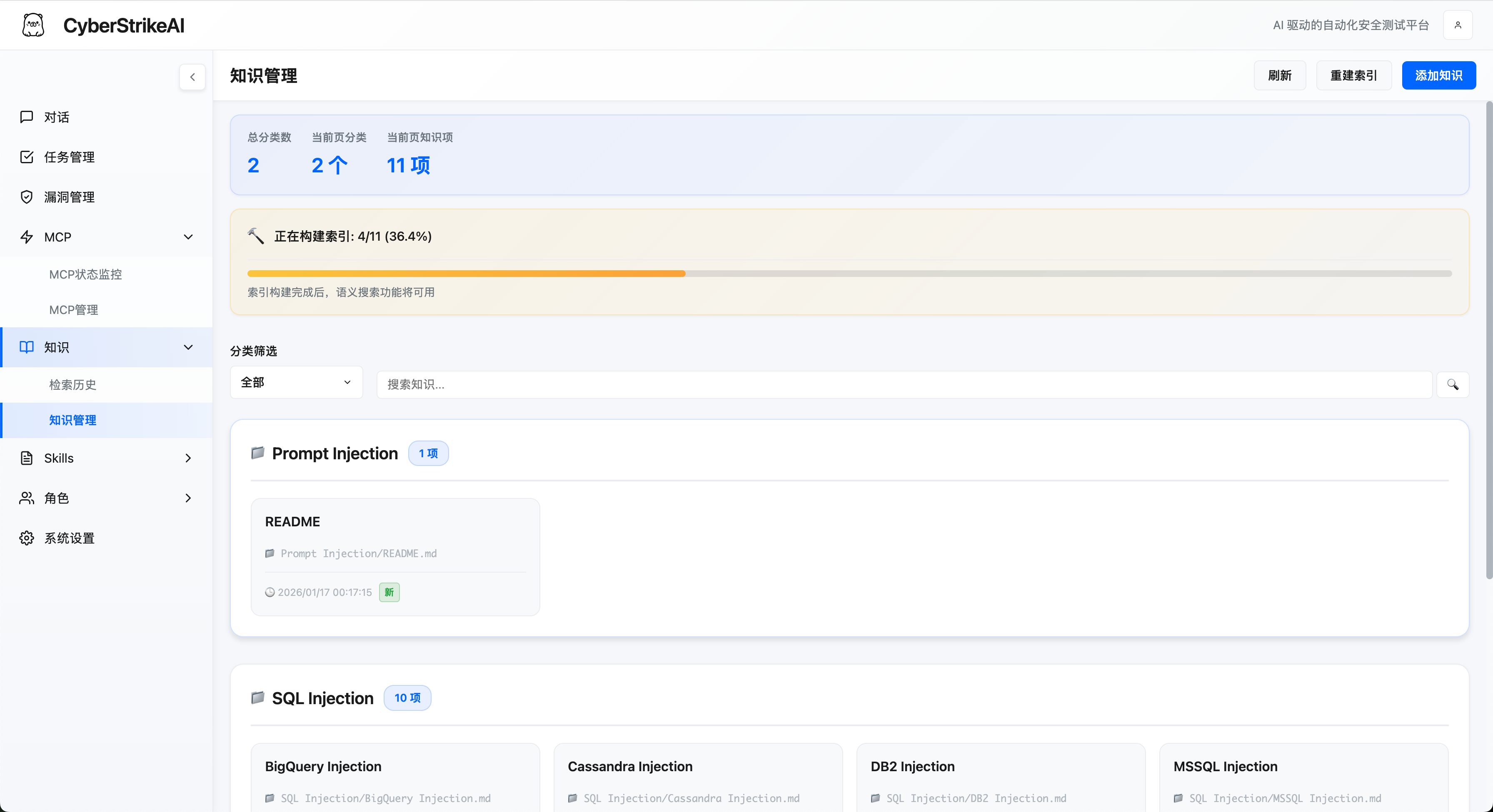
|
Skills Management
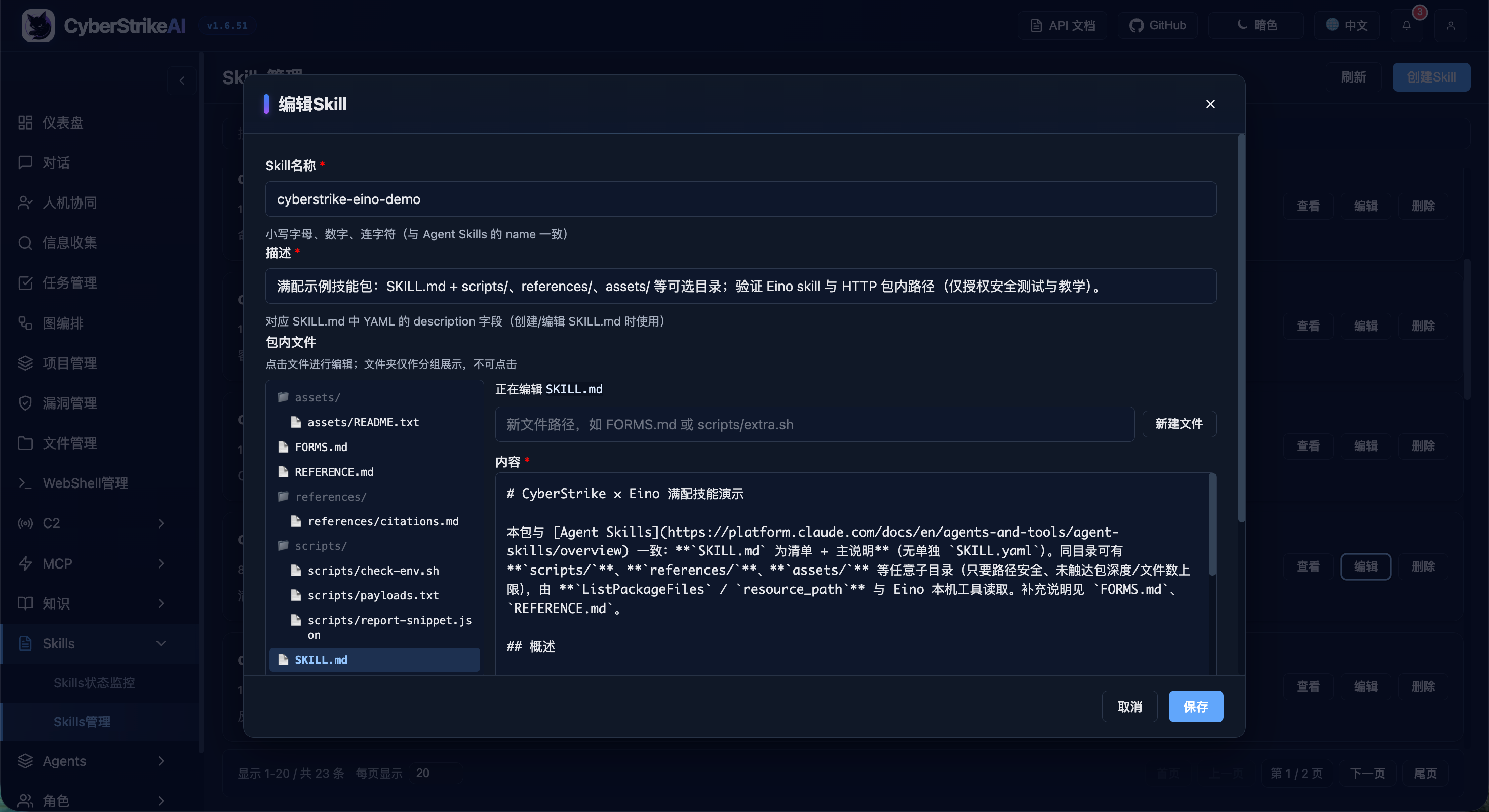
|
Agent Management
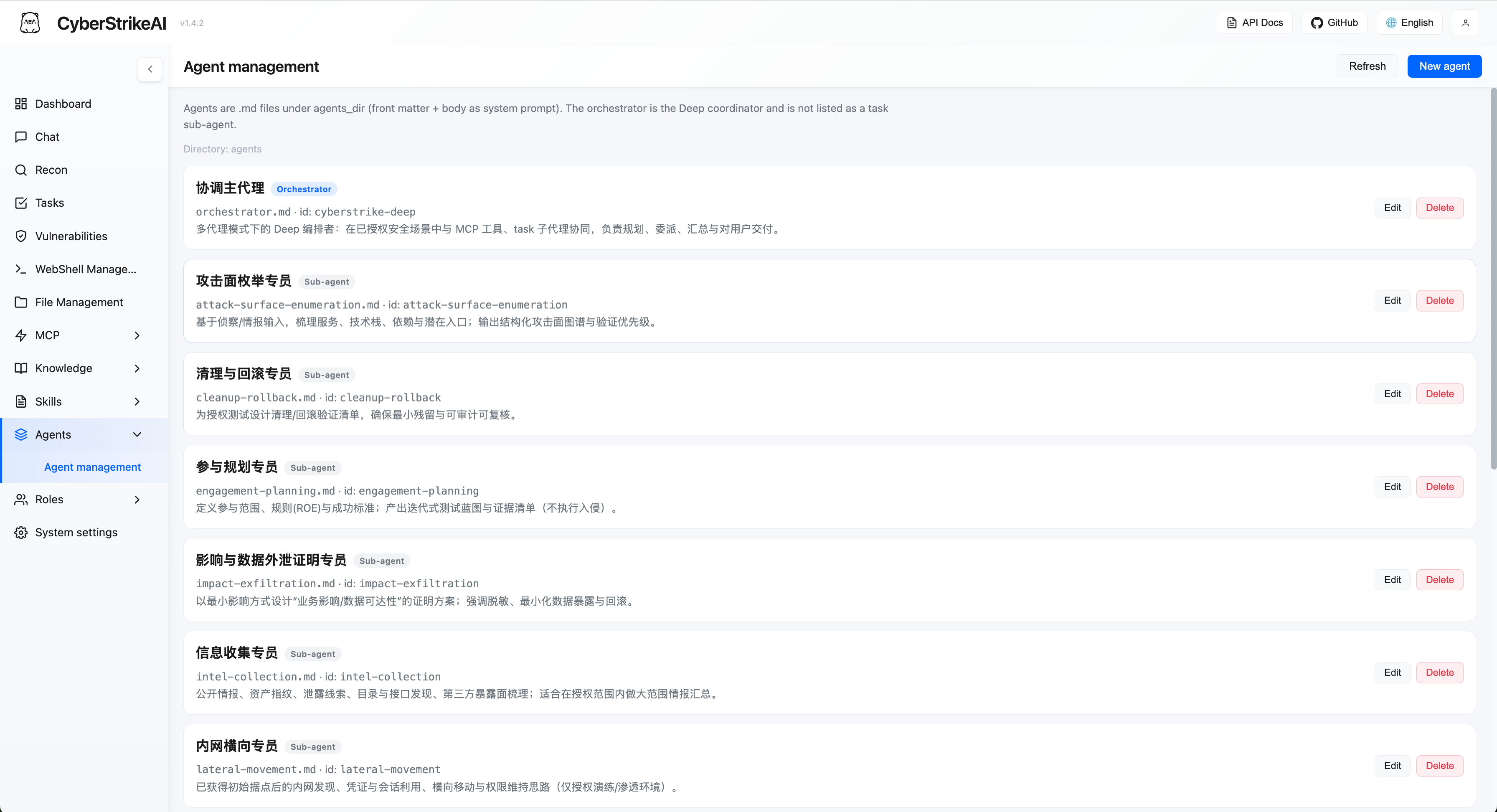
|
Role Management
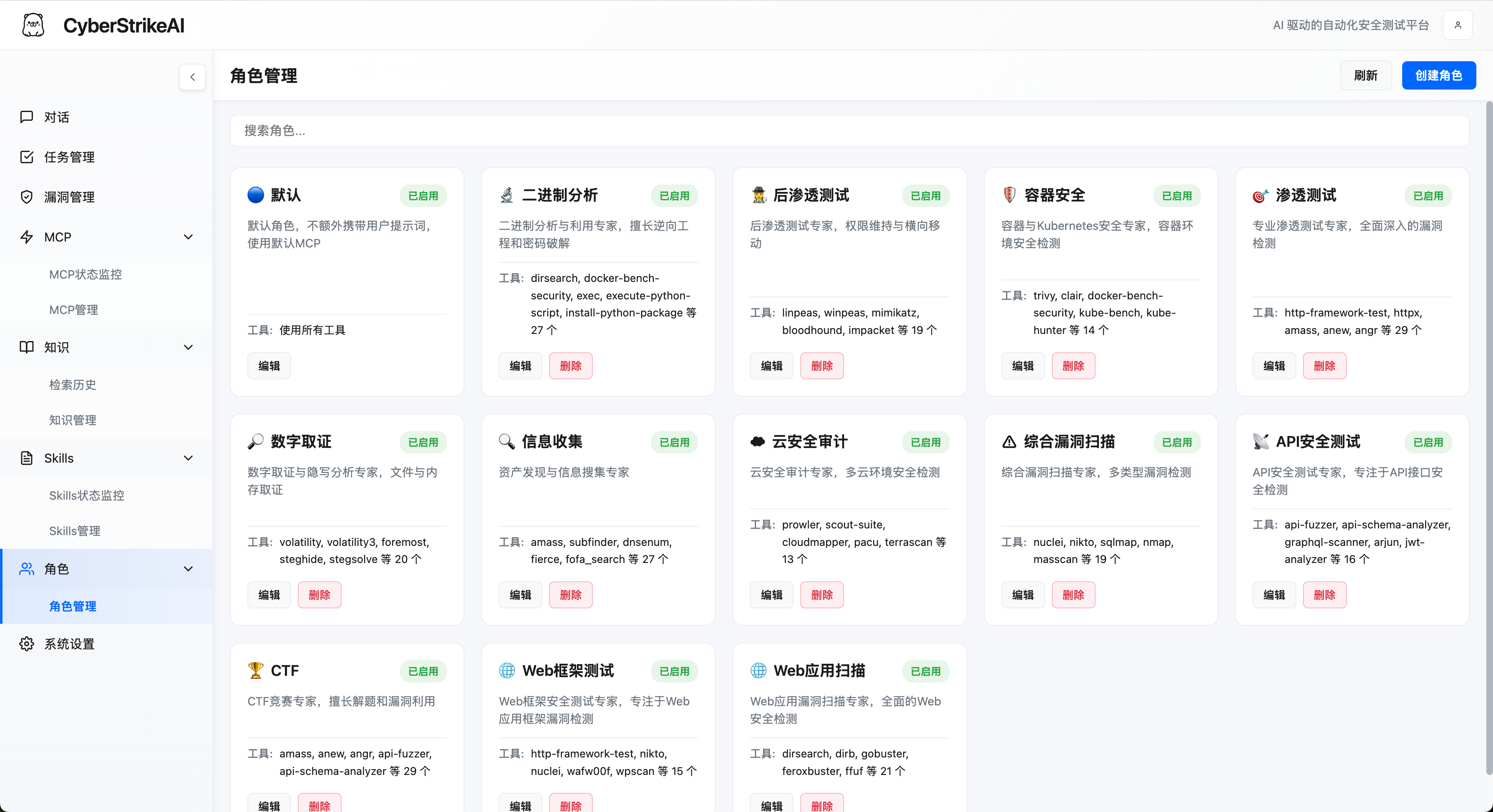
|
System Settings
|
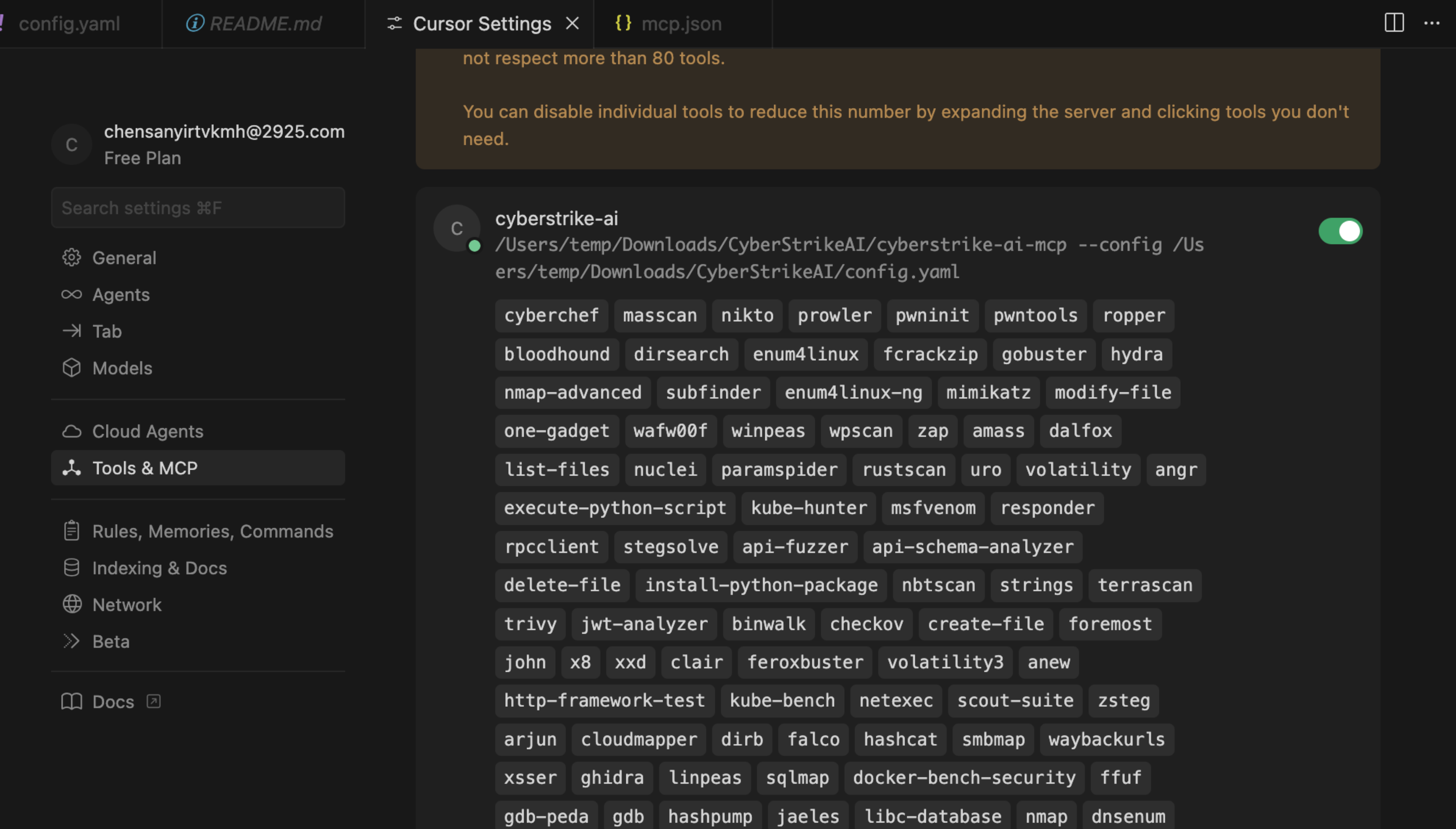
MCP stdio Mode
|
Burp Suite Plugin
|
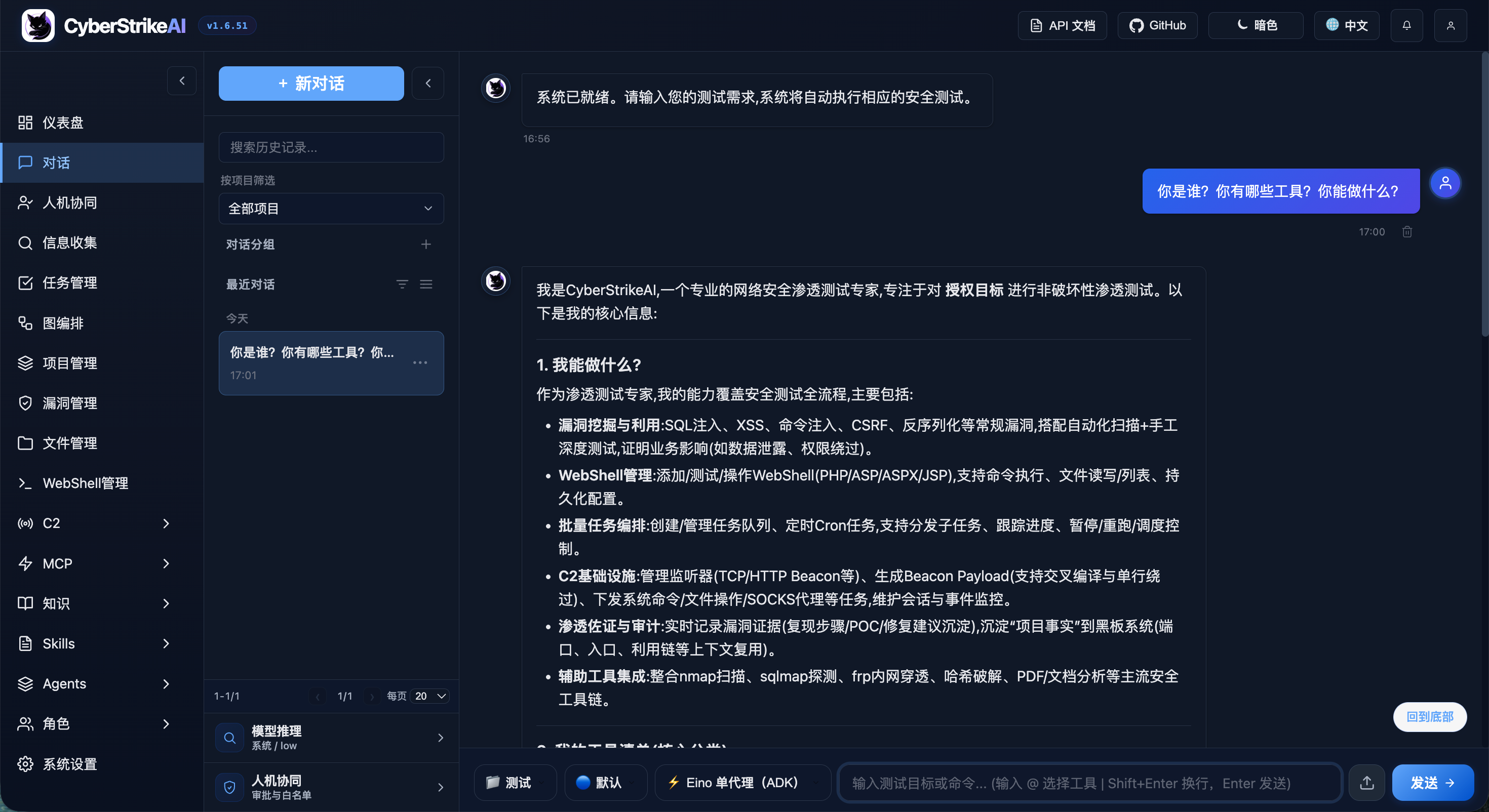
config.yaml directly before launching. ai.default_channel is used for new conversations and tasks that do not explicitly select a channel; the chat page can also select any saved channel per session.Login - On first startup the console prints an auto-generated initial admin password; create accounts from Platform permissions → User management
Install security tools (optional) - Install tools from tools/ as needed; missing tools are skipped or substituted at runtime. Common examples:
macOS (Homebrew):
brew install nmap masscan sqlmap nikto gobuster ffuf hydra hashcat nuclei subfinder
Linux (Kali / Debian / Ubuntu):
sudo apt update
sudo apt install -y nmap masscan sqlmap nikto gobuster hydra hashcat john binwalk
# On some distros, install ffuf/nuclei/subfinder via go install or upstream docs
See the tools/ directory for the full list; refer to each tool's official docs for install details.