
Skip to content
KitploitKITPLOIT
ToolsExploitsBlog
Log in
Submit
ToolsExploitsBlog
Submit

Hacking, PenTest, and Cybersecurity Tools for Your Security Arsenal!

Kitploit is a directory of hacking, cybersecurity, and pentesting tools. Discover the latest project updates to find vulnerabilities, analyze systems, automate testing, and strengthen your security.

FeedsContactPrivacy© 2026 Kitploit

Tool Directory

Categories

View all categories
Loading categories
Tools/GitHubGitHub/christopher-pace/cve-2023-51073
IoT SecurityVulnerability AnalysisExploitationNetwork SecurityHardware & IoT SecurityFirmware Analysis
GitHubchristopher-pace/cve-2023-51073

CVE-2023-51073

Firmware Update Server Verification Vulnerability on Buffalo LS210D Version 1.78-0.03

View Repository
362 years agoNot yet reviewed
Share

CVE-2023-51073 - Firmware Update Server Verification Vulnerability on Buffalo LS210D Version 1.78-0.03

Christopher J. Pace and Ryan Miller

The Buffalo LS210D is a Network Attached Storage (NAS) server designed and marketed towards small-businesses and individuals. Within the LS210D is the ability to remotely download and install a firmware update. The LS210D is vulnerable to an “Adversary in the Middle”, or AitM, attack within this feature. An attacker controlling the upstream connection of a victim will be able to either provide an incorrect DNS name for the update server, or redirect the traffic from the update server to a malicious server. This can lead to command execution as the root user, or direct installation of malware.

The file /etc/init.d/update_notifications.sh is called from the firmware upgrade server-side script at /www/buffalo/www/dynamic/system/update/BufUpdate.pm. Inside of update_notifications.sh is the following line:
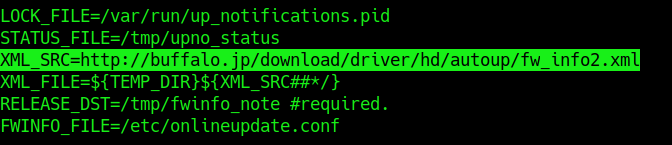
firmware-source

Opening this xml file reveals that the XML file itself also points to an HTTP-only connection:
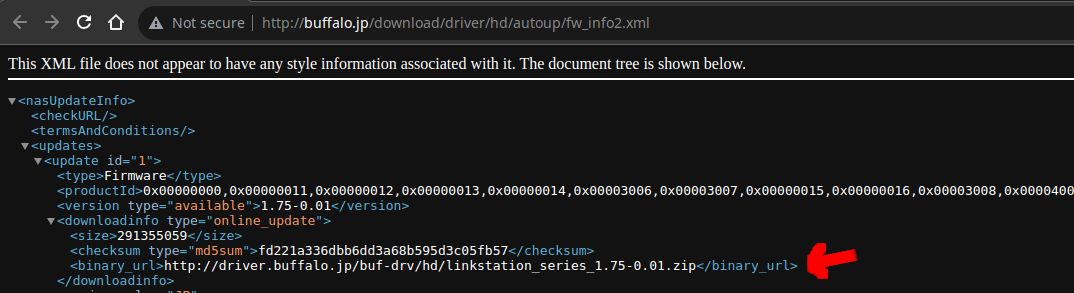
xml-file

Further, this zip file is also not encrypted. Previous research into this model pointed us towards downloading a manual firmware update utility, which did include a password-protected zip file. The file linkstation_series_1.75-0.01.zip does not contain these protections. Within the archive is the file hddrootfs.buffalo.updated, which contains the archive hddrootfs.buffalo, which contains the root filesystem for the LS120D. An attacker can directly view and modify this zip file to include their own malware or read sensitive files.
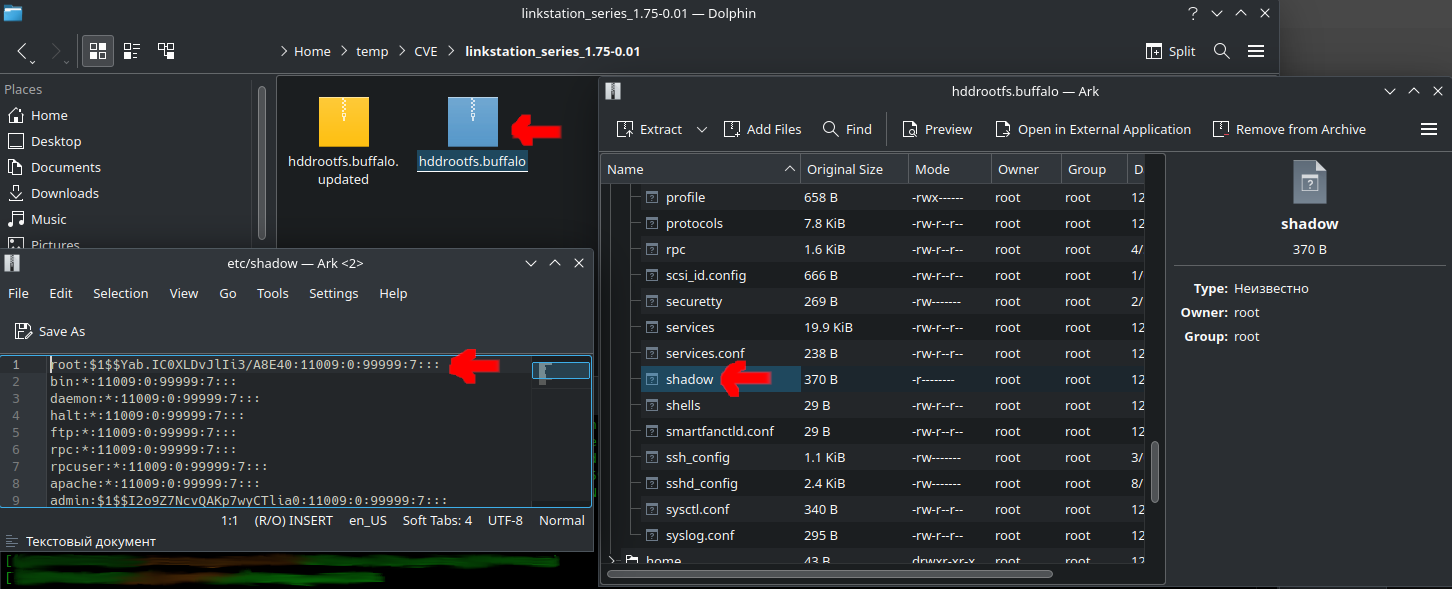
firnware-shadow

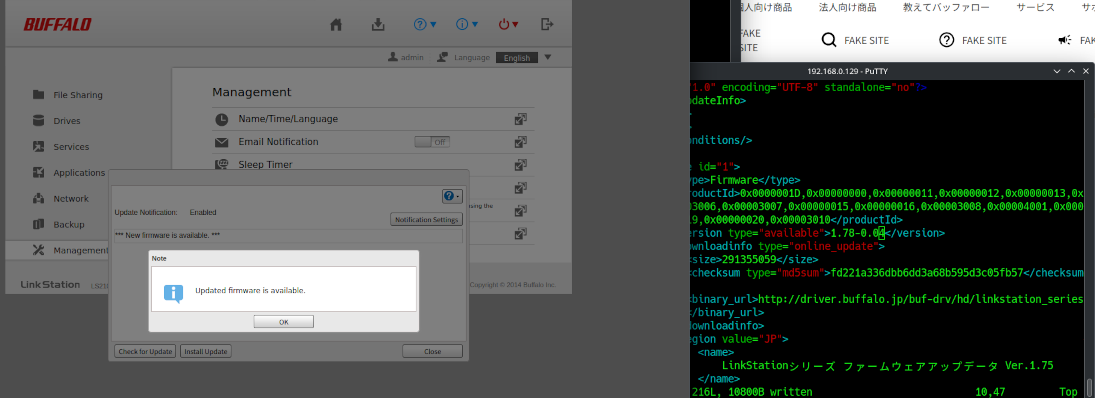
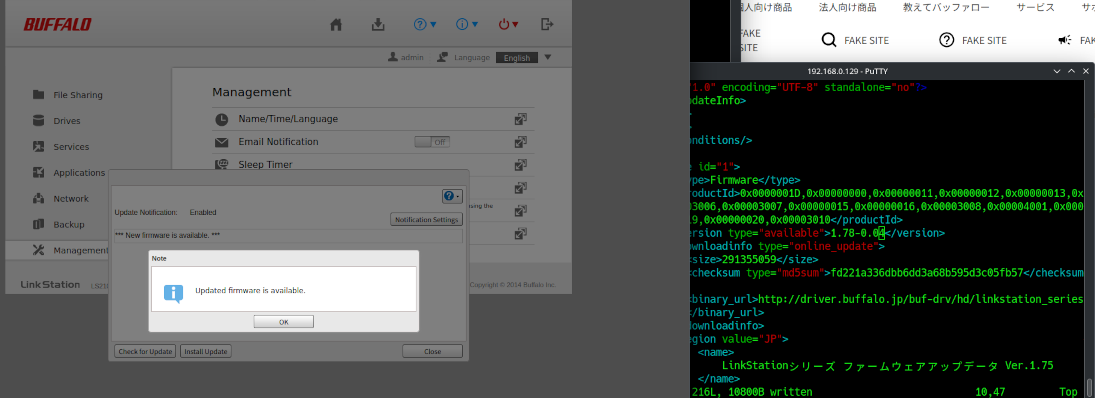
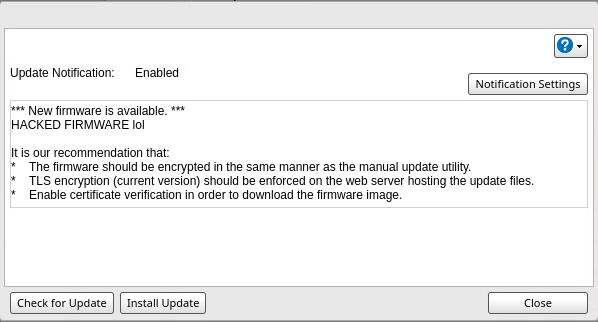
Once an attacker has performed an AitM attack, the router will happily offer to install the updated firmware. Here is an example of such an attack, with the screen on the right showing the necessary modifications to fw_info2.xml, namely adding 0x0000001D to the productId tag, and incrementing the version type tag to a version greater than the victim’s firmware version (1.78-0.04 in this case).
firmware-update-available

recommendations

Download Tool

Most Popular

View all →

Discover the most used tools by our community.

  • 1

    OsintHunter

    letox4/osinthunter

    🎯 The ultimate OSINT toolkit: investigation graph, confidence scoring, alias families, map, timeline and reports. 49 modules, 400+ sites, no API keys required.

    891
  • 2

    ghostlock-app

    yukonga/ghostlock-app

    GhostLock One-Tap Execution App (CVE-2026-43499)

    547
  • 3

    ARTEX

    baarai/artex

    LLM multi-agent autonomous penetration testing platform with planner/worker agents, asset and exploration graphs, MITM traffic recording, and vulnerability retesting.

    369
  • 4

    redforge

    cybersecurity91/redforge

    Browser-side red team toolkit with 102 offline tools for recon, payload generation, credential attacks, crypto, encoding and engagement reporting.

    366
  • 5

    looking-glass

    anonghosty/looking-glass

    CSIRT platform that ingests Shadowserver reports into MongoDB and replays them as interactive maps, analysis, findings, advisories and executive dashboards.

    309
  • 6

    CyberStrikeAI

    ed1s0nz/cyberstrikeai

    The system of action for AI-native cybersecurity—where intent becomes governed execution, evidence becomes operational memory, and every operation improves the next.

    282

Explore all tools

Browse our collection of tools

View all tools →






