
Skip to content
KitploitKITPLOIT
StrumentiExploitsBlog
Log in
Invia
StrumentiExploitsBlog
Invia

Strumenti di Hacking, PenTest e Cybersecurity per il tuo Arsenale di Sicurezza!

Kitploit è una directory di strumenti di hacking, cybersecurity e pentesting. Scopri gli ultimi aggiornamenti dei progetti per trovare vulnerabilità, analizzare sistemi, automatizzare i test e rafforzare la tua sicurezza.

FeedContattoPrivacy© 2026 Kitploit

Directory degli strumenti

Categorie

Vedi tutte le categorie
Loading categories
cartography — Pulls infrastructure assets and their relationships from 30+ cloud, identity, and SaaS platforms into a Neo4j graph for security queries and rule-based analysis. | Kitploit
Strumenti/GitHubGitHub/cartography-cncf/cartography
Cloud Infrastructure SecurityContainer SecurityNetwork MappingVulnerability AnalysisConfiguration AuditingInformation GatheringCloud SecurityDevSecOpsThreat IntelligenceIdentity & Access Management (IAM)Supply Chain Security
4.2k6101401h 48m faRevisionato da Kitploit
GitHubcartography-cncf/cartography

cartography

Pulls infrastructure assets and their relationships from 30+ cloud, identity, and SaaS platforms into a Neo4j graph for security queries and rule-based analysis.

Vedi RepositorySito web
Condividi
Contenuto non disponibile nella lingua richiesta. Visualizzazione della versione inglese.
Cartography

OpenSSF Scorecard OpenSSF Best Practices build

Documentation

Cartography is a Python tool that pulls infrastructure assets and their relationships into a Neo4j graph database.

What it connects: AWS, GCP, Azure, Kubernetes, GitHub, Okta, Entra ID, CrowdStrike, and 30+ more platforms.

Questions it answers:
  • Which identities have access to which datastores? How about across multiple tenants, or providers?
  • Am I affected by any critical vulnerabilities or compromised software packages?
  • What are the network paths in and out of my environment?
  • Which compute instances are exposed to the internet?
  • What AI agents are running in production, and what permissions do they have?

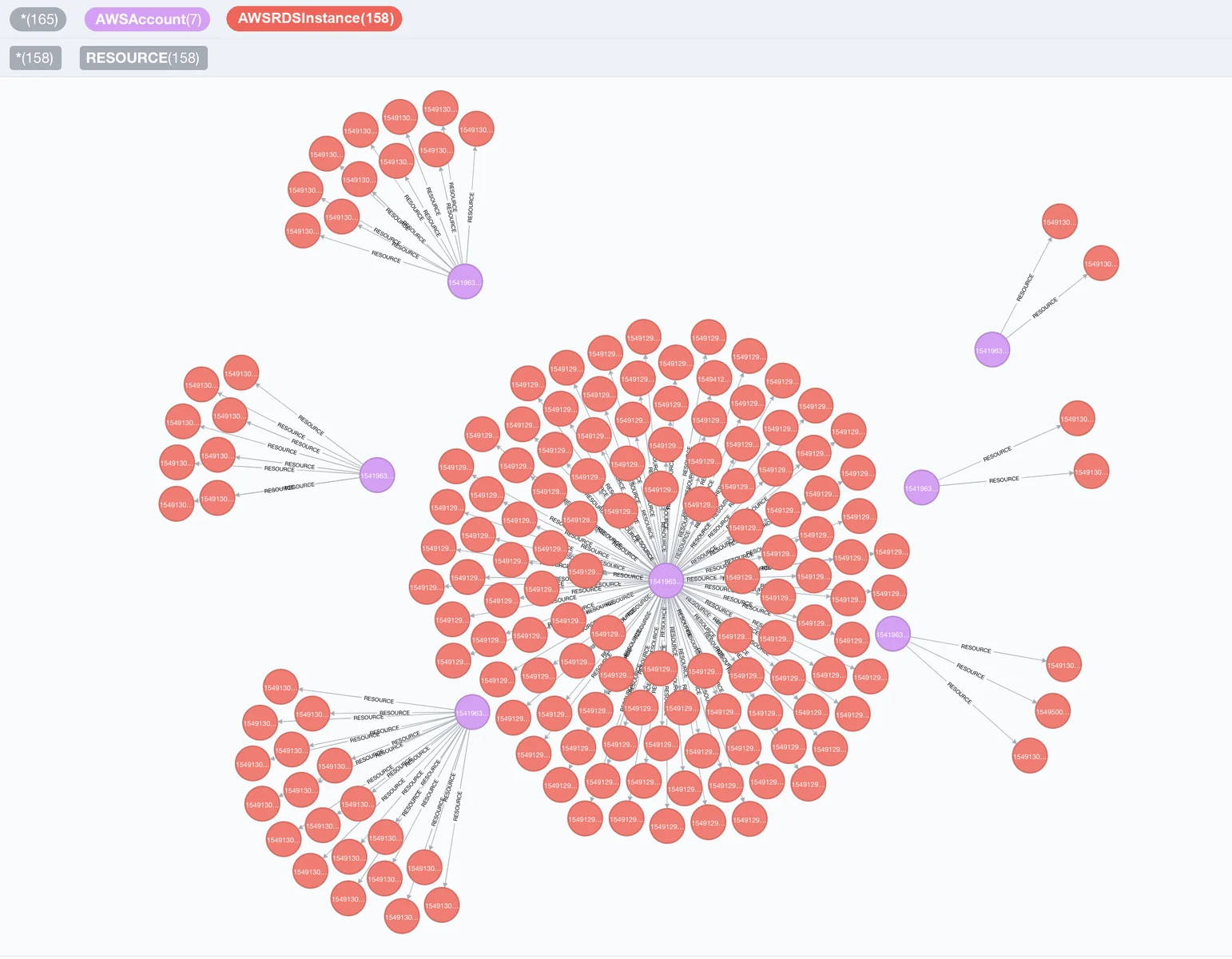
Visualization of RDS nodes and AWS nodes

Quick Start

Install Cartography

pip install cartography

Install cartography[neo4j-rust] instead to swap in Neo4j's Rust Bolt codec, which cuts sync time by roughly 20-30%. See Faster Neo4j driver.

Start Neo4j database

docker run -d --publish=7474:7474 --publish=7687:7687 -v data:/data --env=NEO4J_AUTH=none neo4j:5-community

Confirm that http://localhost:7474 is up.

Sync your first data source (AWS example)

Ensure your AWS credentials and default region are configured (e.g. via AWS_PROFILE, AWS_DEFAULT_REGION, or ~/.aws/config). See AWS credentials docs for reference.

Run Cartography:

cartography --neo4j-uri bolt://localhost:7687 --selected-modules aws

See the full install guide for other platforms.

Query the graph

Open http://localhost:7474 and try:

// Find unencrypted RDS instances by account
MATCH (a:AWSAccount)-[:RESOURCE]->(rds:AWSRDSInstance{storage_encrypted:false})
RETURN a.name, rds.id
// Find EC2 instances exposed to the internet
MATCH (instance:AWSEC2Instance{exposed_internet: true})
RETURN instance.instanceid, instance.publicdnsname

See the querying tutorial and data schema for more use-cases.

Run security rules

Once Cartography has populated the reachable Neo4j graph, list, inspect, and run security rules. This quickstart uses the no-auth Neo4j container started above, so no password is required:

cartography-rules list
cartography-rules list object_storage_public
cartography-rules run object_storage_public

For authenticated Neo4j, set NEO4J_PASSWORD or use one of the other secure password options in the rules docs.

Supported platforms

Click to expand full list of 30+ supported platforms
Scarica lo strumento

Più Popolari

Vedi tutti →

Scopri gli strumenti più utilizzati dalla nostra community.

  • 1

    OsintHunter

    letox4/osinthunter

    🎯 Il toolkit OSINT definitivo: grafo di indagine, punteggio di affidabilità, famiglie di alias, mappa, timeline e report. 49 moduli, oltre 400 siti, nessuna chiave API richiesta.

    806
  • 2

    ghostlock-app

    yukonga/ghostlock-app

    # App di esecuzione con un tocco GhostLock (CVE-2026-43499)

    523
  • 3

    ARTEX

    baarai/artex

    Piattaforma di penetration testing autonoma multi-agente basata su LLM con agenti planner/worker, grafi di asset e di esplorazione, registrazione del traffico MITM e retesting delle vulnerabilità.

    441
  • 4

    redforge

    cybersecurity91/redforge

    Toolkit red team lato browser con 102 strumenti offline per ricognizione, generazione di payload, attacchi alle credenziali, crittografia, codifica e reportistica dell'engagement.

    346
  • 5

    looking-glass

    anonghosty/looking-glass

    Piattaforma CSIRT che importa i report di Shadowserver in MongoDB e li riproduce come mappe interattive, analisi, risultati, avvisi e dashboard executive.

    270
  • 6

    CyberStrikeAI

    ed1s0nz/cyberstrikeai

    Il sistema d'azione per la cybersecurity nativa AI—dove l'intento diventa esecuzione governata, le evidenze diventano memoria operativa, e ogni operazione migliora la successiva.

    264

Esplora tutti gli strumenti

Sfoglia la nostra collezione di strumenti

Vedi tutti gli strumenti →







