 neo23x0/yaraqa
YARA rule analyzer to improve rule quality and performance

YARA rule Analyzer to improve rule quality and performance
YARA rules can be syntactically correct but still dysfunctional. yaraQA tries to find and report these issues to the author or maintainer of a YARA rule set.
The issues yaraQA tries to detect are e.g.:
2 of them in the condition)$ = "\\Debug\\" fullword)$ = "AA"; can be excluded from the analysis using --ignore-performance)I'm going to extend the test set over time. Each minor version will include new features or new tests.
pip install -r requirements.txt
usage: yaraQA.py [-h] [-f yara files [yara files ...]] [-d yara files [yara files ...]] [-o outfile] [-b baseline] [-l level]
                 [--ignore-performance] [--debug]

YARA RULE ANALYZER

optional arguments:
  -h, --help            show this help message and exit
  -f yara files [yara files ...]
                        Path to input files (one or more YARA rules, separated by space)
  -d yara files [yara files ...]
                        Path to input directory (YARA rules folders, separated by space)
  -o outfile            Output file that lists the issues (JSON, default: 'yaraQA-issues.json')
  -b baseline           Use a issues baseline (issues found and reviewed before) to filter issues
  -l level              Minium level to show (1=informational, 2=warning, 3=critical)
  --ignore-performance  Suppress performance-related rule issues
  --debug               Debug output
python3 yaraQA.py -d ./test/
Suppress all performance issues and only show detection / logic issues.
python3 yaraQA.py -d ./test/ --ignore-performance
Suppress all issues of informational character
python3 yaraQA.py -d ./test/ -level 2
Use a baseline to only see new issues (not the ones that you've already reviewed). The baseline file is an old JSON output of a reviewed state.
python3 yaraQA.py -d ./test/ -b yaraQA-reviewed-issues.json
Example rules with issues can be found in the ./test folder.
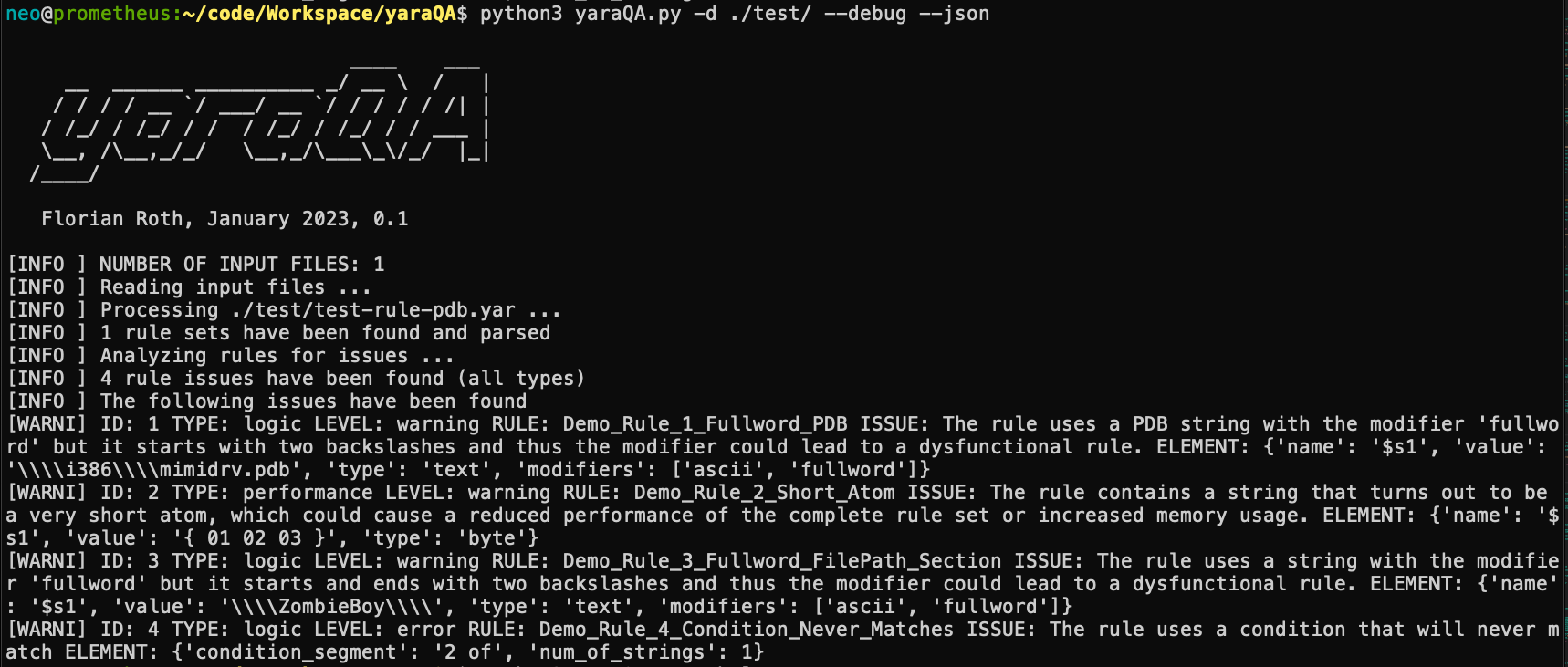
yaraQA writes the detected issues to a file named yaraQA-issues.json by default.
This listing shows an example of the output generated by yaraQA in JSON format:
