
Skip to content
KitploitKITPLOIT
ToolsExploitsBlog
Log in
Submit
ToolsExploitsBlog
Submit

Hacking, PenTest, and Cybersecurity Tools for Your Security Arsenal!

Kitploit is a directory of hacking, cybersecurity, and pentesting tools. Discover the latest project updates to find vulnerabilities, analyze systems, automate testing, and strengthen your security.

FeedsContactPrivacy© 2026 Kitploit

Tool Directory

Categories

View all categories
Loading categories
CVE-2025-56132-Liquidfiles — Proof-of-concept script demonstrating user enumeration in LiquidFiles via password reset endpoint, enabling valid user identification for brute-force attacks. | Kitploit
Tools/GitHubGitHub/fredericgoossens/cve-2025-56132-liquidfiles
Vulnerability AnalysisExploitationInformation GatheringWeb SecurityPenetration Testing
GitHubfredericgoossens/cve-2025-56132-liquidfiles

CVE-2025-56132-Liquidfiles

Proof-of-concept script demonstrating user enumeration in LiquidFiles via password reset endpoint, enabling valid user identification for brute-force attacks.

View Repository
261 year agoNot yet reviewed
Share

CVE-2025-56132 - LiquidFiles User Enumeration POC

Vulnerability Description

This vulnerability was identified in LiquidFiles version 4.1 and below.

When initiating a password reset via the “POST /password_reset” endpoint, the application responds differently depending on whether the supplied email address is registered. A redirect is issued in both cases, and the response includes the “_filetransfer_session” cookie. When this cookie is used to access the root path (“/”), the resulting error message differs based on the validity of the submitted email address.

This effectively allows an attacker to compile a list of valid users, which can then be leveraged in attacks such as brute-forcing/password spraying attacks.

Proof Of Concept (POC)

Password reset response – existing/valid users
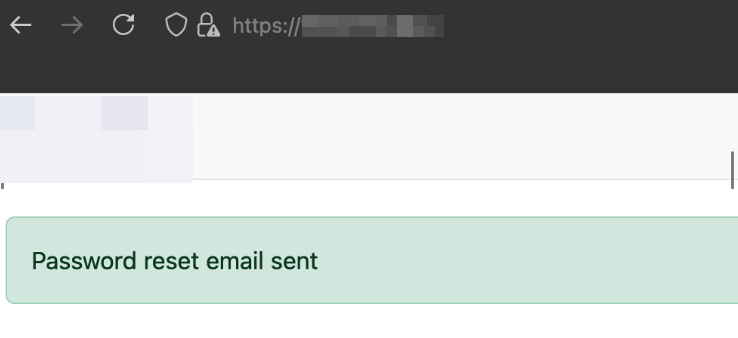
image001

Password reset response – non-existent/invalid users
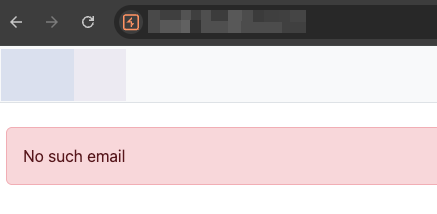
image002

After several password reset attempts, an IP-based lockout is triggered as a security measure, preventing further requests from the same IP address. However, this mechanism is insufficient, as it can be bypassed using free tools. For example, circumvent the lockout using AWS API Gateway proxies in combination with the “IP Rotate” extension in Burp Suite. The script expects a local proxy on port 8080.

Used App to bypass IP-based lockout: 

  • https://portswigger.net/bappstore/2eb2b1cb1cf34cc79cda36f0f9019874

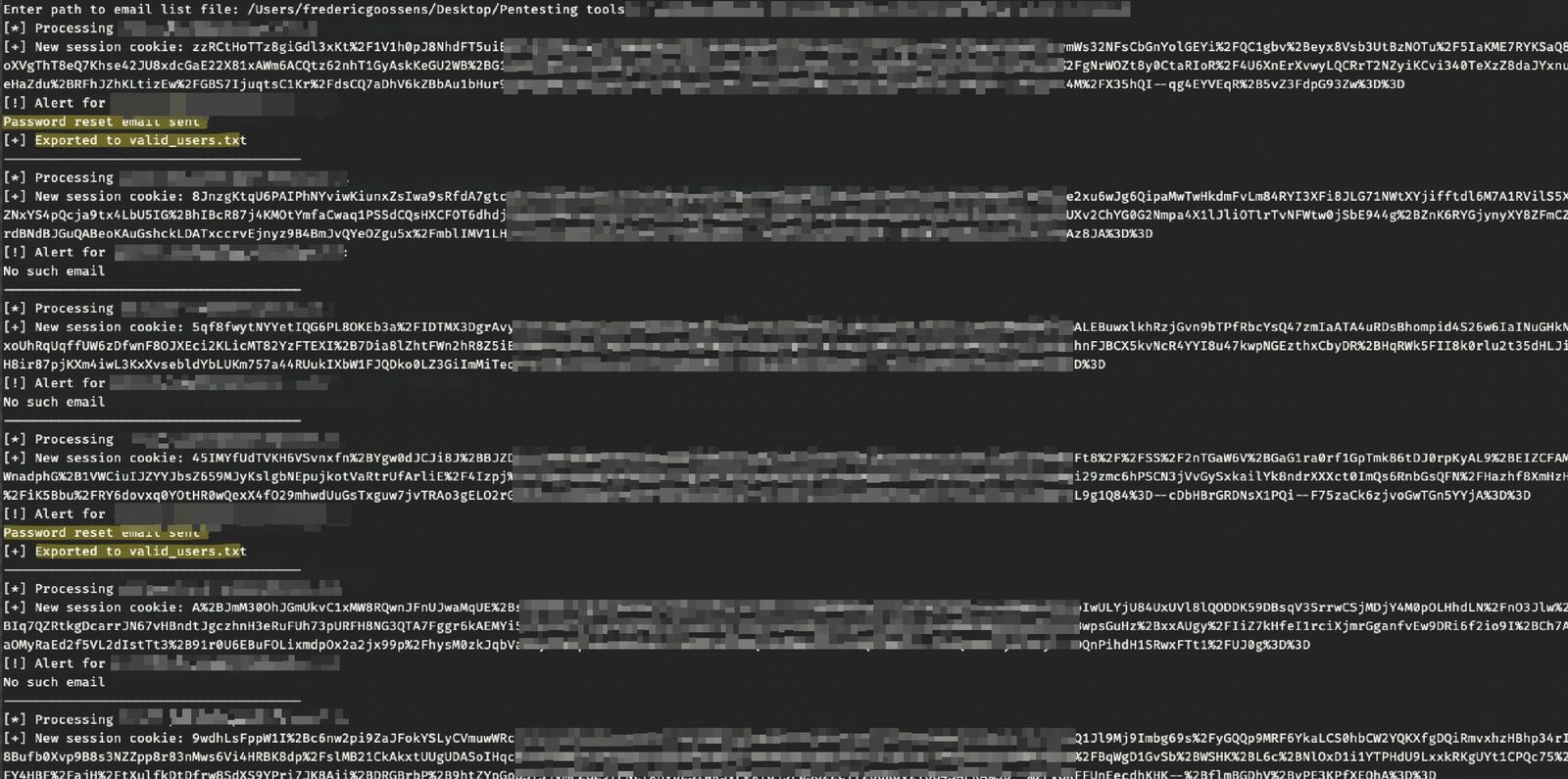
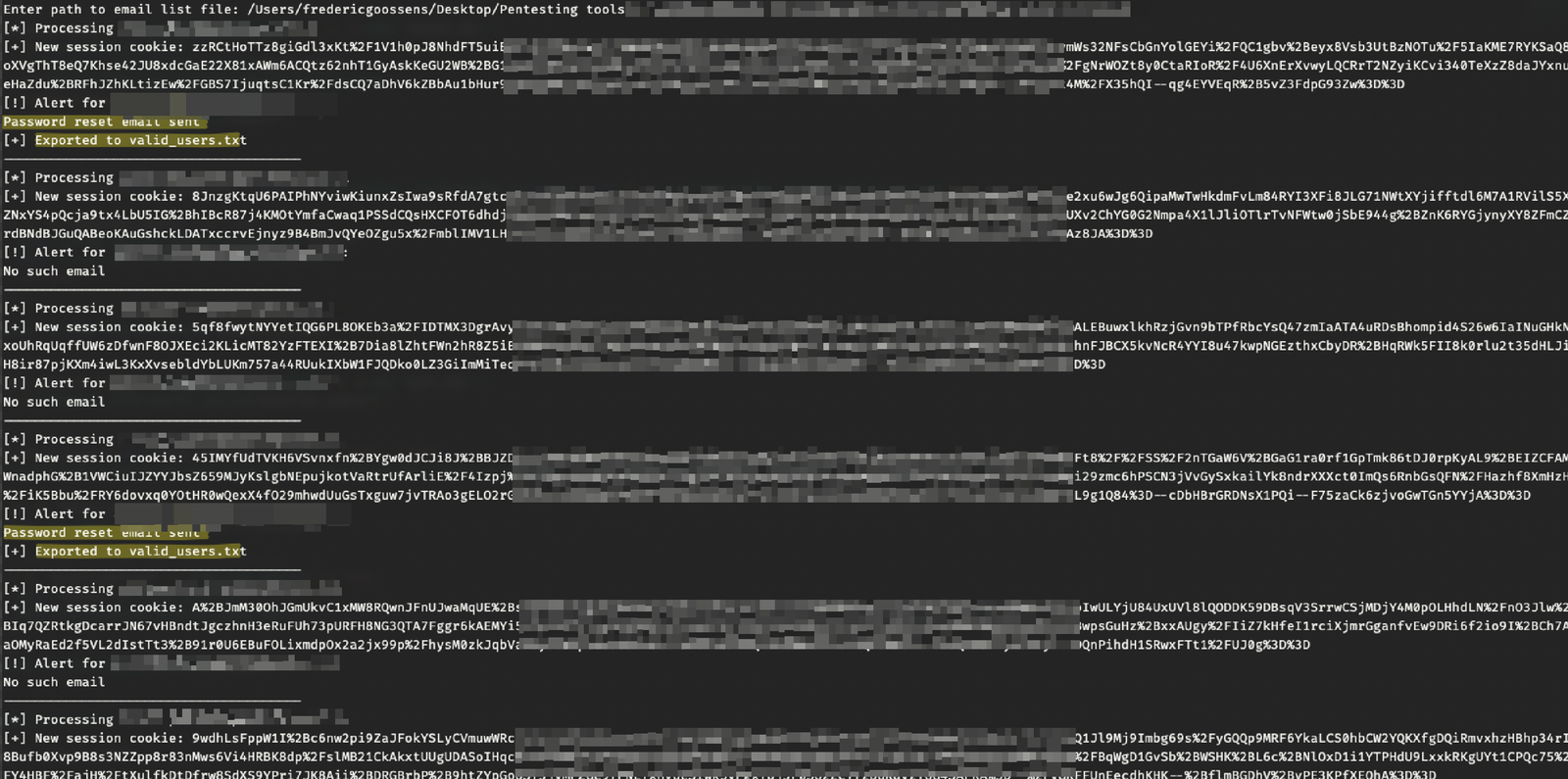
This discrepancy in error messages enables automated enumeration of valid usernames or email addresses. To demonstrate this, I made a proof-of-concept script that takes a list of potential registered email addresses and identifies valid ones based on the application’s response behavior.

Output of the user enumeration script:
SCR-20251005-nhjt-3

Risk (OWASP risk rating)

Once valid usernames are identified, they could be leveraged in a brute-force or password spraying attack. Given that some users may have weak or reused passwords, this poses a high security risk.

The likelihood of exploitation is high, current security measures are easily bypassed, and exploitation is straightforward. The impact is considered medium as after obtaining a list of valid users, one still needs to compromise an account through password spraying or brute-force attacks.

Note that this application is used by a lot of different organizations. Almost always facing the public internet. This makes it just a matter of scraping employee email addresses or names from the internet and password spraying the application.

As a result, this issue poses a high risk.

Patch

Version 4.2 addresses this issue by introducing user-based lockout mechanisms, and by disabling distinct error messages which allow user enumeration by default.


References

  • https://nvd.nist.gov/vuln/detail/CVE-2025-56132
  • https://www.tenable.com/cve/CVE-2025-56132
  • https://docs.liquidfiles.com/release_notes/version_4-2-x.html
  • https://www.liquidfiles.com/updates/v4.2.html
  • https://github.com/advisories/GHSA-qjf7-p4pc-2mq7
Download Tool

Most Popular

View all →

Discover the most used tools by our community.

  • 1

    OsintHunter

    letox4/osinthunter

    🎯 The ultimate OSINT toolkit: investigation graph, confidence scoring, alias families, map, timeline and reports. 49 modules, 400+ sites, no API keys required.

    891
  • 2

    ghostlock-app

    yukonga/ghostlock-app

    GhostLock One-Tap Execution App (CVE-2026-43499)

    547
  • 3

    ARTEX

    baarai/artex

    LLM multi-agent autonomous penetration testing platform with planner/worker agents, asset and exploration graphs, MITM traffic recording, and vulnerability retesting.

    369
  • 4

    redforge

    cybersecurity91/redforge

    Browser-side red team toolkit with 102 offline tools for recon, payload generation, credential attacks, crypto, encoding and engagement reporting.

    366
  • 5

    looking-glass

    anonghosty/looking-glass

    CSIRT platform that ingests Shadowserver reports into MongoDB and replays them as interactive maps, analysis, findings, advisories and executive dashboards.

    309
  • 6

    CyberStrikeAI

    ed1s0nz/cyberstrikeai

    The system of action for AI-native cybersecurity—where intent becomes governed execution, evidence becomes operational memory, and every operation improves the next.

    282

Explore all tools

Browse our collection of tools

View all tools →




