 ericyoc/ai-security-literacy
Reproducible Colab pipeline that grounds six AI Security Literacy competency dimensions in public benchmarks and survey microdata, producing figures, tables, and resumable results.

A reproducible analysis pipeline that grounds the six AI Security Literacy competency dimensions in public benchmarks and nationally representative survey data. Runs in Google Colab. Every artifact — dataset cache, model checkpoint, figure, results table — persists to Google Drive, and every stage is resumable.
AI arrived in schools faster than any guidance about how to use it safely. Students are handed black-box systems and expected to intuit what those systems can be trusted to do. Teachers are split between adopting AI and fearing it. Districts are writing acceptable-use policies while the tools underneath them change every few months.
The literacy frameworks that exist teach students to understand and use AI. The cybersecurity frameworks that exist were written before AI-specific threats existed. Neither treats operating securely in an AI-mediated environment as a competency in its own right — with its own dimensions, its own developmental progression, and its own teachable skills.
That competency is what AISL defines, across six dimensions spanning the whole school ecosystem rather than students alone.
A competency framework that nobody has tested against data is just a taxonomy. Anyone can assert that students should "recognize manipulation" or "calibrate trust." The harder question is whether those phrases name real, measurable phenomena — and if so, what the measurements actually show.
That is what this pipeline is for. It asks what public data can establish about each dimension, and the answers are specific:
Each of those is a lesson a learner can be walked through with real models and real data, which is the point: the framework is meant to be taught, not just cited.
A pipeline can produce figures that look right and are not: a robustness curve from a model that was never properly trained, or benchmark results attached to the wrong categories because two files were joined by row position. Those are the same kinds of failure the framework's most advanced dimension teaches students to catch.
So the pipeline is built to make them structurally hard: attack evaluation is gated on a clean-accuracy sanity check, joins are made on content rather than position, blocked stages announce themselves rather than emitting empty output, sampling is seeded, and every reported number is written to a machine-readable results file instead of transcribed by hand. Reproducibility here is not housekeeping — it is the subject matter.
The pipeline runs in two tiers.
Tier 1 grounds the attitudinal dimensions from nationally representative
survey micro-data that you download yourself under free registration. Until the
files are present, its stages mark themselves skipped. See
Tier 1 setup.
Tier 2 grounds the technical dimensions from public sources. No configuration needed — open and run. Every dataset downloads automatically.
| Dimension | Tier 1 (surveys) | Tier 2 (public data) | |
|---|---|---|---|
| D1 | Permission & Norms | RAND ATP Fall 2025, Pew ATP W142 | — |
| D2 | Data & Privacy Security | Pew ATP W152 | — |
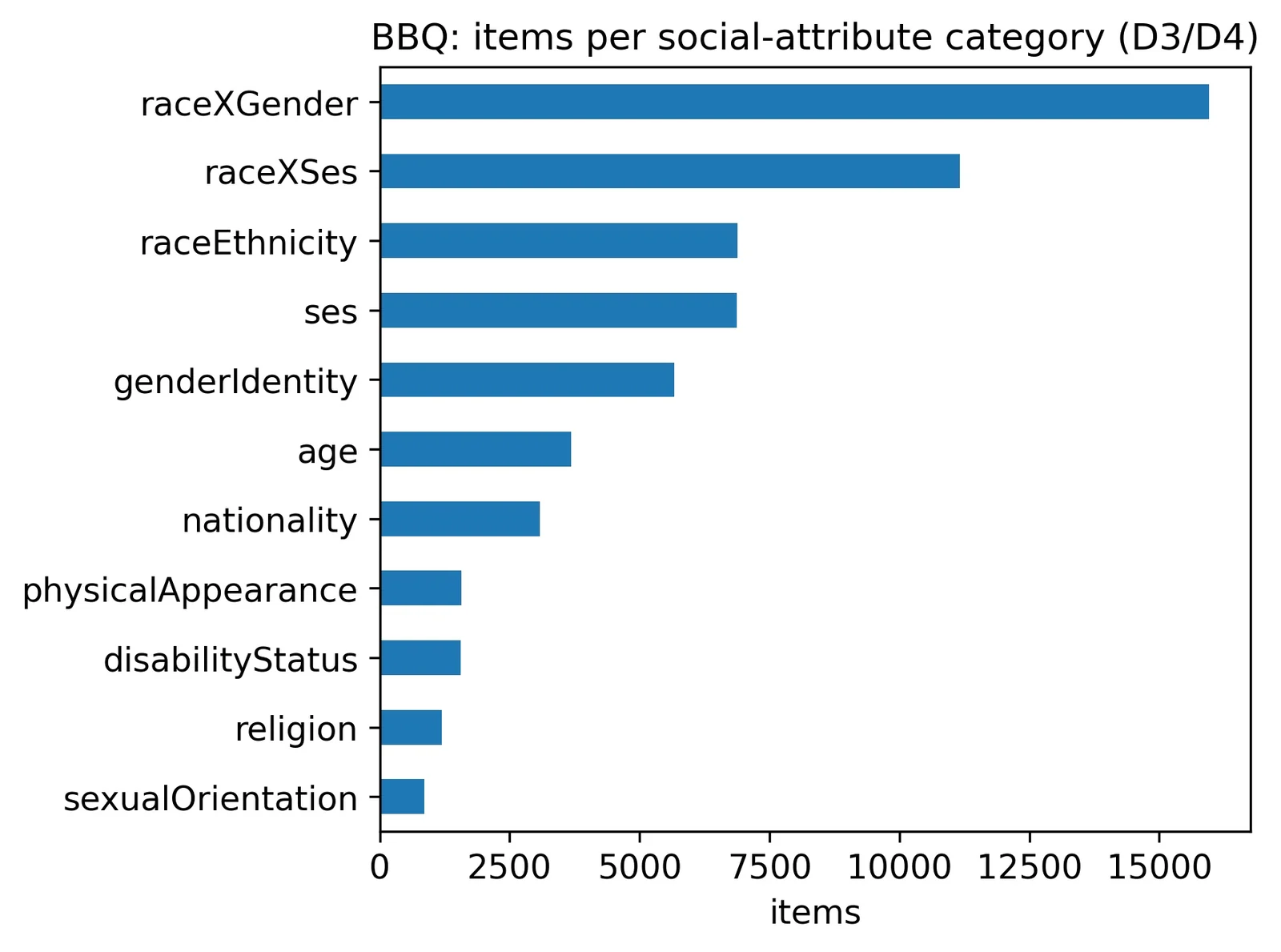
| D3 | Threat & Manipulation Recognition | Pew ATP W152, W168 | RealToxicityPrompts, SMS Spam Collection, BBQ |
| D4 | Trust Calibration & Verification | Pew ATP W142, W152 | TruthfulQA + GPT-2 baseline, BBQ |
| D5 | Adversarial & Technical Understanding | — | CIFAR-10 + FGSM/PGD, 3 seeds |
| D6 | Disposition & Agency | RAND ATP Fall 2025, Pew ATP W152 | — |
Open AISL_analysis_poc.ipynb in Colab and run all cells top to bottom.
Runtime > Change runtime type > GPU     # optional; D5 training is ~10x faster
Runtime > Run all
The first run downloads CIFAR-10 (~170 MB), the Hugging Face corpora, GPT-2 and the SMS Spam Collection. All of them cache to Drive and are never re-downloaded. The run is safe to interrupt at any point — see Resuming a run.
If you add survey files to Drive while a Colab session is open, restart the
session (Runtime > Restart session) before rerunning: Colab does not always see
files added after Drive was mounted.
Everything persistent lives under MyDrive/AISL_data/. Nothing of value is
written to the ephemeral Colab disk.
AISL_data/
├── cache/
│   ├── hf/                    # Hugging Face datasets and GPT-2
│   └── torch/                 # CIFAR-10
├── checkpoints/
│   └── cifar10_cnn_seed{N}.pt # one per seed, written after every epoch, atomically
├── figures/                   # 300-dpi JPGs
├── tables/                    # CSV + JSON + TeX macro exports
├── logs/
│   └── status.json            # per-stage completion record
└── microdata/
    ├── sms/                   # SMS Spam Collection (downloaded automatically)
    ├── pew/                   # <- you place the Pew ATP .sav files here
    └── rand/                  # <- you place the RAND ATP .dta file here
Results are exported in three formats: aisl_results.json (machine-readable),
per-stage .csv files, and aisl_results.tex (a set of TeX macros, one per
reported value, for downstream typesetting).
