
Skip to content
KitploitKITPLOIT
ToolsExploitsBlog
Log in
Submit
ToolsExploitsBlog
Submit

Hacking, PenTest, and Cybersecurity Tools for Your Security Arsenal!

Kitploit is a directory of hacking, cybersecurity, and pentesting tools. Discover the latest project updates to find vulnerabilities, analyze systems, automate testing, and strengthen your security.

FeedsContactPrivacy© 2026 Kitploit

Tool Directory

Categories

View all categories
Loading categories
Tools/GitHubGitHub/cucadili/cve-2017-3066
Vulnerability AnalysisExploitationIDS/IPS EvasionWeb Application ExploitationIntrusion DetectionLearning & Education
GitHubcucadili/cve-2017-3066

CVE-2017-3066

Analysis and exploitation of CVE-2017-3066, a Java deserialization RCE in Adobe ColdFusion's BlazeDS library, with Suricata detection rules and ysoserial payload integration.

View Repository
2727 years agoNot yet reviewed
Share

CVE-2017-3066

Description

Adobe ColdFusion uses message format the Action (AMF). The AMF Protocol is a custom binary serialization Protocol. It has two formats: AMF0 and AMF3. Action message consists of headers and bodies. There are several implementations of AMF in different languages. For Java we have Adobe BlazeDS (now Apache BlazeDS) which is also used in Adobe ColdFusion. Adobe Coldfusion is affected to a Java Deserialisation Flaw in its Apache BlazeDS Library when it handles untrusted Java Objects which further gives Attacker the permission to attack remotely as a Remote Code Execution Vulnerability.

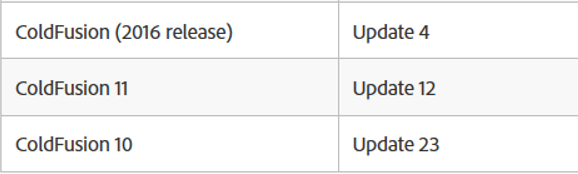
Vulnerable Version

alt text

Update Version

alt text

Comparison of vulnerable and updated version

WinMerge Update files: alt text

The flex-messaging-core.jar library contains the class flex.messaging.validators.ClassDeserializationValidator that performs validation. Therefore, it was separately decompiled using the Java Decompiler and once again launched for comparison in WinMerge.

alt text

Install

Install and Exploiting: https://github.com/vulhub/vulhub/tree/master/coldfusion/CVE-2017-3066

Suricata

In the file "test.rules " presents a rule for the Suricata utility. The rule allows network traffic to detect exploitable vulnerabilities. The rule is connected in the /etc/suricata/suricata file.yaml:

    default-rule-path: /etc/suricata 
    rule-files: 
     - test.rules

RUN:

suricata -c /etc/suricata/suricata.yaml –I ens33

Log /var/log/suricata/fast.log

Signature 79 73 6F 73 65 72 69 61 = ysoserial

Download Tool

Most Popular

View all →

Discover the most used tools by our community.

  • 1

    OsintHunter

    letox4/osinthunter

    🎯 The ultimate OSINT toolkit: investigation graph, confidence scoring, alias families, map, timeline and reports. 49 modules, 400+ sites, no API keys required.

    936
  • 2

    ghostlock-app

    yukonga/ghostlock-app

    GhostLock One-Tap Execution App (CVE-2026-43499)

    555
  • 3

    redforge

    cybersecurity91/redforge

    Browser-side red team toolkit with 102 offline tools for recon, payload generation, credential attacks, crypto, encoding and engagement reporting.

    353
  • 4

    ARTEX

    baarai/artex

    LLM multi-agent autonomous penetration testing platform with planner/worker agents, asset and exploration graphs, MITM traffic recording, and vulnerability retesting.

    348
  • 5

    looking-glass

    anonghosty/looking-glass

    CSIRT platform that ingests Shadowserver reports into MongoDB and replays them as interactive maps, analysis, findings, advisories and executive dashboards.

    336
  • 6

    CyberStrikeAI

    ed1s0nz/cyberstrikeai

    The system of action for AI-native cybersecurity—where intent becomes governed execution, evidence becomes operational memory, and every operation improves the next.

    288

Explore all tools

Browse our collection of tools

View all tools →





