 calesthio/crucix
Your personal intelligence agent. Watches the world from multiple data sources and pings you when something changes.

Your own intelligence terminal. 27 sources. One command. Zero cloud.





Enter The Signal Network

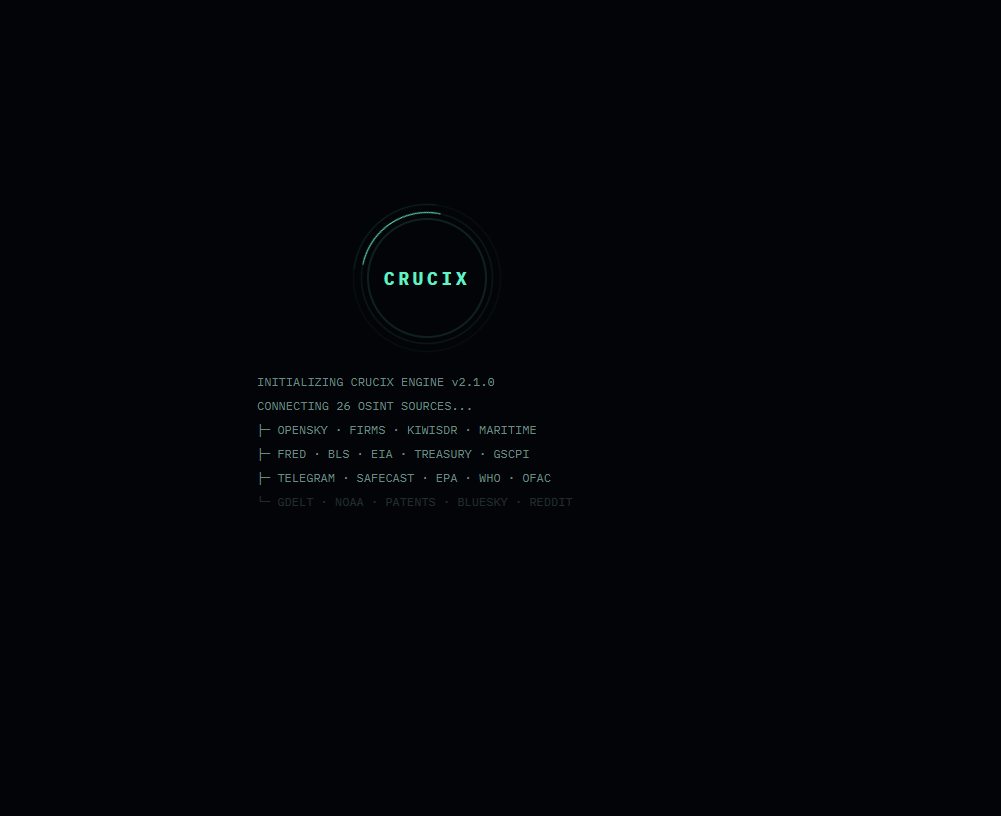
| Boot Sequence | World Map |
|---|---|
 | 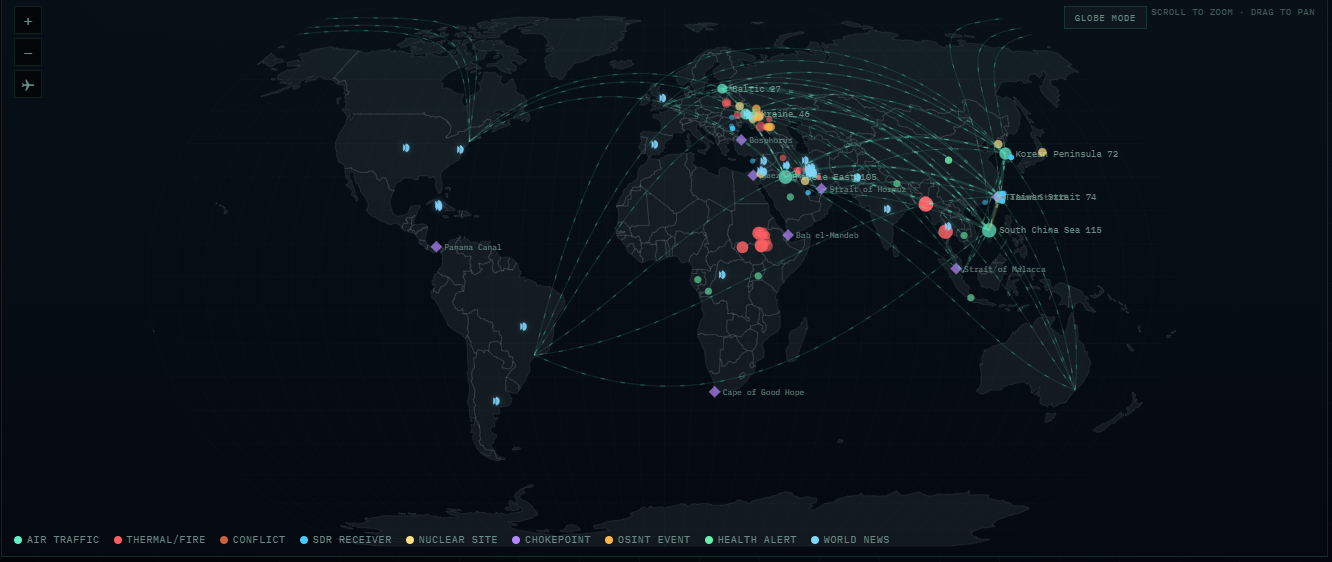 |
| 3D Globe View |
|---|
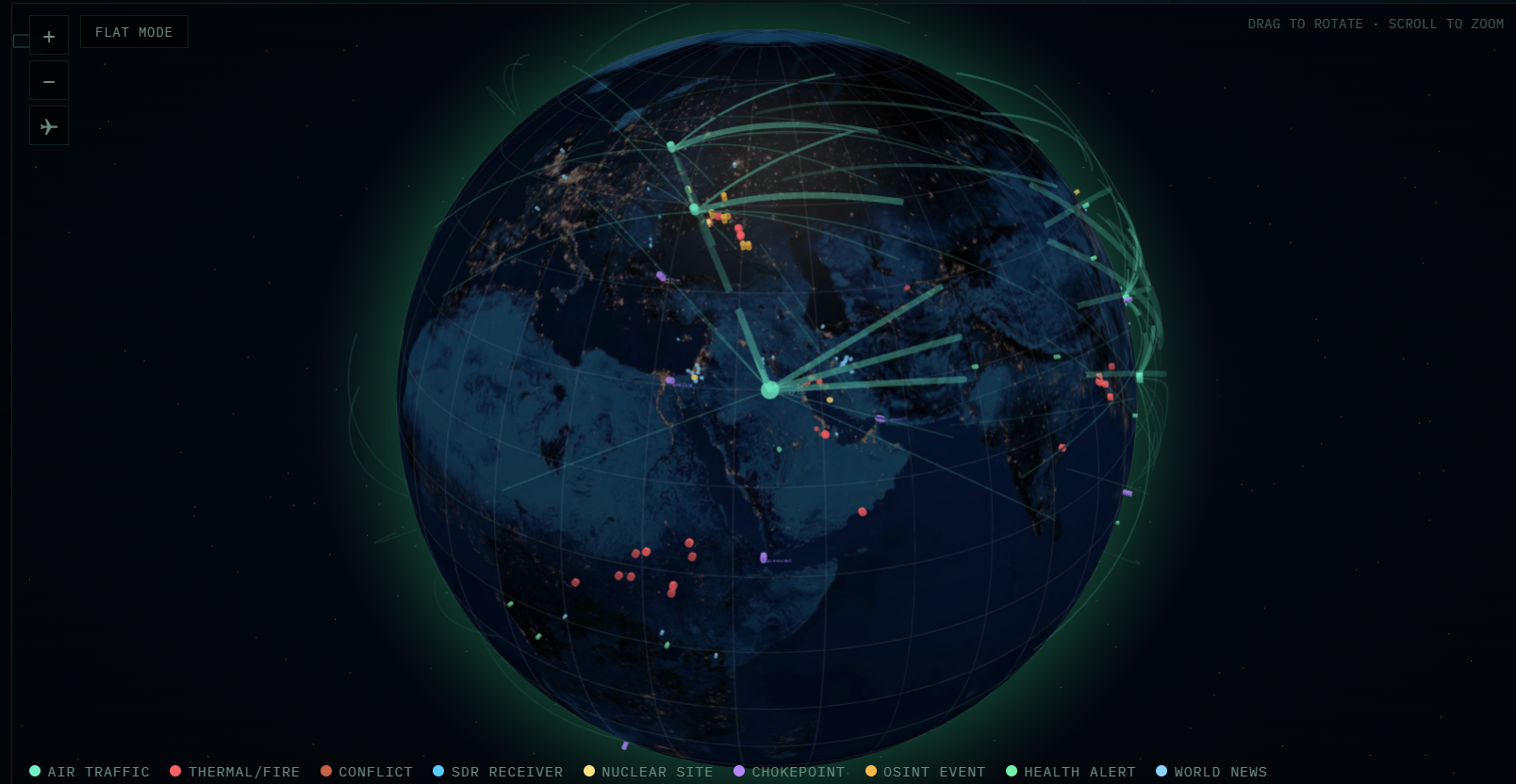 |
Live website: https://www.crucix.live/ Explore the public demo first, then clone the repo to run Crucix locally.
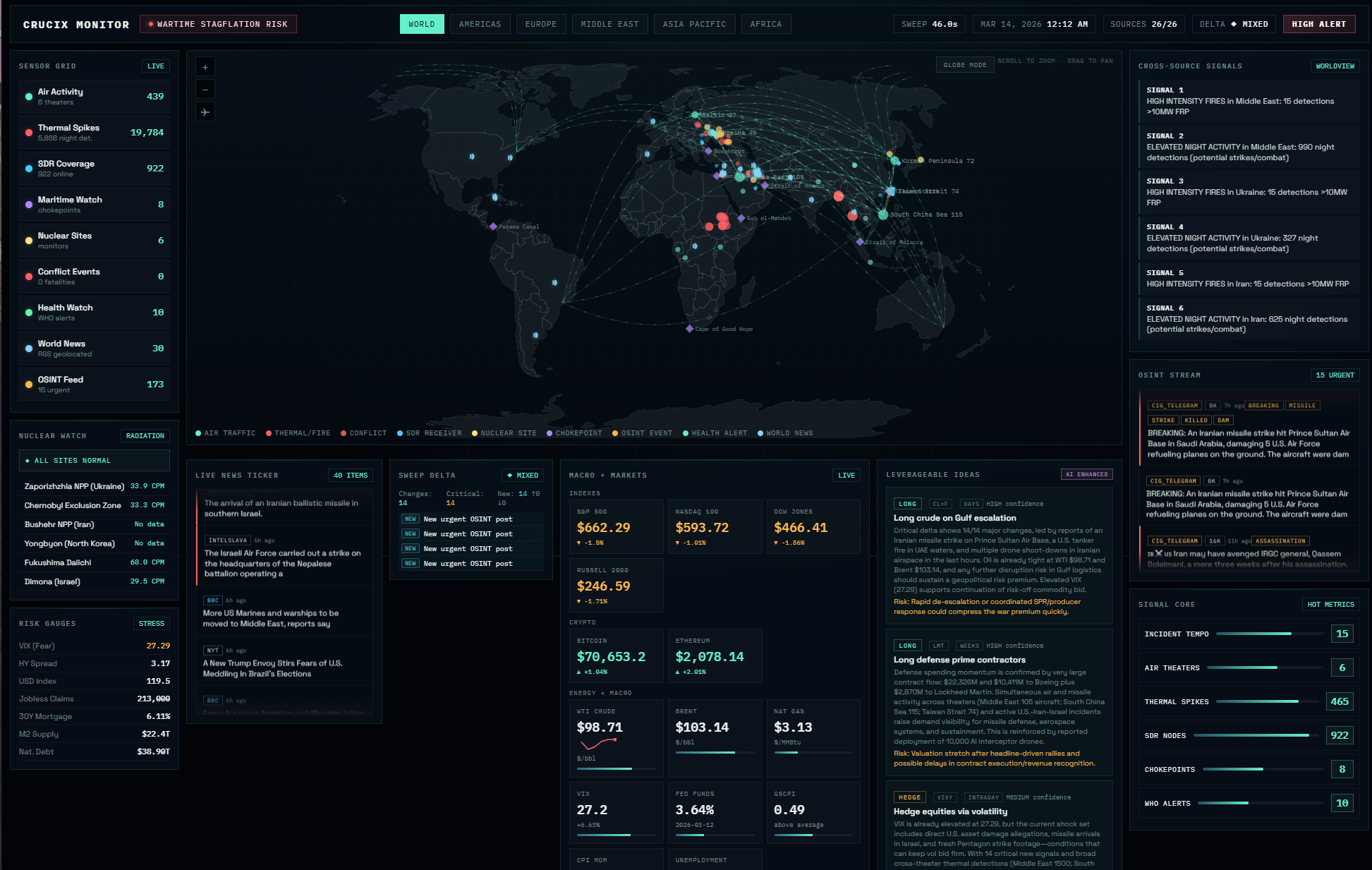
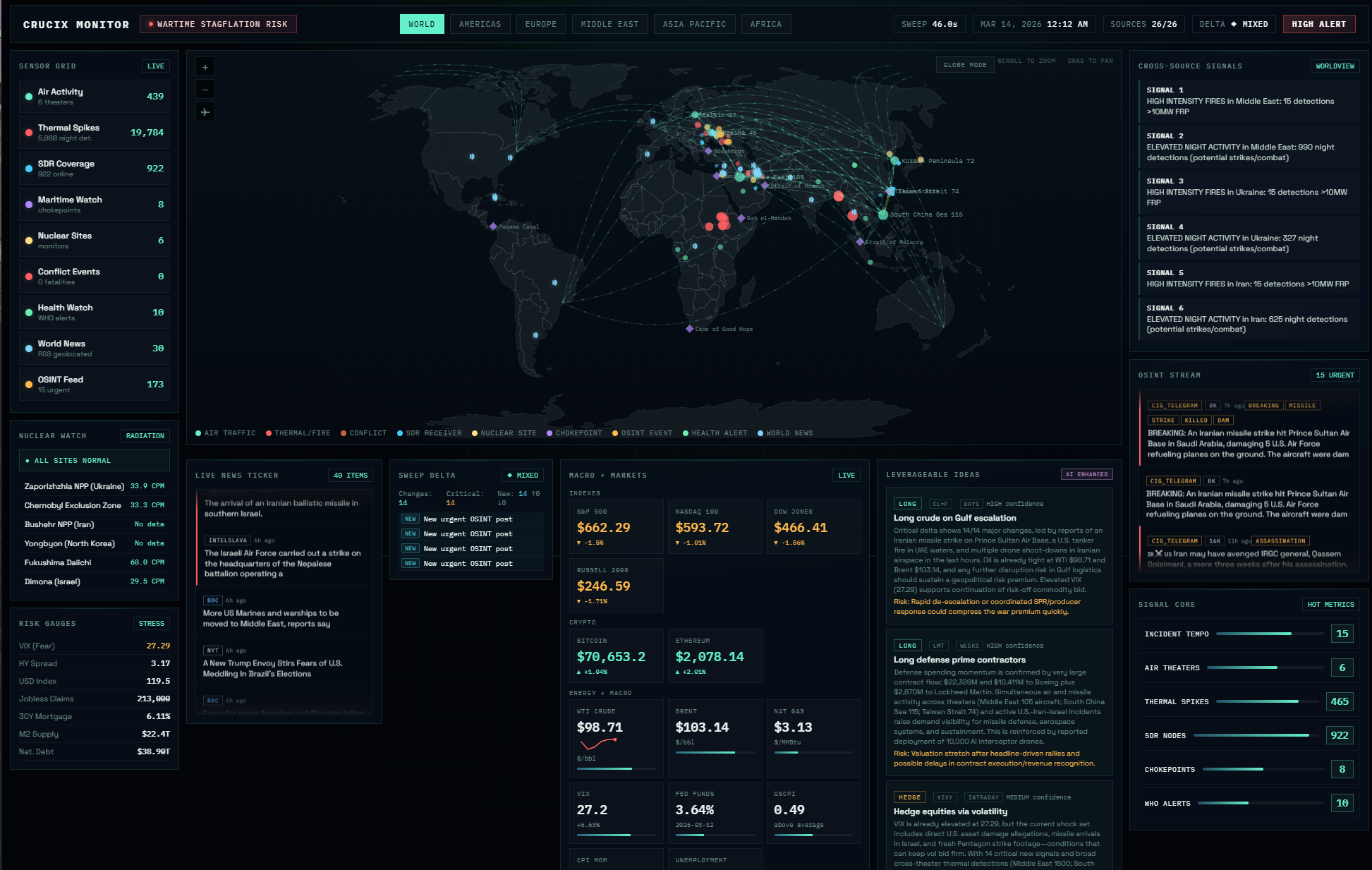
Crucix pulls satellite fire detection, flight tracking, radiation monitoring, satellite constellation tracking, economic indicators, live market prices, conflict data, sanctions lists, and social sentiment from 27 open-source intelligence feeds — in parallel, every 15 minutes — and renders everything on a single self-contained Jarvis-style dashboard.
Hook it up to an LLM and it becomes a two-way intelligence assistant — pushing multi-tier alerts to Telegram and Discord when something meaningful changes, responding to commands like /brief and /sweep from your phone, and generating actionable trade ideas grounded in real cross-domain data. Your own analyst that watches the world while you sleep.
Try the live demo first at https://www.crucix.live/, then clone the repo when you want the full local stack.
No cloud. No telemetry. No subscriptions. Just node server.mjs and you're running.
[!WARNING] Crucix has not launched any official token, coin, NFT, airdrop, presale, or other blockchain-based asset. Any token or digital asset using the Crucix name, logo, or branding is not affiliated with or endorsed by Crucix. Do not buy it, promote it, connect a wallet to claim it, sign transactions, or send funds based on third-party posts, DMs, or websites.
Most of the world's real-time intelligence — satellite imagery, radiation levels, conflict events, economic indicators, flight tracking, maritime activity — is publicly available. It's just scattered across dozens of government APIs, research institutions, and open data feeds that nobody has time to check individually.
Crucix brings it all into one place. Not behind a paywall, not locked in an enterprise platform, not requiring a security clearance. Just open data, aggregated and cross-correlated on your own machine, updated every 15 minutes.
It was built for anyone who wants to understand what's actually happening in the world right now — researchers, journalists, traders, OSINT analysts, or just curious people who believe access to information shouldn't depend on your budget.
# 1. Clone the repo
git clone https://github.com/calesthio/Crucix.git
cd Crucix

# 2. Install dependencies (just Express)
npm install

# 3. Copy env template and add your API keys (see below)
cp .env.example .env

# 4. Start the dashboard
npm run dev
If
npm run devfails silently (exits with no output), run Node directly instead:node --trace-warnings server.mjsThis bypasses npm's script runner, which can swallow errors on some systems (particularly PowerShell on Windows). You can also run
node diag.mjsto diagnose the exact issue — it checks your Node version, tests each module import individually, and verifies port availability. See Troubleshooting for more.
The dashboard opens automatically at http://localhost:3117 and immediately begins its first intelligence sweep. This initial sweep queries all 27 sources in parallel and typically takes 30–60 seconds — the dashboard will appear empty until the sweep completes and pushes the first data update. After that, it auto-refreshes every 15 minutes via SSE (Server-Sent Events). No manual page refresh needed.
Requirements: Node.js 22+ (uses native fetch, top-level await, ESM)
git clone https://github.com/calesthio/Crucix.git
cd Crucix
cp .env.example .env    # add your API keys
docker compose up -d
Dashboard at http://localhost:3117. Sweep data persists in ./runs/ via volume mount. Includes a health check endpoint.
A self-contained Jarvis-style HUD with:
The VISUALS FULL / VISUALS LITE button in the top bar only changes rendering behavior - it does not remove data sources or reduce sweep coverage.
When you switch to VISUALS LITE, the dashboard:



