Skip to content
KitploitKITPLOIT
ToolsExploitsBlog
Log in
Submit
ToolsExploitsBlog
Submit

Hacking, PenTest, and Cybersecurity Tools for Your Security Arsenal!

Kitploit is a directory of hacking, cybersecurity, and pentesting tools. Discover the latest project updates to find vulnerabilities, analyze systems, automate testing, and strengthen your security.

FeedsContactPrivacyΒ© 2026 Kitploit

Tool Directory

Categories

View all categories
Loading categories
CVE-2026-43499 β€” CVE-2026-43499 | Kitploit
Tools/GitHubGitHub/0xblackash/cve-2026-43499
Privilege EscalationMemory ForensicsVulnerability AnalysisExploitationPapers & ResearchLearning & EducationContainer EscapeBinary Exploitation
GitHub0xblackash/cve-2026-43499

CVE-2026-43499

CVE-2026-43499

View Repository
6544 months agoNot yet reviewed
Share

πŸ‘» CVE-2026-43499 β€” GhostLock

ChatGPT Image Jul 9, 2026, 12_55_46 AM

15-Year-Old GhostLock Flaw Enables Root and Container Escape on Most Linux Distros

Linux Component CWE Bug Impact Status

GhostLock is a high-severity Use-After-Free (UAF) vulnerability in the Linux Kernel rtmutex subsystem. The flaw originates from incorrect waiter cleanup during Priority Inheritance (PI) handling, potentially leading to kernel memory corruption, local privilege escalation, or denial of service.


πŸ“‘ Table of Contents

  • Overview
  • Technical Summary
  • Root Cause
  • Attack Flow
  • Impact
  • Affected Versions
  • Detection
  • Mitigation
  • Timeline
  • References
  • Disclaimer

πŸ“Œ Overview

PropertyValue
CVECVE-2026-43499
CodenameGhostLock
ComponentLinux Kernel rtmutex
WeaknessUse-After-Free
CWECWE-416
Attack VectorLocal
Privileges RequiredLow
User InteractionNone
SeverityHigh
Primary ImpactKernel Memory Corruption

πŸ” Technical Summary

The vulnerability resides inside the Linux kernel's Real-Time Mutex (rtmutex) implementation.

During proxy-lock rollback, the function responsible for removing a waiter from the Priority Inheritance (PI) tree incorrectly operates on the current task instead of the actual waiting task.

This logic error leaves stale references inside kernel synchronization structures.

Eventually, the kernel may dereference memory that has already been freed, producing a classic Use-After-Free condition.


🧠 Root Cause

Affected source file:

kernel/locking/rtmutex.c

Affected routine:

remove_waiter()

Issue:

Incorrect task reference
        β”‚
        β–Ό
Wrong waiter removed
        β”‚
        β–Ό
Priority Inheritance tree becomes inconsistent
        β”‚
        β–Ό
Dangling pi_blocked_on pointer
        β”‚
        β–Ό
Freed object referenced later
        β”‚
        β–Ό
Use-After-Free

βš™οΈ Attack Flow

User Process
      β”‚
      β–Ό
futex_requeue()
      β”‚
      β–Ό
rt_mutex_start_proxy_lock()
      β”‚
      β–Ό
remove_waiter()
      β”‚
      β–Ό
Incorrect cleanup
      β”‚
      β–Ό
Dangling pointer
      β”‚
      β–Ό
Kernel accesses freed memory
      β”‚
      β–Ό
Memory Corruption

πŸ’₯ Impact

Successful exploitation may result in:

  • πŸ”΄ Local Privilege Escalation
  • πŸ”΄ Kernel Memory Corruption
  • πŸ”΄ Kernel Panic
  • πŸ”΄ Denial of Service
  • πŸ”΄ System Instability
  • πŸ”΄ Potential Security Boundary Bypass

πŸ–₯️ Affected Versions

Linux KernelStatus
2.6.39 β†’ < 6.1.175Vulnerable
6.2 β†’ < 6.6.140Vulnerable
6.7 β†’ < 6.12.86Vulnerable
6.13 β†’ < 6.18.27Vulnerable
6.19 β†’ < 7.0.4Vulnerable

πŸ”¬ Exploitation Requirements

Typical prerequisites include:

  • Local code execution
  • Access to futex system calls
  • Triggering proxy locking paths
  • Vulnerable Linux kernel
  • Precise synchronization timing

Note: Public advisories describe the vulnerability and its impact. Practical exploit reliability depends on kernel configuration, scheduling, and mitigation features.


πŸ›‘οΈ Detection

Administrators should monitor for:

  • Kernel Oops
  • Kernel Panic
  • KASAN reports
  • Unexpected rtmutex warnings
  • futex-related crashes

Useful commands:

uname -r
journalctl -k
dmesg | grep -Ei "rtmutex|BUG|Oops|KASAN|futex"

πŸ”’ Mitigation

  • Upgrade to a patched Linux kernel.
  • Apply vendor security updates promptly.
  • Reboot after installing updates.
  • Restrict local access on shared systems until patched.
  • Monitor Linux kernel security advisories for backported fixes.

πŸ“… Timeline

DateEvent
2026Vulnerability identified
2026Linux kernel fix released
2026CVE assigned
2026Public disclosure

πŸ“š References

  • National Vulnerability Database (NVD)
  • Linux Kernel Stable Patch
  • Linux Kernel Git Repository
  • Vendor Security Advisories

⚠️ Disclaimer

This repository is intended solely for educational, defensive, and security research purposes.

It does not include exploit code, weaponized payloads, or offensive tooling.

Always follow responsible disclosure practices and test only in environments that you own or are explicitly authorized to assess.


⭐ If this repository was useful, consider giving it a star!

Linux Kernel Security β€’ Vulnerability Research β€’ Defensive Security

Made with ❀️ for the cybersecurity community.

Download Tool

Most Popular

View all β†’

Discover the most used tools by our community.

  • 1

    OsintHunter

    letox4/osinthunter

    🎯 The ultimate OSINT toolkit: investigation graph, confidence scoring, alias families, map, timeline and reports. 49 modules, 400+ sites, no API keys required.

    755
  • 2

    ghostlock-app

    yukonga/ghostlock-app

    GhostLock One-Tap Execution App (CVE-2026-43499)

    510
  • 3

    ARTEX

    baarai/artex

    LLM multi-agent autonomous penetration testing platform with planner/worker agents, asset and exploration graphs, MITM traffic recording, and vulnerability retesting.

    415
  • 4

    redforge

    cybersecurity91/redforge

    Browser-side red team toolkit with 102 offline tools for recon, payload generation, credential attacks, crypto, encoding and engagement reporting.

    343
  • 5

    antifox

    antifox-ai/antifox

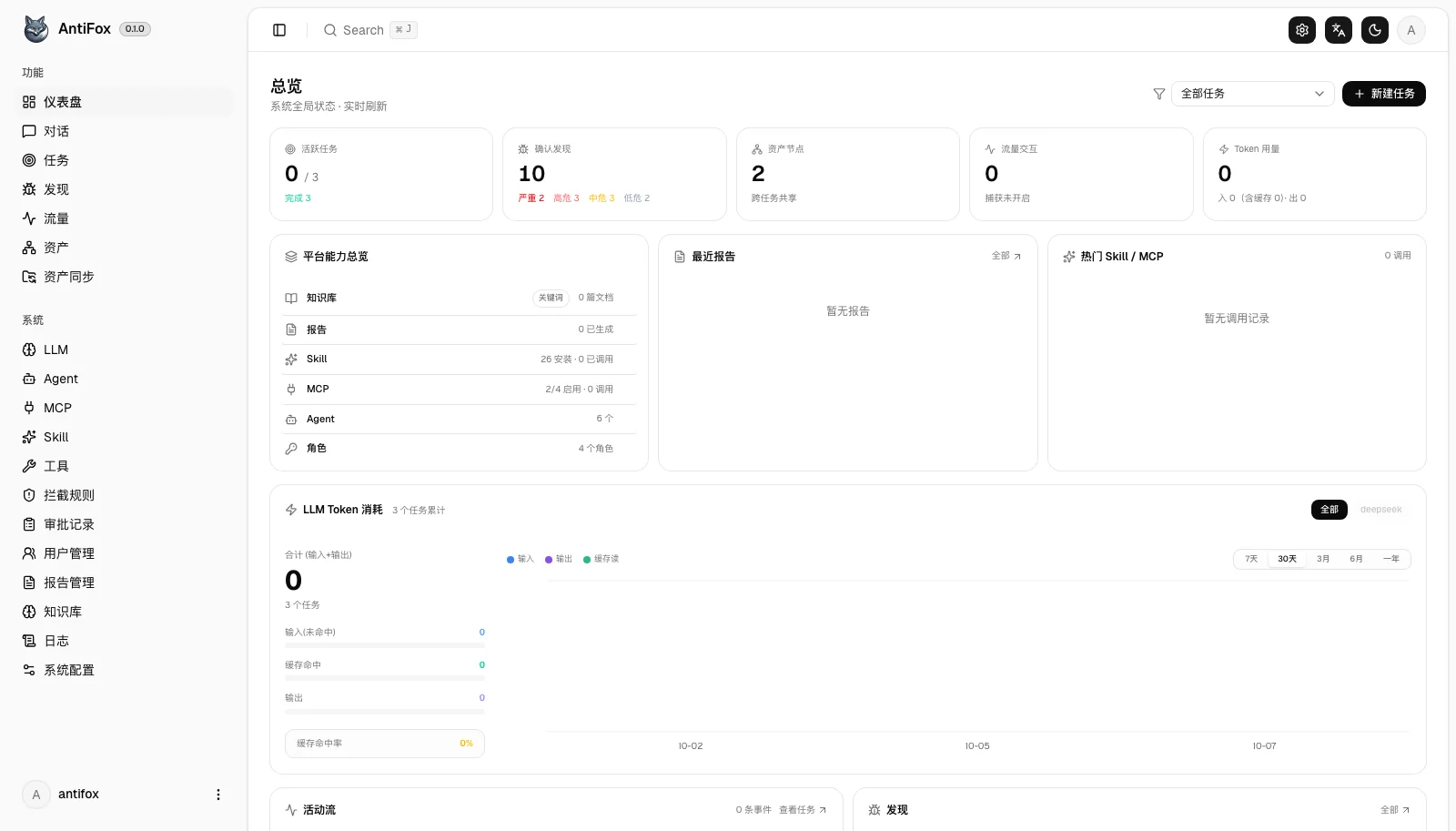
    AI multi-agent autonomous penetration testing platform that runs recon, attack-surface discovery, exploitation validation and evidence-backed report delivery.

    259
  • 6

    CyberStrikeAI

    ed1s0nz/cyberstrikeai

    The system of action for AI-native cybersecurityβ€”where intent becomes governed execution, evidence becomes operational memory, and every operation improves the next.

    258

Explore all tools

Browse our collection of tools

View all tools β†’