
Skip to content
KitploitKITPLOIT
ToolsExploitsBlog
Log in
Einreichen
ToolsExploitsBlog
Einreichen

Hacking-, PenTest- und Cybersicherheits-Tools für Ihr Sicherheitsarsenal!

Kitploit ist ein Verzeichnis von Hacking-, Cybersicherheits- und Pentesting-Tools. Entdecken Sie die neuesten Projekt-Updates, um Schwachstellen zu finden, Systeme zu analysieren, Tests zu automatisieren und Ihre Sicherheit zu stärken.

FeedsKontaktDatenschutz© 2026 Kitploit

Tool-Verzeichnis

Kategorien

Alle Kategorien anzeigen
Loading categories
AgrusScanner — Windows network reconnaissance scanner with ping sweeps, TCP port scanning, and deep AI/ML service detection for finding shadow AI, rogue LLM deployments, and GPU infrastructure. | Kitploit
Tools/GitHubGitHub/nybaywatch/agrusscanner
Defensive ToolsReconnaissanceVulnerability ScannersNetwork MappingPort ScanningInformation GatheringNetwork SecurityUtilities & FrameworksAI Security
GitHubnybaywatch/agrusscanner

AgrusScanner

Windows network reconnaissance scanner with ping sweeps, TCP port scanning, and deep AI/ML service detection for finding shadow AI, rogue LLM deployments, and GPU infrastructure.
416162vor 1 TagVon Kitploit geprüft
Teilen
Repository anzeigenWebseite
Inhalt in der angeforderten Sprache nicht verfügbar. Englische Version wird angezeigt.

Agrus Scanner

Downloads (all channels) GitHub Stars Latest release Signature downloads Signatures

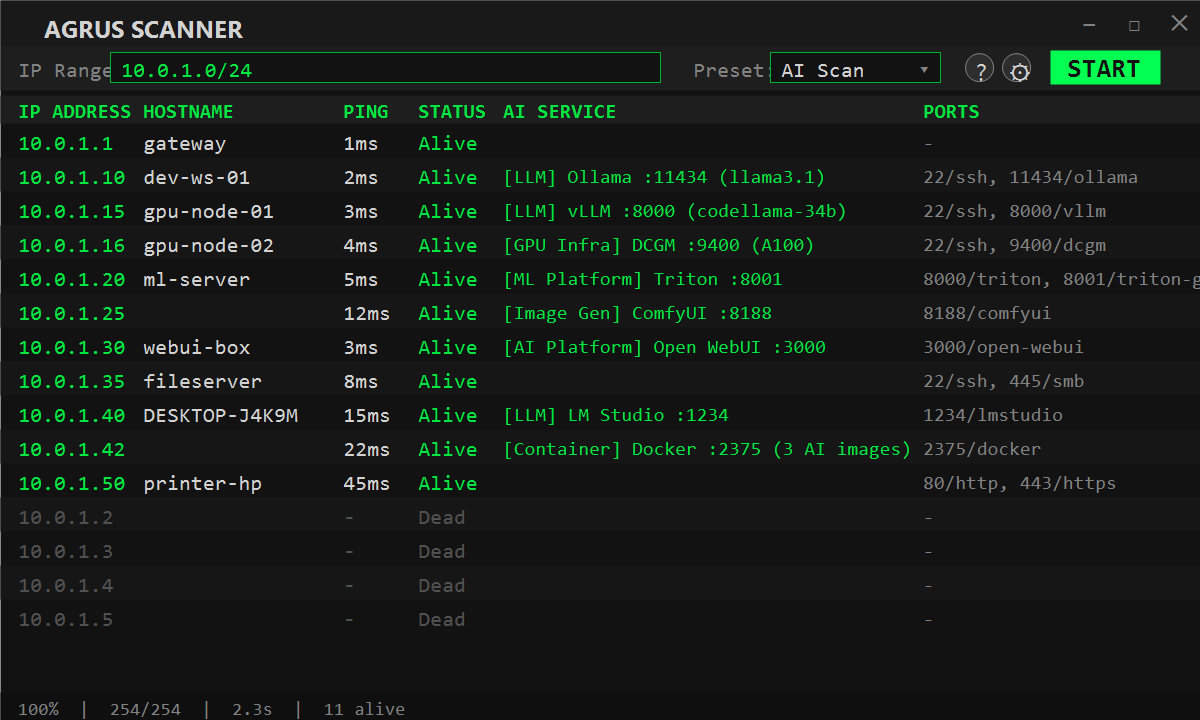
Network reconnaissance tool with deep AI/ML service detection. Scans your network to discover hosts, open ports, and identifies AI services running across your infrastructure.

Built for security teams, IT admins, and researchers who need visibility into shadow AI, rogue LLM deployments, and GPU infrastructure on their networks.

Why

There is a growing concern for shadow AI, and this provides a simple way to scan networks. Also many of the typical scanning tools for windows are slow and have poorly written interfaces, specifically for anyone running a 4k+ monitor. Agrus Scanner is built in native C#/.NET with WPF — no Electron, no embedded browser — so it launches fast, scans fast, and stays light on resources. I've been tired of trying to read tiny print so when a friend/client was looking for a way to scan for shadow AI, and without any windows type tool available, it seemed like a natural fit together.

It also works as a straightforward network scanner — ping sweeps, port scanning, and hostname resolution are all built in. You don't need a separate tool for basic recon. But where Agrus really stands out is AI detection: it goes beyond port scanning by actively probing discovered services with AI-specific API calls, pulling back model names, GPU details, container info, and version data. If someone on your network is running an AI service, Agrus finds it and tells you exactly what it is.

It also runs as an MCP server, so AI agents like Claude Code and OpenClaw can use it as a tool — scan networks, probe hosts, and pull back results autonomously. Point your agent at the endpoint and it handles the rest.
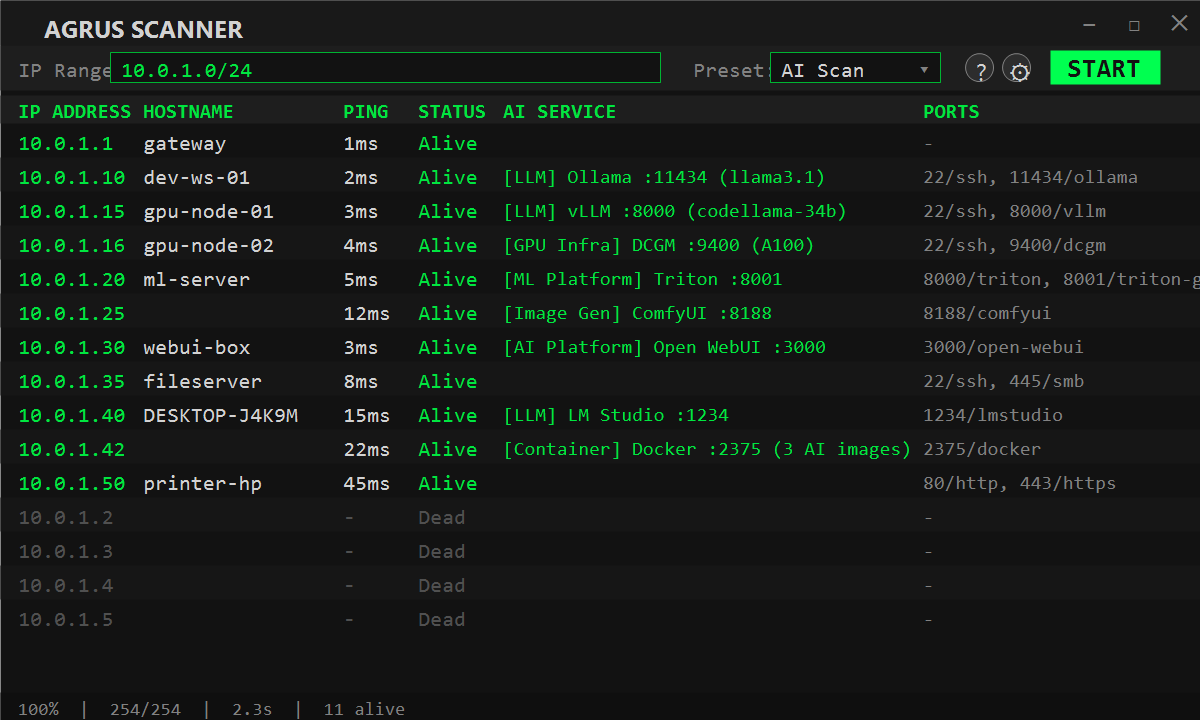
Agrus Scanner

Install

Download the latest installer from Releases, or directly:

AgrusScanner-Setup-1.0.6.msi — self-contained, no .NET runtime needed.

Also available on the Microsoft Store. Or visit the Tools page for the download link, checksum, and winget install command.

Requires Windows 10/11. The installer and the installed binaries are Authenticode-signed (Azure Trusted Signing, publisher Joseph Fago). Once installed, detection signatures keep themselves current; you only need a new installer when the app itself changes.

What's New

Signatures — November 15, 2026

  • NVIDIA GPU Exporter detection (GPU Infra) — the popular nvidia-smi-backed Prometheus exporter (utkuozdemir/nvidia_gpu_exporter) used on homelab/workstation GPUs, complementing the data-center-focused DCGM Exporter already detected; identified via the nvidia_smi_gpu_info identity metric on its documented default port 9835
  • Probe catalog grows to 135 definitions; signatures ship automatically through the rolling feed — no app update needed
  • Dependency check: Microsoft.NET.Test.Sdk 18.11.0 → 18.12.0 (test-only, no runtime impact); no vulnerable packages found

Signatures — November 8, 2026

  • Comet Opik detection (LLM) — self-hosted LLM/RAG/agent observability and evaluation platform, no auth by default; identified via its frontend page title on its standard docker-compose port 5173
  • Agenta detection (LLM) — self-hosted LLMOps platform for prompt management, evaluation and observability; identified via its root page title
  • Attu detection (Vector DB) — official web GUI for self-hosted Milvus, commonly bundled in Milvus docker-compose stacks with no auth by default; identified via its root page title
  • Easy Diffusion detection (Image Gen) — one-click self-hosted Stable Diffusion web app, unauthenticated by default; identified via its root page title on its distinctive default port 9000
  • ClearML detection (ML Platform) — self-hosted open-source MLOps platform for experiment tracking and pipeline management; identified via its webserver root page tagline
  • Rasa detection (Agent Platform) — self-hosted conversational AI/chatbot framework; identified via /version's minimum_compatible_version field on its default REST server port 5005


  • Chainlit detection (AI Platform) — popular self-hosted Python framework for building LLM chat apps, publicly accessible with no auth by default; identified via a generator marker on its root page
  • FastGPT detection (RAG Platform) — self-hosted open-source LLM knowledge-base/RAG platform; identified via its root page branding on its docker-compose default port 3000
  • Probe catalog grows to 134 definitions; signatures ship automatically through the rolling feed — no app update needed

Features

  • Ping Sweep - Fast ICMP discovery across subnets (256 concurrent)
  • Port Scanning - TCP connect scan with preset profiles (Quick, Common, Extended, AI, Deep AI)
  • AI Service Detection - 135 probe definitions identifying 100+ AI/ML services and MCP servers
  • Self-updating Signatures - detection definitions arrive automatically through a signed feed; no reinstall for new services
  • Docker Container Enumeration - Detects AI containers via exposed Docker API
  • GPU Infrastructure - Finds NVIDIA DCGM exporters and inference metrics
  • Export Results - Save scan results to CSV or TXT via the toolbar EXPORT button
  • Real-time Results - Live-updating UI as scan progresses
  • MCP Server - Expose scanning tools to AI agents via Model Context Protocol
  • Agent Skills - Works with Claude Code, OpenClaw, Cursor, and other AgentSkills-compatible tools

AI Detection Categories

Tool herunterladen

Beliebteste

Alle anzeigen →

Entdecken Sie die meistgenutzten Tools unserer Community.

  • 1

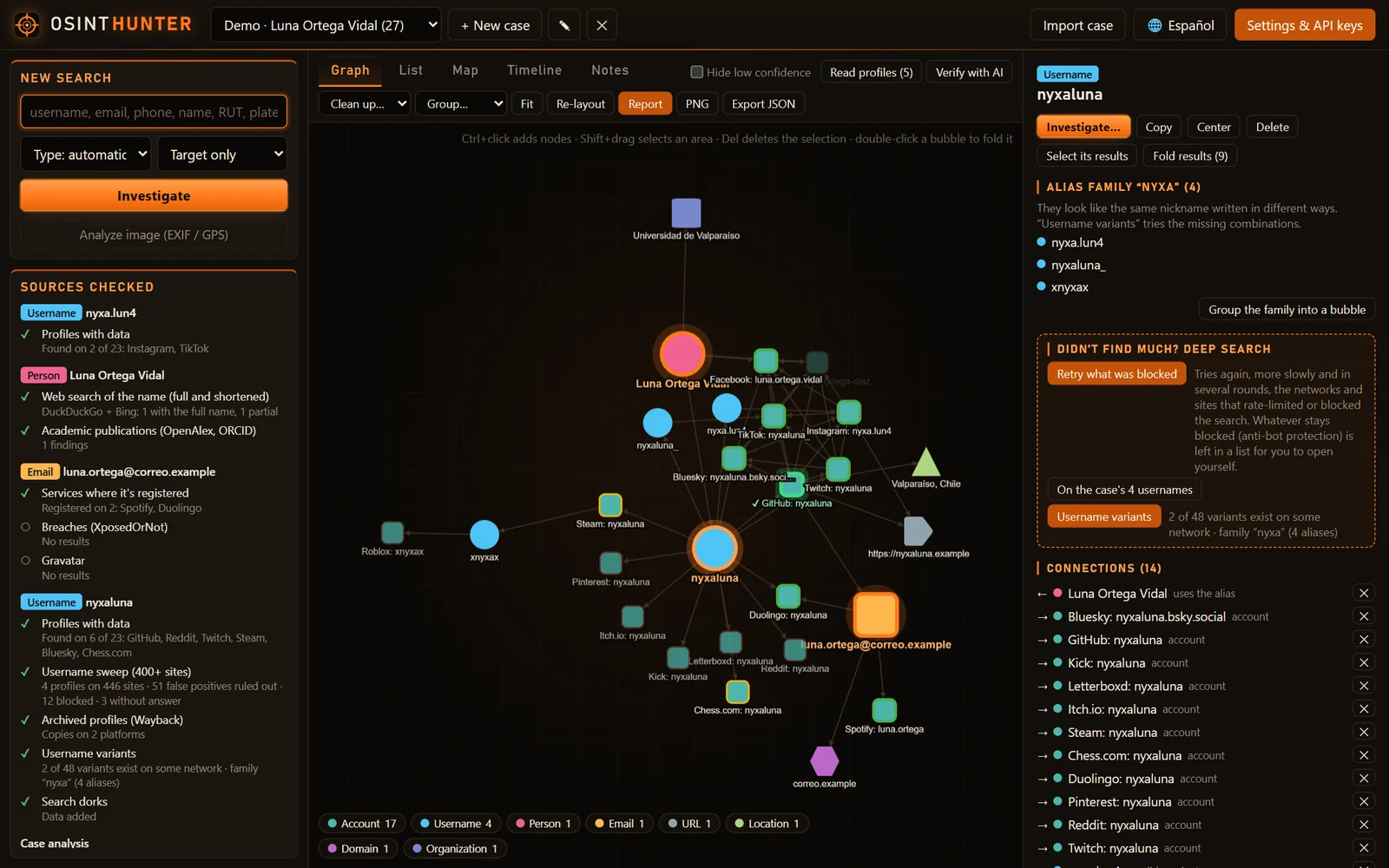
    OsintHunter

    letox4/osinthunter

    🎯 Das ultimative OSINT-Toolkit: Untersuchungsgraph, Konfidenzbewertung, Alias-Familien, Karte, Zeitleiste und Berichte. 49 Module, 400+ Websites, keine API-Schlüssel erforderlich.

    837
  • 2

    ghostlock-app

    yukonga/ghostlock-app

    GhostLock One-Tap Execution App (CVE-2026-43499)

    536
  • 3

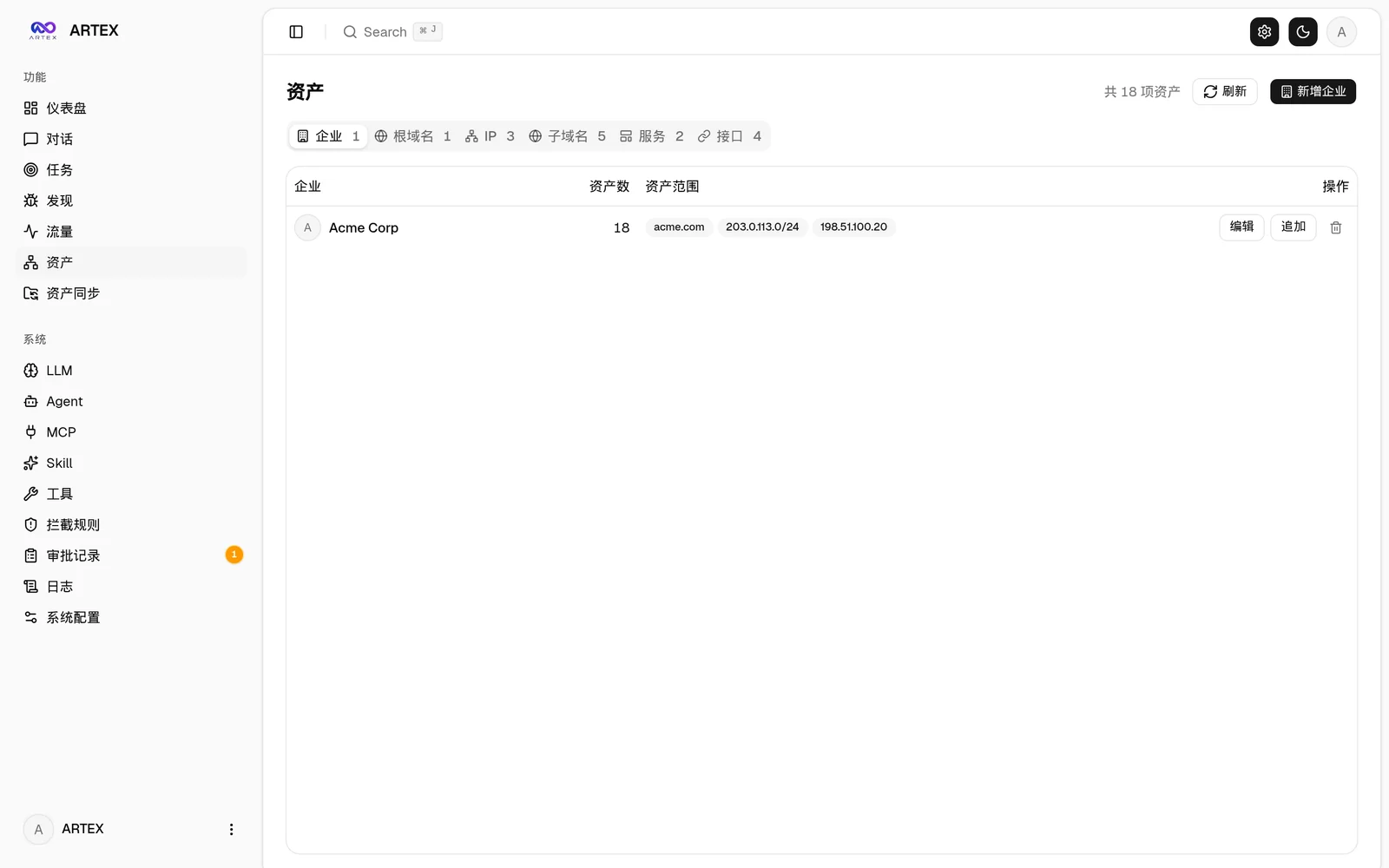
    ARTEX

    baarai/artex

    LLM-basierte Multi-Agenten-Plattform für autonome Penetrationstests mit Planer-/Worker-Agenten, Asset- und Explorationsgraphen, MITM-Verkehrsaufzeichnung und Schwachstellen-Retesting.

    424
  • 4

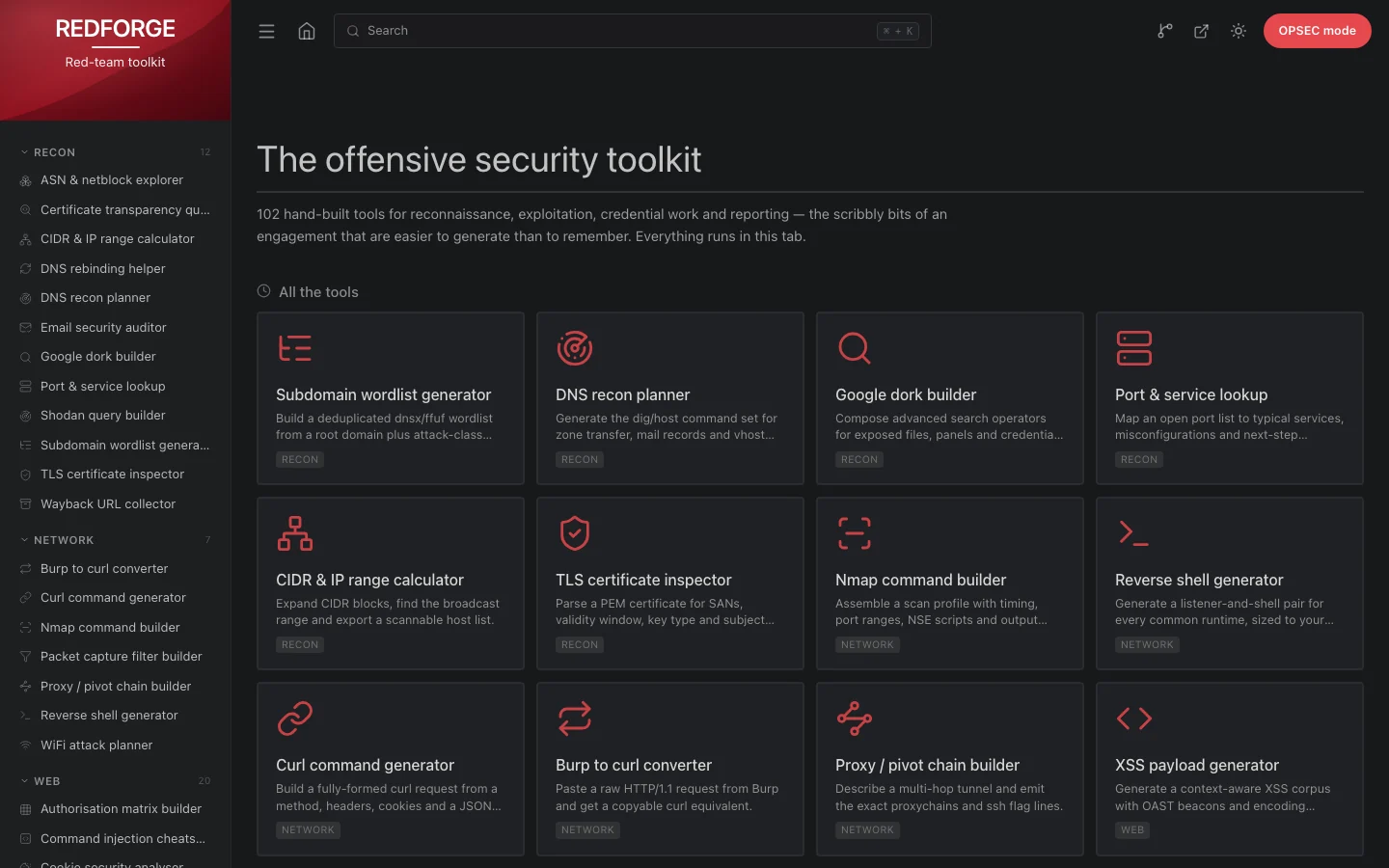
    redforge

    cybersecurity91/redforge

    Browser-seitiges Red-Team-Toolkit mit 102 Offline-Tools für Recon, Payload-Generierung, Credential-Angriffe, Krypto, Encoding und Engagement-Reporting.

    355
  • 5

    looking-glass

    anonghosty/looking-glass

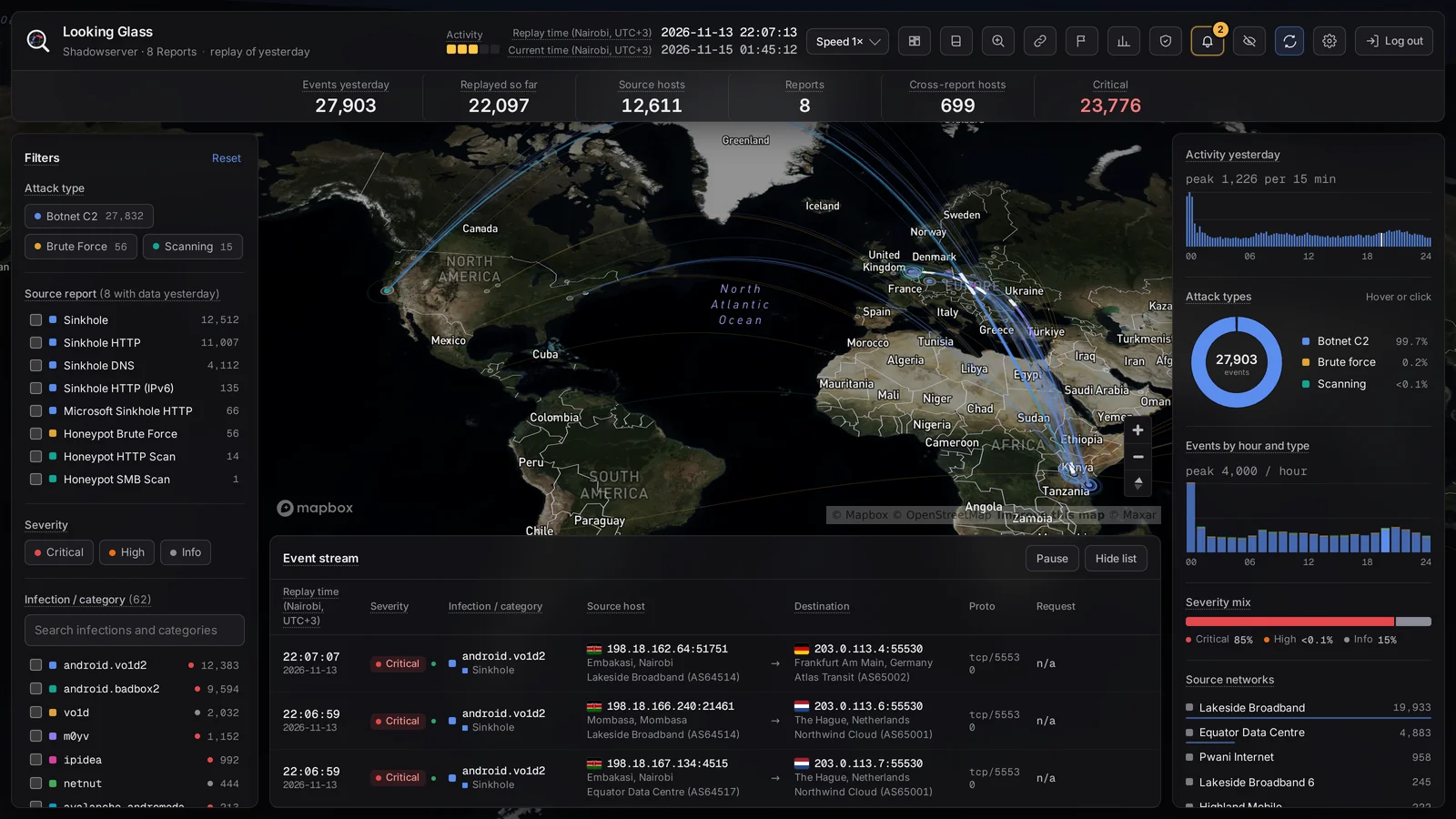
    CSIRT-Plattform, die Shadowserver-Berichte in MongoDB einliest und sie als interaktive Karten, Analysen, Findings, Advisories und Executive-Dashboards wiedergibt.

    294
  • 6

    CyberStrikeAI

    ed1s0nz/cyberstrikeai

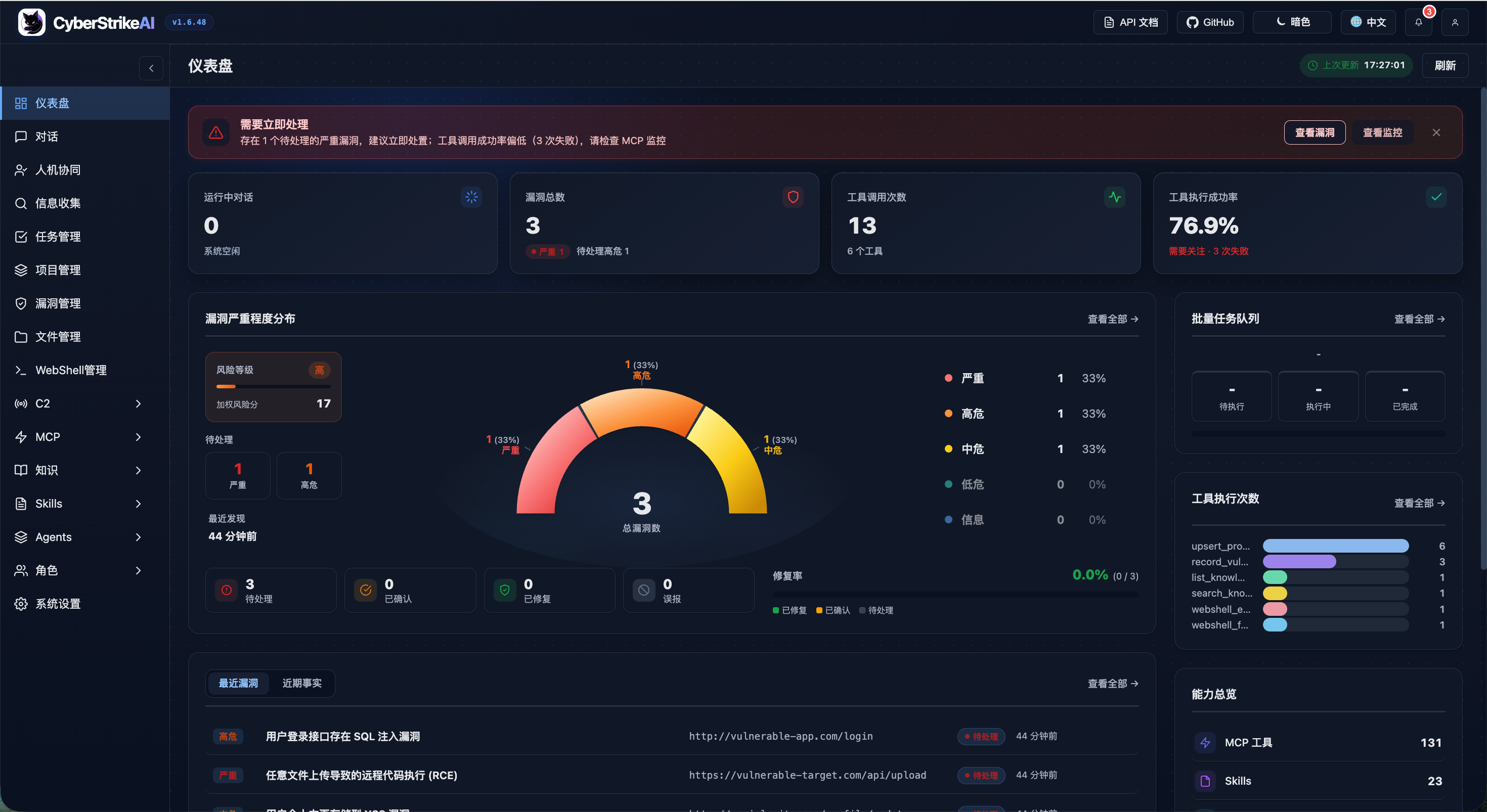
    Das System der Handlung für KI-native Cybersicherheit – wo Absicht zu gesteuerter Ausführung wird, Beweise zu operativem Gedächtnis werden und jeder Einsatz den nächsten verbessert.

    276

Alle Tools erkunden

Durchsuchen Sie unsere Tool-Sammlung

Alle Tools anzeigen →