 offseq/threat-finder
Runtime vulnerability scanner: finds CVEs in the services actually running on a host and ranks them by network exposure.





threat-finder finds the vulnerable software actually running on a host — not
what a manifest claims — and tells you which findings are network-reachable.
It resolves each running service (and, with --scope all, every installed OS
package) to an exact Package-URL and
matches it against the OffSeq Radar catalog using
ecosystem-native version rules, so backported/fixed builds aren't false-flagged.
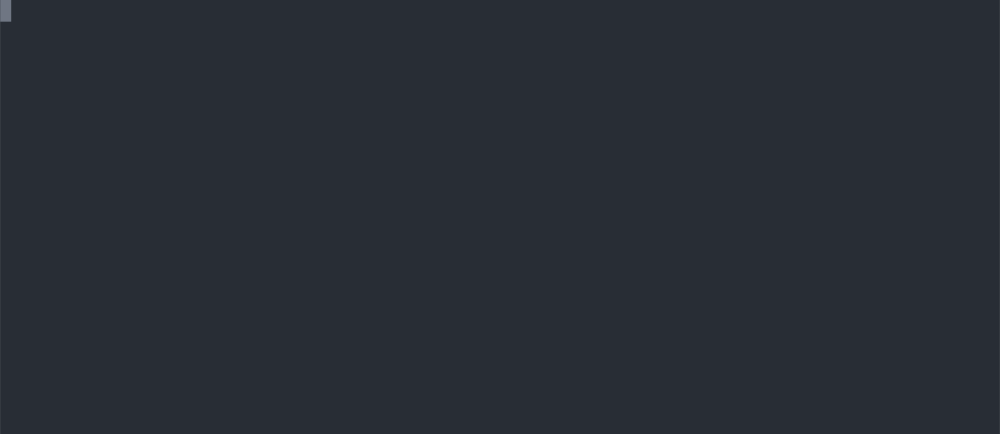
Vulnerability summary (highest risk first):

  openssh-server@1:8.9p1-3ubuntu0.6 — 1 finding(s)  [PUBLIC tcp 0.0.0.0:22]
      [ACT-NOW 92]  HIGH  CVE-2024-6387  [KEV]  regreSSHion: remote code execution in OpenSSH
                          → fix: 1:8.9p1-3ubuntu0.10   https://radar.offseq.com/threat/…
  [email protected] — 1 finding(s)
      [SCHEDULE 41] MED   CVE-2023-44487        HTTP/2 Rapid Reset

2 confirmed finding(s) across 2 asset(s); 1 exposed, 1 known-exploited.
brew install offseq/tap/threat-finder   # Homebrew (macOS/Linux), prebuilt
cargo binstall threat-finder            # prebuilt binary, no toolchain
cargo install --locked threat-finder    # from source
Prebuilt archives for Linux/macOS (x86_64 + arm64) and Windows (x86_64) are on the releases page. Requires Rust ≥ 1.89 to build from source. Linux, macOS, the BSDs, and Windows are all supported.
export OFFSEQ_API_KEY=...    # from https://radar.offseq.com/console
threat-finder
Scans the running services, prints a risk-ranked summary, and writes the full
JSON report to ./threats.json (owner-only). Add --scope all to also scan every
installed OS package.
threat-finder [OPTIONS]
| Flag | Description |
|---|---|
-o, --output <PATH> | Write the JSON report to PATH (default: prompt, or ./threats.json) |
--json | Print the JSON report to stdout instead of a file (conflicts with -o) |
--scope <SCOPE> | running (default) or all (+ every installed OS package) |
--severity <LEVEL> | Only report findings at/above critical|high|medium|low |
--strict | Drop coordinate-unconfirmed findings (report only confirmed) |
--fail-on <WHAT> | Exit 5 if matching findings exist: any|critical|high|medium|low|kev|exploited|act-now|exposed |
--sarif <PATH> | Also write a SARIF 2.1.0 report (for code-scanning UIs) |
--include <GLOB> / --exclude <GLOB> | Filter assets by name glob (repeatable) |
-q, --quiet | Suppress the banner, progress, and summary |
--no-color | Disable ANSI colors |
-y, --yes | Assume defaults, never prompt (CI/cron) |
--reset | Re-enter the API key, ignoring the saved one |
--register | Register the scanned host with Radar for continuous monitoring (no prompt) |
--no-register | Don't register or prompt for monitoring this run |
--host-name <NAME> | Friendly hostname to send with a registration |
--unregister | Remove this host's inventory from Radar and exit |
--sbom <FILE> | Scan an SBOM or lockfile instead of the host (one request; never registers) |
--respect-decisions | Keep findings silenced by a recorded Radar decision out of --fail-on (needs registration; one extra request) |
--vex <PATH> | Write this host's decisions as a VEX document (needs registration and a paid plan; one extra request) |
--vex-format <FORMAT> | openvex (default) or cyclonedx |
-v, --verbose | Debug-level runtime log file (RUST_LOG overrides) |
--windows-missing-updates | (Windows) Also list pending security updates from the Windows Update Agent (online scan; run elevated) |
-h, --help / -V, --version | Help / version |
# CI: only high+ findings, JSON to stdout, no prompts
OFFSEQ_API_KEY=… threat-finder --yes --json --severity high > report.json

# Fail the build only on findings that need action now (exposure-aware)
OFFSEQ_API_KEY=… threat-finder --yes --quiet --fail-on act-now
Exit codes: 0 ok · 1 lookup/IO error · 2 no or malformed API key · 3
unsupported OS · 4 rate limit/quota, or API access required (upgrade needed) ·
5 --fail-on threshold met. With --fail-on, a run where any lookup failed or
an asset was left incomplete exits 1 rather than passing; packages Radar could
not evaluate (listed under rejected) don't count as failed lookups. When the
quota runs out mid-run, the report is still written with what was matched (the
rest under errors), registration is skipped, and the run exits 4.
API key (get one from the Radar Console), resolved in order:
OFFSEQ_API_KEY environment variable (best for CI/cron).$XDG_CONFIG_HOME/offseq-rust/config.toml (0600),
unless --reset is given.Keys have Radar's format, tr_ followed by 64 hex characters; a malformed
OFFSEQ_API_KEY or saved key exits 2 before any request is made.
Non-interactive (--yes / no TTY) with no key available exits 2.
Set OFFSEQ_CONFIG_DIR to override where the config lives (default: the OS
per-user config dir) — handy for containers/CI that need a deterministic path.
Exact-coordinate matching. Each asset becomes a purl carrying its full
version (epoch + distro revision) and a ?distro= qualifier, e.g.
pkg:deb/ubuntu/openssh-server@1:8.9p1-3ubuntu0.6?distro=jammy. The inventory is
matched in batched POST /match/batch calls (one request per tier-sized chunk)
server-side, with ecosystem-native version rules (dpkg/rpm/apk/semver) — so a
backported-and-fixed build like 1.18.0-6+deb11u3 is correctly not flagged, and
there's no client-side version guessing. Findings are split by the API's
confirmed flag: confirmed matches are reported; coordinate matches whose
version can't be confirmed are surfaced separately as unconfirmed / triage
(excluded from the count, byCve, and --fail-on; drop them with --strict).
Assets with no buildable coordinate fall back to a name search, at most 25 per
run; the rest are listed under errors.
Network-exposure correlation. Manifest scanners (Trivy, Grype, osv-scanner)
read package lists; external scanners (Nessus, OpenVAS) need a second host. This
tool maps each running service's process to the sockets it is listening on
(/proc/net on Linux, lsof on the other Unixes, Get-NetTCPConnection /
netstat on Windows) and classifies reachability —
loopback / private / public. A vulnerable service on 0.0.0.0 is a very
different risk from one on 127.0.0.1: findings rank exposed-first and
--fail-on exposed gates CI on exactly that. No packets are sent. Findings also
carry CISA KEV (due date, ransomware use), EPSS, public exploit
maturity, and exploitation seen by ENISA EUVD or OffSeq Mirage
honeypots (--fail-on exploited).