
 protectai/vulnhuntr
Scoperta di vulnerabilità zero-shot utilizzando LLM


Uno strumento per identificare vulnerabilità sfruttabili da remoto utilizzando LLM e analisi statica del codice.
Le prime vulnerabilità 0day al mondo scoperte autonomamente da un'IA
Vulnhuntr sfrutta la potenza degli LLM per creare e analizzare automaticamente intere catene di chiamate di codice a partire dall'input utente remoto fino all'output del server, per la rilevazione di vulnerabilità complesse, multi-step e che bypassano la sicurezza, andando ben oltre ciò che gli strumenti tradizionali di analisi statica del codice sono in grado di fare. Consulta tutti i dettagli, inclusi gli output di Vulnhuntr per tutti gli 0-day, qui: Protect AI Vulnhuntr Blog
[!TIP] Hai trovato una vulnerabilità usando Vulnhuntr? Invia un report a huntr.com per ottenere $$ e invia una PR per aggiungerla alla lista qui sotto!
[!NOTE] Questa tabella è solo un esempio delle vulnerabilità trovate finora. Rimuoveremo i dati oscurati man mano che i periodi di responsible disclosure termineranno.
| Repository | Stelle | Vulnerabilità |
|---|---|---|
| gpt_academic | 67k | LFI, XSS |
| ComfyUI | 66k | XSS |
| Langflow | 46k | RCE, IDOR |
| FastChat | 37k | SSRF |
| Ragflow | 31k | RCE |
| LLaVA | 21k | SSRF |
| gpt-researcher | 17k | AFO |
| Letta | 14k | AFO |
[!IMPORTANT] Vulnhuntr richiede strettamente Python 3.10 a causa di numerosi bug in Jedi, che utilizza per analizzare il codice Python. Non funzionerà in modo affidabile se installato con altre versioni di Python.
Consigliamo di usare pipx o Docker per installare ed eseguire facilmente Vulnhuntr.
Usando Docker:
docker build -t vulnhuntr https://github.com/protectai/vulnhuntr.git#main
Usando pipx:
pipx install git+https://github.com/protectai/vulnhuntr.git --python python3.10
In alternativa puoi installarlo direttamente dal sorgente usando poetry:
git clone https://github.com/protectai/vulnhuntr
cd vulnhuntr && poetry install
Questo strumento è progettato per analizzare un repository GitHub alla ricerca di potenziali vulnerabilità sfruttabili da remoto. Lo strumento richiede una chiave API e il percorso locale di un repository GitHub. Puoi anche specificare opzionalmente un endpoint personalizzato per il servizio LLM.
[!CAUTION] Imposta sempre limiti di spesa o monitora attentamente i costi con il provider LLM che utilizzi. Questo strumento ha il potenziale di generare bollette salate poiché cerca di inserire più codice possibile nella finestra di contesto dell'LLM.
[!TIP] Consigliamo di usare Claude come LLM. Durante i test abbiamo ottenuto risultati migliori rispetto a GPT.
usage: vulnhuntr [-h] -r ROOT [-a ANALYZE] [-l {claude,gpt,ollama}] [-v]

Analyze a GitHub project for vulnerabilities. Export your ANTHROPIC_API_KEY/OPENAI_API_KEY before running.

options:
  -h, --help            show this help message and exit
  -r ROOT, --root ROOT  Path to the root directory of the project
  -a ANALYZE, --analyze ANALYZE
                        Specific path or file within the project to analyze
  -l {claude,gpt,ollama}, --llm {claude,gpt,ollama}
                        LLM client to use (default: claude)
  -v, --verbosity       Increase output verbosity (-v for INFO, -vv for DEBUG)
Da un'installazione pipx, analizza l'intero repository usando Claude:
export ANTHROPIC_API_KEY="sk-1234"
vulnhuntr -r /path/to/target/repo/
[!TIP] Consigliamo di indicare a Vulnhuntr file specifici che gestiscono l'input utente remoto e di scansionarli singolarmente.
Da un'installazione pipx, analizza il file /path/to/target/repo/server.py usando GPT-4o. Puoi anche specificare una sottodirectory invece di un file:
export OPENAI_API_KEY="sk-1234"
vulnhuntr -r /path/to/target/repo/ -a server.py -l gpt
Da un'installazione Docker, esegui usando Claude e un endpoint personalizzato per analizzare /local/path/to/target/repo/repo-subfolder/target-file.py:
docker run --rm -e ANTHROPIC_API_KEY=sk-1234 -e ANTHROPIC_BASE_URL=https://localhost:1234/api -v /local/path/to/target/repo:/repo vulnhuntr:latest -r /repo -a repo-subfolder/target-file.py
Sperimentale
Ollama è incluso come opzione, tuttavia non abbiamo avuto successo con i modelli open source nella strutturazione corretta del loro output.
export OLLAMA_BASE_URL=http://localhost:11434/api/generate
export OLLAMA_MODEL=llama3.2
vulnhuntr -r /path/to/target/repo/ -a server.py -l ollama
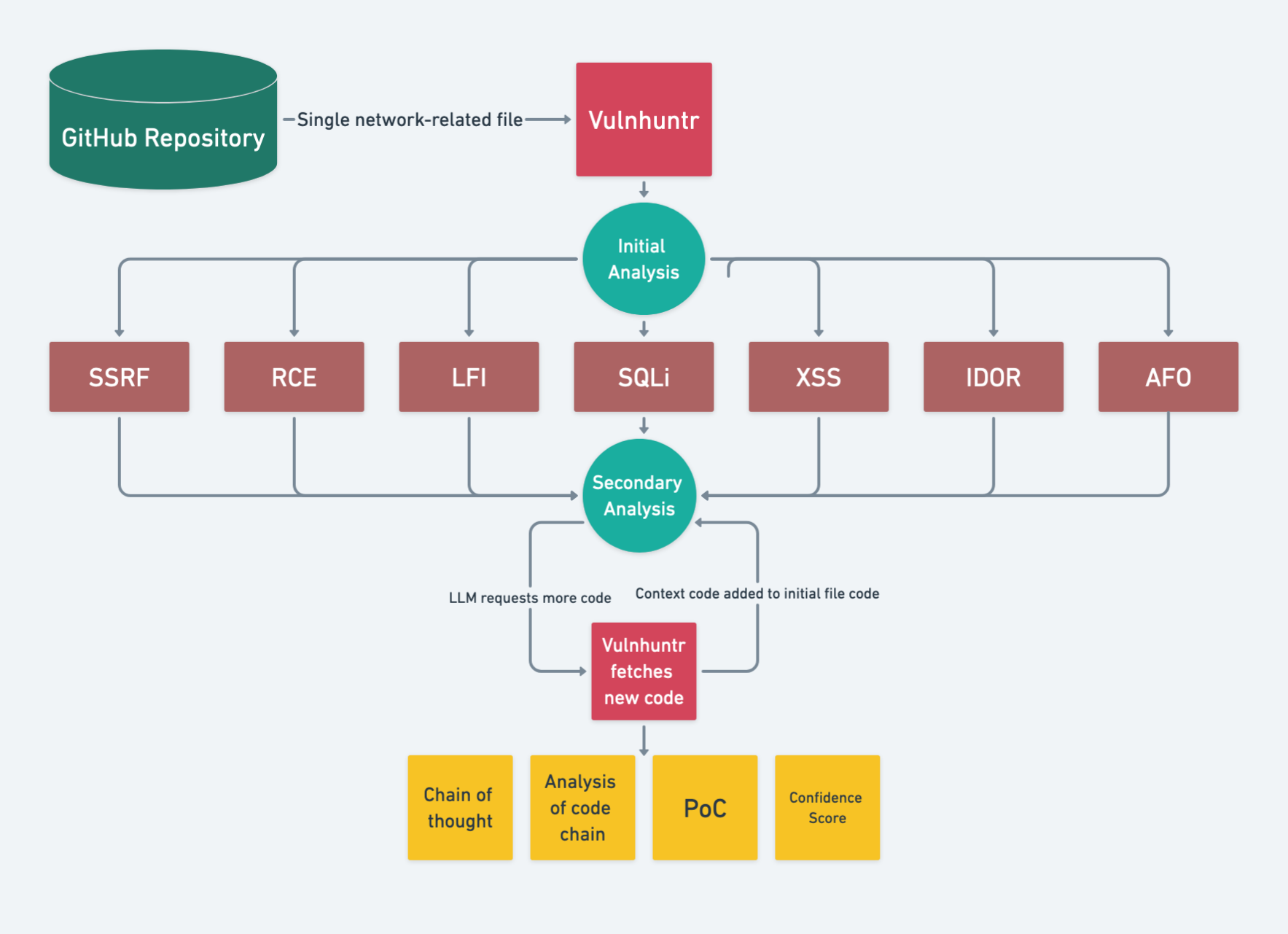
[!TIP] Generalmente punteggi di confidenza < 7 indicano che probabilmente non c'è una vulnerabilità. I punteggi di confidenza di 7 significano che dovrebbe essere investigata, e i punteggi di confidenza di 8+ significano che è molto probabile che sia una vulnerabilità valida.
Lo strumento genera un report dettagliato delle vulnerabilità trovate nei file analizzati. Il report include:
Di seguito è riportato un esempio di report di Vulnhuntr che descrive una vulnerabilità di remote code execution 0-day in Ragflow (ora corretta):
