 eslam3kl/sqlidetector
Semplice script Python supportato con profilo BurpBouty che ti aiuta a rilevare SQL injection "basata su errori" inviando più richieste con 14 payload e controllando 152 pattern regex per diversi database.

Semplice script Python supportato dal profilo BurpBouty che ti aiuta a rilevare SQL injection "Error based" inviando multiple richieste con 14 payload e controllando 152 pattern regex per diversi database.
+-+-+-+-+-+-+-+-+-+-+-+-+-+-+-+-+-+-+-+-+-+-+-+-+-+-+-+-+-+-
| S|Q|L|i| |D|e|t|e|c|t|o|r|
| Coded By: Eslam Akl @eslam3kll & Khaled Nassar @knassar702
| Version: 1.0.0
| Blog: eslam3kl.medium.com
+-+-+-+-+-+-+-+-+-+-+-+-+-+-+-+-+-+-+-+-+-+-+-+-+-+-+-+-+-+-
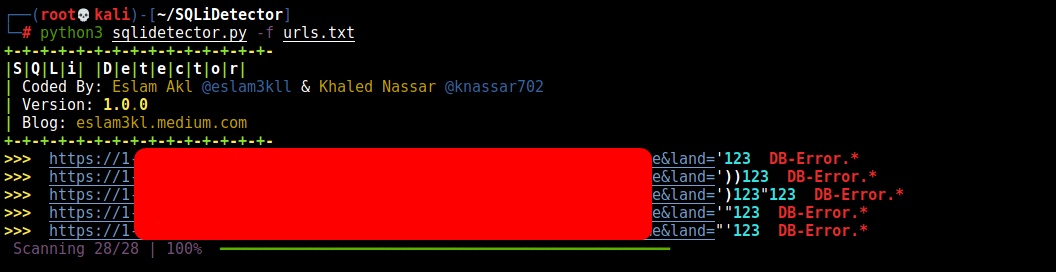
L'idea principale dello strumento è scansionare SQL Injection Error Based usando diversi payload come
'123
''123
`123
")123
"))123
`)123
`))123
'))123
')123"123
[]123
""123
'"123
"'123
\123
E confronta 152 pattern regex di errore per diversi database.
Fonte: https://github.com/sqlmapproject/sqlmap/blob/master/data/xml/errors.xml
È molto semplice, basta organizzare i tuoi passaggi come segue
Lo schema finale degli URL che passerai allo strumento deve essere come questo
https://aykalam.com?x=test&y=fortest
http://test.com?parameter=ayhaga
Esegui semplicemente il seguente comando per installare le librerie richieste.
~/eslam3kl/SQLiDetector# pip3 install -r requirements.txt
Per eseguire lo strumento stesso.
# cat urls.txt
http://testphp.vulnweb.com/artists.php?artist=1

# python3 sqlidetector.py -h
usage: sqlidetector.py [-h] -f FILE [-w WORKERS] [-p PROXY] [-t TIMEOUT] [-o OUTPUT]
A simple tool to detect SQL errors
optional arguments:
  -h, --help            show this help message and exit]
  -f FILE, --file FILE  [File of the urls]
  -w WORKERS, --workers [WORKERS Number of threads]
  -p PROXY, --proxy [PROXY Proxy host]
  -t TIMEOUT, --timeout [TIMEOUT Connection timeout]
  -o OUTPUT, --output [OUTPUT [Output file]

# python3 sqlidetector.py -f urls.txt -w 50 -o output.txt -t 10
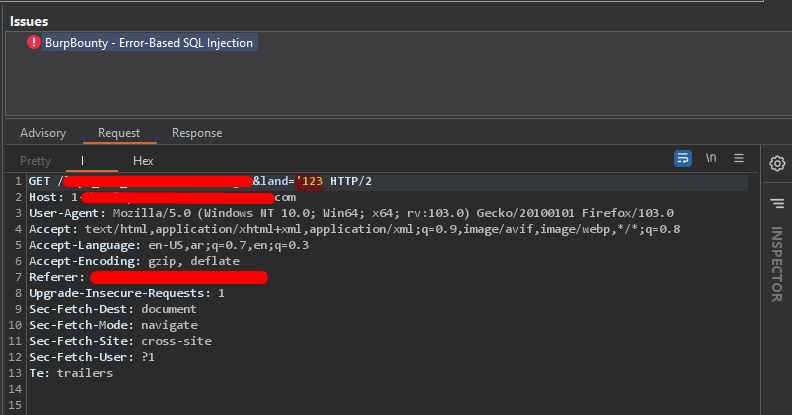
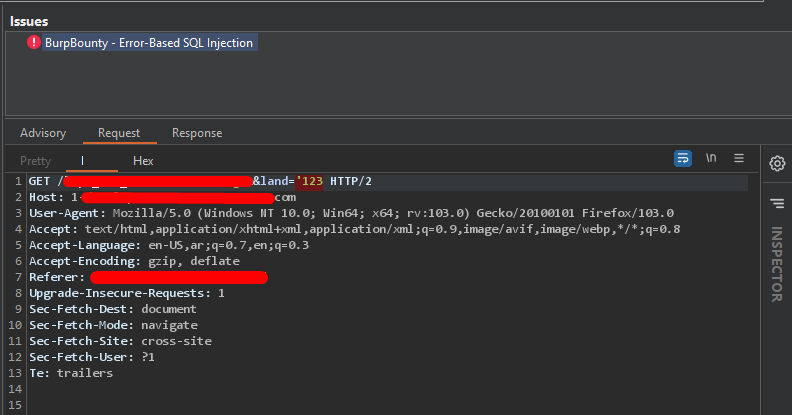
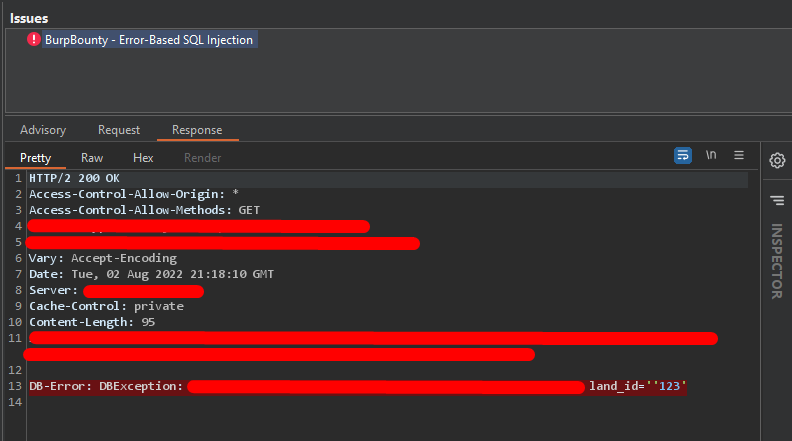
Ho creato un profilo BurpBounty che usa gli stessi payload e li inietta in più posizioni come
Penso sia più efficace e sarà utile per le richieste POST che non puoi testare con lo script Python.
Qual è la differenza tra questo strumento e qualsiasi altro?
Se abbiamo un link come questo https://example.com?file=aykalam&username=eslam3kl quindi abbiamo 2 parametri. Crea 2 possibili URL vulnerabili.
https://example.com?file=123'&username=eslam3kl
https://example.com?file=aykalam&username=123'
Se vuoi contribuire, sentiti libero di farlo. Sei il benvenuto :)
Grazie a Mohamed El-Khayat e Orwa per i fantastici payload e idee. Seguiteli e imparerete di più
https://twitter.com/Mohamed87Khayat
https://twitter.com/GodfatherOrwa

