v3ng4mxv1p3r/mobile-drop-device-soc-detection
End-to-end simulation of detecting a root-less Android Drop Device (Casper) using Wazuh SIEM to capture Layer 7 attacks like Shellshock (CVE-2014-6271).

This project demonstrates an end-to-end SOC laboratory workshop simulating how an unauthorized, root-less Android device (Casper Via S), used as a "Drop Device" within an internal network, is detected via Wazuh SIEM when launching critical Layer 7 attacks (Web Scanning, RCE).
This repository showcases the fusion of Mobile Penetration Testing (Red Team), SIEM Log Integration (Blue Team), and Custom Rule Creation (Detection Engineering) to mitigate the "Shadow Device" threat.
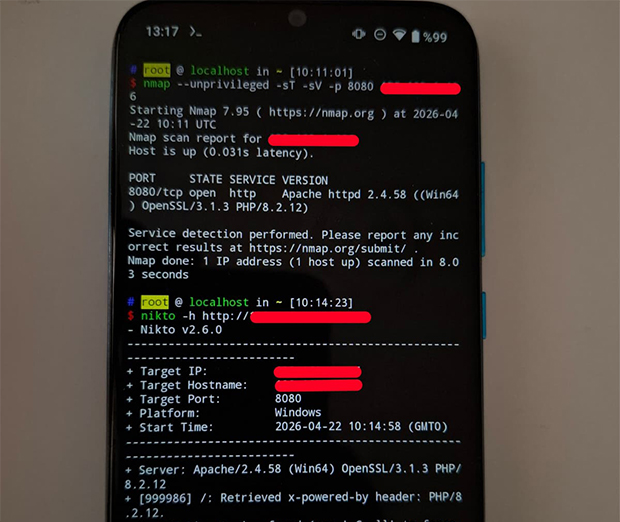
Performed using nmap --unprivileged from the mobile device to discover open services. Standard TCP Connect (-sT) scans were utilized due to SELinux restrictions preventing raw socket creation on non-rooted Android devices. The target Apache server was identified on Port 8080.
Initiated an aggressive vulnerability scan using Nikto against the target's internal IP and Port 8080. Nikto attempted to obfuscate its identity while injecting numerous well-known exploit payloads.
Ingested Apache access.log from the Windows 10 target into Wazuh Server via the deployed agent.
Critical Log Detail Captured: Although Nikto attempted to hide its scanner identity, Wazuh's deep log analysis (Rule 31166) successfully detected the notorious Shellshock RCE payload within the request header.
This image perfectly captures the project: The mobile "Drop Device" active in hand, and the SOC Dashboard behind it, showing the real-time detection alerts.
These images show the specific log detail captured by Wazuh SIEM, highlighting the Shellshock payload, the CVE ID, and the MITRE ATT&CK techniques.
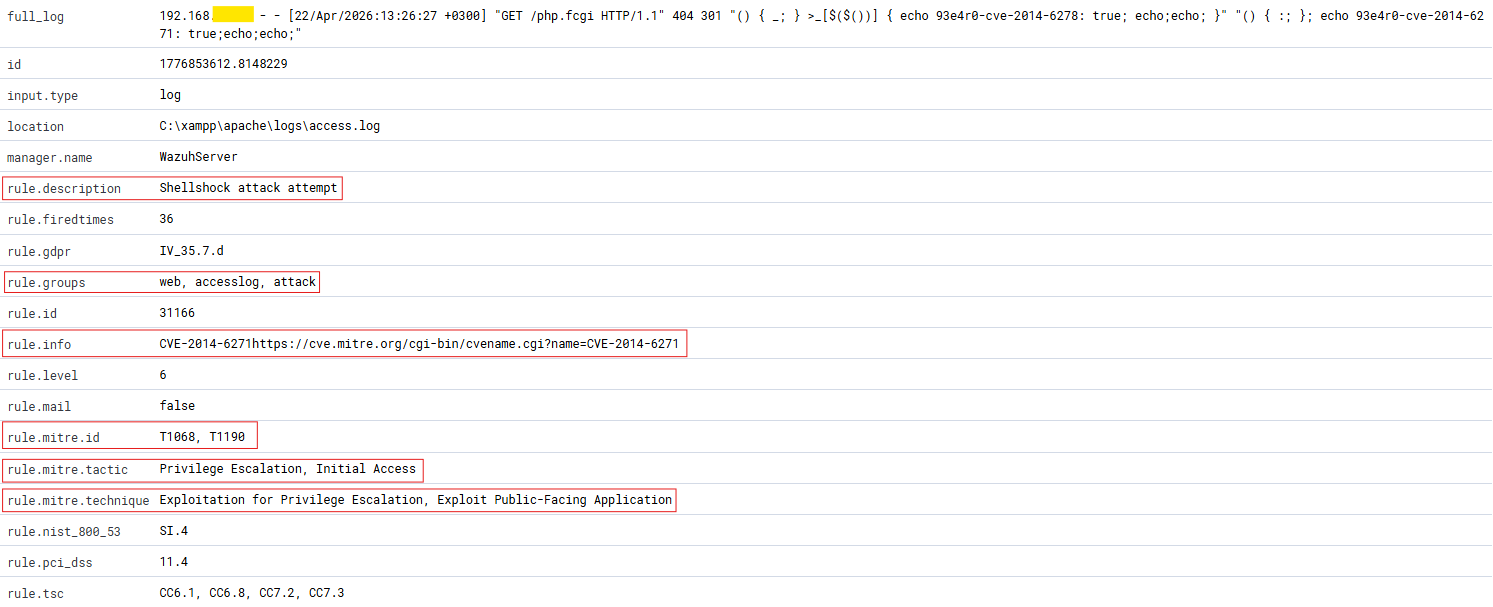
In addition to built-in rules, a custom Level 12 rule was created to identify generalized web scanner patterns from unauthorized devices, although in this instance, the specific Shellshock alert (Rule 31166) was prioritized.