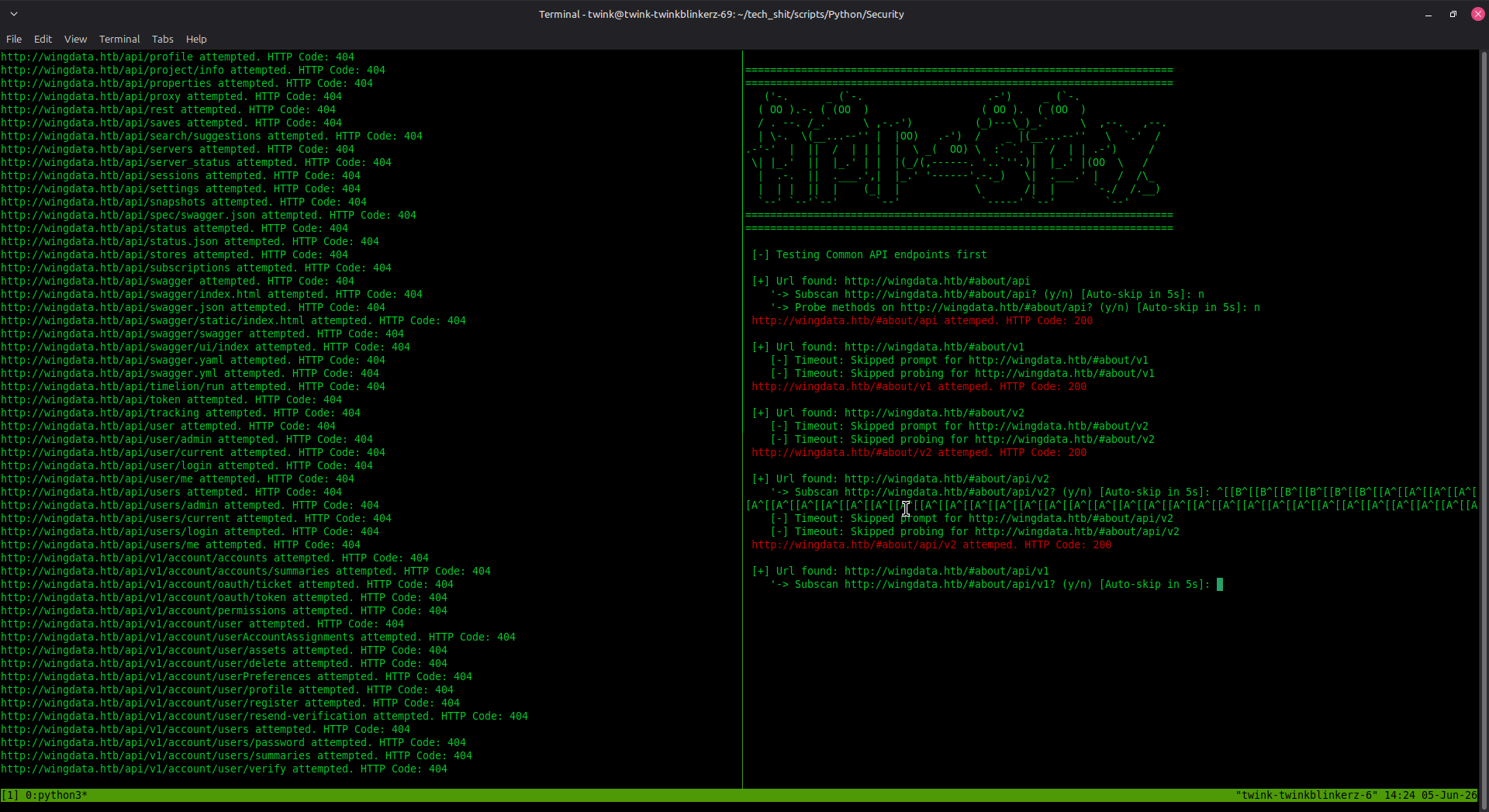
A powerful directory brute-force tool that's tailored for recursive/multiplex operations, API discovery and enumeration, JS file scraping, and lists API HTTP methods, in one command. This is not ONLY for APIs, my tool just excels at them

A powerful directory brute-force tool designed for API reconnaissance and penetration testing. Automatically discovers hidden API endpoints, performs recursive subscanning, and probes HTTP methods for deeper API enumeration.
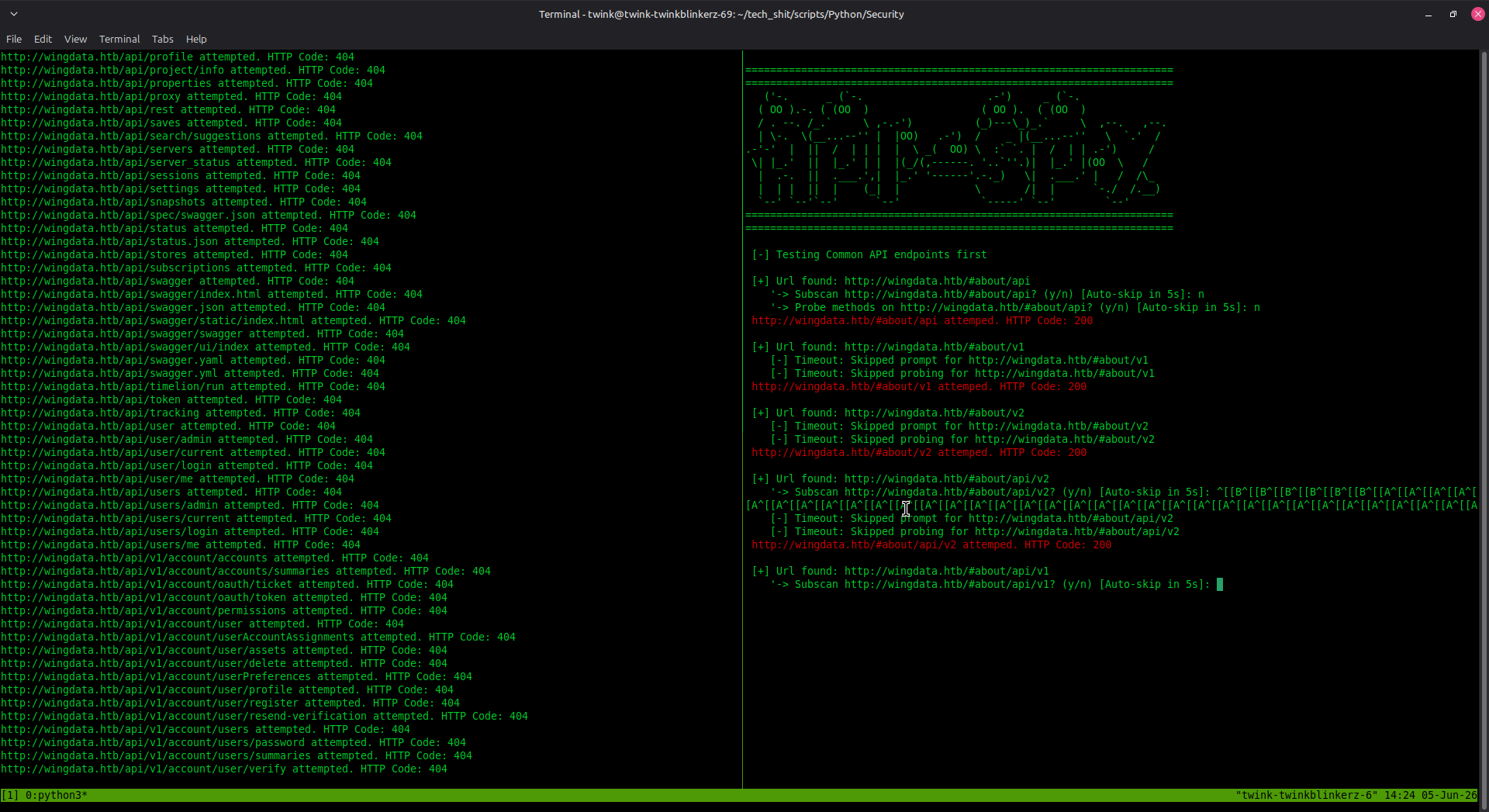
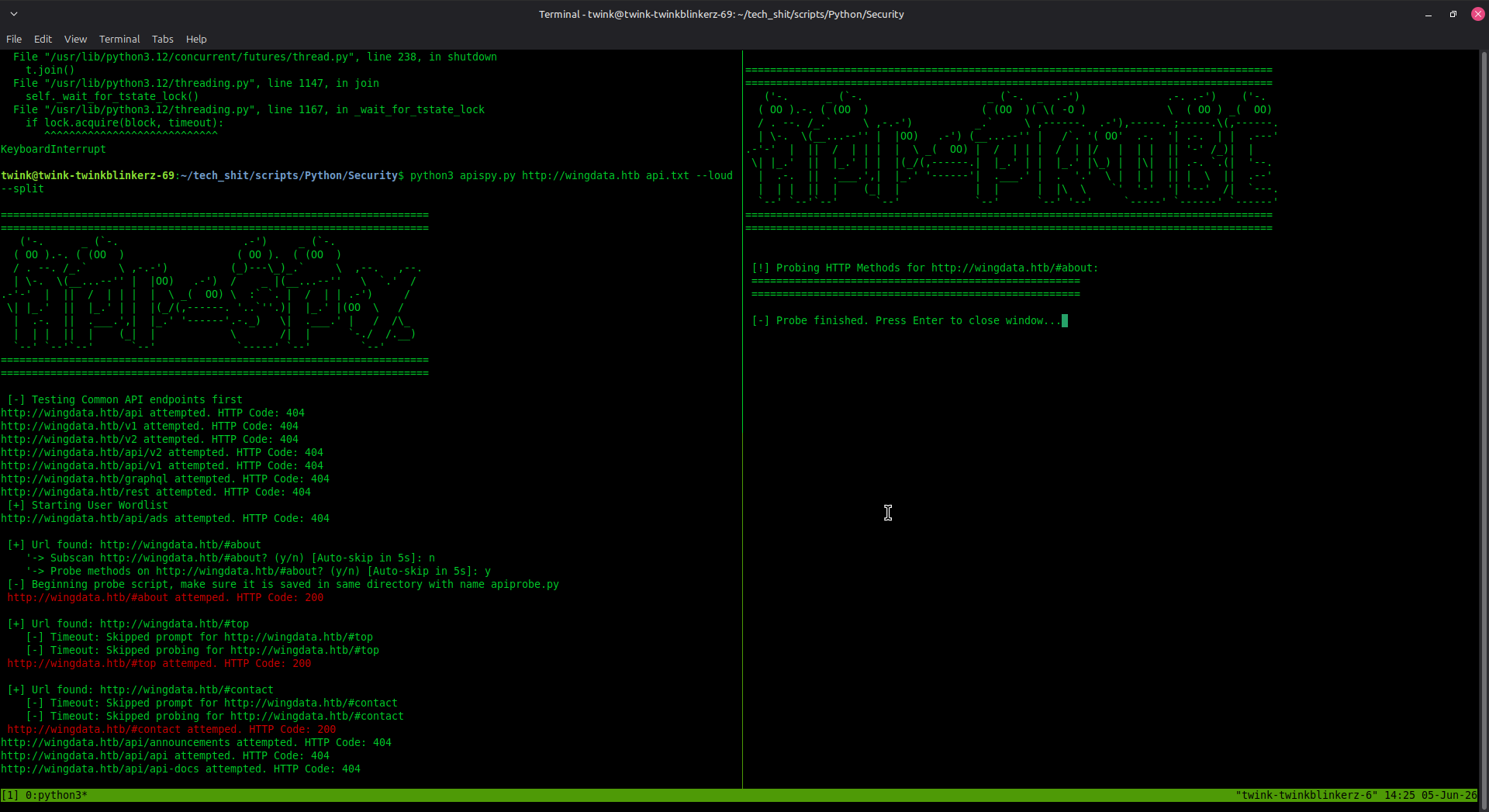
✨ Core Capabilities:
requests librarytmux (optional, for --split flag)xfce-terminal (for Linux desktop environments)# Clone the repository
git clone https://github.com/austinjump-sec/API-SPY.git
cd API-SPY
# Install dependencies
pip install requests
# Make scripts executable (optional)
chmod +x apispy.py apiprobe.py
python3 apispy.py <baseUrl> <wordlist> [OPTIONS]
| Argument | Description |
|---|---|
<baseUrl> | Target URL (e.g., http://example.com or http://api.example.com) |
<wordlist> | Path to wordlist file containing endpoints (one per line) |
| Argument | Description |
|---|---|
--t<number> | Thread count (max 150, default: 1) |
--split | Use tmux split-window instead of new terminal windows |
--debug | Shows otherwise hidden error messages |
--loud | Shows all messages, positive and errors, highlighting any that dont return 404 |
--js | Scans for JavaScript files and scrapes any found ones for common hardcoded API endpoints |
python3 apispy.py http://api.example.com wordlist.txt
python3 apispy.py http://api.example.com wordlist.txt -t10
python3 apispy.py http://api.example.com wordlist.txt -t5 --split
python3 apispy.py http://api.example.com/v1 wordlist.txt -t20
The tool starts by testing a predefined set of common API paths:
api, v1, v2, api/v1, api/v2, graphql, rest#)200, 401, 403When an endpoint is found, you're prompted:
'-> Subscan <url>? (y/n) [Auto-skip in 5s]:
y/yes to recursively scan that endpoint with the same wordlistAfter subscanning, you're prompted:
'-> Probe methods on <url>? (y/n) [Auto-skip in 5s]:
apiprobe.py which tests HTTP methods on the discovered endpointAllow header hints[+] Url found: http://api.example.com/v1 ← 200 OK (accessible)
'-> Subscan http://api.example.com/v1? (y/n) [Auto-skip in 0s]:
[-] Timeout: Skipped prompt for http://api.example.com/v1?
'-> Probe methods on http://api.example.com/v1? (y/n) [Auto-skip in 4s]:
[-] Url found but not permitted (403 ERR): ... ← Forbidden but exists
[-] Url found but not permitted (401 ERR): ... ← Requires authentication
[+] GET     -> STATUS: 200 OK (Size: 1024)
[-] POST    -> STATUS: 405 (Size: 0)
[Header Hint] Allow: GET, HEAD, OPTIONS
Create a simple text file with endpoints (one per line):
admin
users
api/users
v1/products
v2/customers
/api/v1/auth
/graphql
search
data
config
Note: Lines starting with # are treated as comments and ignored.
Popular API wordlists to use with API-SPY:
# Stealth mode (low threads)
python3 apispy.py http://target.com wordlist.txt -t3

# Balanced mode
python3 apispy.py http://target.com wordlist.txt -t15

# Aggressive mode
python3 apispy.py http://target.com wordlist.txt -t50
timeout=5 in source code to customizeEnsure the wordlist path is correct and the file exists:
ls -la /path/to/wordlist.txt
When subscanning, ensure:
apispy.pyapiprobe.pyIf --split fails:
sudo apt install tmuxtmux new-session -s scancurl http://your-url/check_status() function⚠️ Legal & Ethical:
Edit the source code to adjust timeout values:
def ask_subscan(url, wordlist, timeout=10): # Change from 5 to 10 seconds

