 ntdallas/bof_executeassembly
Beacon Object File für Cobalt Strike, das .NET-Assemblys im Beacon mit Umgehungstechniken ausführt.

Beacon-Objekt-Datei für Cobalt Strike, die .NET-Assemblies im Beacon mit Umgehungstechniken ausführt.
┌──────────────────────────────────────────────────────────────────────────────┐
│                         Cobalt Strike Beacon                                 │
│                         (Parent Process)                                     │
└──────────────────────────────────┬───────────────────────────────────────────┘
                                   │
                                   │ beacon_inline_execute()
                                   │ - Gepackte Argumente parsen
                                   │ - go() aufrufen
                                   ▼
┌──────────────────────────────────────────────────────────────────────────────┐
│                      BOF Execute-Assembly Entry (go)                         │
│  ┌────────────────────────────────────────────────────────────────────────┐  │
│  │ Konfigurationsparsing                                                  │  │
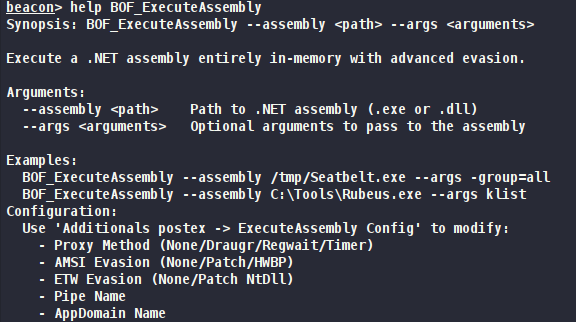
│  │  • ProxyMethod (None/Draugr/Timer/RegWait)                             │  │
│  │  • AmsiEvasion (None/Patch/HWBP)                                       │  │
│  │  • EtwEvasion (None/Patch)                                             │  │
│  │  • PipeName, AppDomainName, Assembly-Bytes, Argumente                  │  │
│  └────────────────────────────────┬───────────────────────────────────────┘  │
│                                   │                                          │
│  ┌────────────────────────────────▼───────────────────────────────────────┐  │
│  │ Framework-Initialisierung                                              │  │
│  │  • InitVxTable() - Syscall-Nummern auflösen                            │  │
│  │    └─> NtProtectVirtualMemory, NtContinue, NtCreateEvent,              │  │
│  │        NtSetEvent, NtWaitForSingleObject, NtClose                      │  │
│  │  • DraugrInit() - Synthetische Stack-Frames einrichten                 │  │
│  │    └─> RtlUserThreadStart, BaseThreadInitThunk lokalisieren            │  │
│  └────────────────────────────────┬───────────────────────────────────────┘  │
│                                   │                                          │
│  ┌────────────────────────────────▼───────────────────────────────────────┐  │
│  │ DLL-Laden (ProxyLoadLibraryA)                                          │  │
│  │  • amsi.dll, OleAut32.dll, mscoree.dll, User32.dll                     │  │
│  │                                                                        │  │
│  │  PROXY_NONE:     LoadLibraryA() direkt                                 │  │
│  │  PROXY_DRAUGR:   DRAUGR_API(LoadLibraryA) - gespoofter Stack          │  │
│  │  PROXY_TIMER:    CreateTimerQueue → Timer-Rückruf                     │  │
│  │  PROXY_REGWAIT:  RegisterWaitForSingleObject → Event-Rückruf           │  │
│  └────────────────────────────────┬───────────────────────────────────────┘  │
│                                   │                                          │
│  ┌────────────────────────────────▼───────────────────────────────────────┐  │
│  │ AMSI-Umgehung einrichten                                               │  │
│  │                                                                        │  │
│  │  AMSI_PATCH:                         AMSI_HWBP:                        │  │
│  │  ┌─────────────────────────┐         ┌──────────────────────────────┐  │  │
│  │  │ 1. 4 Bytes sichern      │         │ 1. VEH-Handler hinzufügen    │  │  │
│  │  │ 2. NtProtectVirtualMem  │         │ 2. RtlCaptureContext         │  │  │
│  │  │    (RW)                 │         │ 3. DR0 = AmsiScanBuffer      │  │  │
│  │  │ 3. Schreiben:           │         │ 4. DR7-Breakpoint aktivieren │  │  │
│  │  │    48 31 C0  xor rax,rax│         │ 5. NtContinue (Kontext anw.) │  │  │
│  │  │    C3        ret        │         │                              │  │  │
│  │  │ 4. NtProtectVirtualMem  │         │ Bei Aufruf von AmsiScanBuffer:│  │  │
│  │  │    (wiederherstellen)   │         │   → #BP-Exception            │  │  │
│  │  └─────────────────────────┘         │   → VEH leitet zu RET um     │  │  │
│  │                                      │   → RAX = 0                  │  │  │
│  │                                      └──────────────────────────────┘  │  │
│  └────────────────────────────────┬───────────────────────────────────────┘  │
│                                   │                                          │
│  ┌────────────────────────────────▼───────────────────────────────────────┐  │
│  │ ETW-Umgehung (falls aktiviert)                                         │  │
│  │  • NtProtectVirtualMemory(NtTraceEvent, RW)                            │  │
│  │  • 4 Bytes sichern                                                     │  │
│  │  • Schreiben: 48 31 C0 C3 (xor rax,rax; ret)                           │  │
│  │  • NtProtectVirtualMemory(Schutz wiederherstellen)                     │  │
│  └────────────────────────────────┬───────────────────────────────────────┘  │
│                                   │                                          │
│  ┌────────────────────────────────▼───────────────────────────────────────┐  │
│  │ Ausgabeumleitung einrichten                                            │  │
│  │  ┌──────────────────────────────────────────────────────────────────┐  │  │
│  │  │ 1. CreateNamedPipeW(\\.\pipe\{CustomName})  → hPipe              │  │  │
│  │  │ 2. CreateFileW(Pipe-Pfad)                   → hFile              │  │  │
│  │  │ 3. AllocConsole() + ShowWindow(SW_HIDE)     → Versteckte Konsole │  │  │
│  │  │ 4. PEB-Manipulation:                                             │  │  │
│  │  │    • Sichern: hCurrentStdOut = PEB->ProcessParameters->StdOut    │  │  │
│  │  │    • Sichern: hCurrentStdErr = PEB->ProcessParameters->StdErr    │  │  │
│  │  │    • Umleiten: PEB->StdOut = hFile                               │  │  │
│  │  │    • Umleiten: PEB->StdErr = hFile                               │  │  │
│  │  └──────────────────────────────────────────────────────────────────┘  │  │
│  └────────────────────────────────┬───────────────────────────────────────┘  │
│                                   │                                          │
│  ┌────────────────────────────────▼───────────────────────────────────────┐  │
│  │ CLR-Hosting & Assembly-Ausführung (ExecuteAssembly)                    │  │
│  │  ┌──────────────────────────────────────────────────────────────────┐  │  │
│  │  │ 1. CLR-Versionserkennung                                         │  │  │
│  │  │    • Assembly-Bytes auf "v2.0.50727" oder "v4.0.30319" prüfen    │  │  │
│  │  │ 2. CLR-Initialisierung                                           │  │  │
│  │  │    • CLRCreateInstance → ICLRMetaHost                            │  │  │
│  │  │    • GetRuntime(v2/v4) → ICLRRuntimeInfo                         │  │  │
│  │  │    • GetInterface → ICorRuntimeHost                              │  │  │
│  │  │    • Start()                                                     │  │  │
│  │  │ 3. AppDomain-Verwaltung                                          │  │  │
│  │  │    • GetDefaultDomain() → Standard-AppDomain                     │  │  │
│  │  │    • CreateDomain(CustomName) → Isolierte AppDomain              │  │  │
│  │  │ 4. Assembly laden                                                │  │  │
│  │  │    • SAFEARRAY (VT_UI1) mit Assembly-Bytes erstellen             │  │  │
│  │  │    • SafeArrayAccessData → Assembly in Safe Array kopieren       │  │  │
│  │  │    • CustomAppDomain->Load_3(safearray) → Im Speicher laden      │  │  │
│  │  │ 5. Argumente vorbereiten                                         │  │  │
│  │  │    • Leerzeichen-getrennte Argumente parsen                      │  │  │
│  │  │    • SAFEARRAY(VT_BSTR) für jedes Argument erstellen             │  │  │
