
tlsx v1.4.0
TLSベースのデータ収集に特化した、高速で設定可能なTLSグラバー。





機能 • インストール • 使い方 • tlsxの実行 • Discordに参加
TLSベースのデータ収集と分析に焦点を当てた、高速で設定可能なTLSグラバーです。
機能
- 高速かつ完全に設定可能なTLS接続
- 複数のTLS接続モード
- 複数のTLSプローブ
- 旧TLSバージョンのための自動TLSフォールバック
- 事前ハンドシェイク TLS接続(早期終了)
- カスタマイズ可能なCipher / SNI / TLS選択
- JARM/JA3 TLSフィンガープリント
- TLS設定ミス
- ASN,CIDR,IP,HOST,およびURL入力
- STD IN/OUTおよびTXT/JSON出力
インストール
tlsxのインストールにはGo 1.24が必要です。インストールするには、以下のコマンドを実行するか、リリースページからプリコンパイル済みバイナリをダウンロードしてください。```console go install github.com/projectdiscovery/tlsx/cmd/tlsx@latest
## 使用方法```console
tlsx -h
これはツールのヘルプを表示します。サポートされているすべてのスイッチは次のとおりです。```console TLSX is a tls data gathering and analysis toolkit.
Usage: tlsx [flags]
Flags: INPUT: -u, -host string[] target host to scan (-u INPUT1,INPUT2) -l, -list string target list to scan (-l INPUT_FILE) -p, -port string[] target port to connect (default 443)
SCAN-MODE: -sm, -scan-mode string tls connection mode to use (ctls, ztls, openssl, auto) (default "auto") -ps, -pre-handshake enable pre-handshake tls connection (early termination) using ztls -sa, -scan-all-ips scan all ips for a host (default false) -iv, -ip-version string[] ip version to use (4, 6) (default 4)
PROBES: -san display subject alternative names -cn display subject common names -so display subject organization name -tv, -tls-version display used tls version -cipher display used cipher -hash string display certificate fingerprint hashes (md5,sha1,sha256) -jarm display jarm fingerprint hash -ja3 display ja3 fingerprint hash (using ztls) -wc, -wildcard-cert display host with wildcard ssl certificate -tps, -probe-status display tls probe status -ve, -version-enum enumerate and display supported tls versions -ce, -cipher-enum enumerate and display supported cipher -ct, -cipher-type value ciphers types to enumerate. possible values: all/secure/insecure/weak (comma-separated) (default all) -ch, -client-hello include client hello in json output (ztls mode only) -sh, -server-hello include server hello in json output (ztls mode only) -se, -serial display certificate serial number
MISCONFIGURATIONS: -ex, -expired display host with host expired certificate -ss, -self-signed display host with self-signed certificate -mm, -mismatched display host with mismatched certificate -re, -revoked display host with revoked certificate -un, -untrusted display host with untrusted certificate
CONFIGURATIONS: -config string path to the tlsx configuration file -r, -resolvers string[] list of resolvers to use -cc, -cacert string client certificate authority file -ci, -cipher-input string[] ciphers to use with tls connection -sni string[] tls sni hostname to use -rs, -random-sni use random sni when empty -rps, -rev-ptr-sni perform reverse PTR to retrieve SNI from IP -min-version string minimum tls version to accept (ssl30,tls10,tls11,tls12,tls13) -max-version string maximum tls version to accept (ssl30,tls10,tls11,tls12,tls13) -cert, -certificate include certificates in json output (PEM format) -tc, -tls-chain include certificates chain in json output -vc, -verify-cert enable verification of server certificate -ob, -openssl-binary string OpenSSL Binary Path -hf, -hardfail strategy to use if encountered errors while checking revocation status -proxy string socks5 proxy to use for tlsx
OPTIMIZATIONS: -c, -concurrency int number of concurrent threads to process (default 300) -cec, -cipher-concurrency int cipher enum concurrency for each target (default 10) -timeout int tls connection timeout in seconds (default 5) -retry int number of retries to perform for failures (default 3) -delay string duration to wait between each connection per thread (eg: 200ms, 1s)
UPDATE: -up, -update update tlsx to latest version -duc, -disable-update-check disable automatic tlsx update check
OUTPUT: -o, -output string file to write output to -j, -json display output in jsonline format -dns display unique hostname from SSL certificate response -ro, -resp-only display tls response only -silent display silent output -nc, -no-color disable colors in cli output -v, -verbose display verbose output -version display project version
PDCP: -pd, -dashboard upload or view output in the PDCP UI dashboard -pdu, -dashboard-upload string upload tlsx output file (JSONL format) to the PDCP UI dashboard -auth string PDCP API key for authentication -tid, -team-id string upload asset results to a specified team ID -aid, -asset-id string upload new assets to an existing asset ID -aname, -asset-name string asset group name
DEBUG: -health-check, -hc run diagnostic check up
## ライブラリとしての tlsx の使用

tlsx をライブラリとして使用する例は、[examples](https://github.com/projectdiscovery/tlsx/blob/main/examples) フォルダにあります。

## tlsx の実行

### tlsx への入力

**tlsx** は TLS 接続を行うために **ip** を必要とし、以下に示す複数の形式を受け付けます:```bash
AS1449 # ASN input
173.0.84.0/24 # CIDR input
93.184.216.34 # IP input
example.com # DNS input
example.com:443 # DNS input with port
https://example.com:443 # URL input port
-host / -uフラグを使用して入力ホストを指定でき、複数の値はカンマ区切りの入力で指定できます。同様に、file入力は-list / -lフラグを使用してサポートされています。
カンマ区切りのホスト入力の例:```console $ tlsx -u 93.184.216.34,example.com,example.com:443,https://example.com:443 -silent
ファイルベースのホスト入力の例:```console
$ tlsx -list host_list.txt
Port Input:
tlsx はデフォルトでポート 443 に接続します。これは -port / -p フラグを使用してカスタマイズできます。単一または複数のポートは、カンマ区切りの入力または接続するポートのリストを含む改行区切りのファイルを使用して指定できます。
カンマ区切りのポート入力の例:``` $ tlsx -u hackerone.com -p 443,8443
ファイルベースのポート入力の例:```
$ tlsx -u hackerone.com -p port_list.txt
注記:
入力ホストにポートが含まれている場合(例:
8.8.8.8:443やhackerone.com:8443)、ホストで指定されたポートが、デフォルトまたは-port / -pフラグで指定されたポートの代わりにTLS接続に使用されます。
TLSプローブ(デフォルト実行)
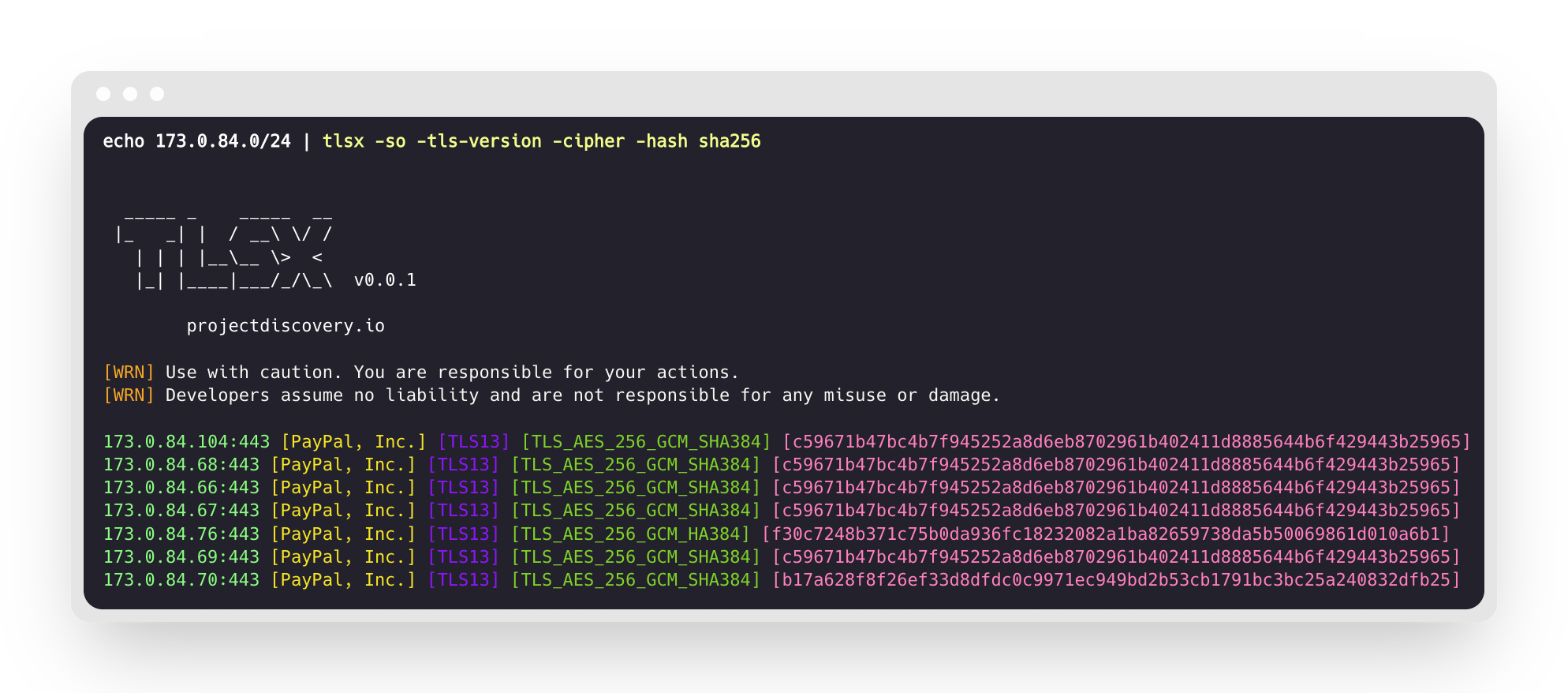
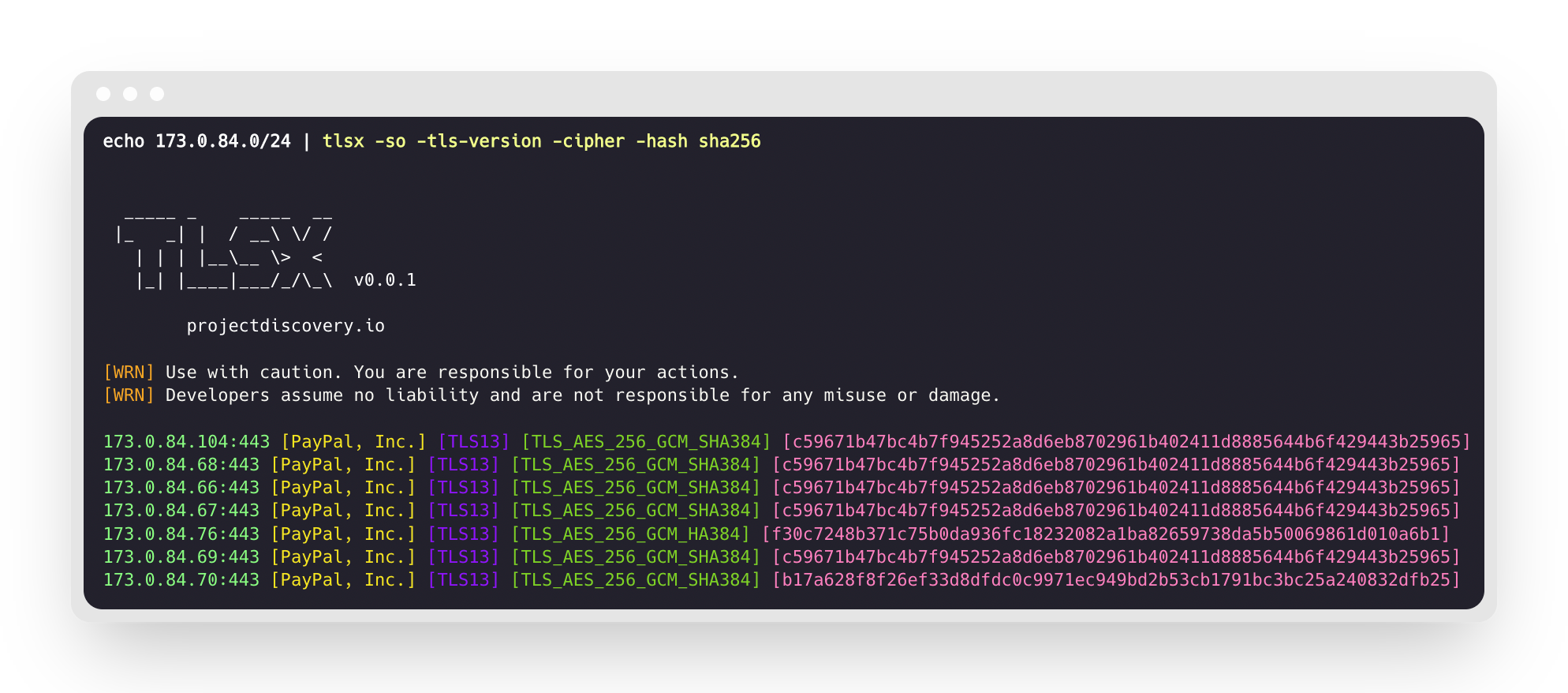
これは、指定されたCIDRレンジに対してツールを実行し、ポート443でTLS接続を受け付けるホストを返します。```console $ echo 173.0.84.0/24 | tlsx
|_ | | / \ / / | | | |_ > < || ||/_/_\ v0.0.1