 xernary/cve-2026-82539
Security advisory for TOTOLINK a720r buffer overflow vulnerability

Vendor: TOTOLINK
Vendor's website: TOTOLINK
Model: A720R
Firmware version: V4.1.5cu.630_B20250509
Firmware download address: TOTOLINK
CVSS v4.0 Base Score: 9.4 (Critical)
Vector: CVSS:4.0/AV:N/AC:L/AT:N/PR:H/UI:N/VC:H/VI:H/VA:H/SC:H/SI:H/SA:H/E:P
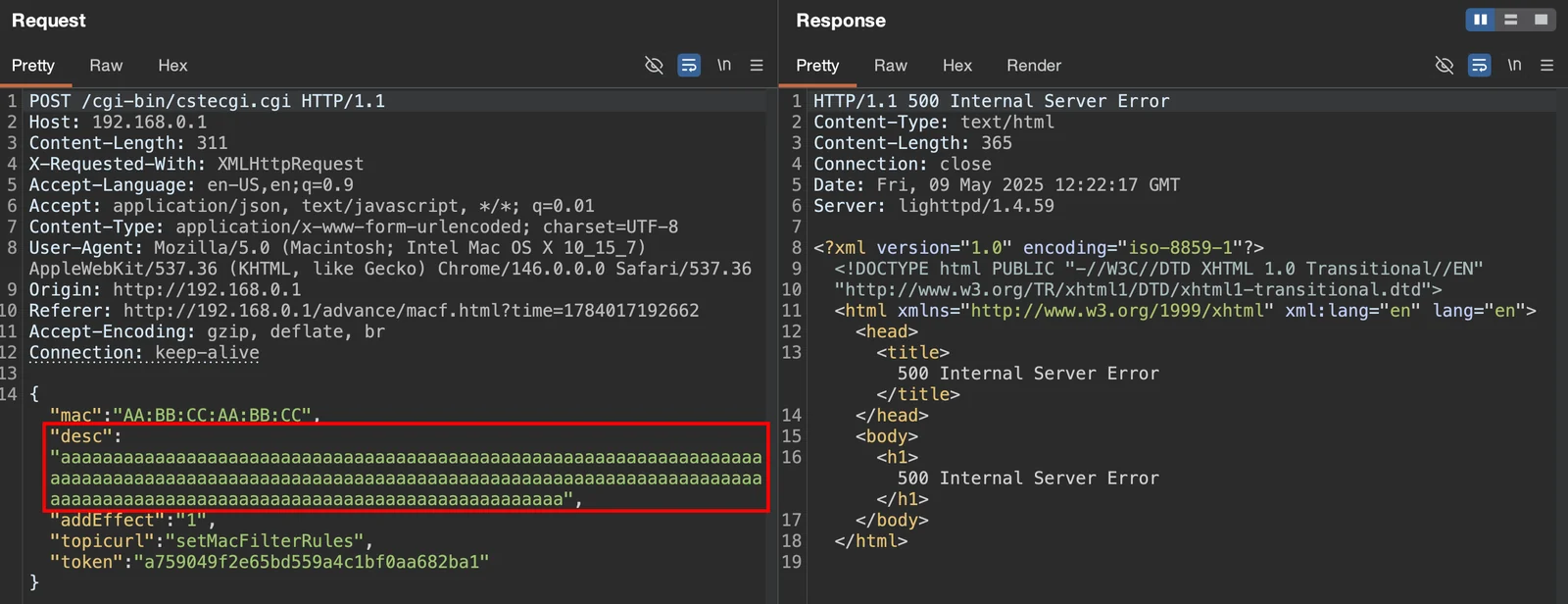
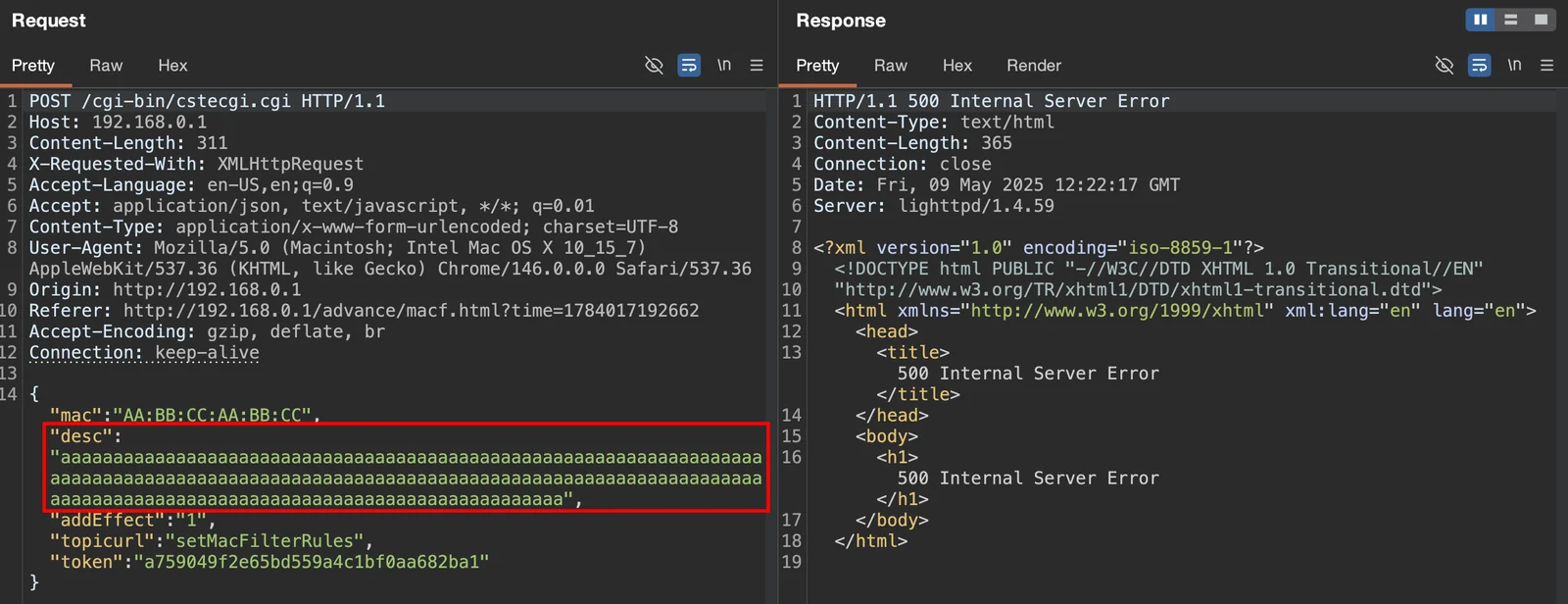
A stack-based buffer overflow exists in the cstecgi.cgi firmware binary that allows an authenticated administrator to hijack the control flow of the process and execute existing code paths within the binary. The vulnerability can be triggered by sending a crafted request to the setMacFilterRules handler containing an overly long value of a desc parameter, which is copied into a fixed-size stack buffer via strcpy() without any bounds checking, overwriting the saved return address.
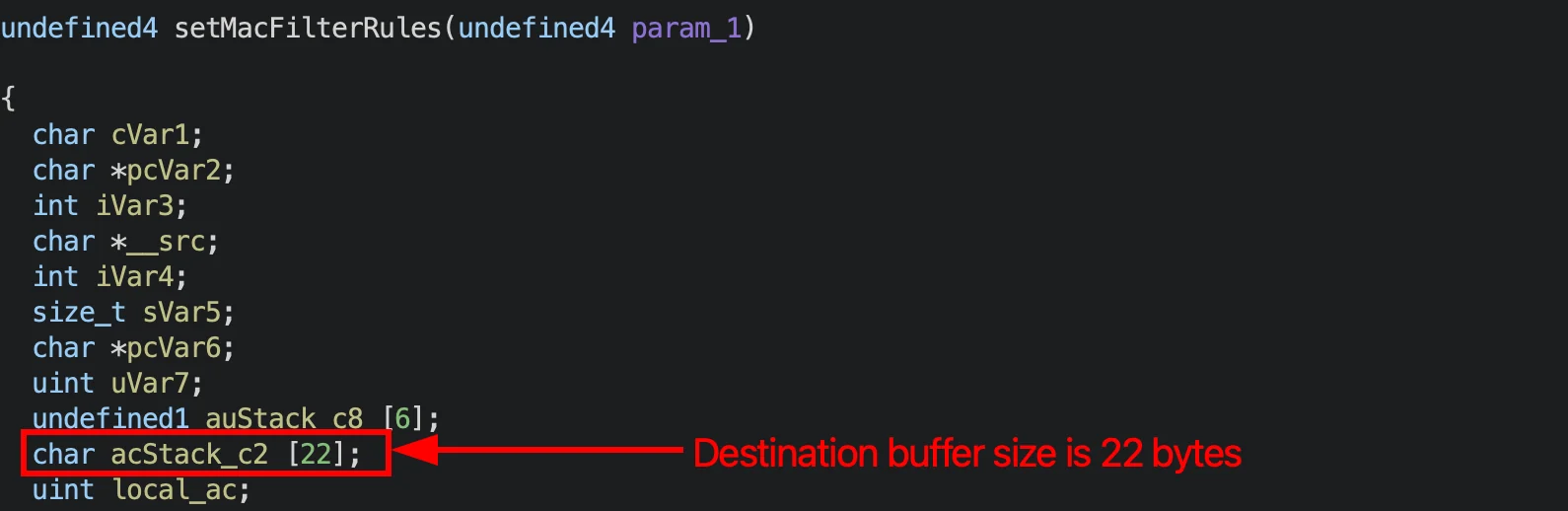
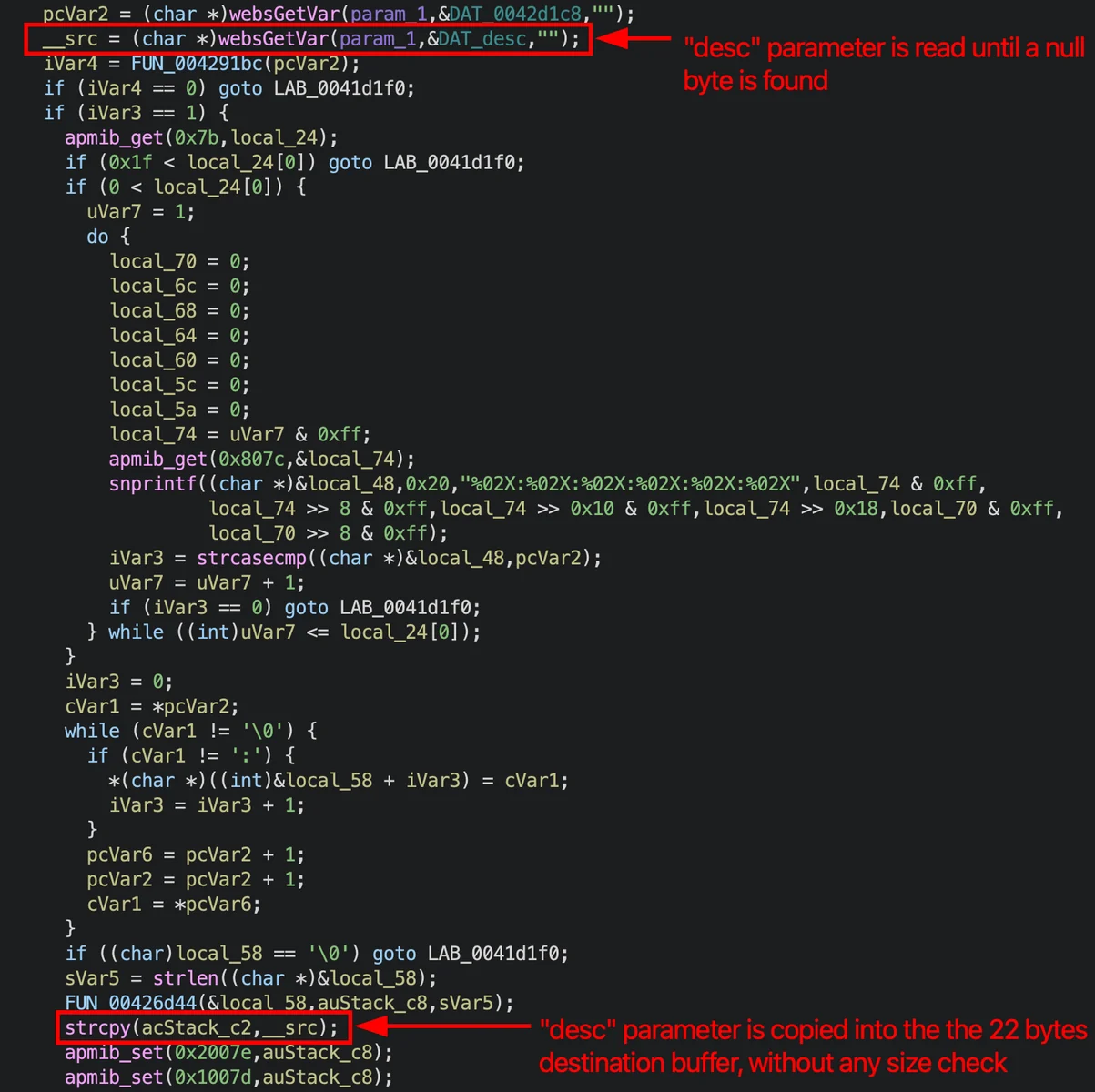
The vulnerable code is located within the cstecgi.cgi binary, where the supplied value of desc is copied into a stack buffer without length validation, allowing the saved return address to be overwritten and the program's control flow to be redirected. As the binary is compiled without stack canaries and without PIE, the overflow goes undetected and execution can be reliably redirected to code residing at fixed addresses within the binary.
By overwriting the saved return address, control flow was redirected to existing functions within the binary. This was demonstrated by invoking a sleep(2) call (confirming reliable control of the instruction pointer through a measurable delay in the device's response), the system reboot routine, the session logout function, and the log-clearing routine.
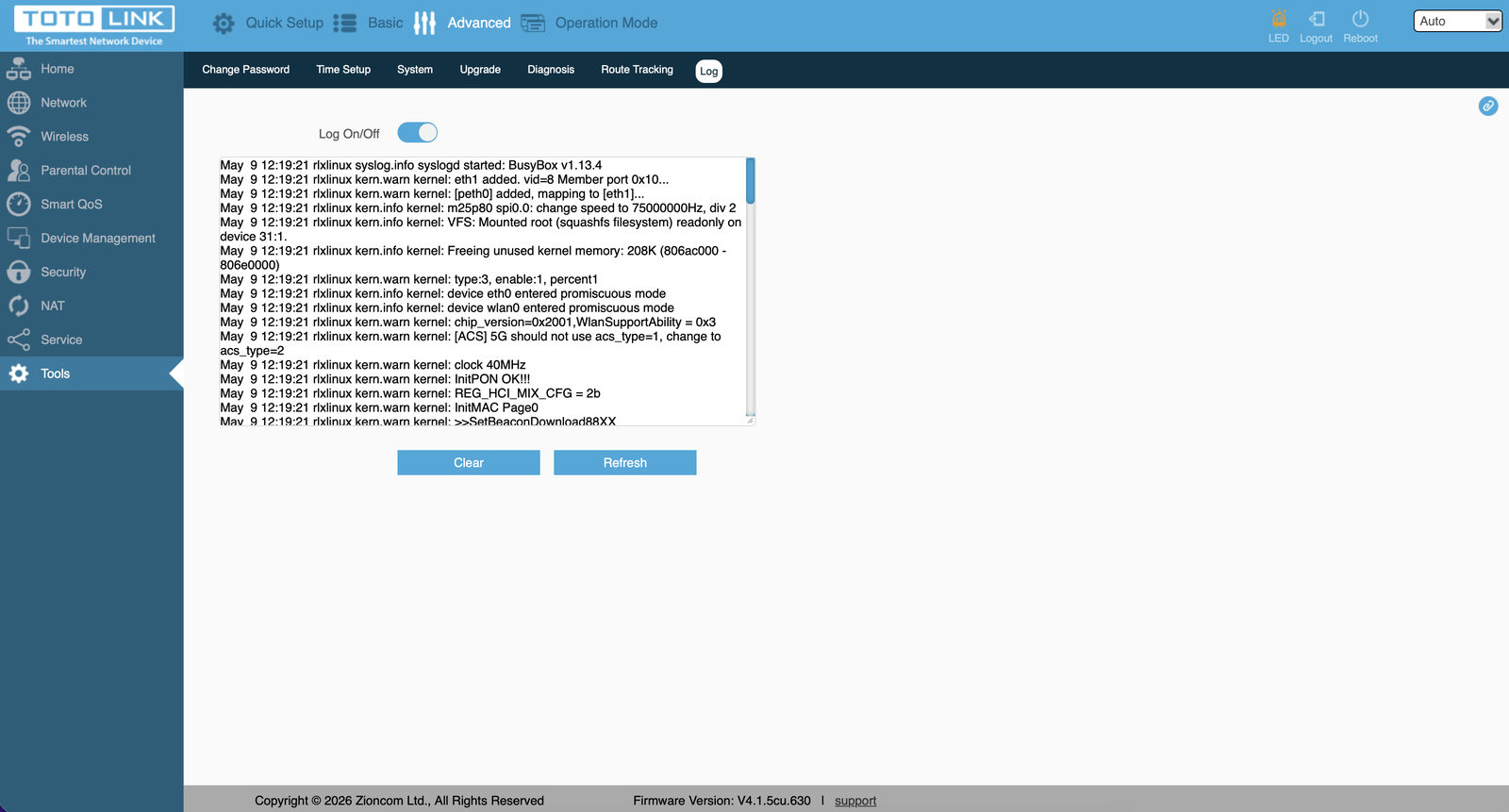
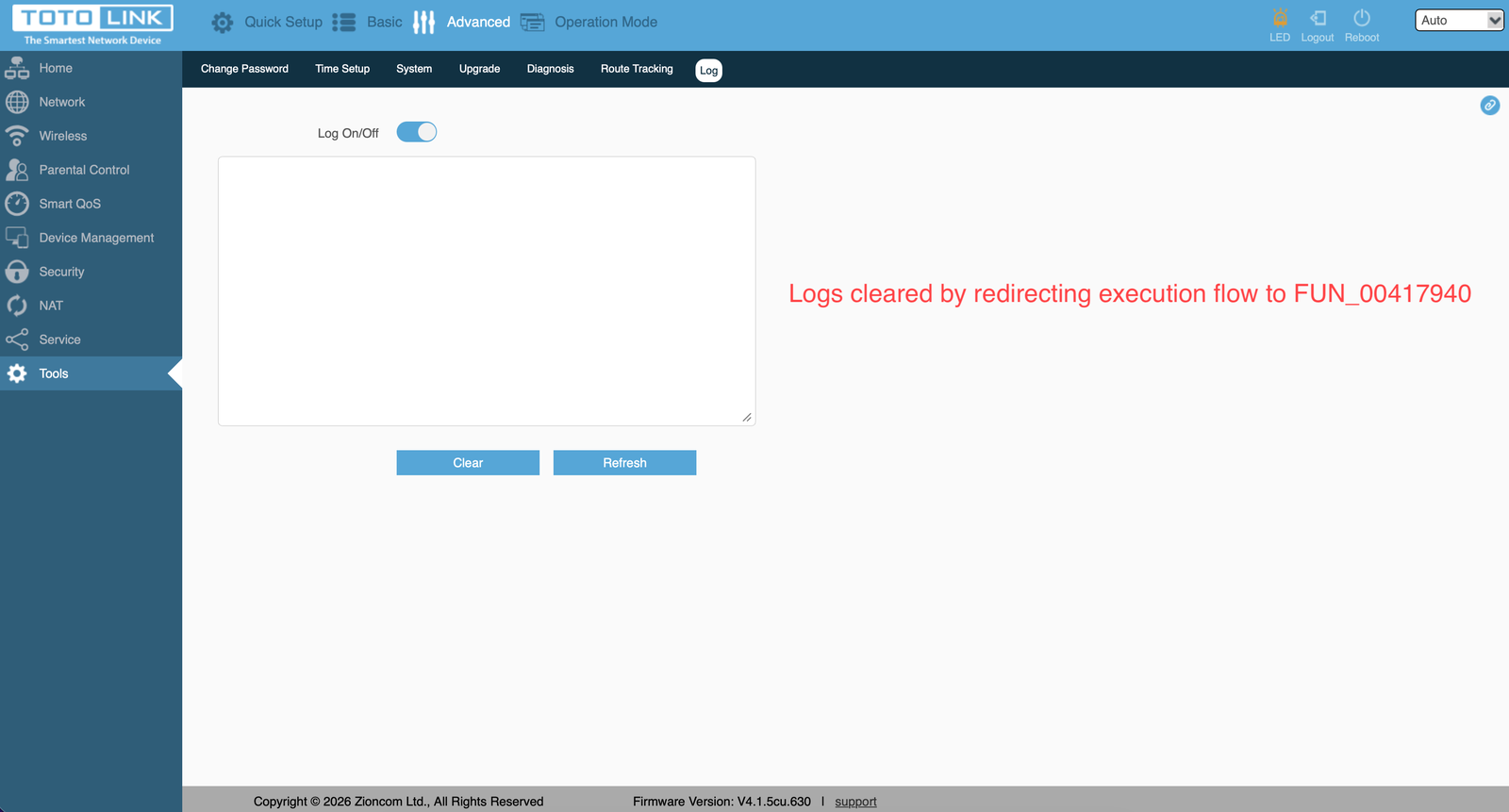
Control flow was further redirected to the routine responsible for starting the Telnet service, enabling Telnet on the device.
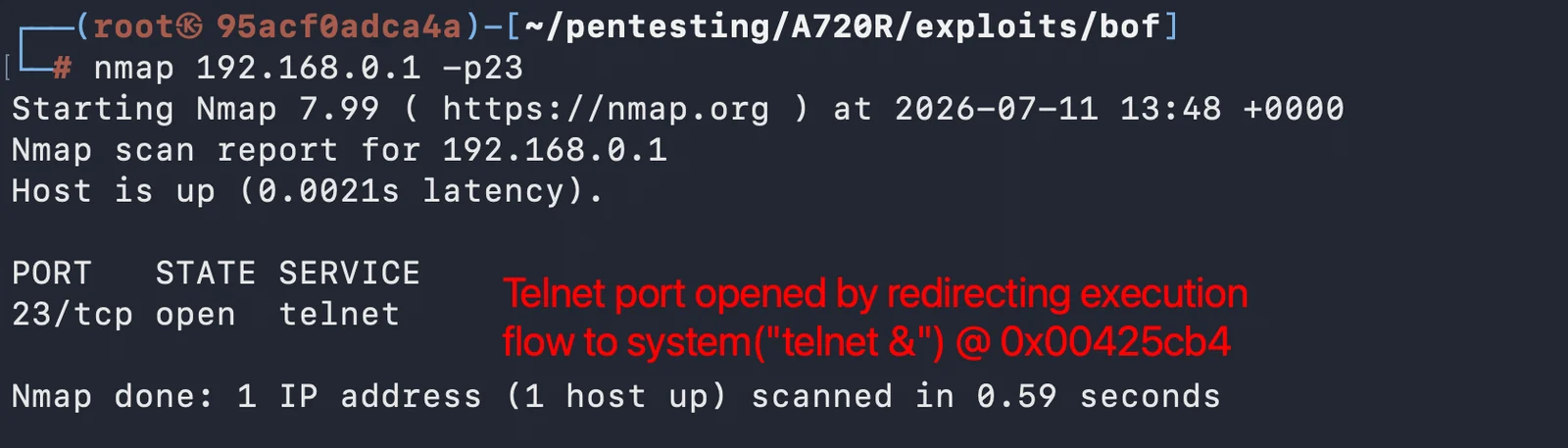
As a result, an authenticated attacker with network access to the target device can hijack the execution flow of the cstecgi.cgi process and execute arbitrary code paths within the binary, compromising the confidentiality, integrity, and availability of the device.
These vulnerabilities were reported by Nicola Giuffrida.
