 wetw0rk/sickle-pdk
Sickle - Kit di sviluppo payload


Sickle è uno strumento che ho sviluppato inizialmente per aiutarmi a essere più efficace, sia nello sviluppo che nella comprensione dello shellcode. Tuttavia, nel corso del suo sviluppo e del suo utilizzo, si è evoluto in un kit di sviluppo di payload. Sebbene i moduli attuali siano principalmente orientati all'assembly, questo strumento non si limita allo shellcode.
Attualmente Sickle può aiutare nelle seguenti attività:
Sickle supporta la generazione di shellcode tramite il Keystone Engine. Trattandosi di una funzionalità aggiunta di recente, il supporto per i payload è limitato. Tuttavia, l'obiettivo è aggiungere una reverse shell di base per ogni architettura e piattaforma.
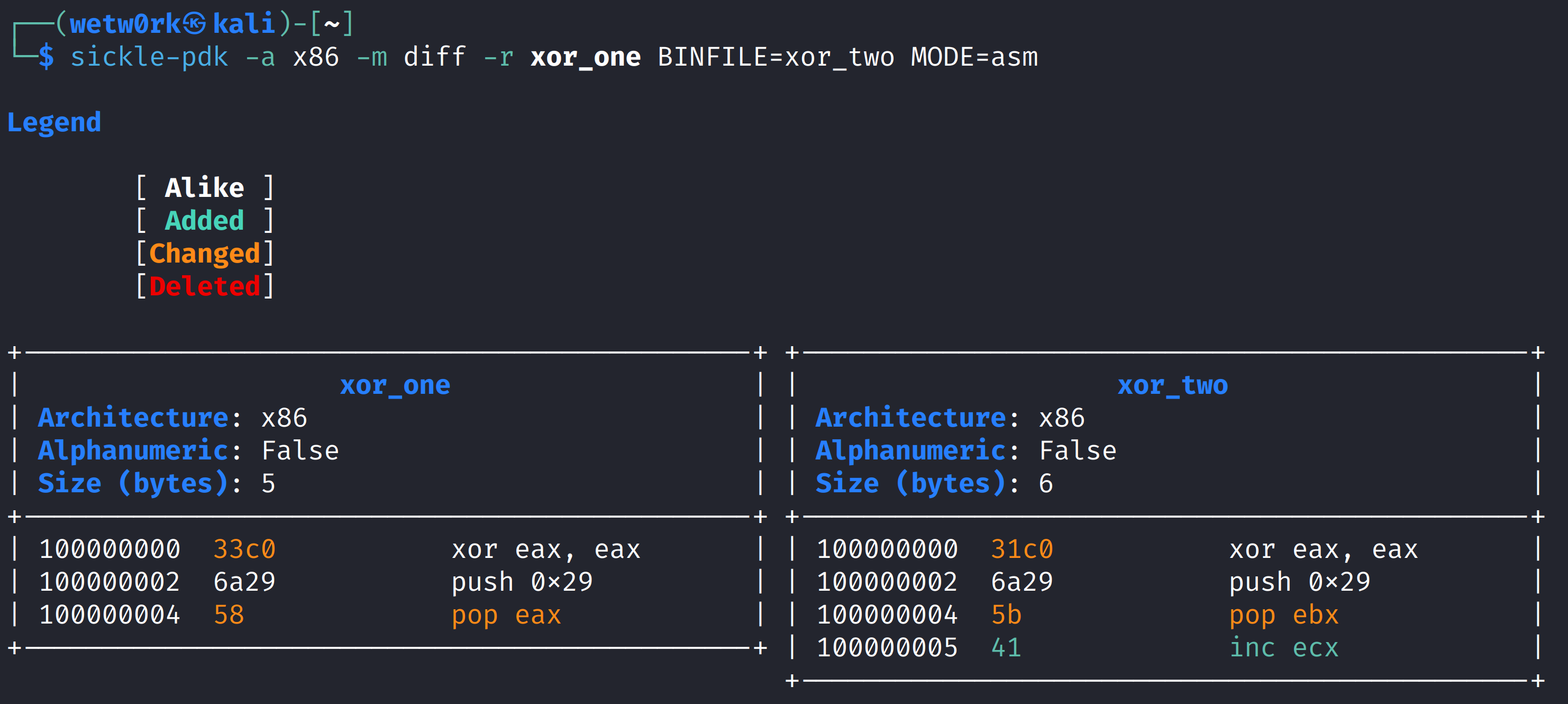
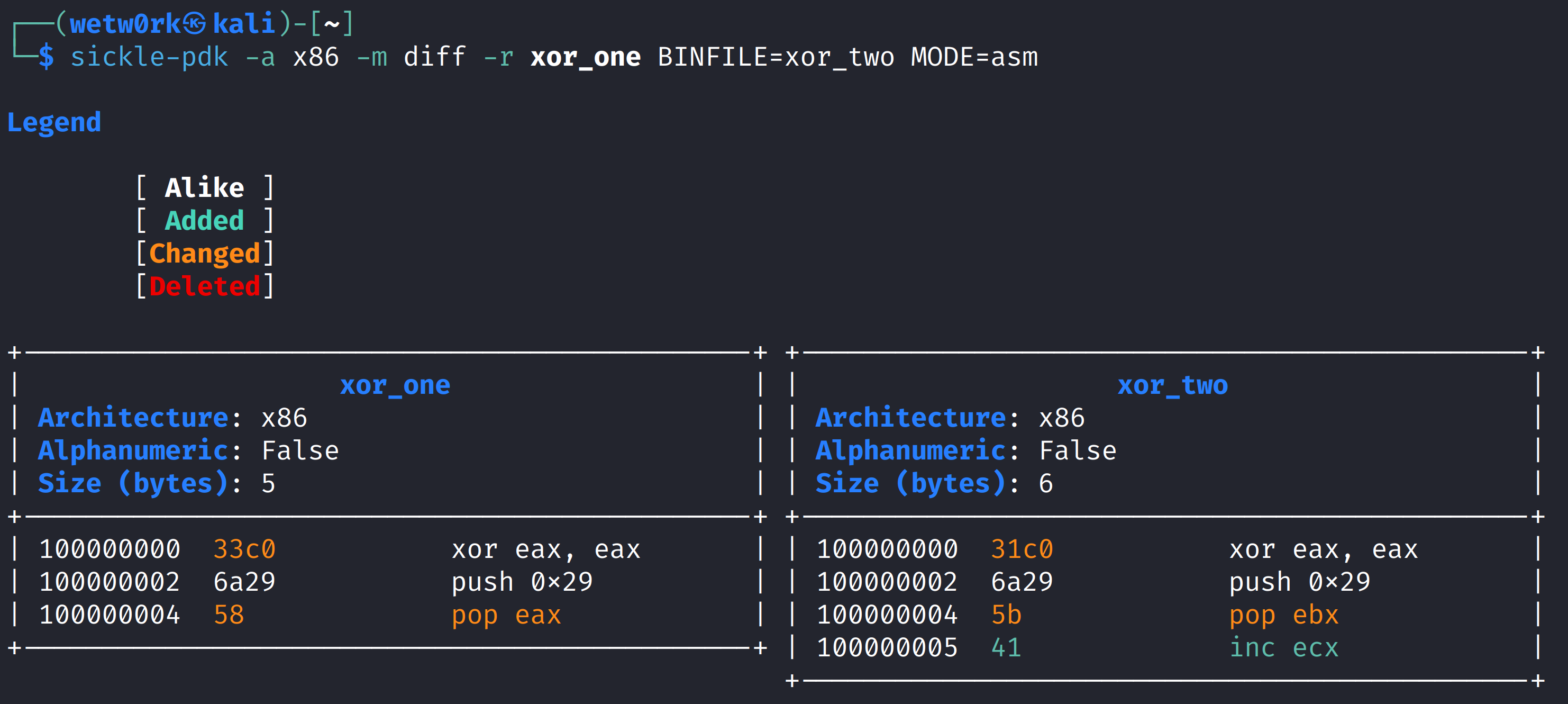
Sickle include un modulo di "diffing" progettato inizialmente per analizzare gli stub di shellcode. La modalità "asm" originale esegue diff di disassemblaggio lineare sia a livello di linguaggio assembly che di opcode, separatamente.
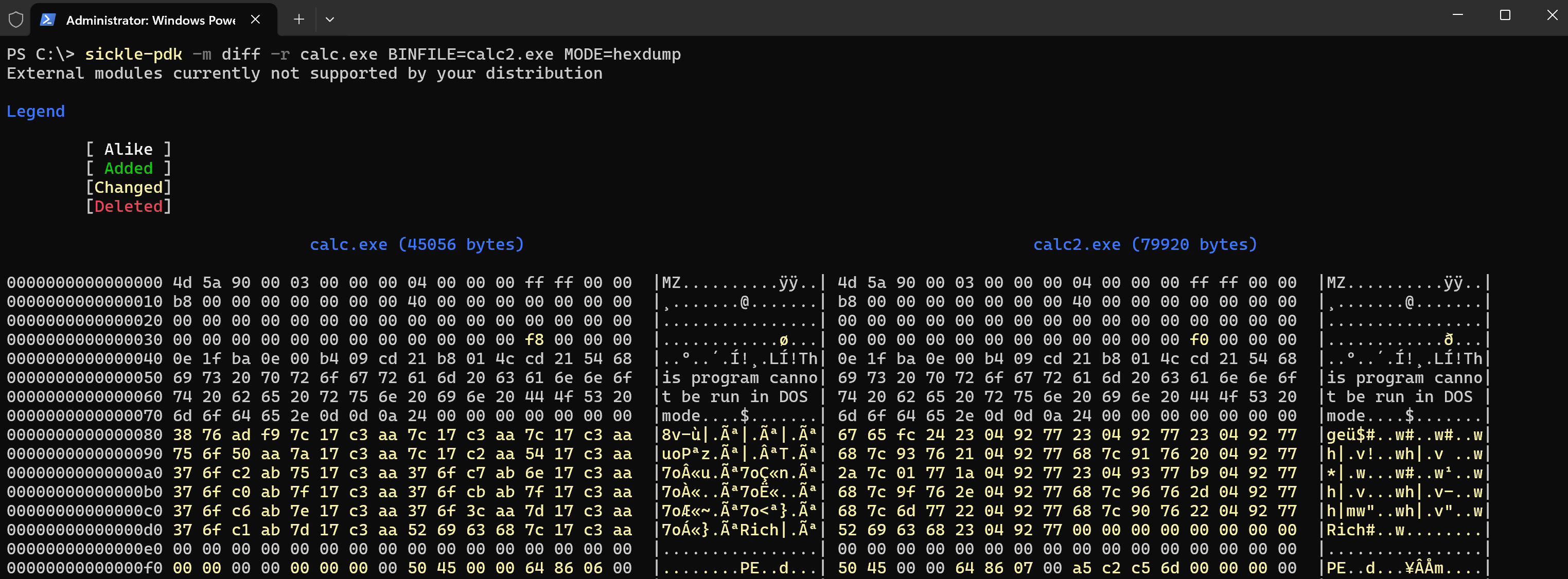
Inoltre, Sickle offre varie modalità per eseguire diff, rendendolo utile anche al di là dello sviluppo di shellcode.
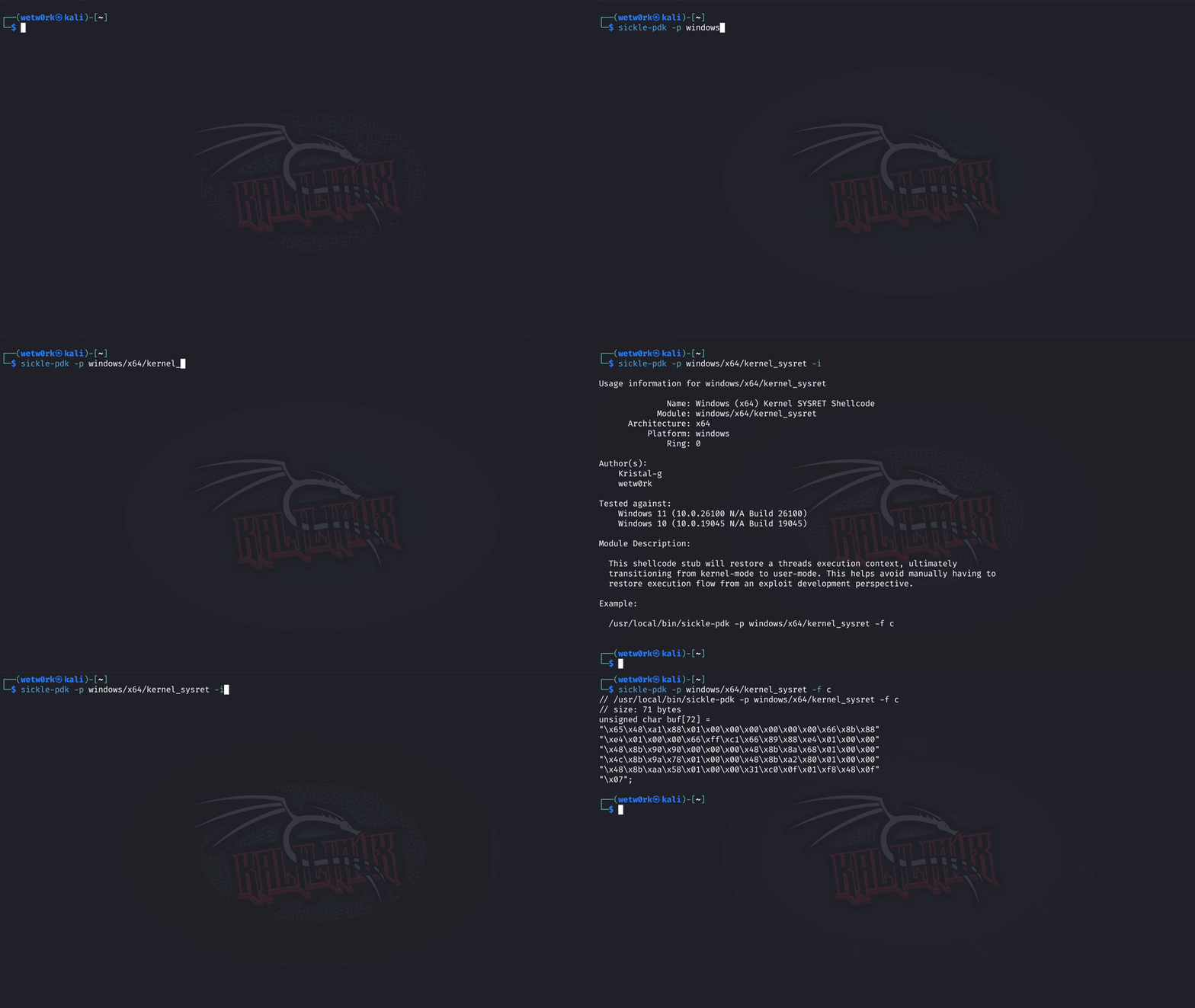
Un'attività comune che potresti svolgere spesso è testare il tuo shellcode. Questo processo in genere prevede i seguenti passaggi:
Sebbene questi passaggi possano sembrare banali, possono richiedere molto tempo se ripetuti. Sickle semplifica il processo incapsulando automaticamente lo shellcode per test rapidi, e il modulo "run" attualmente supporta sia sistemi Windows che Unix.

Sickle può anche convertire un file binario in opcode estratti (shellcode) e poi tradurli in istruzioni macchina (assembly). Nota che questo processo funziona solo con file binari grezzi e attualmente esegue il disassemblaggio in modo lineare tramite Capstone.
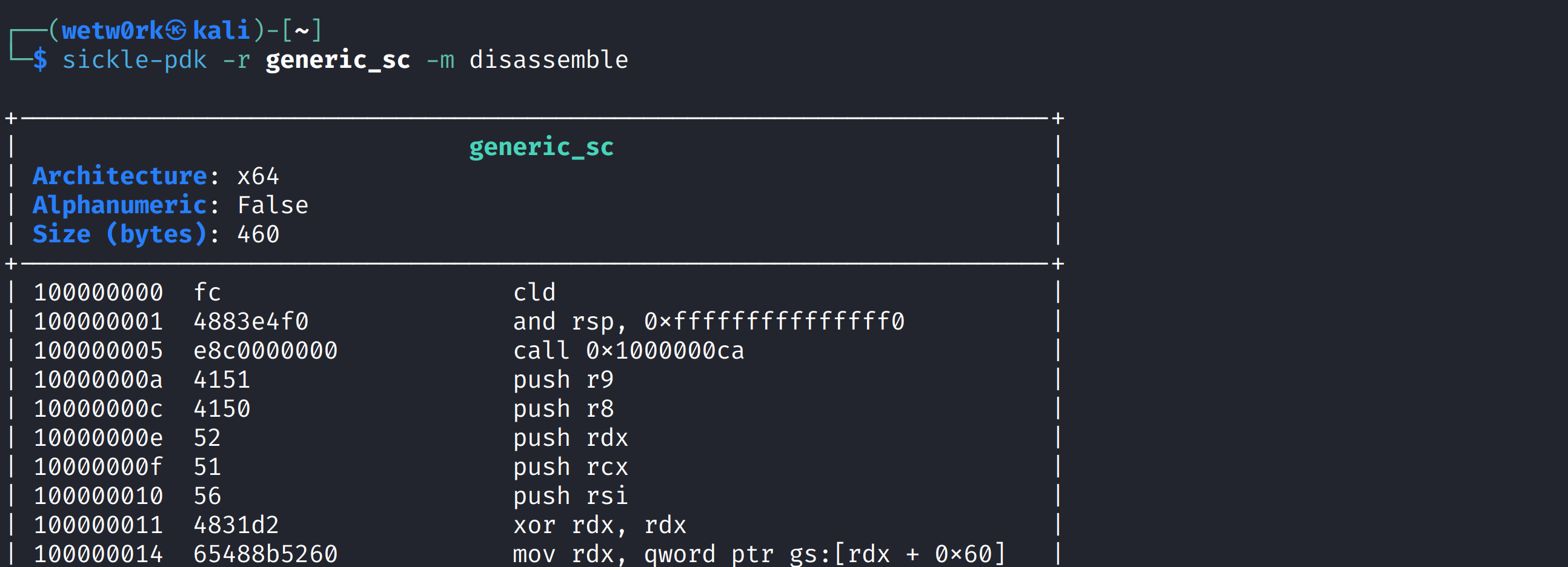
Nell'esempio mostrato sopra, il modulo "disassemble" disassembla in assembly una reverse shell progettata da Stephen Fewer.
L'estrazione dello shellcode è stato il primo modulo, o meglio, la funzionalità principale di Sickle, poiché gli opcode vengono interpretati in modo diverso a seconda del wrapper utilizzato. JavaScript, ad esempio, non memorizza e interpreta lo shellcode nello stesso modo in cui farebbe un programma C.

Forse la più grande fonte di ispirazione per tutto ciò è stato msfvenom.
Sebbene meno comuni negli exploit a 64 bit, possono esserci casi in cui un exploit limita l'uso di determinati caratteri. È qui che il modulo "pinpoint" eccelle, poiché identifica ed evidenzia direttamente le istruzioni assembly responsabili dei caratteri non validi individuati.
Inizialmente, questo strumento è nato come un unico grande script. Tuttavia, man mano che si evolveva, mi sono ritrovato a dover reimparare il codice a ogni aggiornamento. Per risolvere questo problema, Sickle ora segue un approccio modulare, che consente di aggiungere nuove funzionalità dedicando il minimo tempo a reimparare la progettazione dello strumento.
$ sickle-pdk -l

  Shellcode                              Ring Description
  ---------                              ---- -----------
  windows/x64/virtualalloc_exec_tcp       3   A lightweight stager that connects to a handler via TCP over IPv4 to receive and execute shellcode
  windows/x64/egghunter                   3   Egghunter based on Hell's Gate and NtProtectVirtualMemory
  windows/x64/virtualalloc_exec_https     3   A lightweight stager that connects to a handler over HTTPS to receive and execute shellcode
  windows/x64/exec                        3   Executes a command on the target host
  windows/x64/reflective_pe_loader        3   Stageless Reflective PE Loader that takes an x64 binary and executes it in memory
  windows/x64/shell_reverse_tcp           3   Reverse Shell via TCP over IPv4 that provides an interactive cmd.exe session
  windows/aarch64/shell_reverse_tcp       3   Reverse Shell via TCP over IPv4 that provides an interactive cmd.exe session
  windows/x86/shell_reverse_tcp           3   Reverse shell via TCP over IPv4 that provides an interactive cmd.exe session
  windows/x64/kernel_token_stealer        0   Token stealing shellcode for privilege escalation
  windows/x64/kernel_sysret               0   Generic method of returning from kernel space to user space
  windows/x64/kernel_ace_edit             0   SID entry modifier for process injection
  windows/x86/kernel_token_stealer        0   Token stealing shellcode for privilege escalation
  linux/x64/memfd_reflective_elf_tcp      3   Staged Reflective ELF Loader via TCP over IPV4 which executes an ELF from a remote server
  linux/aarch64/memfd_reflective_elf_tcp  3   Staged Reflective ELF Loader via TCP over IPv4 which executes an ELF from a remote server handler
  linux/aarch64/shell_reverse_tcp         3   Reverse Shell via TCP over IPv4 that provides an interactive /bin/sh session
  linux/x86/execve                        3   Executes a shell session such as /bin/sh
  linux/x86/shell_reverse_tcp             3   Reverse shell via TCP over IPV4 that provides an interactive /bin/sh session

  Architectures
  -------------
  aarch64
  x64
  x86

  Modules       Description
  -------       -----------
  disassemble   Simple linear disassembler for multiple architectures
  handler       Module for handling payload distribution and session management
  asm_shell     Interactive assembler and disassembler
  diff          Bytecode diffing module for comparing two binaries (or shellcode)
  pinpoint      Highlights opcodes within a disassembly to identify instructions responsible for bad characters
  run           Wrapper used for executing bytecode (shellcode)
  format        Converts bytecode into a respective format (activated anytime '-f' is used)
  badchar       Produces a set of all potential invalid characters for validation purposes
