 r57-labs/chaos
Utilità di scansione IP di origine sviluppata con ChatGPT

chaos è uno scanner IP di 'origine' sviluppato da RST in collaborazione con ChatGPT. È un'utilità di nicchia il cui pubblico è principalmente composto da penetration tester e bug hunter.
Un IP di origine è un'espressione tecnica che descrive la destinazione IP pubblica finale per siti web serviti pubblicamente tramite terze parti. Se desideri capire meglio perché qualcuno potrebbe essere interessato agli IP di origine, consulta il nostro post sul blog.
chaos è stato rapidamente prototipato dall'idea a un proof-of-concept funzionale in meno di 24 ore utilizzando i nostri principi di DevOps con ChatGPT.
usage: chaos.py [-h] -f FQDN -i IP [-a AGENT] [-C] [-D] [-j JITTER] [-o OUTPUT] [-p PORTS] [-P] [-r] [-s SLEEP] [-t TIMEOUT] [-T] [-v] [-x]
         _..._
     .-'`     `'-.
   __|___________|__
   \               /
    `._  CHAOS _.'
       `-------`
         /   \\
        /     \\
       /       \\
      /         \\
     /           \\
    /             \\
   /               \\
  /                 \\
 /                   \\
/_____________________\\
CHAtgpt Origin-ip Scanner
 _______ _______ _______ _______ _______
|\\     /|\\     /|\\     /|\\     /|\\/|
| +---+ | +---+ | +---+ | +---+ | +---+ |
| |H  | | |U  | | |M  | | |A  | | |N  | |
| |U  | | |S  | | |A  | | |N  | | |C  | |
| |M  | | |E  | | |N  | | |C  | | |O  | |
| |A  | | |R  | | |C  | | |   | | |L  | |
| +---+ | +---+ | +---+ | +---+ | +---+ |
|/_____|\\_____|\\_____|\\_____|\\_____\\

 Origin IP Scanner developed with ChatGPT
 cha*os (n): complete disorder and confusion
 (ver: 0.9.4)
cd path/to/chaospip3 install -U pip setuptools virtualenvvirtualenv envsource env/bin/activate(env) pip3 install -U -r ./requirements.txt(env) ./chaos.py -h-h, --help mostra questo messaggio di aiuto ed esce
-f FQDN, --fqdn FQDN Percorso del file FQDN (un FQDN per riga)
-i IP, --ip IP Indirizzi IP per le richieste HTTP (IP separati da virgola, reti IP e/o file con IP/rete per riga)
-a AGENT, --agent AGENT
Valore dell'header User-Agent per le richieste
-C, --csv Aggiunge l'output CSV a OUTPUT_FILE.csv
-D, --dns Esegue lookup DNS avanti/indietro sui valori FQDN/IP prima della richiesta; non influisce sulla coda di test
-j JITTER, --jitter JITTER
Aggiunge un ritardo randomizzato di 0-N secondi al valore di sleep
-o OUTPUT, --output OUTPUT
Aggiunge l'output della console al FILE
-p PORTS, --ports PORTS
Elenco separato da virgola delle porte TCP da usare (default: "80,443")
-P, --no-prep Non pre-scansiona ogni IP/porta con `GET /` usando l'header `Host: {IP:Port}` per eliminare host non reattivi
-r, --randomize Randomizza (approssimativamente) l'ordine in cui IP/porte vengono testati
-s SLEEP, --sleep SLEEP
Aggiunge N secondi prima che il thread completi
-t TIMEOUT, --timeout TIMEOUT
Aspetta N secondi per un host non reattivo
-T, --test Modalità test; non invia richieste
-v, --verbose Abilita output verbose
-x, --singlethread Esecuzione a thread singolo; per sistemi a 1-2 core; thread di default=(core-1) se core>2
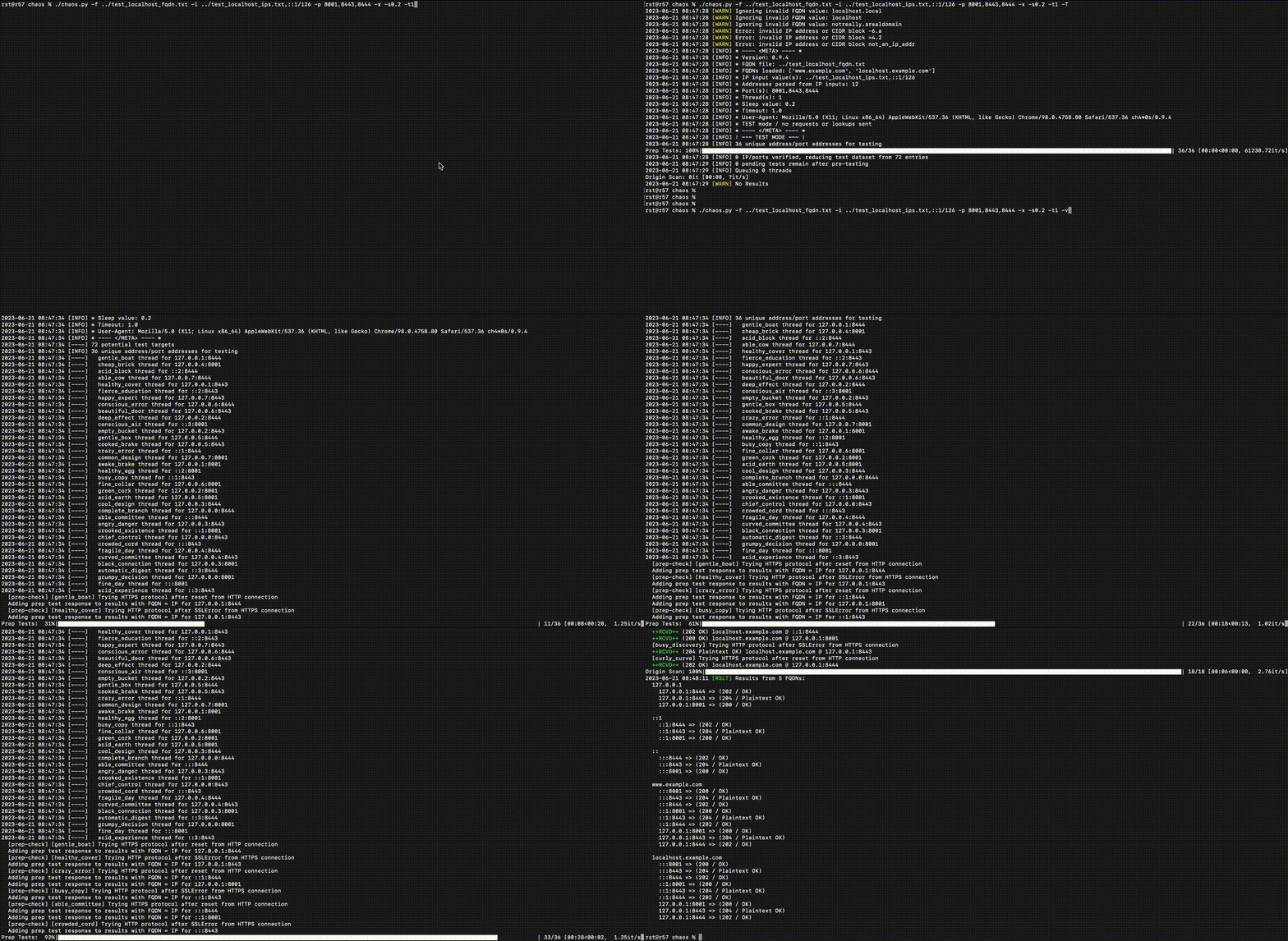
Avvia server HTTP Python
% python3 -u -m http.server 8001
Serving HTTP on :: port 8001 (http://[::]:8001/) ...
Avvia ncat come HTTP su una porta rilevata come SSL; usa un ciclo perché --keep-open potrebbe rimanere in attesa
% while true; do ncat -lvp 8443 -c 'printf "HTTP/1.0 204 Plaintext OK\n\n<html></html>\n"'; done
Ncat: Version 7.94 ( https://nmap.org/ncat )
Ncat: Listening on [::]:8443
Ncat: Listening on 0.0.0.0:8443
Avvia anche ncat come SSL su una porta che di default verrà rilevata come HTTP
% while true; do ncat --ssl -lvp 8444 -c 'printf "HTTP/1.0 202 OK\n\n<html></html>\n"'; done
Ncat: Version 7.94 ( https://nmap.org/ncat )
Ncat: Generating a temporary 2048-bit RSA key. Use --ssl-key and --ssl-cert to use a permanent one.
Ncat: SHA-1 fingerprint: 0208 1991 FA0D 65F0 608A 9DAB A793 78CB A6EC 27B8
Ncat: Listening on [::]:8444
Ncat: Listening on 0.0.0.0:8444
Prepara un file FQDN:
% cat ../test_localhost_fqdn.txt
www.example.com
localhost.example.com
localhost.local
localhost
notreally.arealdomain
Prepara un file / elenco IP:
% cat ../test_localhost_ips.txt
127.0.0.1
127.0.0.0/29
not_an_ip_addr
-6.a
=4.2
::1
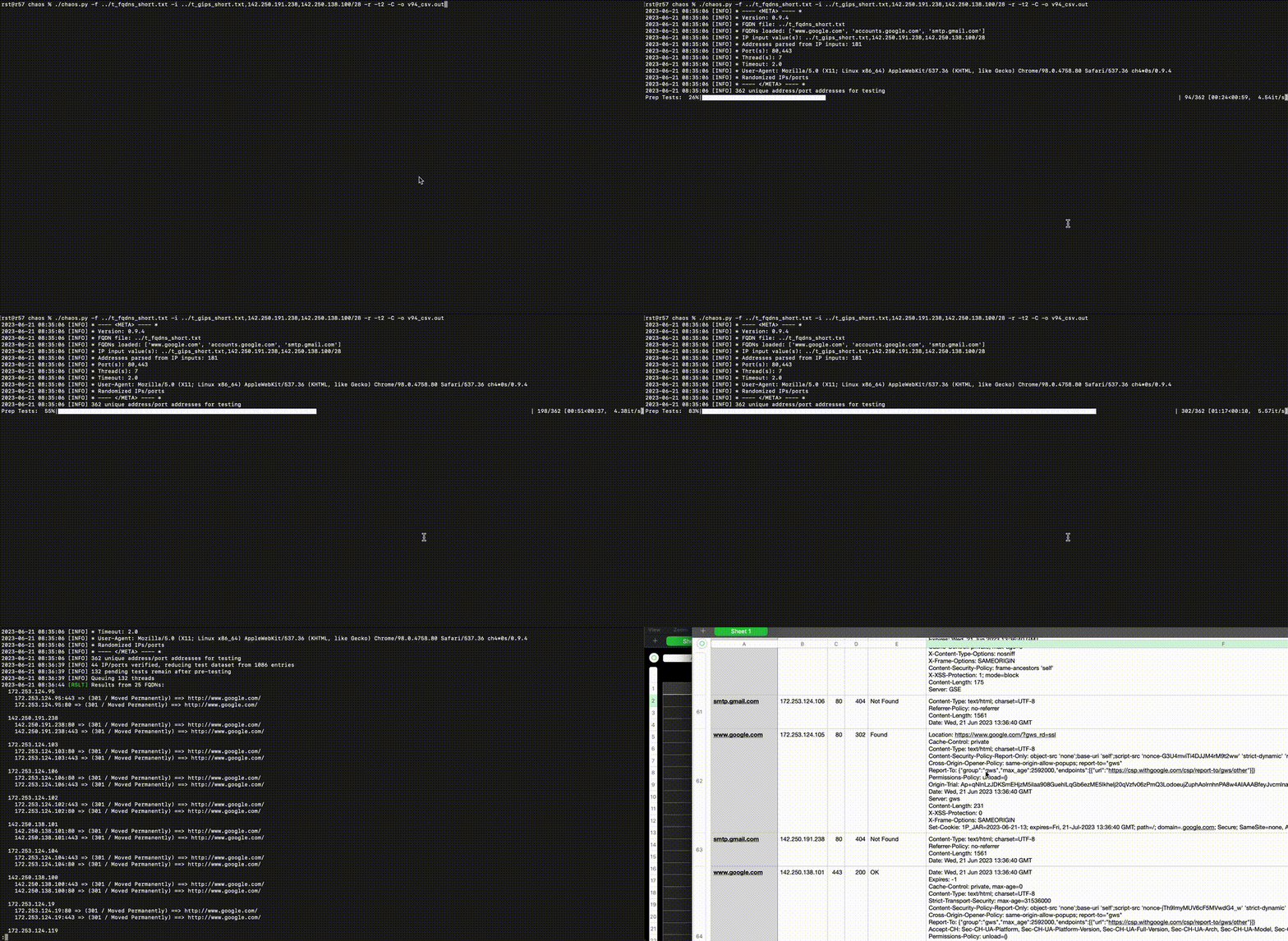
Esegui la scansione