 p0dalirius/ipsourcebypass
Questo script Python può essere utilizzato per bypassare le restrizioni relative all'origine IP utilizzando gli header HTTP.


Questo script Python può essere utilizzato per bypassare le restrizioni dell'origine IP utilizzando gli header HTTP.



--json outputfile.json.$ ./ipsourcebypass.py -h
[~] IP source bypass using HTTP headers, v1.2
usage: ipsourcebypass.py [-h] [-v] -i IP [-t THREADS] [-x PROXY] [-k] [-L] [-j JSONFILE] [-C] [-H HEADERS] [-S] url
This Python script can be used to test for IP source bypass using HTTP headers
positional arguments:
url e.g. https://example.com:port/path
optional arguments:
-h, --help show this help message and exit
-v, --verbose arg1 help message
-i IP, --ip IP IP to spoof.
-t THREADS, --threads THREADS
Number of threads (default: 5)
-x PROXY, --proxy PROXY
Specify a proxy to use for requests (e.g., http://localhost:8080)
-k, --insecure Allow insecure server connections when using SSL (default: False)
-L, --location Follow redirects (default: False)
-j JSONFILE, --jsonfile JSONFILE
Save results to specified JSON file.
-C, --curl Generate curl commands for each request.
-H HEADERS, --header HEADERS
arg1 help message
-S, --save Save all HTML responses.
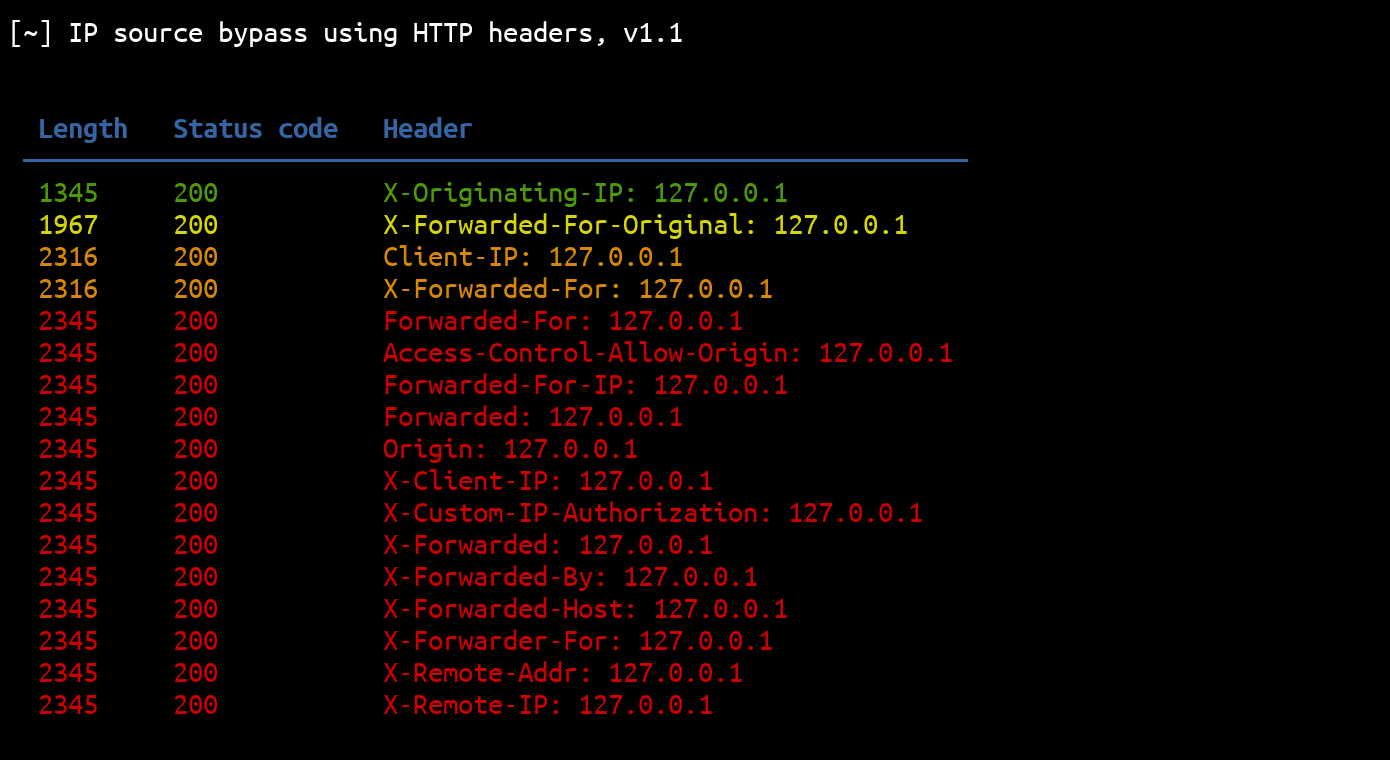
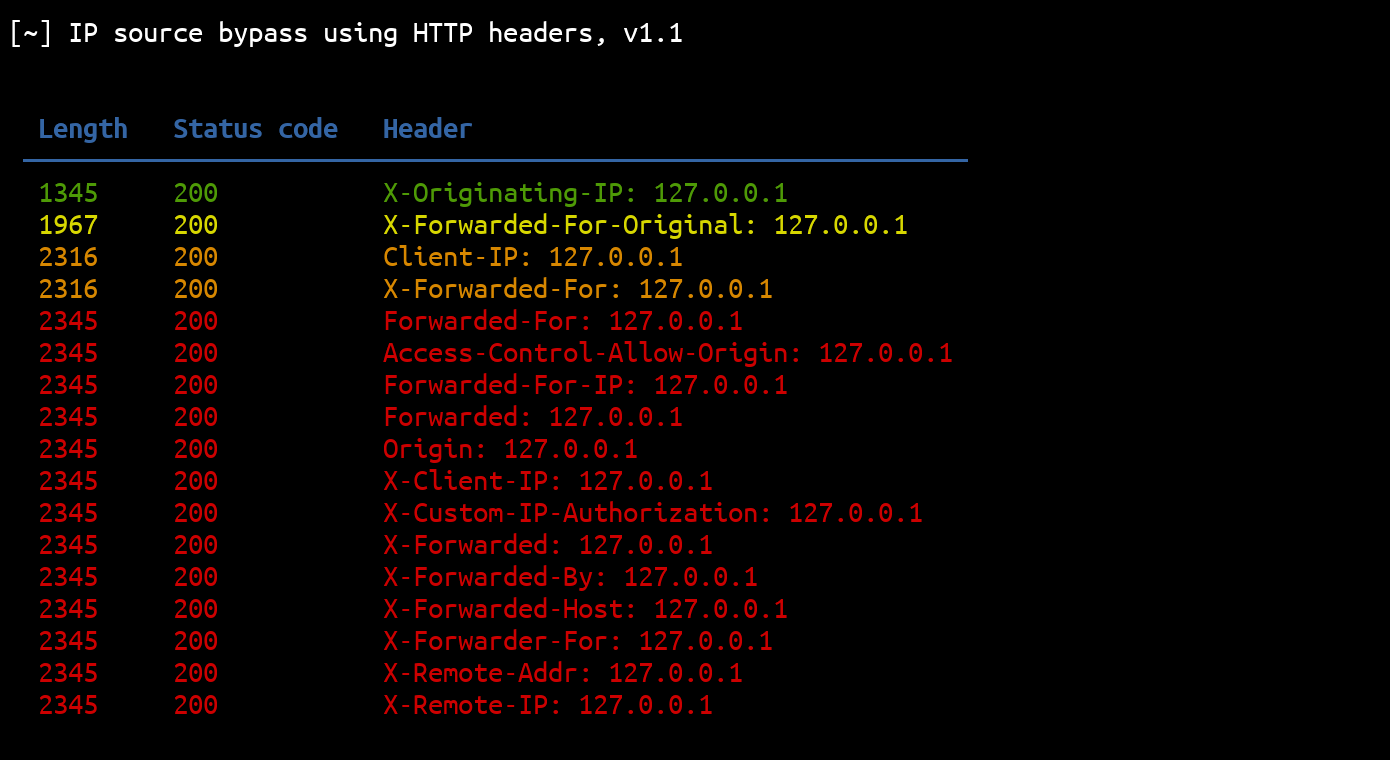
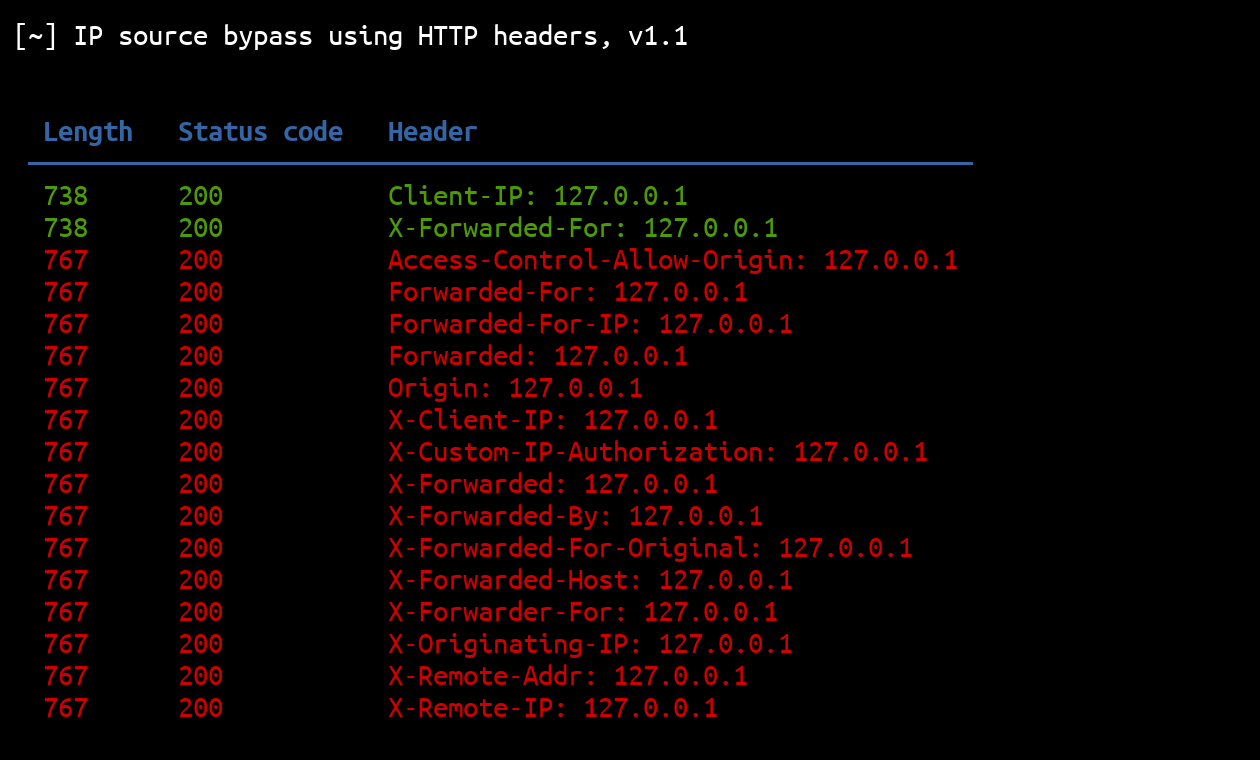
I risultati sono ordinati in base all'unicità della lunghezza della loro risposta. Ciò significa che i risultati con lunghezza di risposta unica saranno in cima, e quelli con lunghezza di risposta che si verifica più volte in fondo:
| Due diverse lunghezze di risultato | Quattro diverse lunghezze di risultato |
|---|---|
 | |
Le pull request sono benvenute. Sentiti libero di aprire un issue se desideri aggiungere altre funzionalità.
