 neo23x0/fnord
Estrattore di pattern per codice offuscato



Fnord è un estrattore di pattern per codice offuscato
Fnord ha due funzioni principali:
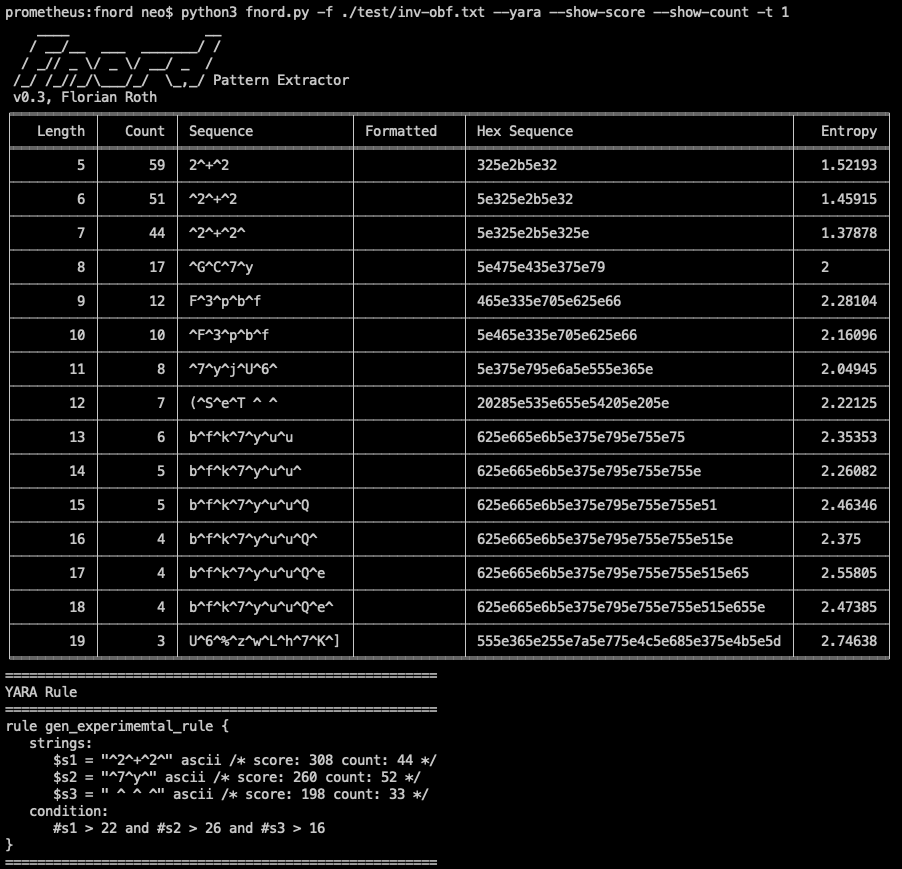
Fnord elabora il file con una finestra scorrevole di dimensione variabile per estrarre tutte le sequenze con una lunghezza minima -m X (predefinita: 4) fino a una lunghezza massima -x X (predefinita: 40). Per ogni lunghezza, Fnord presenterà le sequenze più frequenti -t X (predefinito: 3) in una tabella.
Ogni riga della tabella contiene:
Fnord genera anche una regola YARA sperimentale. Durante la creazione della regola YARA, calcola un punteggio basato sulla lunghezza della sequenza e sul numero di occorrenze (lunghezza * occorrenze). Quindi elabora ciascuna sequenza rimuovendo tutti i caratteri non alfabetici e confrontandole con un elenco di parole chiave (case-insensitive) per rilevare sequenze più interessanti di altre. Prima di scrivere ogni stringa nella regola, Fnord calcola una distanza di Levenshtein e salta le sequenze troppo simili a quelle già integrate nella regola.
[Sperimentale] Fnord è stato creato alcuni giorni fa e l'ho testato con una manciata di campioni. Immagino che nelle prossime settimane regolerò le impostazioni predefinite e aggiungerò altre parole chiave, filtri e opzioni di punteggio.
Se hai trovato codice offuscato in un campione, usa un editor esadecimale per estrarre la sezione offuscata del campione e salvala in un nuovo file. Usa quel nuovo file per l'analisi.
Gioca con i flag -s, -k, -r, --yara-strings, -m e -e.
Per favore, inviami campioni che producono regole YARA deboli che potrebbero essere migliorate.
        ____                 __
       / __/__  ___  _______/ /
      / _// _ \/ _ \/ __/ _  /
     /_/ /_//_/\___/_/  \_,_/ Pattern Extractor for Obfuscated Code
     v0.7, Florian Roth

    usage: fnord.py [-h] [-f file] [-m min] [-x max] [-t top] [-n min-occ]
                    [-e min-entropy] [--strings] [--include-padding] [--debug]
                    [--noyara] [-s similarity] [-k keywords-multiplier]
                    [-r structure-multiplier] [-c count-limiter] [--yara-exact]
                    [--yara-strings max] [--show-score] [--show-count]
                    [--author author]

    Fnord - Pattern Extractor for Obfuscated Code

    optional arguments:
      -h, --help            show this help message and exit
      -f file               File to process
      -m min                Minimum sequence length
      -x max                Maximum sequence length
      -t top                Number of items in the Top x list
      -n min-occ            Minimum number of occurrences to show
      -e min-entropy        Minimum entropy
      --strings             Show strings only
      --include-padding     Include 0x00 and 0x20 in the extracted strings
      --debug               Debug output

    YARA Rule Creation:
      --noyara              Do not generate an experimental YARA rule
      -s similarity         Allowed similarity (use values between 0.1=low and
                            10=high, default=1.5)
      -k keywords-multiplier
                            Keywords multiplier (multiplies score of sequences if
                            keyword is found) (best use values between 1 and 5,
                            default=2.0)
      -r structure-multiplier
                            Structure multiplier (multiplies score of sequences if
                            it is identified as code structure and not payload)
                            (best use values between 1 and 5, default=2.0)
      -c count-limiter      Count limiter (limts the impact of the count by
                            capping it at a certain amount) (best use values
                            between 5 and 100, default=20)
      --yara-exact          Add magic header and magic footer limitations to the
                            rule
      --yara-strings max    Maximum sequence length
      --show-score          Show score in comments of YARA rules
      --show-count          Show count in sample in comments of YARA rules
      --author author       YARA rule author
git clone https://github.com/Neo23x0/Fnord.git e cd Fnordpip3 install -r ./requirements.txtpython3 ./fnord.py --helppython3 fnord.py -f ./test/wraeop.sct --yara-strings 10
python3 fnord.py -f ./test/vbs.txt --show-score --show-count -t 1 -x 20
python3 fnord.py -f ./test/inv-obf.txt --show-score --show-count -t 1 --yara-strings 4 --yara-exact
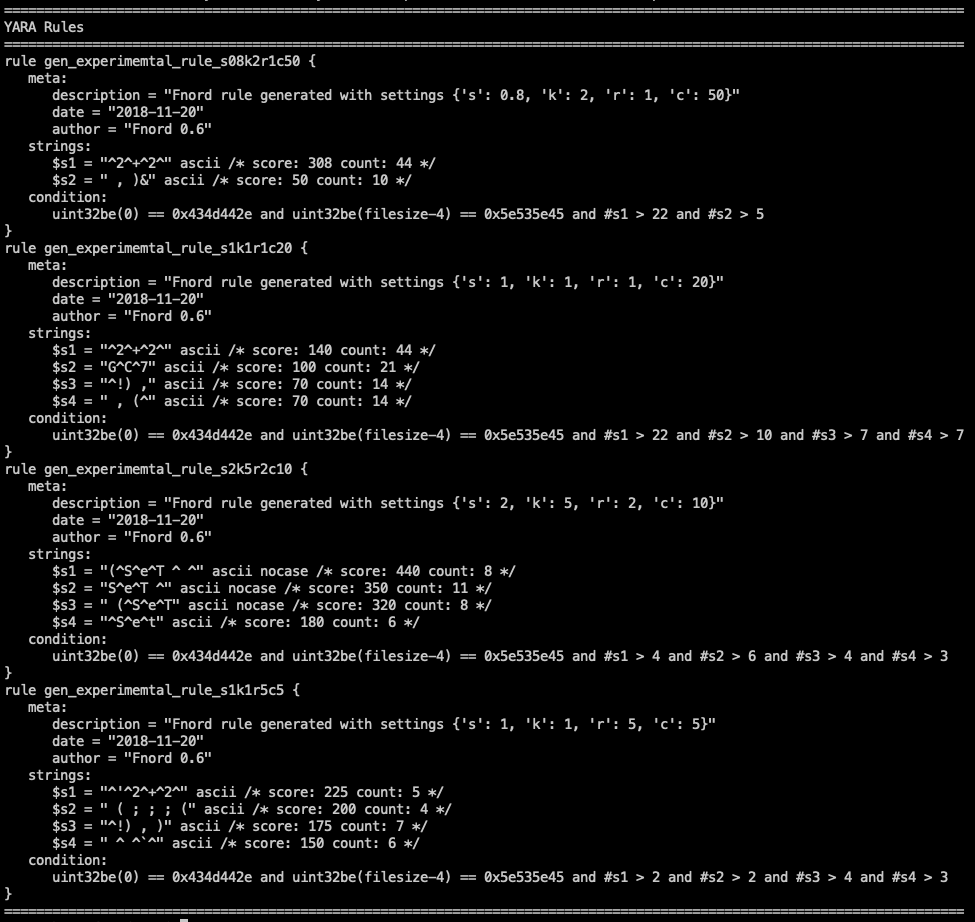
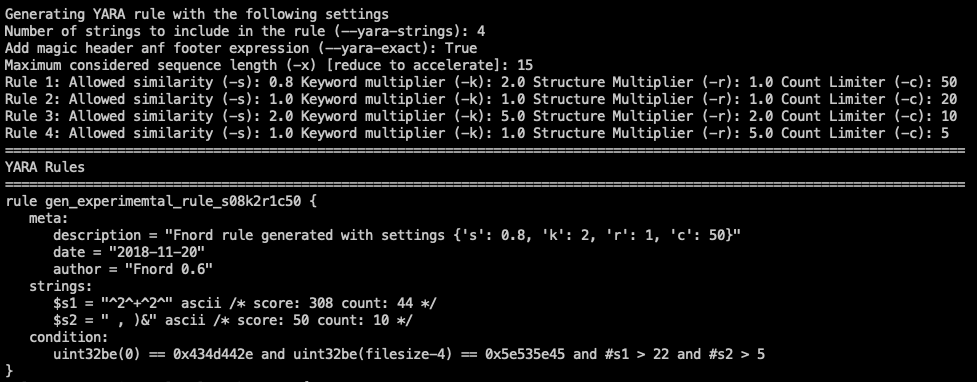
La cartella ./test contiene script dannosi che potrebbero essere rilevati dal tuo antivirus locale. Non danneggiano il tuo sistema finché non li esegui.
yarGen utilizza un approccio di whitelisting per filtrare le stringhe migliori per la creazione di una regola YARA. yarGen applica alcune espressioni regolari per regolare i punteggi delle stringhe prima di creare le regole YARA. Ma il suo approccio è molto diverso dal metodo utilizzato da Fnord, che calcola il punteggio delle sequenze di byte basandosi sulle statistiche.
Mentre yarGen è più adatto per codice non offuscato, Fnord è solo per codice offuscato e dovrebbe produrre risultati molto migliori di yarGen.
Seguimi su Twitter per aggiornamenti @cyb3rops
