 luke-goddard/enumy
Enumerazione di escalation dei privilegi in post-exploitation su Linux







Enumy è un eseguibile portatile ultra veloce che si inserisce nella macchina Linux di destinazione durante un pentest o CTF nella fase di post-exploitation. Eseguire enumy enumererà la macchina per vulnerabilità di sicurezza comuni.
Puoi scaricare il binario finale dalla scheda release x86 o x64. Collegato staticamente a musl Trasferisci il binario finale di enumy sulla macchina di destinazione.
./enumy
$ ./enumy64 -h
 ▄█▀─▄▄▄▄▄▄▄─▀█▄  _____
 ▀█████████████▀ |   __|___ _ _ _____ _ _
     █▄███▄█     |   __|   | | |     | | |
      █████      |_____|_|_|___|_|_|_|_  |
      █▀█▀█                          |___|

 https://github.com/luke-goddard/enumy

 Enumy - Used to enumerate the target the target environment & look for
 common security vulnerabilities and hostspots
 ----------------------------------------------------------------------

 Output
  -o <loc>     OUTPUT results to location (default enumy.json)

 Walking Filesystem
  -i <loc>     IGNORE files in this directory (usefull for network shares)
  -w <loc>     Only WALK files in this directory (usefull for devlopment)

 Scan Options
  -f           run FULL scans (CPU intensive scan's enabled)
  -t <num>     THREADS (default 4)

 Printing Options
  -a           Print all security AUDIT issues to screen (probably won't help duing a CTF)
               Issues are ALWAYS logged in result files regardless of this flag being set.
  -d <1|2>     Print DEBUG mode (1 low, 2 high) to enable error being printed to screen.
  -g <H|M|L>   print to screen values GREATER than or equal to high, medium & low
  -p <H|M|L|I> do not PRINT to screen high, medium, low & info issues (see below for example)
  -m 1-100     MAXIMUM number of issues with same name to print to screen default (unlimited)
Per compilare durante lo sviluppo, sono sufficienti make e la libreria libcap.
sudo apt-get install libcap-dev
make
Per rimuovere la dipendenza da glibc e collegare staticamente tutte le librerie/compilare con musl, procedere come segue. Nota: per farlo dovrai avere docker installato per creare l'ambiente di build Alpine.
./build.sh 64bit
./build.sh 32bit
./build.sh all
cd output
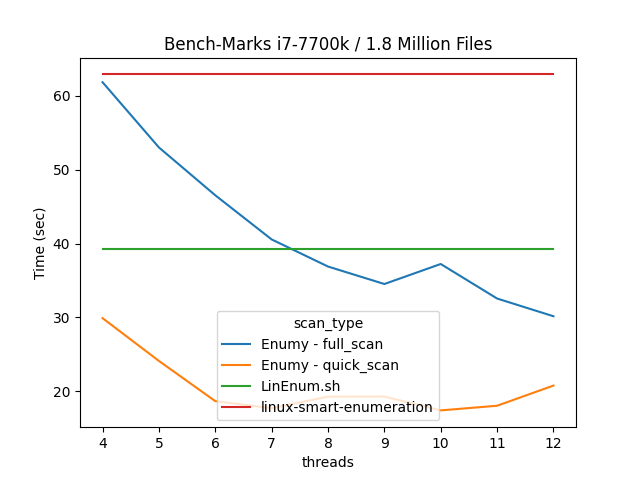
Di seguito è riportata la lista sempre crescente delle scansioni che sono state implementate.
