 anonymous-family/zero-day-scanning
Zero-day-scanning è uno scanner di vulnerabilità per Domain Controller, che attualmente include controlli per Zero-day-scanning (CVE-2020-1472), MS-PAR/MS-RPRN e SMBv2 Signing.

Zeroscan è uno scanner di vulnerabilità per Domain Controller, che attualmente include controlli per Zerologon (CVE-2020-1472), MS-PAR/MS-RPRN e SMBv2 Signing.
CVE-2020-1472:
Utilizza uno script integrato per verificare Zerologon (CVE-2020-1472), ma NON tenta di sfruttare il target, è semplicemente uno scanner di vulnerabilità. Codice preso in prestito da: https://github.com/Anonymous-Family/CVE-2020-1472.git
MS-PAR / MS-RPRN:
Utilizza un wrapper attorno a rpcdump di Impacket per verificare se i servizi di stampa MS-PAR e MS-RPRN sono accessibili da remoto. Questo controllo può aiutare a determinare se il target è vulnerabile a CVE-2021-1675.
SMBv2 Signing:
Utilizza un wrapper attorno allo script 'smb2-security-mode' del Nmap Scripting Engine (NSE), per identificare la configurazione di firma SMBv2 del target.

Installazione:
git clone https://github.com/Anonymous-Family/Zero-day-scanning.git
cd Zero-day-scanning/
virtualenv -p /usr/bin/python3.9 venv
source venv/bin/activate
python3 -m pip install -r requirements.txt
Menu:
Zeroscan
--------------------------------------------------

Usage:
  python3 zeroscan.py -t dc01 192.168.1.10
  python3 zeroscan.py -iL /path/to/targetfile.txt
  python3 zeroscan.py -iL /path/to/targetfile.txt --database
  python3 zeroscan.py -iL /path/to/targetfile.txt --drop-table
  python3 zeroscan.py -iL /path/to/targetfile.txt -r
  python3 zeroscan.py -iL /path/to/targetfile.txt -v


Primary options:
  -t TARGET TARGET     Single target using netbiosname and ipaddress. I.e "dc01 192.168.1.10"
  -iL TARGETSFILE      File that contains one target per line using netbiosname and ipaddress. I.e "dc01 192.168.1.10"

Secondary options:
  --database DATABASE  Filepath for database file.
  --drop-table         Drops database table.
  -r, --rpc-message    Turn on RPC response messages for CVE-2020-1472, helpful when troubleshooting connectivity issues.
  -v, --verbose        Turn on verbosity, helpful when debugging code.
  -h, --help           Show this help message and exit.
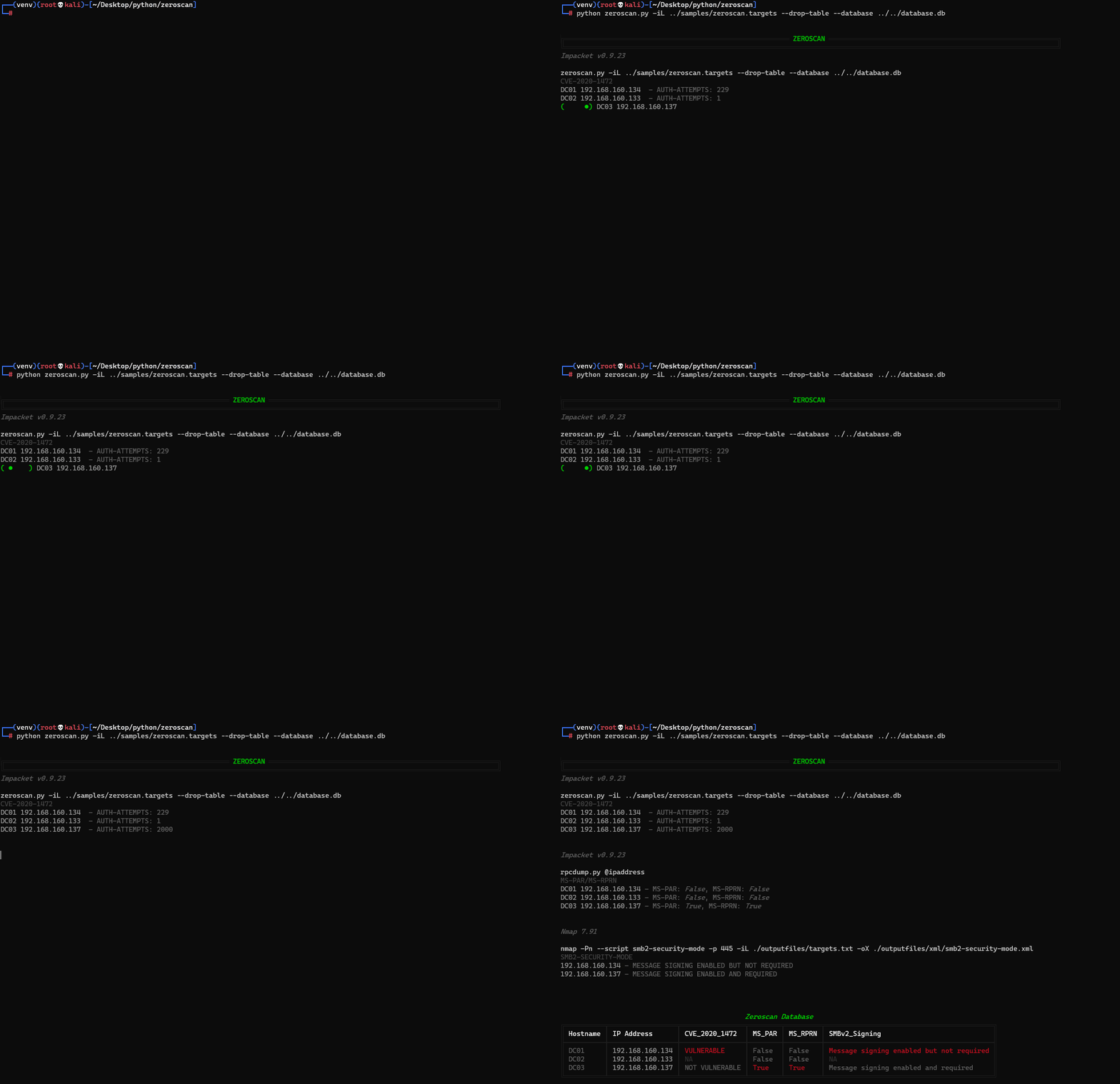
Esempio di output:
╔════════════════════════════════════════════════════════ ZEROSCAN ═════════════════════════════════════════════════════════╗
╚═══════════════════════════════════════════════════════════════════════════════════════════════════════════════════════════╝
Impacket v0.9.23

./zeroscan.py -iL targets.txt
CVE-2020-1472
DC01 192.168.160.134  - AUTH-ATTEMPTS: 26
DC02 192.168.160.133  - AUTH-ATTEMPTS: 1
DC03 192.168.160.137  - AUTH-ATTEMPTS: 2000


Impacket v0.9.23

rpcdump.py @ipaddress
MS-PAR/MS-RPRN
DC01 192.168.160.134 - MS-PAR: False, MS-RPRN: False
DC02 192.168.160.133 - MS-PAR: False, MS-RPRN: False
DC03 192.168.160.137 - MS-PAR: True, MS-RPRN: True


Nmap 7.91

nmap -Pn --script smb2-security-mode -p 445 -iL ./outputfiles/targets.txt -oX ./outputfiles/xml/smb2-security-mode.xml
SMB2-SECURITY-MODE
192.168.160.134 - MESSAGE SIGNING ENABLED BUT NOT REQUIRED
192.168.160.137 - MESSAGE SIGNING ENABLED AND REQUIRED


                                              Zeroscan Database
╔══════════╤═════════════════╤════════════════╤════════╤═════════╤══════════════════════════════════════════╗
║ Hostname │ IP Address      │ CVE_2020_1472  │ MS_PAR │ MS_RPRN │ SMBv2_Signing                            ║
╟──────────┼─────────────────┼────────────────┼────────┼─────────┼──────────────────────────────────────────╢
║ DC01     │ 192.168.160.134 │ VULNERABLE     │ False  │ False   │ Message signing enabled but not required ║
║ DC02     │ 192.168.160.133 │ NA             │ False  │ False   │ NA                                       ║
║ DC03     │ 192.168.160.137 │ NOT VULNERABLE │ True   │ True    │ Message signing enabled and required     ║
╚══════════╧═════════════════╧════════════════╧════════╧═════════╧══════════════════════════════════════════╝
Demo - Multi-target: