 ma111e/melody
मेलोडी एक पारदर्शी इंटरनेट सेंसर है जिसे खतरे की खुफिया जानकारी के लिए बनाया गया है। यह कस्टम टैगिंग नियमों और कमजोर एप्लिकेशन सिमुलेशन का समर्थन करता है।

इंटरनेट के पृष्ठभूमि शोर पर नज़र रखें







Melody एक पारदर्शी इंटरनेट सेंसर है जो खतरे की खुफिया जानकारी के लिए बनाया गया है और एक डिटेक्शन रूल फ्रेमवर्क द्वारा समर्थित है जो आपको आगे के विश्लेषण और खतरे की निगरानी के लिए रुचि के पैकेट को टैग करने की अनुमति देता है।
यहाँ Melody की कुछ प्रमुख विशेषताएँ दी गई हैं:
चूंकि मुझे अभी अन्य परियोजनाओं पर ध्यान केंद्रित करना है, इसलिए मैं Melody के विकास में अधिक समय नहीं लगा सकता।
हालांकि सुधार के लिए बहुत गुंजाइश है, तो यहाँ कुछ विशेषताएँ हैं जिन्हें मैं कभी लागू करना चाहूंगा:
cmd/meloctl में Meloctl देखें
नवीनतम रिलीज़ https://github.com/ma111e/melody/releases पर प्राप्त करें।
make install               # Set default outfacing interface
make cap                   # Set network capabilities to start Melody without elevated privileges
make certs                 # Make self signed certs for the HTTPS fileserver
make enable_all_rules      # Enable the default rules
make service               # Create a systemd service to restart the program automatically and launch it at startup

sudo systemctl stop melody  # Stop the service while we're configuring it
अवांछित पैकेटों को फ़िल्टर करने के लिए filter.bpf फ़ाइल अपडेट करें।
sudo systemctl start melody     # Start Melody
sudo systemctl status melody    # Check that Melody is running
लॉग /opt/melody/logs/melody.ndjson में जमा होने शुरू हो जाने चाहिए।
tail -f /opt/melody/logs/melody.ndjson # | jq
git clone https://github.com/ma111e/melody /opt/melody
cd /opt/melody
make build
फिर रिलीज़ TL;DR के चरणों के साथ जारी रखें।
make certs                           # Make self signed certs for the HTTPS fileserver
make enable_all_rules                # Enable the default rules
mkdir -p /opt/melody/logs
cd /opt/melody/

docker pull ma111e/melody:latest

MELODY_CLI="" # अपने CLI विकल्प यहाँ रखें। उदाहरण: export MELODY_CLI="-s -i 'lo' -F 'dst port 5555' -o 'server.http.port: 5555'"

docker run \
    --net=host \
    -e "MELODY_CLI=$MELODY_CLI" \
    --mount type=bind,source="$(pwd)/filter.bpf",target=/app/filter.bpf,readonly \
    --mount type=bind,source="$(pwd)/config.yml",target=/app/config.yml,readonly \
    --mount type=bind,source="$(pwd)/var",target=/app/var,readonly \
    --mount type=bind,source="$(pwd)/rules",target=/app/rules,readonly \
    --mount type=bind,source="$(pwd)/logs",target=/app/logs/ \
    ma111e/melody
लॉग /opt/melody/logs/melody.ndjson में जमा होने शुरू हो जाने चाहिए।
CVE-2020-14882 Oracle Weblogic Server RCE:
  layer: http
  meta:
    id: 3e1d86d8-fba6-4e15-8c74-941c3375fd3e
    version: 1.0
    author: BonjourMalware
    status: stable
    created: 2020/11/07
    modified: 2020/20/07
    description: "Checking or trying to exploit CVE-2020-14882"
    references:
      - "https://nvd.nist.gov/vuln/detail/CVE-2020-14882"
  match:
    http.uri:
      startswith|any|nocase:
        - "/console/css/"
        - "/console/images"
      contains|any|nocase:
        - "console.portal"
        - "consolejndi.portal?test_handle="
  tags:
    cve: "cve-2020-14882"
    vendor: "oracle"
    product: "weblogic"
    impact: "rce"
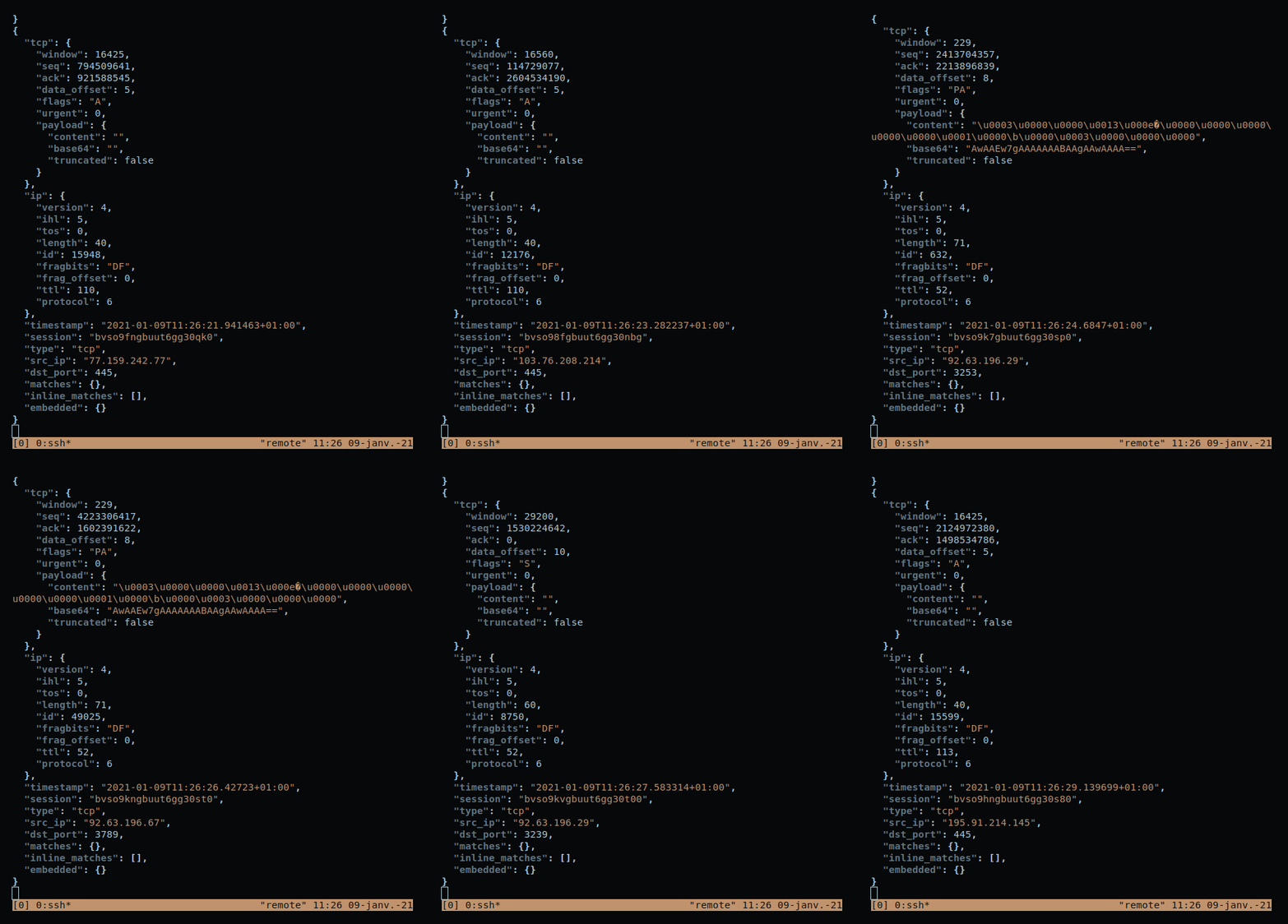
IPv4 पर Netcat TCP पैकेट:
{
  "tcp": {
    "window": 512,
    "seq": 1906765553,
    "ack": 2514263732,
    "data_offset": 8,
    "flags": "PA",
    "urgent": 0,
    "payload": {
      "content": "I made a discovery today. I found a computer.\n",
      "base64": "SSBtYWRlIGEgZGlzY292ZXJ5IHRvZGF5LiAgSSBmb3VuZCBhIGNvbXB1dGVyLgo=",
      "truncated": false
    }
  },
  "ip": {
    "version": 4,
    "ihl": 5,
    "tos": 0,
    "length": 99,
    "id": 39114,
    "fragbits": "DF",
    "frag_offset": 0,
    "ttl": 64,
    "protocol": 6
  },
  "timestamp": "2020-11-16T15:50:01.277828+01:00",
  "session": "bup9368o4skolf20rt8g",
  "type": "tcp",
  "src_ip": "127.0.0.1",
  "dst_port": 1234,
  "matches": {},
  "inline_matches": [],
  "embedded": {}
}
