
resterm v1.10.2
HTTP, GraphQL, gRPC, WebSocket और SSE के लिए टर्मिनल API क्लाइंट। सादे .http फ़ाइलें जिन्हें आप diff और version कर सकते हैं, साथ में स्क्रिप्टेड टेस्ट, वर्कफ़्लो, मॉक, रिकॉर्डर और एक CLI रनर।

Resterm
An API-as-code workbench for the terminal.
resterm.app · docs
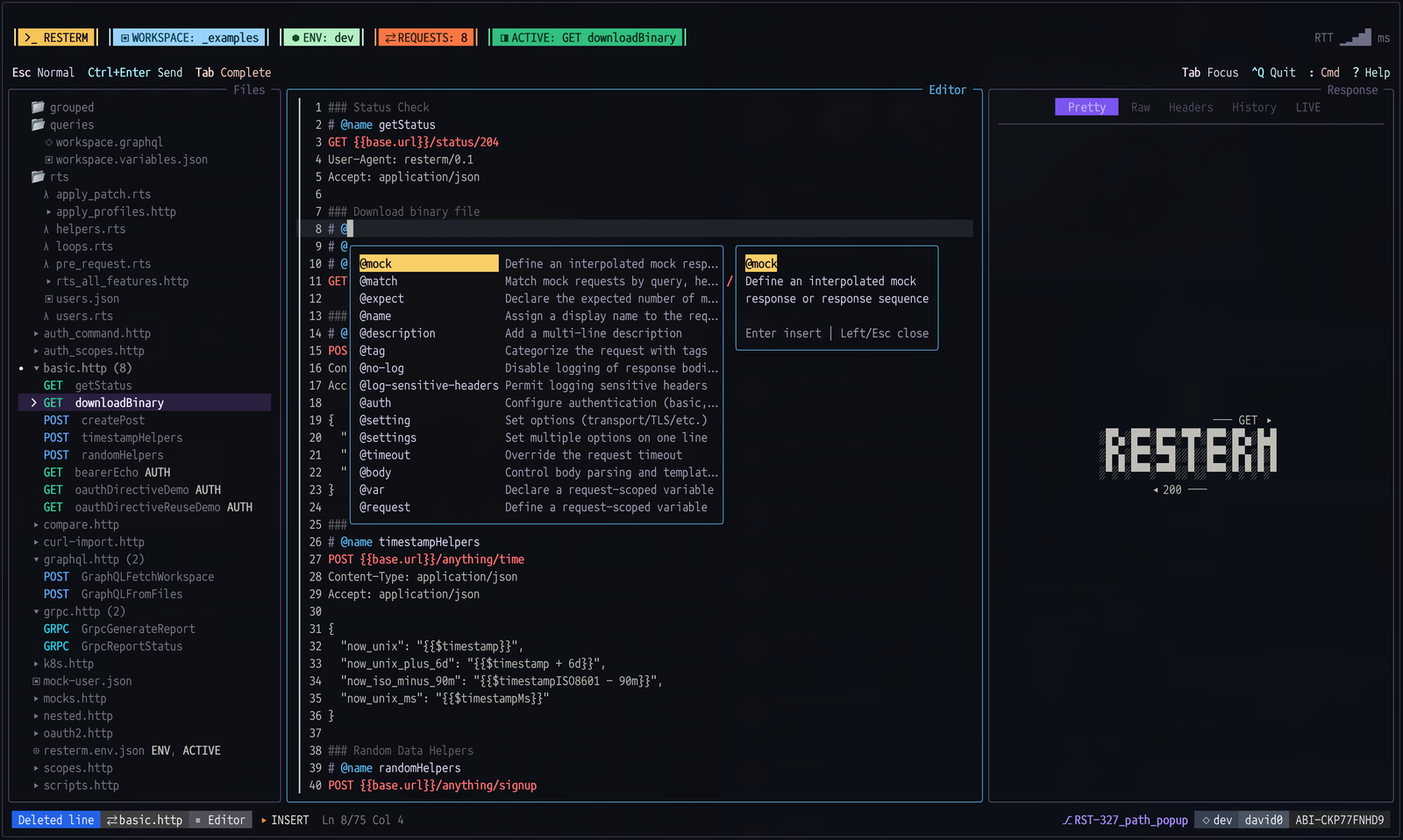
Resterm treats the file as the interface. A request is plain text in a .http or .rest file: method, URL, headers, body, auth, checks and settings. Environments, workflows and local mocks work the same way, and so do themes and key bindings. You can use the terminal UI, or run the same files from the CLI with resterm run. If your API sits behind an SSH bastion or inside a Kubernetes cluster, Resterm opens the tunnel or port-forward for you.
Features
- HTTP, GraphQL, gRPC (with reflection and streaming), WebSocket and SSE
- environment files, grouped environments, dotenv files and OS variables
- bearer tokens, OAuth 2.0 and tokens from CLIs like
gh auth token - TLS client certificates, custom root CAs, proxies, HTTP/2 and a cookie jar per environment
- captures and checks with
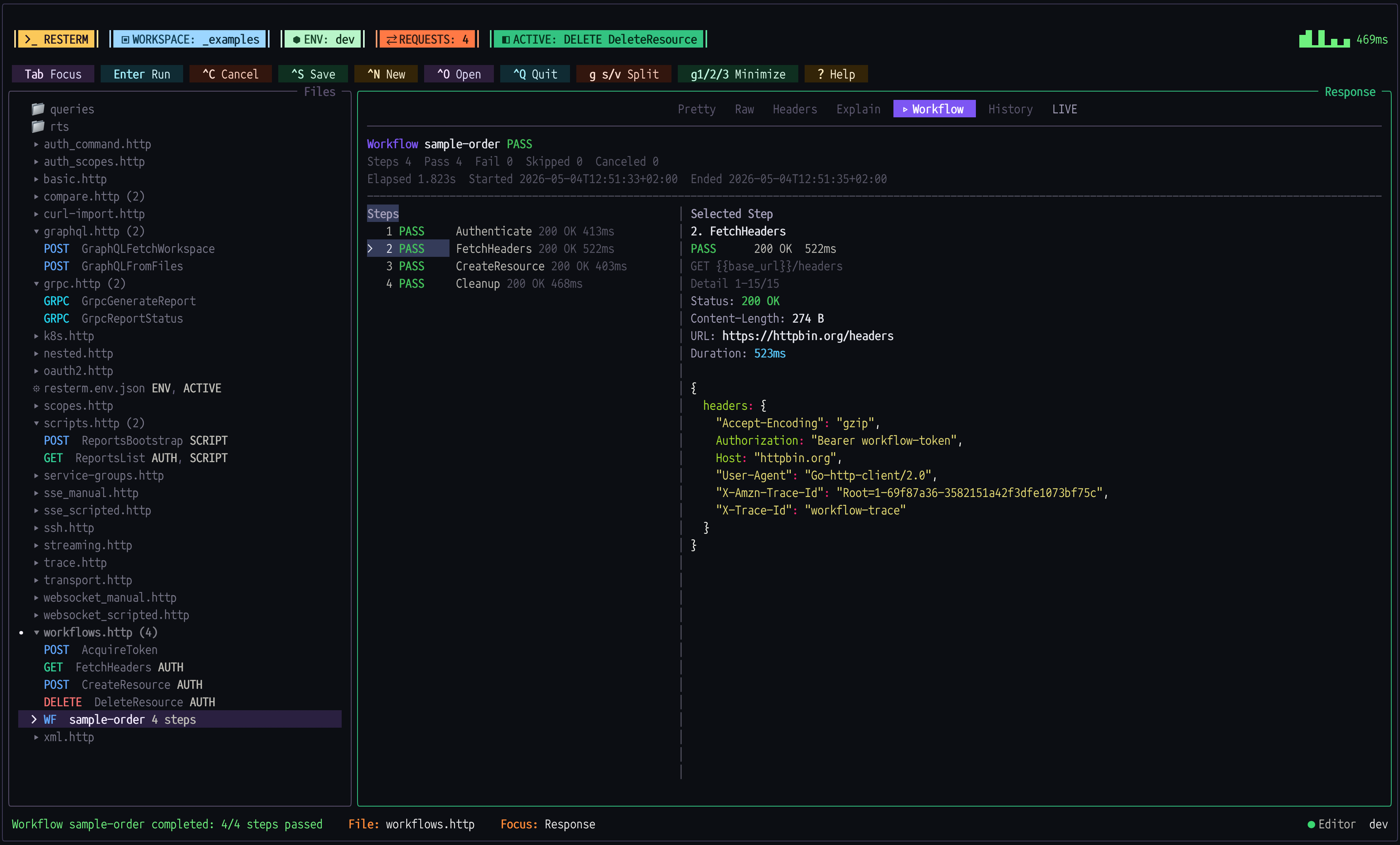
@captureand@assert, plus@polland@retry - workflows that chain requests into steps, with
@ifand@for-each - RestermScript for logic and
@rts testblocks - editor with Vim motions, completion and inline diagnostics
@compareto send one request to several environments and diff the results- timeline tracing with per-phase budgets, and export to OpenTelemetry
@profilewith latency stats, a histogram, P95 and P99- SSH tunnels and Kubernetes port-forwards
- local mock servers, and a proxy that records traffic as requests or mocks
resterm runto run requests and workflows from the command line, with JSON or JUnit output- headless Go API to run the same files from your own Go code
- import from curl and OpenAPI, and share collections as bundles or zip files
- custom key bindings and themes
- open a file in
$EDITOR, or a response body in your default app
No account and no telemetry.
[!NOTE] Resterm has no MCP server or built-in AI features. To help your LLM use Resterm, install the skill with
resterm skill --agent claudeorresterm skill --agent codex. See the skill docs for other agents. You can also point your agent atdocs/or resterm.app/docs.
Screenshots
Trace and timeline
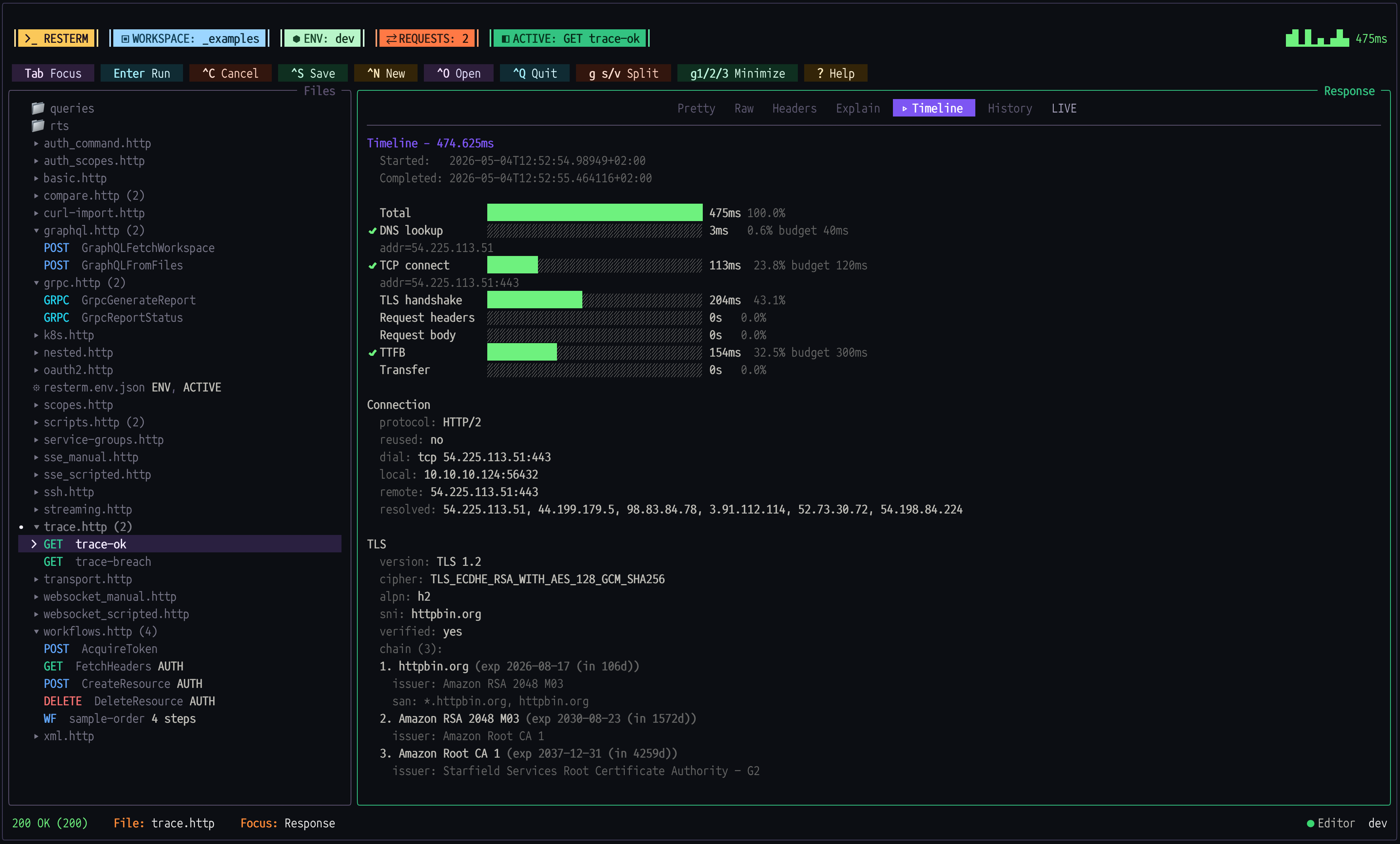
Click to see more of the UI
Workflows
Profiler
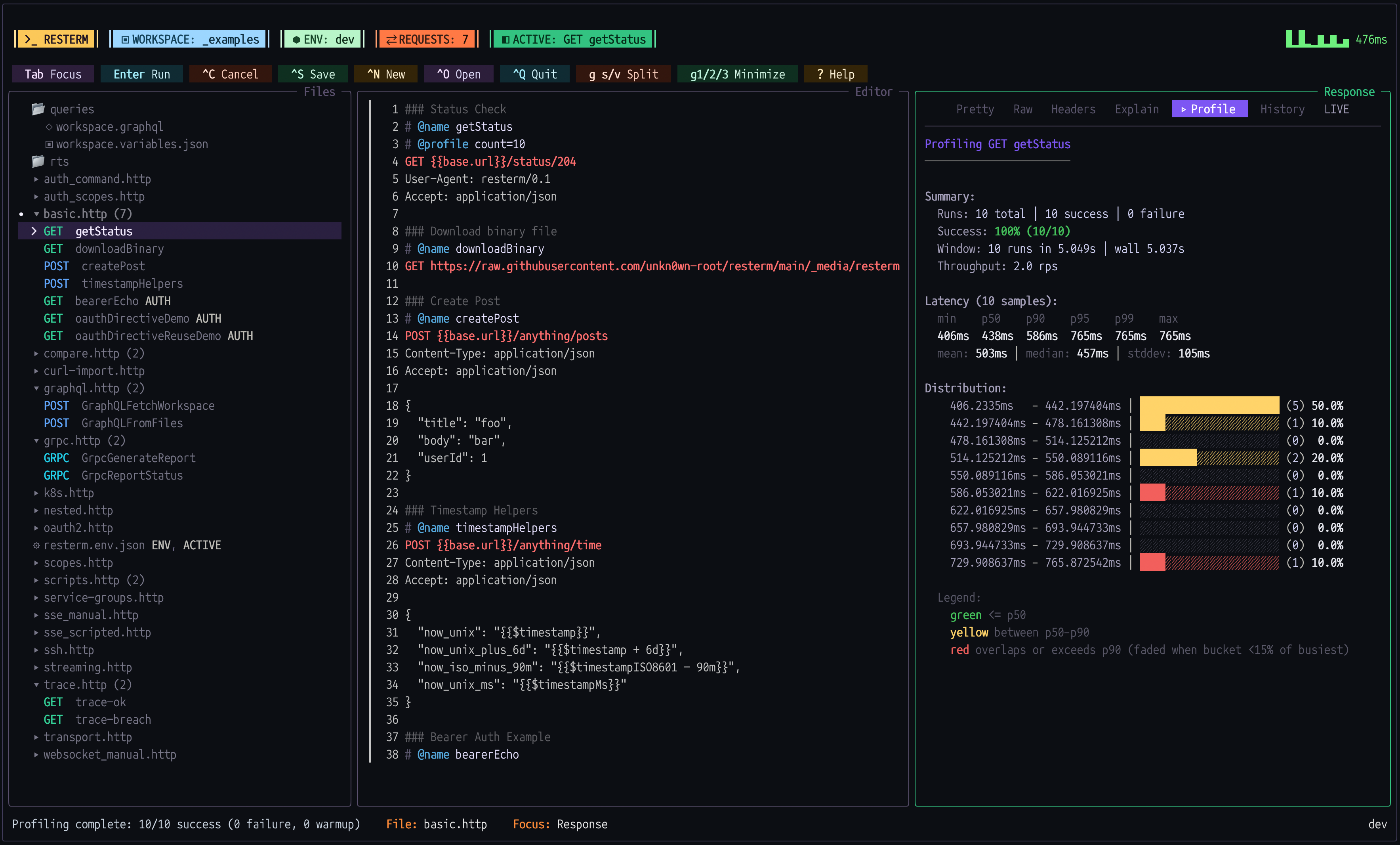
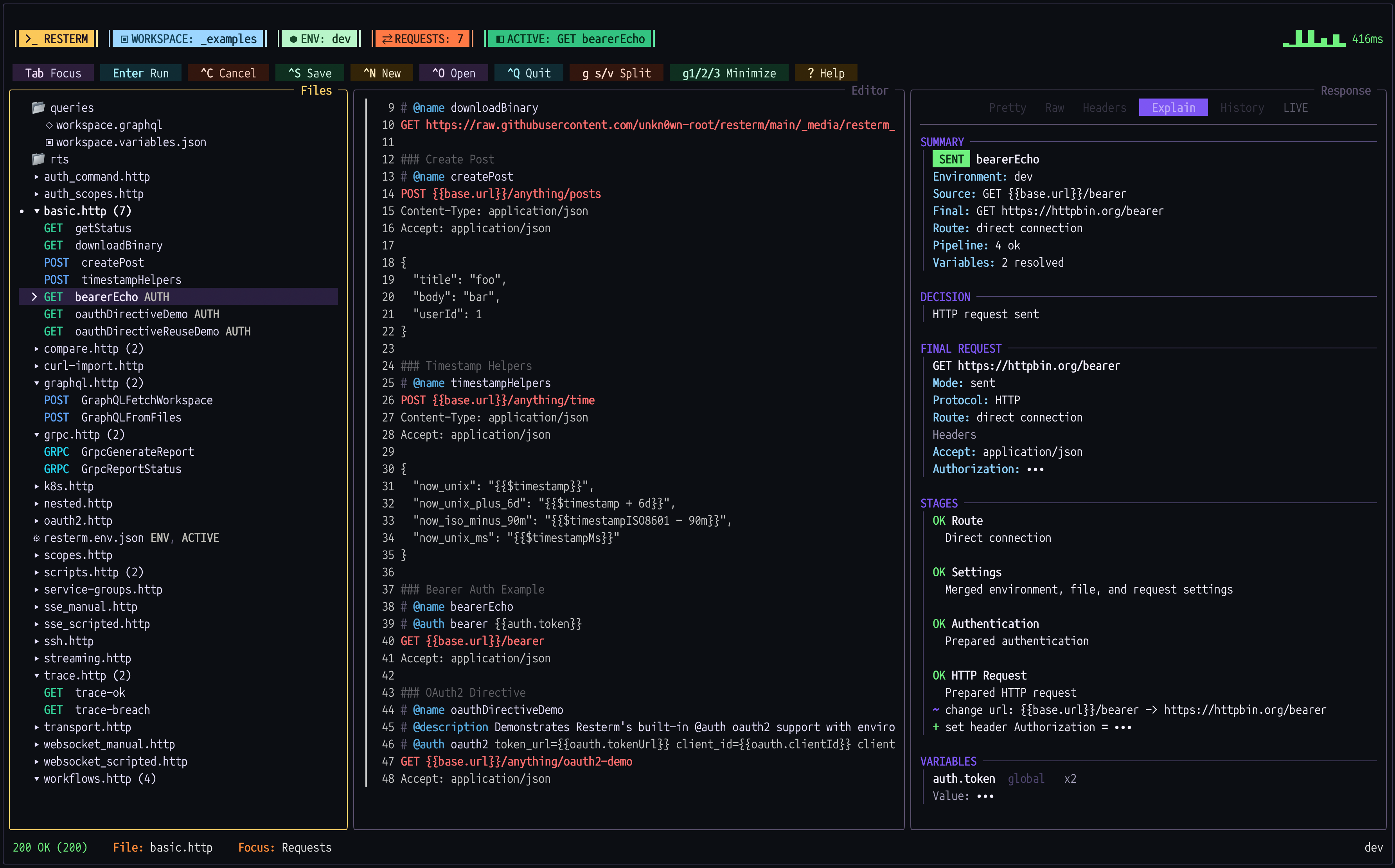
Explain
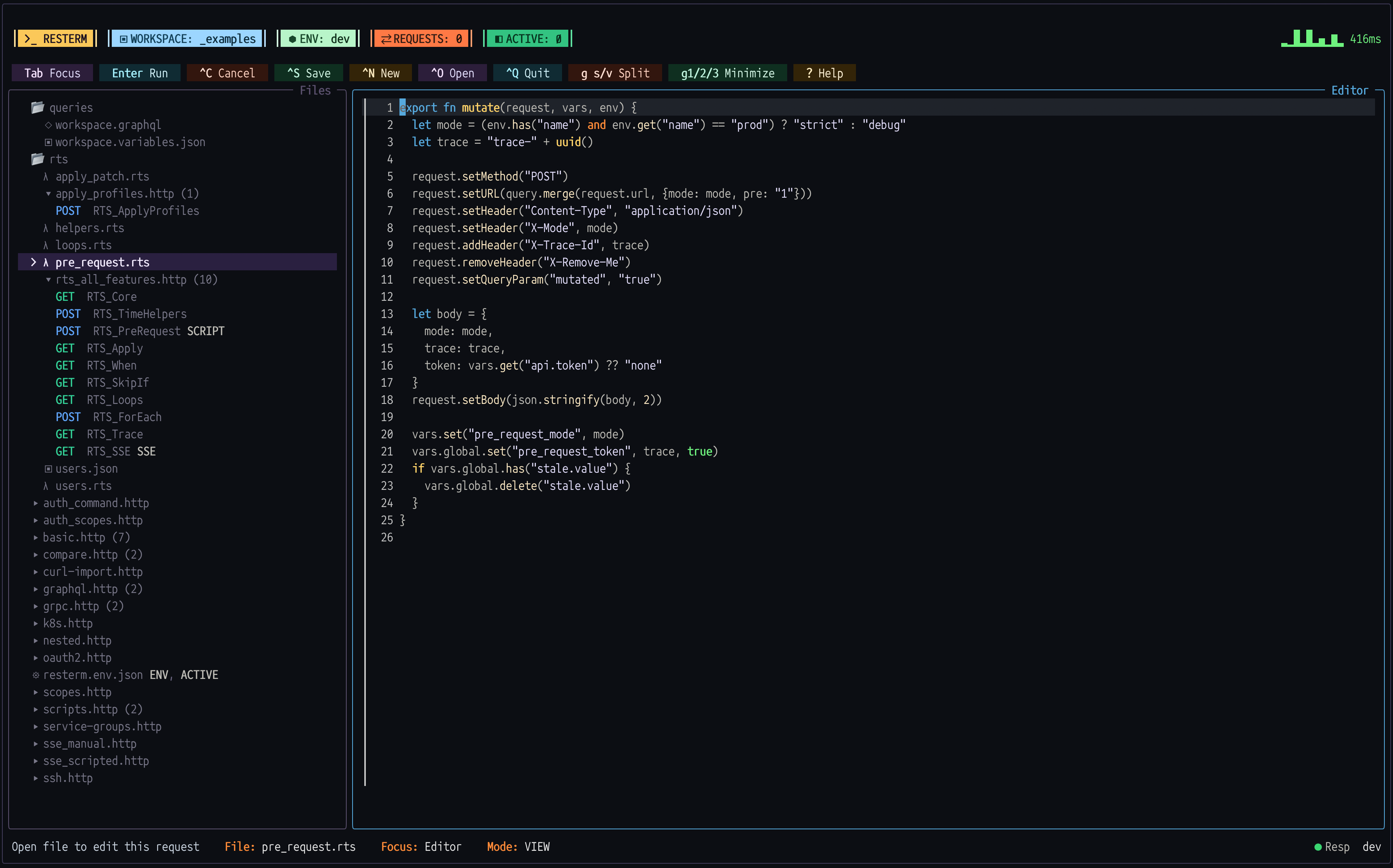
RestermScript
Install
macOS and Linux:
brew install resterm
# or
curl -fsSL https://resterm.app/install.sh | sh
Windows:
irm https://resterm.app/install.ps1 | iex
With Go 1.25 or newer:
go install github.com/unkn0wn-root/resterm/cmd/resterm@latest
Prebuilt binaries for macOS, Linux and Windows are on the releases page. The macOS binaries need macOS 13 Ventura or newer, and the Linux binaries need glibc 2.32 or newer.
To update a Homebrew installation, run brew upgrade resterm. For release binaries or installations made with the scripts, run resterm --update. If you installed with Go, rerun the go install command above. More in the install guide.
Quick start
mkdir my-api && cd my-api
resterm init
resterm
resterm init creates a requests.http file with a few sample requests and local mocks to answer them, so you don't need a real API to try it. Press g Shift+M to start the mock server, move the cursor to a request and press Ctrl+Enter to send it. Press ? for help at any time.
You don't need init either. Run resterm, type a URL or paste a curl command, and press Ctrl+Enter.
The same file also runs without the UI. Start the mocks in one terminal and run a request in another:
resterm mock requests.http                       # terminal 1
resterm run --request CreateUser requests.http   # terminal 2
Request files
Resterm reads the standard .http format and adds # @ directives on top for settings and automation:
# @setting base-url https://api.example.com/v1/

### Create users
// Send this request once for each name in the list.
# @for-each ["david", "tom"] as name
# @when env.meta.name == "dev"
# @assert response.statusCode == 201
# @rts test "user has an id"
> if response.json().id == null {
>   t.error("no id for", name)
> }
POST users
Content-Type: application/json

{"name":"{{= name }}"}
A @setting before the first request applies to the whole file. ### starts a new request. Directives above a request can repeat it, skip it or check the response, either with @assert or with an @rts test block of RestermScript code.
There are more examples at resterm.app/examples and in _examples/, and every directive is listed in the request file reference.
Documentation
The full docs are at resterm.app/docs. Good places to start are workflows, mock servers, recording, the CLI and RestermScript.
Inside the TUI, :help <topic> opens the built-in manual and :docs <topic> opens the same page on the website.
To run request files from your own Go code, see the headless package.
Contributing
To suggest a feature, start a discussion in the Ideas category. To report a bug, open an issue. To contribute code, open a pull request.
Reporting bugs and suggesting features helps just as much as code.