
Skip to content
KitploitKITPLOIT
ToolsExploitsBlog
Log in
Submit
ToolsExploitsBlog
Submit

Hacking, PenTest, and Cybersecurity Tools for Your Security Arsenal!

Kitploit is a directory of hacking, cybersecurity, and pentesting tools. Discover the latest project updates to find vulnerabilities, analyze systems, automate testing, and strengthen your security.

FeedsContactPrivacy© 2026 Kitploit

Tool Directory

Categories

View all categories
Loading categories
cve-2020-23127-PoC — Proof-of-concept and analysis for CVE-2020-23127 (CSRF) with a Docker-based lab environment. Demonstrates exploitation and understanding of cross-site request forgery vulnerabilities. | Kitploit
Tools/GitHubGitHub/patrickhalasik/cve-2020-23127-poc
Vulnerability AnalysisExploitationWeb Application ExploitationCTFLearning & EducationLabs & Practice
GitHubpatrickhalasik/cve-2020-23127-poc

cve-2020-23127-PoC

Proof-of-concept and analysis for CVE-2020-23127 (CSRF) with a Docker-based lab environment. Demonstrates exploitation and understanding of cross-site request forgery vulnerabilities.

View Repository
301 year agoNot yet reviewed
Share

cve-2020-23127-PoC

CVE-2020-23127: https://www.cvedetails.com/cve/CVE-2020-23127/

Introduction

This is my first CVE proof of concept and analysis. It was done as part of my cyber-security course on my 2nd year of Master in Computer Sciences at Université de Franche-Comté.

I looked specifically for a CSRF CVE to better understand this kind of vulnerability and protections against CSRF attacks.

CVE analysis

You will find a CVE analysis made by me in the .docx format. It is currently in French only.

What is needed for the PoC

1) Docker

Install Docker if not already present on your machine.

2) Files from this repository

You need to download the following files:

  • compose.yaml
  • dump.sql
  • dump-updated.sql

These 3 files have to be in the same directory for the docker compose command to work.

3) Execute the docker compose command

docker compose up -d

Proof of concept

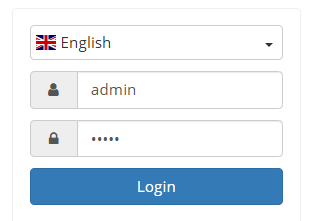
1) Open localhost:8081

2) Log in as admin/admin

image

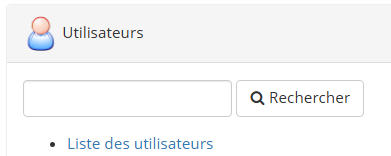
3) Go to Administration > Users > List of Users

image

You will notice that there is the user "Juan Hernandez" with the role Student (Apprenant)

image

4) In another tab, open localhost:8082

By entering this website, a CSRF attack is done with a customized POST request: http://localhost:8081/main/admin/user_edit.php?user_id=3

5) Go back to the tab with localhost:8081 and refresh the page

image

You will now see that the user "Juan Hernandez" has the role Teacher (Enseignant)

Download Tool

Most Popular

View all →

Discover the most used tools by our community.

  • 1

    OsintHunter

    letox4/osinthunter

    🎯 The ultimate OSINT toolkit: investigation graph, confidence scoring, alias families, map, timeline and reports. 49 modules, 400+ sites, no API keys required.

    513
  • 2

    ghostlock-app

    yukonga/ghostlock-app

    GhostLock One-Tap Execution App (CVE-2026-43499)

    471
  • 3

    ARTEX

    baarai/artex

    LLM multi-agent autonomous penetration testing platform with planner/worker agents, asset and exploration graphs, MITM traffic recording, and vulnerability retesting.

    345
  • 4

    redforge

    cybersecurity91/redforge

    Browser-side red team toolkit with 102 offline tools for recon, payload generation, credential attacks, crypto, encoding and engagement reporting.

    311
  • 5

    estorides

    grisuno/estorides

    Aggregates 99+ free OSINT sources in parallel, resolves entities into a knowledge graph, and exports STIX 2.1, MISP, or GraphML with LLM-assisted analysis.

    303
  • 6

    opencti

    opencti-platform/opencti

    Open Cyber Threat Intelligence Platform

    303

Explore all tools

Browse our collection of tools

View all tools →