
Skip to content
KitploitKITPLOIT
ToolsExploitsBlog
Log in
Submit
ToolsExploitsBlog
Submit

Hacking, PenTest, and Cybersecurity Tools for Your Security Arsenal!

Kitploit is a directory of hacking, cybersecurity, and pentesting tools. Discover the latest project updates to find vulnerabilities, analyze systems, automate testing, and strengthen your security.

FeedsContactPrivacyΒ© 2026 Kitploit

Tool Directory

Categories

View all categories
Loading categories
Ashwesker-CVE-2025-64155 β€” CVE-2025-64155 | Kitploit
Tools/GitHubGitHub/mefhika120/ashwesker-cve-2025-64155
Vulnerability AnalysisExploitationWeb Application ExploitationPenetration TestingCommand and ControlRed Teaming
GitHubmefhika120/ashwesker-cve-2025-64155

Ashwesker-CVE-2025-64155

CVE-2025-64155

View Repository
3510 months agoNot yet reviewed

Most Popular

View all β†’

Discover the most used tools by our community.

  • 1

    OsintHunter

    letox4/osinthunter

    🎯 The ultimate OSINT toolkit: investigation graph, confidence scoring, alias families, map, timeline and reports. 49 modules, 400+ sites, no API keys required.

    1.0k
  • 2

    ghostlock-app

    yukonga/ghostlock-app

    GhostLock One-Tap Execution App (CVE-2026-43499)

    647
  • 3

    looking-glass

    anonghosty/looking-glass

    CSIRT platform that ingests Shadowserver reports into MongoDB and replays them as interactive maps, analysis, findings, advisories and executive dashboards.

    421
  • 4

    jumpserver

    jumpserver/jumpserver

    JumpServer is an open-source Privileged Access Management (PAM) platform that provides DevOps and IT teams with on-demand and secure access to SSH, RDP, Kubernetes, Database and RemoteApp endpoints through a web browser.

    389
  • 5

    ARTEX

    baarai/artex

    LLM multi-agent autonomous penetration testing platform with planner/worker agents, asset and exploration graphs, MITM traffic recording, and vulnerability retesting.

    333
  • 6

    SafeLine

    chaitin/safeline

    Self-hosted WAF and reverse proxy that filters malicious HTTP traffic, blocks SQL injection, XSS, and bot attacks, with rate limiting and dynamic HTML/JS encryption.

    331

Explore all tools

Browse our collection of tools

View all tools β†’
Share

πŸ”’ CVE-2025-64155: Critical FortiSIEM Vulnerability

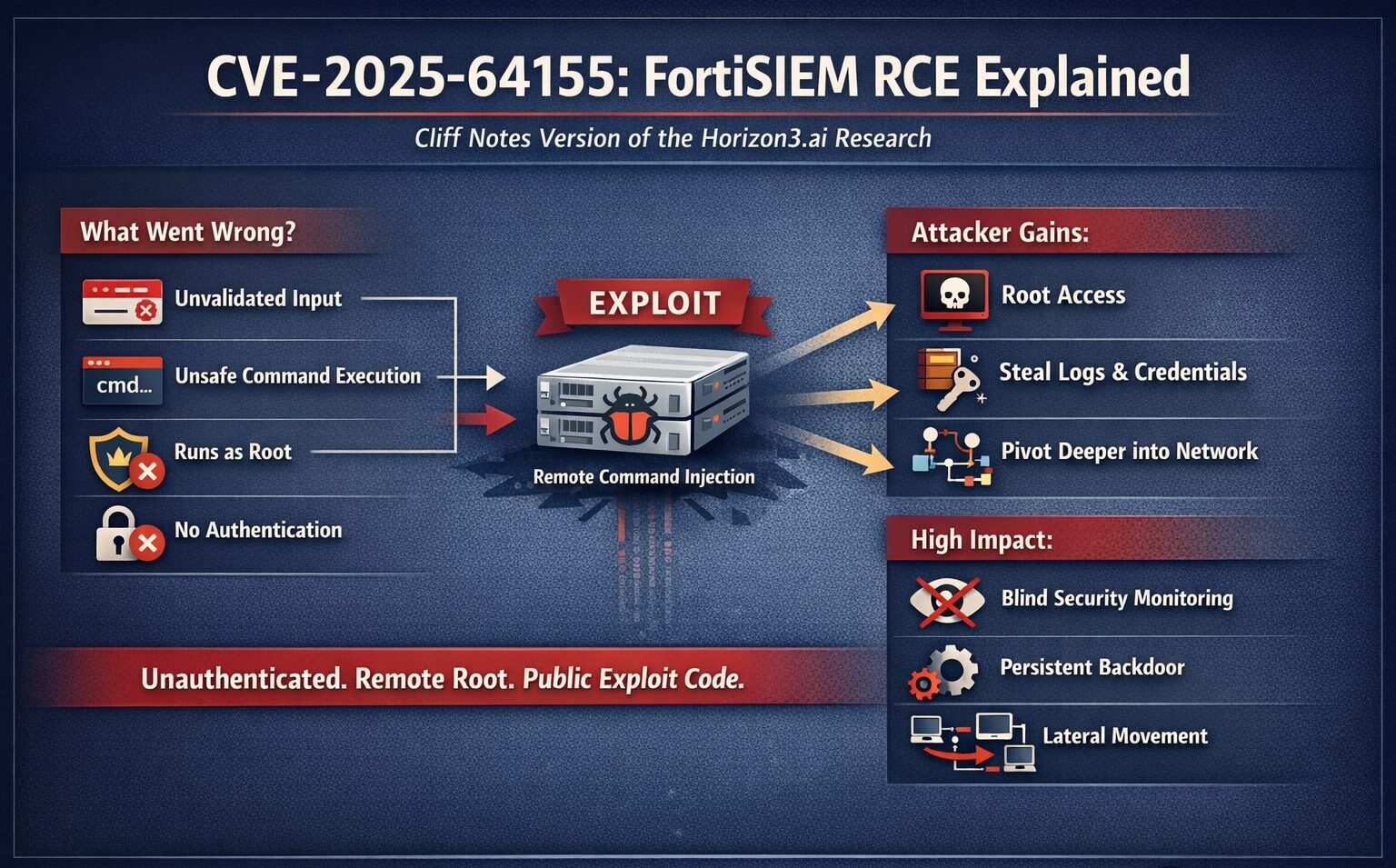
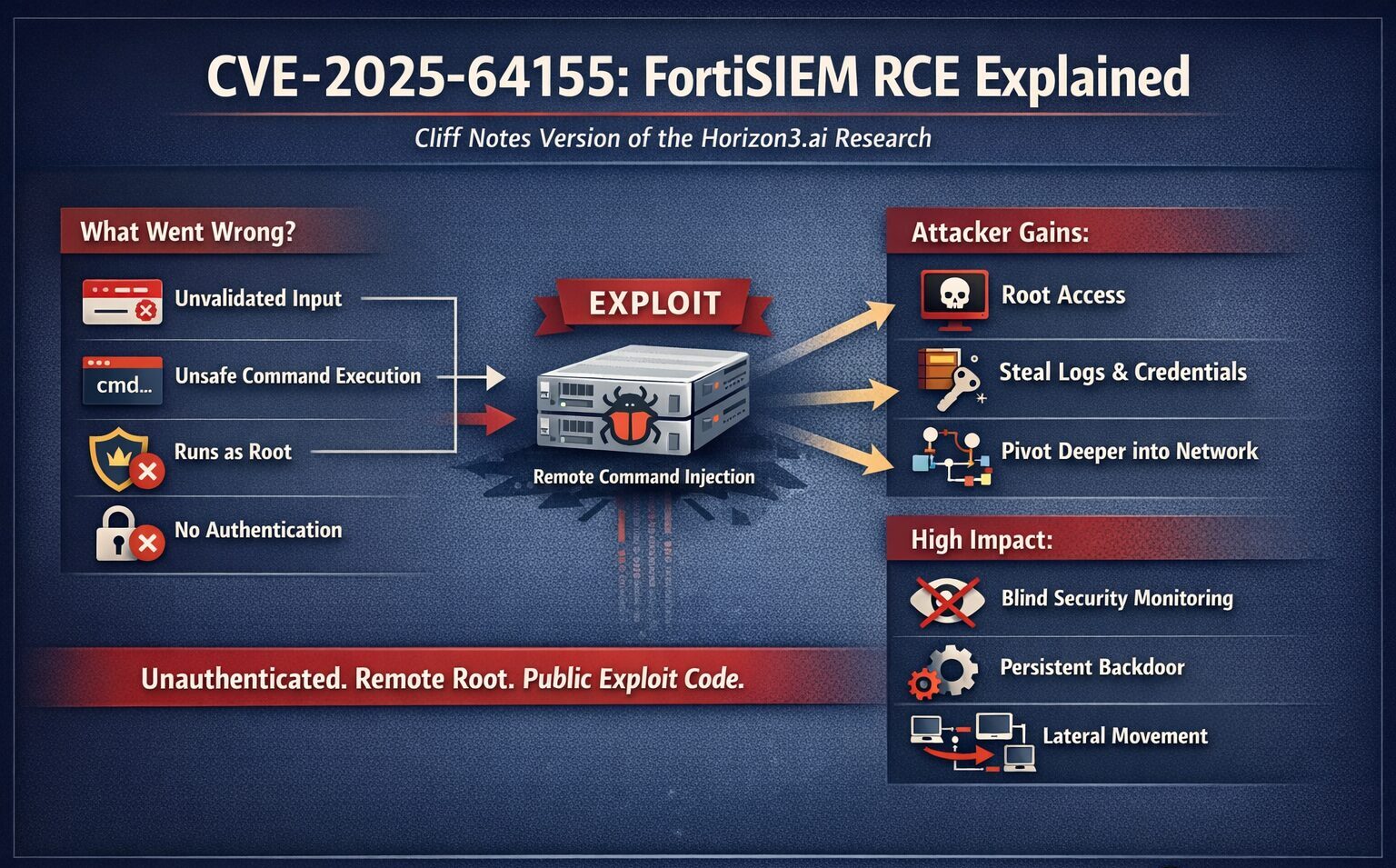
CVE-2025-64155-e1768444742484


πŸ“Œ Overview

CVE-2025-64155 is a critical security vulnerability in Fortinet FortiSIEM, a popular security information and event management platform. Publicly disclosed on January 13, 2026, it allows unauthenticated remote attackers to execute arbitrary system commands.


⚠️ Vulnerability Details

  • Type: OS Command Injection (CWE-78)
  • Impact: Remote Code Execution (RCE) with root privileges
  • Attack Vector: Network (TCP Port 7900)
  • Privileges Required: None
  • User Interaction: None
  • Attack Complexity: Low
  • Severity: CVSS 3.x 9.8 (Critical)

Description: An attacker can send specially crafted requests to FortiSIEM services (like phMonitor) to execute arbitrary commands, potentially compromising the entire system.


πŸ–₯ Affected Products / Versions

  • FortiSIEM 6.7.0 – 6.7.10
  • FortiSIEM 7.0.0 – 7.0.4
  • FortiSIEM 7.1.0 – 7.1.8
  • FortiSIEM 7.2.0 – 7.2.6
  • FortiSIEM 7.3.0 – 7.3.4
  • FortiSIEM 7.4.0

Note: Cloud and latest patched versions (e.g., 7.4.1, 7.3.5, 7.2.7, 7.1.9) are not affected.


πŸ”₯ Impact

  • Unauthenticated remote exploitation possible

  • Full system compromise (root access)

  • Potential attacker actions:

    • Install malware/backdoors
    • Exfiltrate logs and credentials
    • Tamper or disable monitoring
    • Pivot to internal systems

FortiSIEM often contains sensitive telemetry and admin data, so compromise can seriously weaken organizational security.


πŸ“ˆ Exploitation Status

  • Public Proof-of-Concept (PoC) available
  • Active exploitation reported in the wild
  • Not yet listed in some official government vulnerability catalogs, but highly urgent

πŸ›‘ Mitigation & Remediation

Immediate Actions:

  1. Patch FortiSIEM immediately: upgrade to versions 7.4.1, 7.3.5, 7.2.7, or 7.1.9
  2. Restrict network access: allow only trusted hosts to reach TCP port 7900
  3. Segment & isolate FortiSIEM from general network exposure
  4. Monitor logs: watch for unusual connections or unexpected admin actions

Temporary Workaround:

  • Block inbound traffic to TCP port 7900 until patching is possible

🧠 Summary

CVE-2025-64155 is a critical OS command injection vulnerability in FortiSIEM, enabling remote, unauthenticated root access. With PoC exploits publicly available, organizations must patch, isolate, and monitor immediately to prevent full system compromise.


References:

  • The Hacker Wire
  • Socradar Threat Blog
  • INCIBE
Download Tool