puncia v0.35
Panthera(P.)uncia - Official CLI utility for Subdomain Center & Exploit Observer.
Panthera(P.)uncia
Official CLI utility for Subdomain Center & Exploit Observer

Puncia is the official command-line client for two A.R.P. Syndicate intelligence APIs — point it at a domain, a brand, or a vulnerability ID and get structured JSON back in seconds, no browser required:
- 🕸️ Subdomain Center — subdomain enumeration, subdomain takeover surfacing, shadow IT discovery, and brand impersonation / lookalike-domain (typosquat) detection at internet scale.
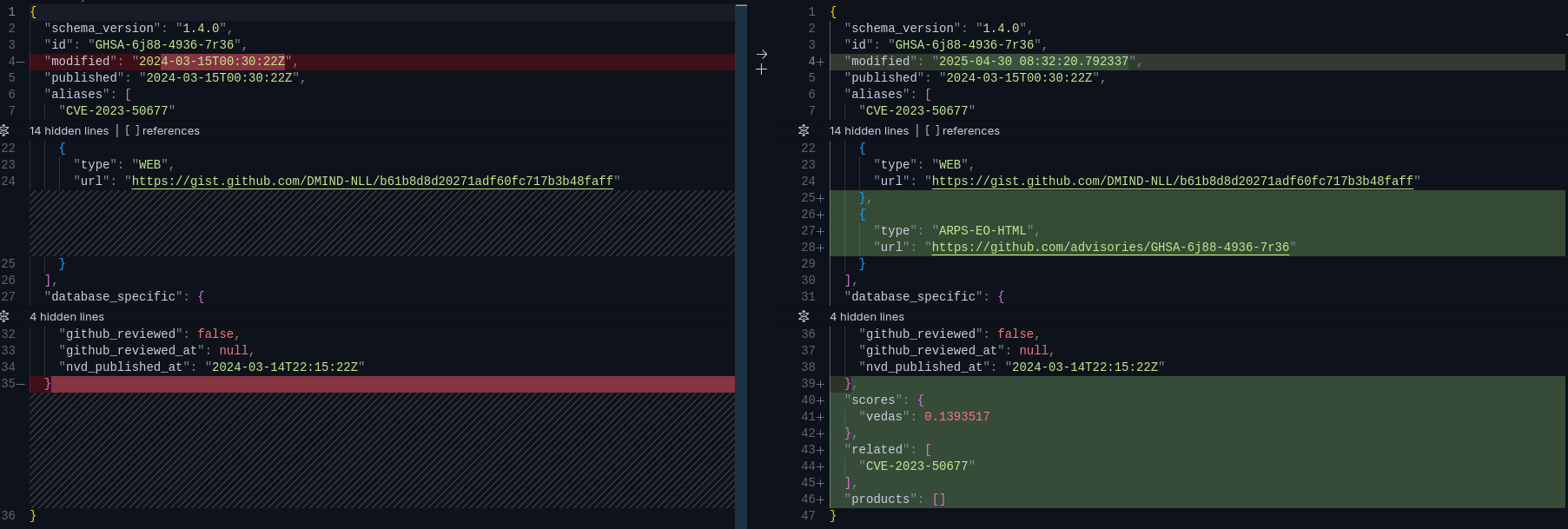
- 💥 Exploit Observer — exploit & vulnerability intelligence across 150+ identifier schemes (CVE, GHSA, EDB, MSF, ZDI, nation-state feeds and more), with CVE/GHSA enrichment (EPSS + VEDAS maturity scoring) and SBOM scanning.
$ puncia subdomain arpsyndicate.io
╭──────────────────────────────────────────────────────────────────────╮
│ Panthera(P.)uncia v0.36 │
│ subdomain recon · brand impersonation · exploit intel · sbom analysis│
│ A.R.P. Syndicate — https://www.arpsyndicate.io │
╰──────────────────────────────────────────────────────────────────────╯
[
"advisories.arpsyndicate.io",
"asm.arpsyndicate.io",
"blog.arpsyndicate.io",
...
]
$ puncia sbom bom.json ./out
puncia ━━━━━━━━━━━━━━━━━━━━━━━━━━━━━━━━━━━━━━━━ 100% (128/128) 0:00:41
Please note that although these results can sometimes be pretty inaccurate & unreliable, they can greatly differ from time to time due to their self-improvement capabilities.
Aggressive rate-limits can be avoided with an API key: https://www.arpsyndicate.io/pricing.html
Practical Applications
- Brand Impersonation & Phishing Domain Detection
Surface replica, lookalike, and typosquat domains riding on your brand before they're used against you or your customers. - Shadow IT & External Attack Surface Discovery
Identify and monitor exposed subdomains and infrastructure spun up outside official channels. - Subdomain Takeover Reconnaissance
Enumerate the full subdomain footprint of a target, a key first step in spotting dangling/takeover-prone records. - Advanced Vulnerability Research & Monitoring
Discover and track known and emerging threats, including obscure or unlisted vulnerabilities. - Contextual Enrichment of CVE/GHSA Data
Add depth and actionable intelligence (EPSS + VEDAS maturity scores) to known vulnerabilities for better prioritization. - Vulnerability Detection in Software Bill of Materials (SBOM)
Analyze software components for known exploits and security issues using structured SBOM data. - Seamless Integration with CI/CD & Threat Intel Workflows
Automate intelligence gathering and vulnerability checks within development or security pipelines. - Monitoring Nation-State Exploit Trends
Stay ahead of threats by tracking vulnerabilities flagged by foreign actors but not yet recognized by mainstream databases. - Keyword-Based Subdomain Discovery
Surface hosts carrying a given keyword across the internet, independent of a specific parent domain. - Bulk Threat Intelligence Processing
Run batch queries (domains, vulnerabilities, etc.) for scalable analysis across large datasets or enterprise asset inventories. - Passive Reconnaissance for Red Teams
Conduct stealthy reconnaissance by using passive data sources (no direct interaction with targets). - Open Source Intelligence (OSINT) Collection
Combine subdomain and exploit intelligence to enhance OSINT investigations. - Compliance & Risk Management Support
Enrich vulnerability data to support compliance audits (e.g., ISO 27001, SOC 2) with deeper context.
Installation
- From PyPi -
pip3 install puncia - From Source -
pip3 install .
30-second Quickstart
pip3 install puncia
# subdomain footprint of a target (shadow IT / attack surface / takeover recon)
puncia subdomain example.com
# lookalike / typosquat / brand-impersonation domains
puncia replica example.com
# what's known about a CVE
puncia exploit CVE-2021-44228
Usage
puncia <mode> <query> [output] [--match M] [--domain D] [--limit N] [--offset N]
[--crawl] [--api-key K] [--concurrency N]
[--timeout S] [--retries N] [--quiet]
Run puncia --help for the full reference. Results are printed to stdout; the
banner, progress bars, warnings and errors all go to stderr, so
puncia subdomain example.com > out.json always yields clean, valid JSON.
Exit codes: 0 success · 1 request or input error · 2 usage error.
-
(PAID) Store an API key (storekey) -
puncia storekey <api-key>- Stored at
~/.punciawith0600permissions.$PUNCIA_API_KEYoverrides it, which is usually what you want in CI.
- Stored at
-
(FREEMIUM) Query Domains, clustered by domain (subdomain /
cuttlefishengine) -puncia subdomain <domain> <output-file>- Pagination (authenticated only): an authenticated result has no total
cap. By default
subdomain/replica/keywordwalk every page and merge them for you. Pass--offset(with or without--limit) to fetch exactly one raw page yourself instead, e.g. for a resumable or streaming walk:Anonymous requests ignorepuncia subdomain bigco.com --limit 50000 --offset 0 # stderr prints: note: more results available — continue with --offset 50000 puncia subdomain bigco.com --limit 50000 --offset 50000--limit/--offsetserver-side (always a shuffled sample of up to 500 rows); puncia warns rather than pretending they did something. - Live crawl (authenticated only):
--crawlsupplements stored results with a live discovery pass. A given domain is only actually re-crawled once every ~6h — requests inside that window get the cached crawl result instantly. Puncia reports the outcome on stderr:crawl: fresh, 12 newly discovered name(s)(alsopartial/cooldown/disabled).puncia subdomain bigco.com --crawl
- Pagination (authenticated only): an authenticated result has no total
cap. By default
-
(FREEMIUM) Query Replica Domains, clustered by brand (replica /
octopusengine) -puncia replica <domain> --match <prefix|exact|substring> <output-file> -
(FREEMIUM) Query by Keyword, clustered by keyword (keyword /
ammonitesengine) -puncia keyword <keyword> --match <exact|prefix> <output-file>- Optionally scope the keyword to a single domain with
--domain:puncia keyword blog --domain bandcamp.com
- Optionally scope the keyword to a single domain with
-
Query Exploit & Vulnerability Identifiers (exploit)
- (FREE) Vulnerability & Exploit Identifers Watchlist (^WATCHLIST_IDES) -
puncia exploit ^WATCHLIST_IDES <output-file> - (FREE) Vulnerability & Exploit Identifers Watchlist with Descriptions (^WATCHLIST_INFO) -
puncia exploit ^WATCHLIST_INFO <output-file> - (FREE) Vulnerable Technologies Watchlist (^WATCHLIST_TECH) -
puncia exploit ^WATCHLIST_TECH <output-file> - (FREE) Aggregate vulnerability/exploit stats (^STATS) -
puncia exploit ^STATS <output-file> - (FREE) Service health (^HEALTH) -
puncia exploit ^HEALTH <output-file> - (FREEMIUM) Supported Vulnerability Identifiers -
puncia exploit <eoidentifier> --match <substring|prefix|exact> <output-file>
- (FREE) Vulnerability & Exploit Identifers Watchlist (^WATCHLIST_IDES) -
-
(FREEMIUM) Enrich CVE/GHSA Identifiers (enrich) -
puncia enrich <cve-id/ghsa-id> <output-file>enrich=trueonly takes effect forCVE-/GHSA-identifiers; it merges the full upstream advisory record with EPSS + VEDAS scoring.
-
(PAID) Non-CVE Identifiers by VEDAS group (noncve) -
puncia noncve <browser/china/russia/europe/exploitable> <output-file> -
(FREE) Subdomain Center service health (^HEALTH) -
puncia subdomain ^HEALTH <output-file> -
Multiple Queries (bulk/sbom)
- (FREEMIUM) Bulk Input JSON File Format -
puncia bulk <json-file> <output-directory>{ "subdomain": [ "domainA.com", "domainB.com" ], "replica": [ "domainA.com", "domainB.com" ], "keyword": [ "keywordA", "keywordB" ], "exploit": [ "eoidentifierA", "eoidentifierB" ], "enrich": [ "eoidentifierA", "eoidentifierB" ] } - (FREEMIUM) SBOM Input JSON File Format -
puncia sbom <json-file> <output-directory>
Bulk and SBOM runs de-duplicate queries, cap parallelism at
--concurrency(default 10), and — when no API key is present — pace requests to stay inside the free-tier budget automatically. - (FREEMIUM) Bulk Input JSON File Format -
-
(FREEMIUM) External Import
import asyncio
import puncia
async def main():
# Without an API key (ratelimited)
print(await puncia.query_api("exploit", "CVE-2021-3450"))
print(await puncia.query_api("subdomain", "arpsyndicate.io"))
# With an API key
await puncia.store_key("ARPS-xxxxxxxxxx")
api_key = await puncia.read_key()
print(await puncia.query_api("subdomain", "arpsyndicate.io", apikey=api_key))
print(await puncia.query_api("replica", "arpsyndicate.io", match="exact", apikey=api_key))
print(await puncia.query_api("enrich", "CVE-2021-3450", apikey=api_key))
print(await puncia.query_api("noncve", "exploitable", apikey=api_key))
# Static endpoints (unauthenticated, unlimited)
print(await puncia.query_api("subdomain", "^HEALTH"))
print(await puncia.query_api("exploit", "^STATS"))
# Live crawl, with the outcome surfaced via a callback
await puncia.query_api(
"subdomain", "bigco.com", apikey=api_key, crawl=True,
on_crawl=lambda h: print("crawl status:", h.get("X-Crawl-Status")),
)
# Write straight to disk
await puncia.query_api("subdomain", "arpsyndicate.io", "out.json", apikey=api_key)
asyncio.run(main())
Failures raise puncia.PunciaError; an empty result ({} / []) is returned
as-is rather than being treated as an error. Reuse one session across many
queries by passing session= and a shared limiter=, exactly as
process_bulk() does.
from puncia import PunciaError, query_api
try:
data = await query_api("exploit", "CVE-2021-3450", apikey=api_key)
except PunciaError as exc:
print(f"lookup failed: {exc}")
Development
git clone https://github.com/ARPSyndicate/puncia && cd puncia
pip install --upgrade pip # editable installs need pip >= 21.3
pip install -e ".[dev]"
pytest # 42 offline tests, no API calls or network access
The test suite is fully offline — it covers URL construction, output-path containment, SBOM parsing, bulk planning and ratelimiter timing without touching the network, so it is safe to run in any environment.
CVE Enrichment
GHSA Enrichment
Noteworthy Mentions
- Passive Subdomain Enumeration: Uncovering More Subdomains than Subfinder & Amass
- Around 1000 exploitable cybersecurity vulnerabilities that MITRE & NIST ‘might’ have missed but China or Russia didn’t.
- Utilizing GitHub Actions for gathering Subdomain & Exploit Intelligence
- Introducing Exploit Observer — More than Shodan Exploits, Less than Vulners
- PUNCIA — The Panthera(P.)uncia of Cybersecurity
- Subdomain Enumeration Tool Face-off - 2023 Edition