
CVE-2024-30051
Master's Thesis research on CVE-2024-30051 (Windows DWM Heap Overflow). Features a high-reliability exploit with automated heap spray optimization,…
Tools for analyzing RAM dumps to find running processes, network connections, and hidden malware.

Master's Thesis research on CVE-2024-30051 (Windows DWM Heap Overflow). Features a high-reliability exploit with automated heap spray optimization,…

Heap-based buffer overflow in aswRdr.sys (aka the TDI RDR driver) in avast! Home and Professional 4.8.1356.0 allows local users to cause a denial of…

Proof-of-concept for CVE-2025-50422: demonstrates heap memory disclosure in Poppler's pdftocairo, allowing local attackers to recover clear-text PDF…

NtCopyFileChunk stack buffer overflow POC

Heap overflow exploit for CVE-2021-22555 achieving local privilege escalation to root on Ubuntu 20.04 with kernel 5.8.0-48.

linux security checks

CVE-2026-50142 — Heap allocation vulnerability in libheif HEIF sequence parser

CVE-2024-29050 is a vulnerability found in the Windows Cryptographic Services.

Detailed analysis of the Copy Fail vulnerability (CVE-2026-31431) in the Linux kernel, including memory corruption mechanism, privilege escalation…

CVE-2026-31402

PrISM: A Scalable Probabilistic RowHammer Mitigation (ISCA 2026). Ramulator2 source code and evaluation scripts.

Exploit for CVE-2026-14431 providing V8 sandbox read/write primitives via a crafted JavaScript file, targeting Chromium's V8 engine on Linux x64.

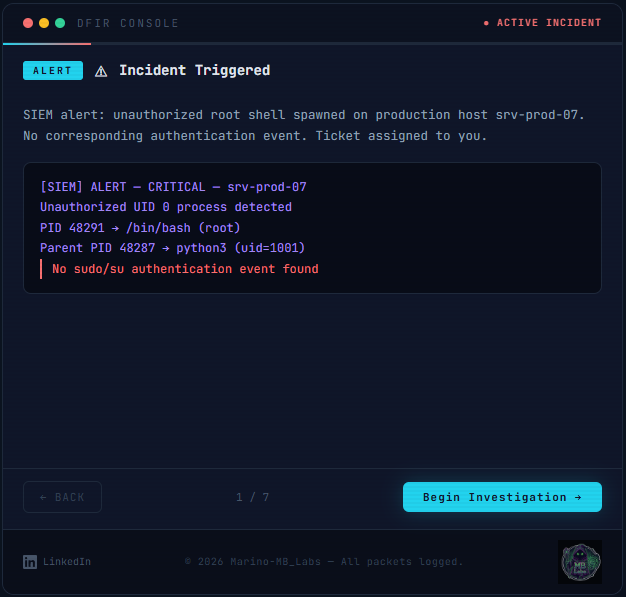
Interactive DFIR walkthrough of CVE-2026-31431 (Copy Fail) - from SIEM alert to confirmed verdict. Real Volatility 3 commands, verified methodology.

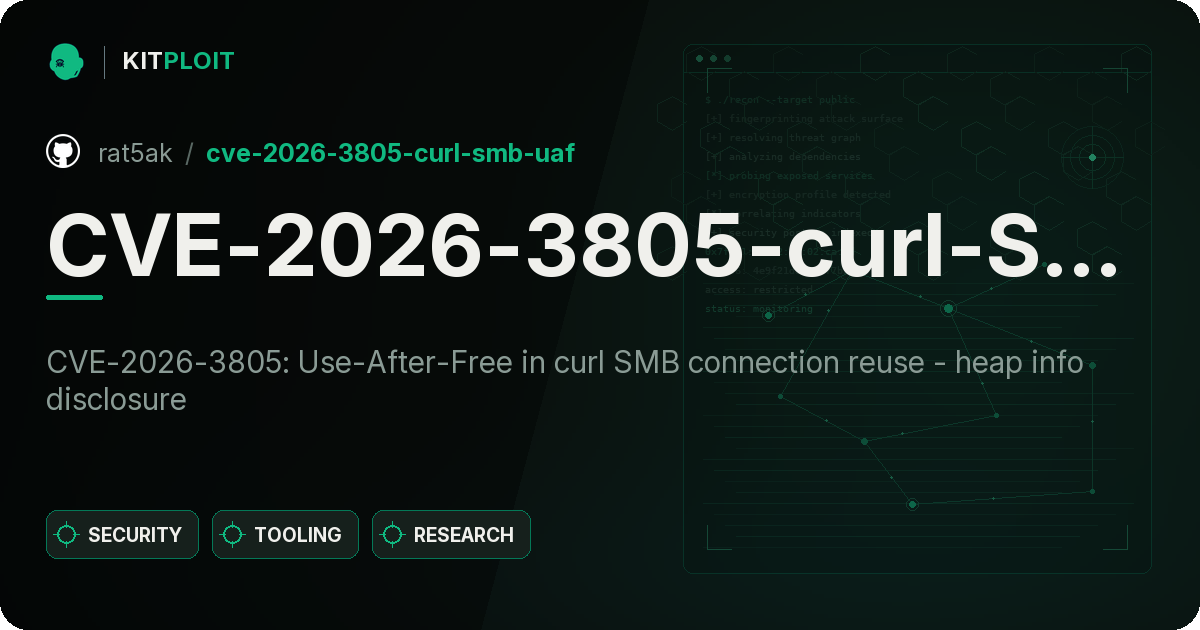
CVE-2026-3805: Use-After-Free in curl SMB connection reuse - heap info disclosure

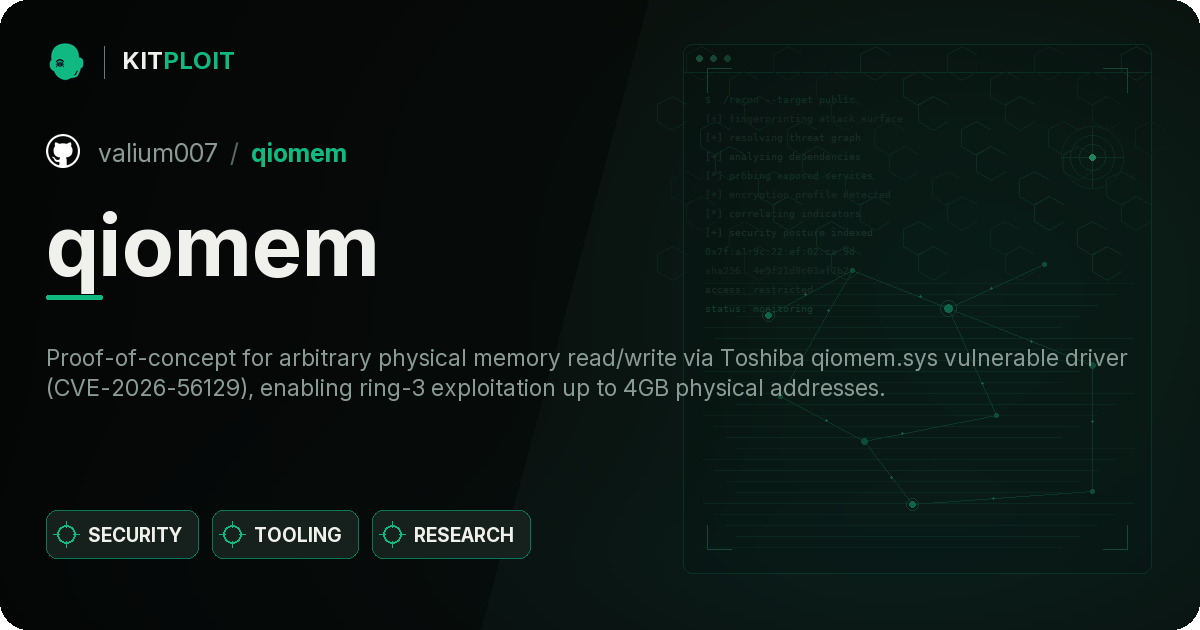
Toshiba Qiomem.sys vulnerable driver POC (CVE-2026-56129)

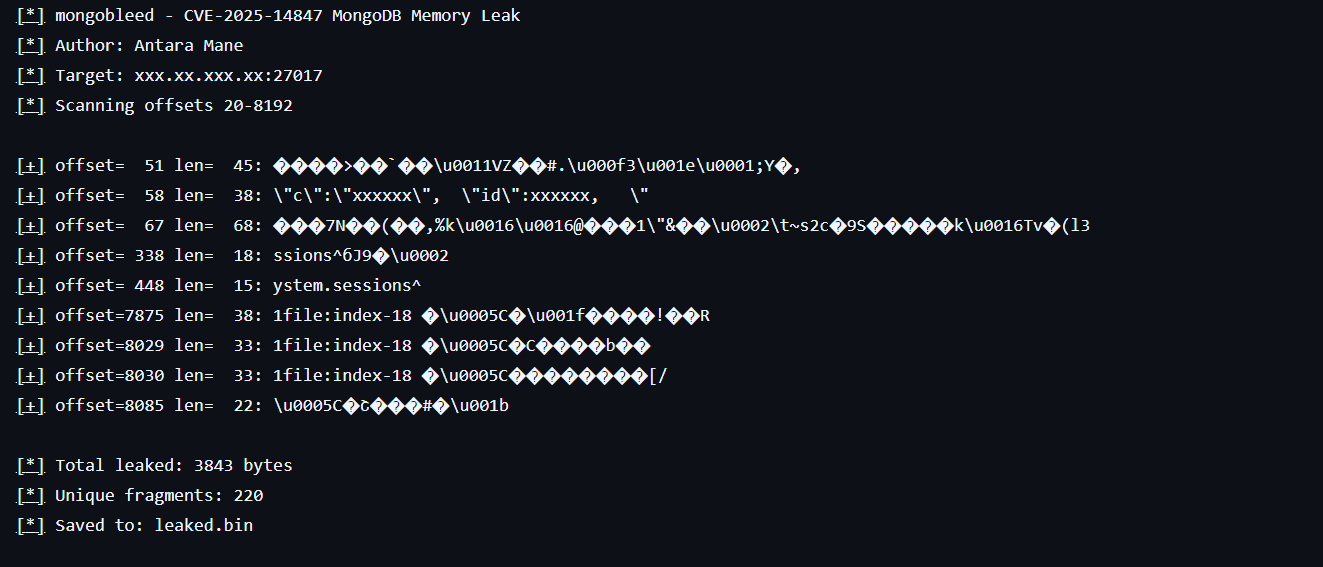
Educational research tool demonstrating CVE-2025-14847 memory disclosure in MongoDB's BSON decompression. Simulates bounds-checking failures and…

This Python application scans for the CVE-2023-38831 vulnerability in WinRAR.

Public advisory and technical analysis for CVE-2026-36590, a NanoMQ v0.24.9 denial-of-service vulnerability.