 y4er/weblogic-shiro-shell
WebLogic利用CVE-2020-2883打Shiro rememberMe反序列化漏洞,一键注册蚁剑filter内存shell

本次分享涉及的东西有以下几点:
Java 序列化是指把 Java 对象转换为字节序列的过程便于保存在内存、文件、数据库中,ObjectOutputStream类的 writeObject() 方法可以实现序列化,将Java对象转为字节序列。
Java 反序列化是指把字节序列恢复为 Java 对象的过程,ObjectInputStream 类的 readObject() 方法用于反序列化。
举一个简单的例子,见代码SerializeAndDeserialize ps:这里重点关注下在代码中的强制转换类型
package org.chabug.demo;

import org.chabug.entity.Dog;
import org.chabug.entity.Person;
import org.chabug.util.Serializables;

/*
这个例子是为了证明只要实现了Serializable接口的类都可以被序列化
并且Java内置的几大数据类型也可被序列化,因为他们都继承了Object类
 */

public class SerializeAndDeserialize {

    public static void main(String[] args) throws Exception {
        byte[] bytes;
        String s1 = "I'm a String Object....";
        bytes = Serializables.serializeToBytes(s1);
        Object o1 = Serializables.deserializeFromBytes(bytes);
        System.out.println(o1);

        String[] s2 = new String[]{"tom", "bob", "jack"};
        bytes = Serializables.serializeToBytes(s2);
        String[] o2 = (String[])Serializables.deserializeFromBytes(bytes);
        System.out.println(o2);

        int i = 123;
        bytes = Serializables.serializeToBytes(i);
        int o3 = (Integer) Serializables.deserializeFromBytes(bytes);
        System.out.println(o3);

        // 一只名叫woody的狗
        Dog dog = new Dog();
        dog.setName("woody");

        // tom
        Person tom = new Person();
        tom.setAge(14);
        tom.setName("tom");
        tom.setSex("男");
        tom.setDog(dog);

        bytes = Serializables.serializeToBytes(tom);
        Person o = (Person) Serializables.deserializeFromBytes(bytes);
        System.out.println(o);

    }
}
String、Integer、数组、Object对象等Java内置的数据类型均可实现序列化,我们自己写的Person、Dog类只要实现了Serializable接口即可实现序列化和反序列化。
来看一段代码,现在有一个恶意的实体类EvilClass
package org.chabug.entity;

import java.io.ObjectInputStream;
import java.io.Serializable;

public class EvilClass implements Serializable {
    String name;

    public EvilClass() {
        System.out.println(this.getClass() + "的EvilClass()构造方法被调用!!!!!!");
    }

    public EvilClass(String name) {
        System.out.println(this.getClass() + "的EvilClass(String name)构造方法被调用!!!!!!");
        this.name = name;
    }

    public String getName() {
        System.out.println(this.getClass() + "的getName被调用!!!!!!");
        return name;
    }

    public void setName(String name) {
        System.out.println(this.getClass() + "的setName被调用!!!!!!");
        this.name = name;
    }

    @Override
    public String toString() {
        System.out.println(this.getClass() + "的toString()被调用!!!!!!");
        return "EvilClass{" +
                "name='" + getName() + '\'' +
                '}';
    }

    private void readObject(ObjectInputStream in) throws Exception {
        //执行默认的readObject()方法
        in.defaultReadObject();
        System.out.println(this.getClass() + "readObject()被调用!!!!!!");
        Runtime.getRuntime().exec(new String[]{"cmd", "/c", name});
    }
}
其readObject中存在执行命令的代码Runtime.getRuntime().exec(new String[]{"cmd", "/c", name}),name参数是要执行的命令。那么我们可以构造一个恶意的对象,将其name属性赋值为要执行的命令,当反序列化触发readObject时就会RCE。如下
package org.chabug.demo;

import org.chabug.entity.EvilClass;
import org.chabug.util.Serializables;

public class EvilSerialize {
    public static void main(String[] args) throws Exception {
        EvilClass evilObj = new EvilClass();
        evilObj.setName("calc");
        byte[] bytes = Serializables.serializeToBytes(evilObj);
        EvilClass o = (EvilClass) Serializables.deserializeFromBytes(bytes);
        System.out.println(o);
    }
}
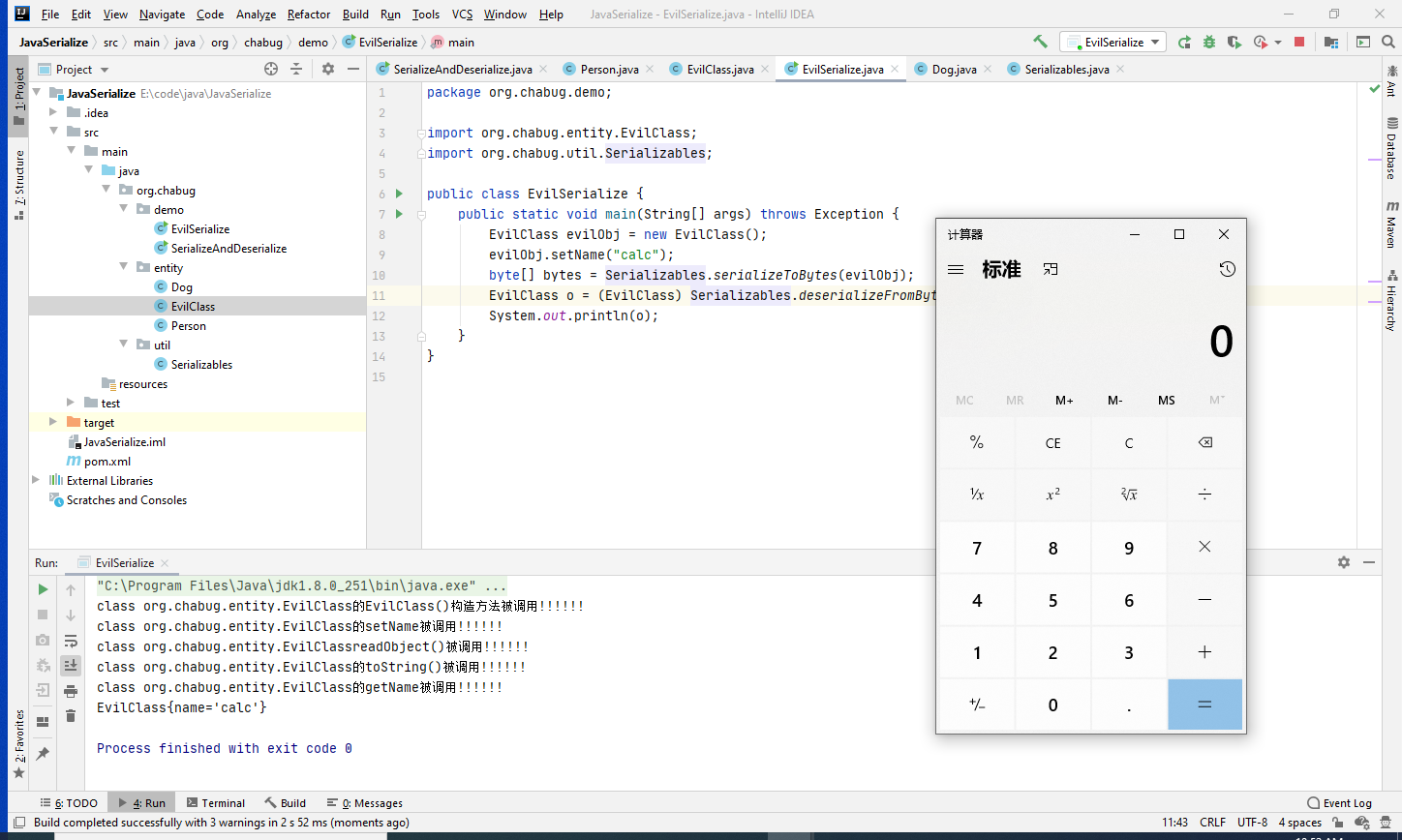
那么现在我们知道了反序列化是如何被RCE的,但是开发中也不可能直接这么写,所以这就涉及到了利用链的寻找。反序列化漏洞需要三个东西
细心再看上图中的输出结果,不仅仅触发了readObject方法,还触发了toString()、无参构造、set、get方法,那么在实际寻找利用链的过程中就不仅仅需要关注readObject()的方法了。
然后到现在我们就需要了解反射这个东西了,上文中我们提到了强制类型转换的问题,在实际开发中,在readObject中会进行逻辑处理,当不知道传入对象的具体数据类型时会通过反射来判断调用,而反射就是我们通向RCE的重要手段。
什么是反射?"反射"中有一个"反"字,那么解释反射就得从"正射"开始,看代码。这是我的实体类
package org.chabug.entity;

import java.io.IOException;

public class ReflectionClass {
    String name;

    public ReflectionClass(String name) {
        this.name = name;
    }

    public ReflectionClass() {
    }

    public String say() {
        return this.name;
    }

    private void evil(String cmd) {
        try {
            Runtime.getRuntime().exec(new String[]{"cmd","/c",cmd});
        } catch (IOException e) {
            e.printStackTrace();
        }
    }

    @Override
    public String toString() {
        return "ReflectionClass{" +
                "name='" + name + '\'' +
                '}';
    }

    public String getName() {
        return name;
    }

    public void setName(String name) {
        this.name = name;
    }
}
正常写法
package org.chabug.demo;

import org.chabug.entity.ReflectionClass;

public class ReflectionDemo {
    public static void main(String[] args) {
        ReflectionClass demo = new ReflectionClass();
        demo.setName("hello");
        System.out.println(demo.say());
//        demo.evil("calc");    // 不能够调用private方法
    }
}
很简单就是通过new创建了一个ReflectionClass实例,然后通过实例去调用其所属方法,这就是"正射"。但是当你new的时候不知道类名怎么办?受private保护的方法怎么调用?反射的作用就体现出来了。看下面这一段代码
package org.chabug.demo;

import org.chabug.entity.ReflectionClass;

import java.lang.reflect.Method;

public class ReflectionDemo {
    public static void main(String[] args) throws Exception {
        // new
        Class<?> aClass = Class.forName("org.chabug.entity.ReflectionClass");
        Object o = aClass.newInstance();

        // setName("jack")
        Method setName = aClass.getDeclaredMethod("setName",String.class);
        setName.invoke(o, "jack");

        // say()
        Method say = aClass.getDeclaredMethod("say",null);
        Object o1 = say.invoke(o, null);
        System.out.println(o1);

        // evil("calc")
        // 反射可以修改方法的修饰符来调用private方法
        Method evil = aClass.getDeclaredMethod("evil", String.class);
        evil.setAccessible(true);
        evil.invoke(o,"calc");
    }
}
不需要提前知道类名,用到org.chabug.entity.ReflectionClass类改一改通过参数传进来就行了,并且可以通过setAccessible来获取private保护的方法或字段。
接下来我们从漏洞入手,深入了解反射在反序列化中的作用,以及反序列化调用链的挖掘。
ysoserial 是一个生成Java反序列化exp的工具,其中继承了一些一直的exp,比如的CommonsCollections几条利用链。这次要分析的是CC2、CC5这两条链,之所以分析这两条,是为了在CC2中使用了定义字节码的操作,CC5中是为了对反射和链式调用加深理解。
先来看更方便理解的CC5链条。
漏洞出现在org.apache.commons.collections.functors.InvokerTransformer#transform
public Object transform(Object input) {
    if (input == null) {
        return null;
    } else {
        try {
            Class cls = input.getClass();
            Method method = cls.getMethod(this.iMethodName, this.iParamTypes);
            return method.invoke(input, this.iArgs);
        } catch (NoSuchMethodException var5) {
            throw new FunctorException("InvokerTransformer: The method '" + this.iMethodName + "' on '" + input.getClass() + "' does not exist");
        } catch (IllegalAccessException var6) {
            throw new FunctorException("InvokerTransformer: The method '" + this.iMethodName + "' on '" + input.getClass() + "' cannot be accessed");
        } catch (InvocationTargetException var7) {
            throw new FunctorException("InvokerTransformer: The method '" + this.iMethodName + "' on '" + input.getClass() + "' threw an exception", var7);
        }
    }
}
对比反射章节的代码可知这是很明显的反射用法,用正射的代码来解释的话就是
input.iMethodName(iArgs);
