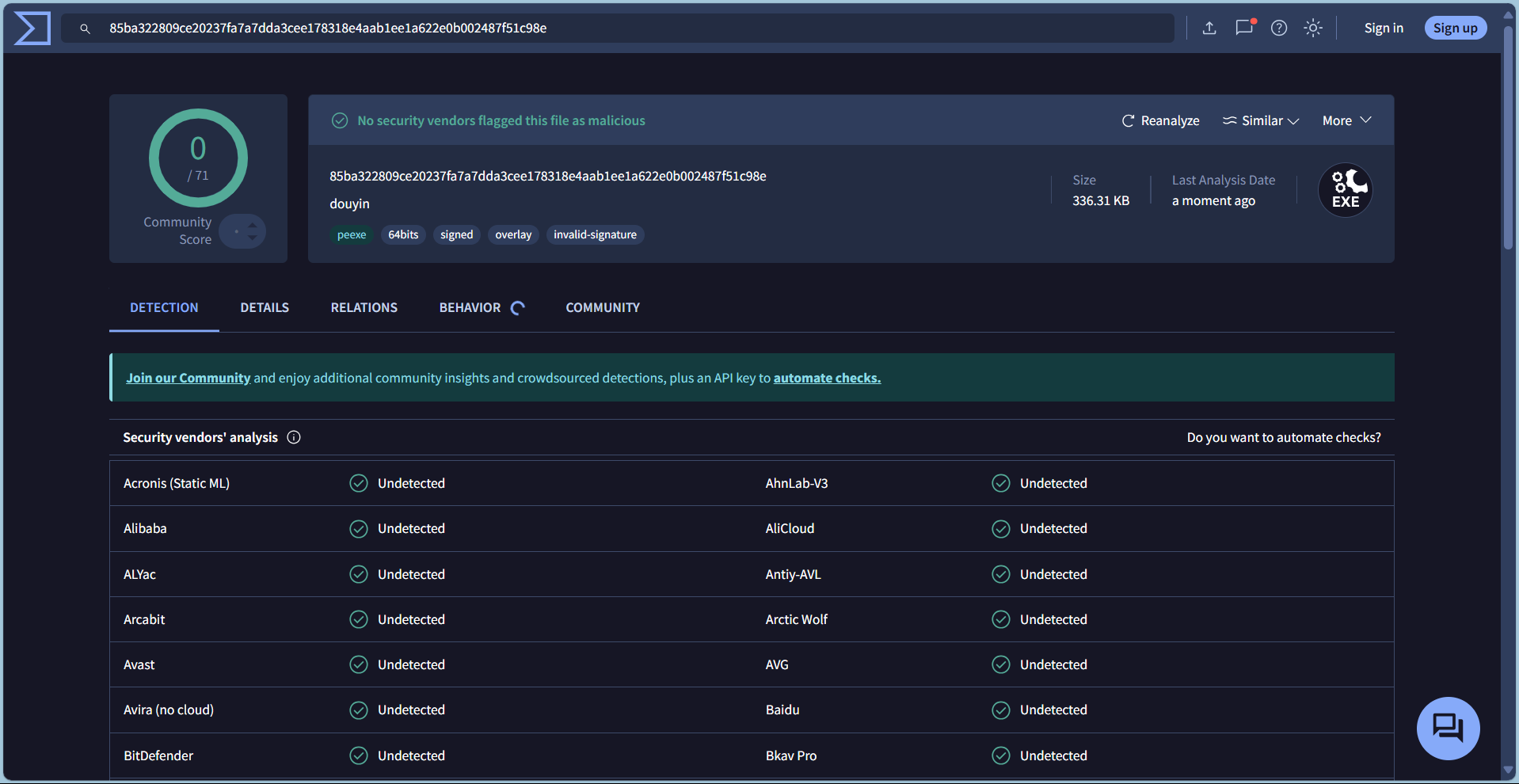
下面我会对木马所涉及的技术进行阐述我会针对shellcode和加载器两方面解释
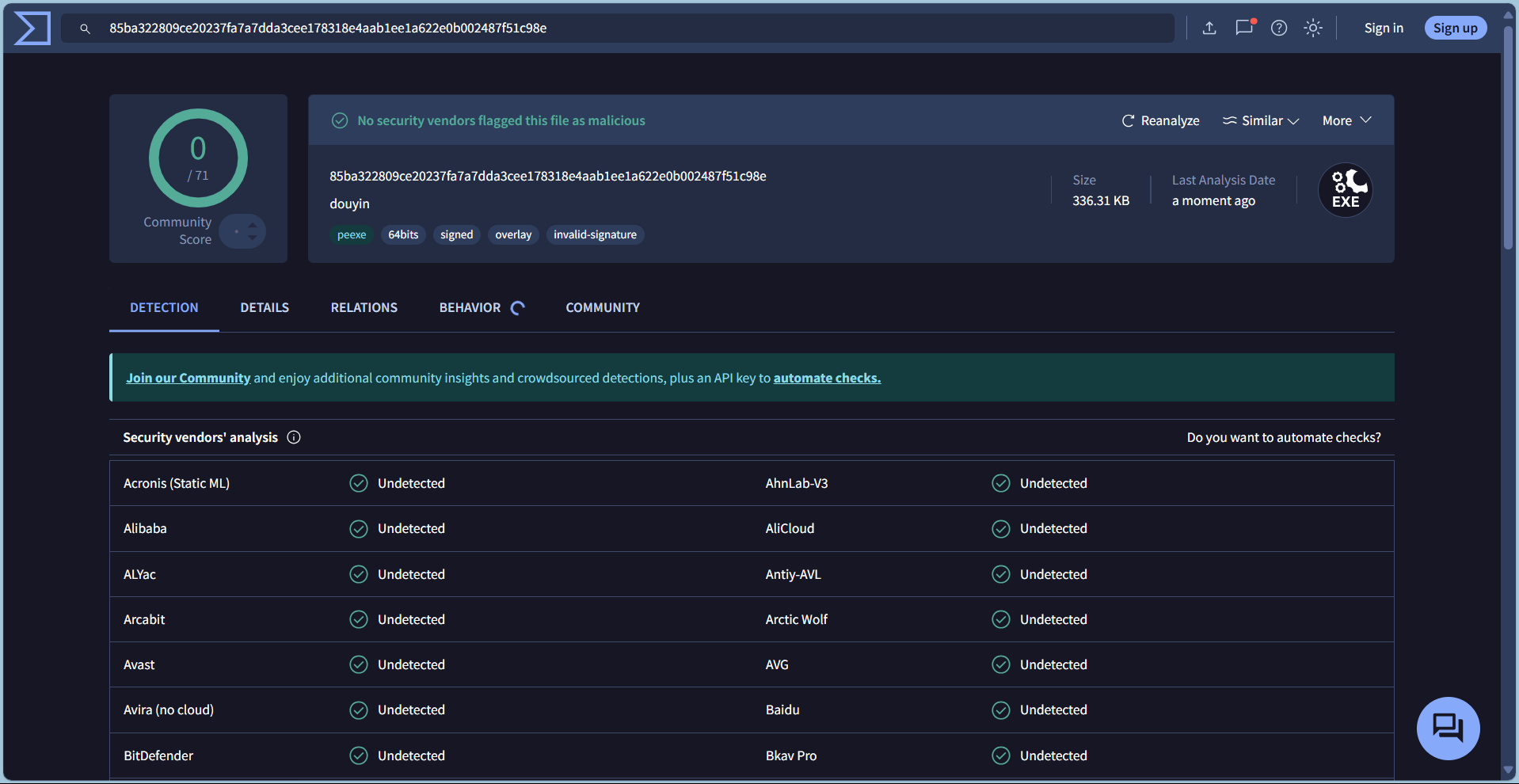
This is a Trojan sample that can bypass the vast majority of antivirus software and sandboxes. Below, I will explain the technologies involved in the Trojan, focusing on both the shellcode and the loader.
It is well-known that the conventional detection of anti-sandbox functions is based on operations on the host's CPU, memory, hard disk, etc. However, I personally think this approach is not ideal because some antivirus software or cloud sandboxes will monitor anti-sandbox functions and keep an eye on sensitive APIs, which may lead to detection. Therefore, my idea is to detect desktop shortcuts, such as those for commonly used software like QQ, WeChat, and DingTalk, to evade cloud sandboxes.
The detection mechanism of general anti-virus software is to hook some sensitive APIs. Therefore, we can bypass the hooks and achieve the function by using the ntdll overloading and dynamic API calling techniques. The ntdll overloading part involves loading the original ntdll.dll from the system directory and replacing the hooked ntdll code segment (.text segment) in the current process with the original code. The dynamic API calling is to traverse the export table of the target dll, match the function name using hash, obtain the address of the target function, and execute it using a pointer.
The shellcode section mainly undergoes multi-layer obfuscation processing, which involves XOR, RC4, base64, and MAC. The final output is in MAC address format, taking advantage of Windows' tolerance for MAC format strings.
Thank you for reading.