

Autonomous AI pentesting engine, continuous offensive security across web, cloud, AD & Kubernetes. Agentic reasoning + real exploit execution deliver proof-based vulnerabilities. Privacy gateway: the LLM never sees your real IPs, hosts, creds or paths (deterministic placeholders rehydrated locally), nothing leaves your perimeter.





⭐ Star DarkMoon · 🚀 Quick Start · 🧩 Integrations · 📊 Benchmark · 🔒 Darkmoon Pro · ▶️ Watch the demo (Pro)
DarkMoon is autonomous AI penetration testing for your own infrastructure. Point it at an authorized target and it runs the whole assessment on its own, then documents every finding with the exact command and raw output.
The open source Darkmoon is a command line tool. This is what you get when you clone the repo. You launch an assessment from the command line and watch every agent, command and finding stream past in real time.
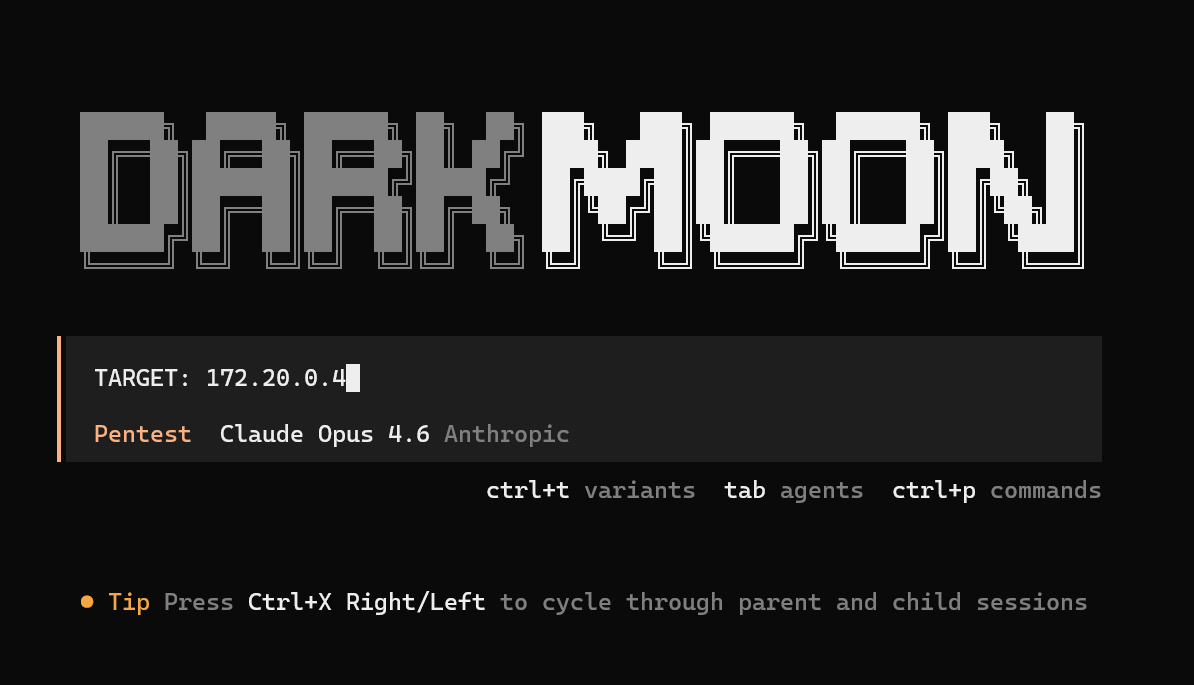
Kick off a run from the CLI. One |
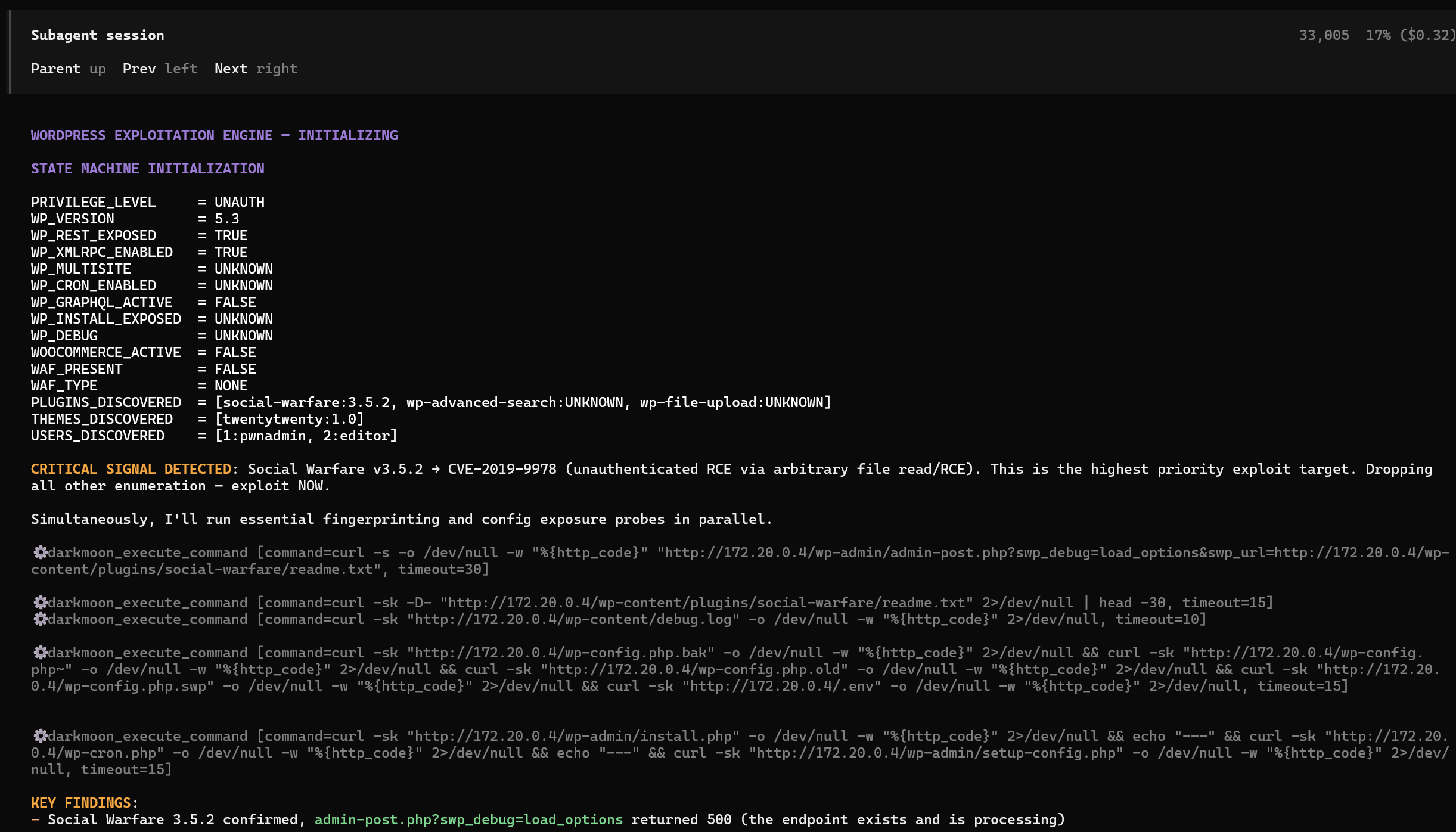
Autonomous agents reason and exploit, live in your terminal. Here a sub-agent flags CVE-2019-9978 and pivots straight to exploitation. |
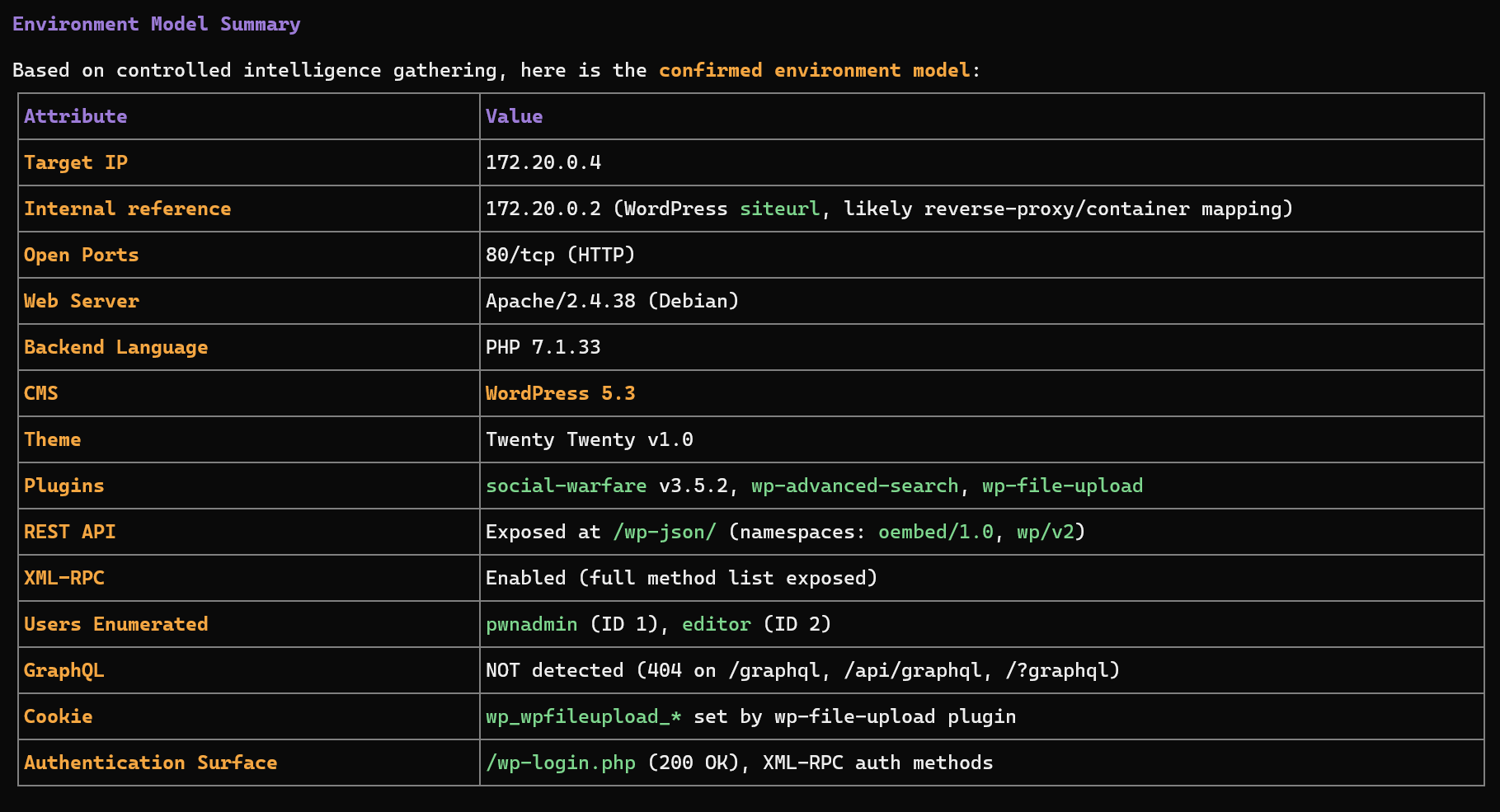
Recon and environment model. DarkMoon fingerprints the stack and confirms the attack surface before it strikes. |
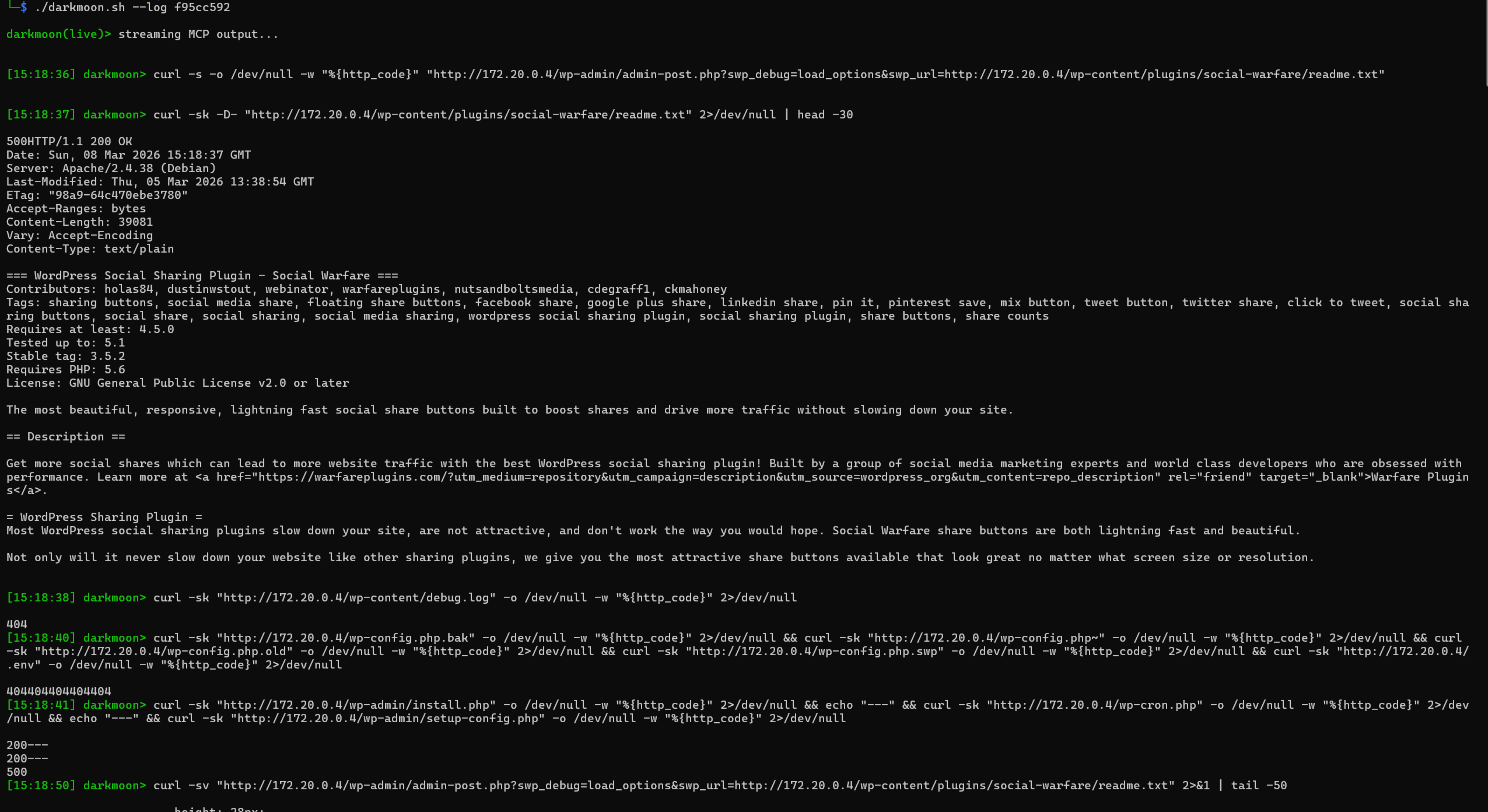
Live MCP stream. Every command the agent runs and its raw output, timestamped, with |
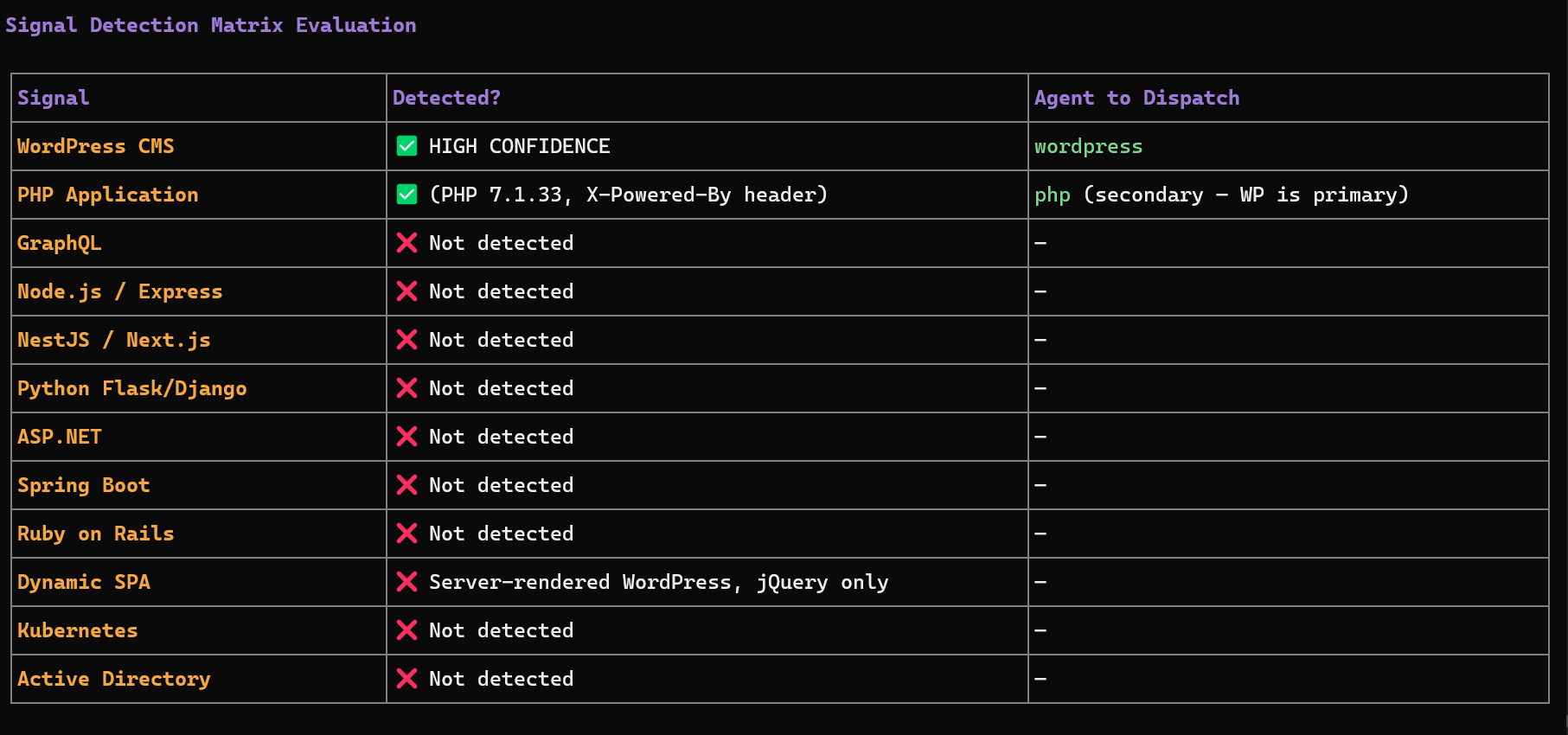
Signal to agent dispatch. DarkMoon decides which specialist agents to deploy from exactly what it detects on the target.
As featured in Help Net Security · Cyber Security News · DevOps.com · SecurityBrief · LinuxLinks · IT Brief · ChannelLife
git clone https://github.com/ASCIT31/Dark-Moon.git
cd Dark-Moon
./install.sh
install.sh configures your LLM provider interactively (no need to edit docker-compose.yml) and builds the full stack:
./install.sh           # skip form if .opencode.env already configured
./install.sh --init    # force reconfiguration (cloud or local model)
./install.sh --help    # show usage
Supports cloud providers (Anthropic, OpenAI, OpenRouter…) and local models (Ollama, llama.cpp). Then run your first assessment and watch it live:
./darkmoon.sh "TARGET: example.com"
./darkmoon.sh --log <session_id>
Prerequisites: Docker & Docker Compose, and an LLM API key (or a local model). GPU setup, environment variables and the full flags reference live in the Full Documentation.

